Difference Between Virus And Bacteria (original) (raw)
Last Updated : 20 Nov, 2025
Viruses and bacteria are two of the most common microorganisms that cause diseases, but they are very different from each other. Both can lead to infections, yet they vary in their size, structure, how they live, and the way they spread.
Bacteria are complete living cells that can survive on their own, while viruses can multiply only inside a living host. Understanding these differences is important for identifying the right treatment and for knowing how various infections develop.
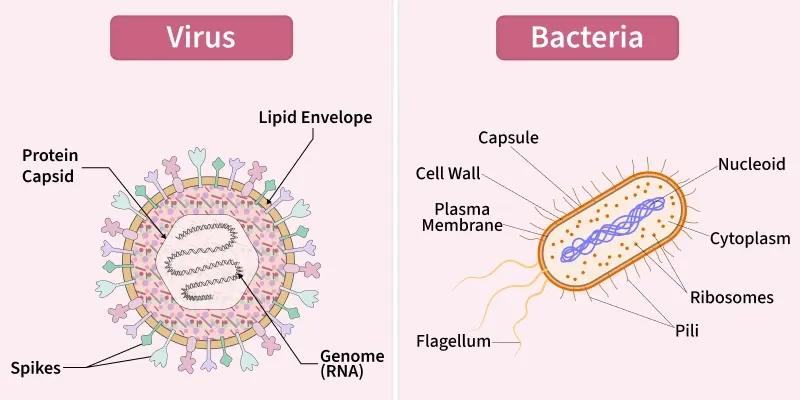
Below are some of the most important differences that clearly distinguish viruses from bacteria:
| **Features | Virus | **Bacteria |
|---|---|---|
| **Cellular Structure | Non-cellular | Cellular |
| **Composition | Genetic material (DNA or RNA) | Genetic material (DNA) |
| **Cell Wall | Absent | Present in many |
| **Cellular Organization | Lack cellular organelles | Have cellular organelles |
| **Metabolism | Depend on host cell for replication | Independent metabolism |
| **Living or Non-living | Considered non-living | Considered living |
| **Size | Smaller | Larger |
| **Reproduction | Replicate only inside host cells | Can reproduce independently |
| **Mode of Reproduction | Replication using host machinery | Binary fission |
| **Diseases | Cause various diseases in hosts | Some species cause diseases |
| **Symptoms | Can cause a variety of symptoms, such as fever, pus formation, localized pain. | Often associated with systemic symptoms like fever, fatigue, and specific organ-related symptoms. |
| **Spread | Can spread through air, water, direct contact, or contaminated surfaces. | Typically spread through respiratory droplets, blood, or bodily fluids. |
| **Duration of Illness | Symptoms may persist until treated with antibiotics. | May resolve on their own or require antiviral treatment, duration varies. |
| **Treatment | Antiviral medications | Antibiotics |
| **Examples | Influenza virus, HIV, SARS-CoV-2 | Escherichia coli, Streptococcus |