DNA Full Form (original) (raw)
Last Updated : 23 Jul, 2025
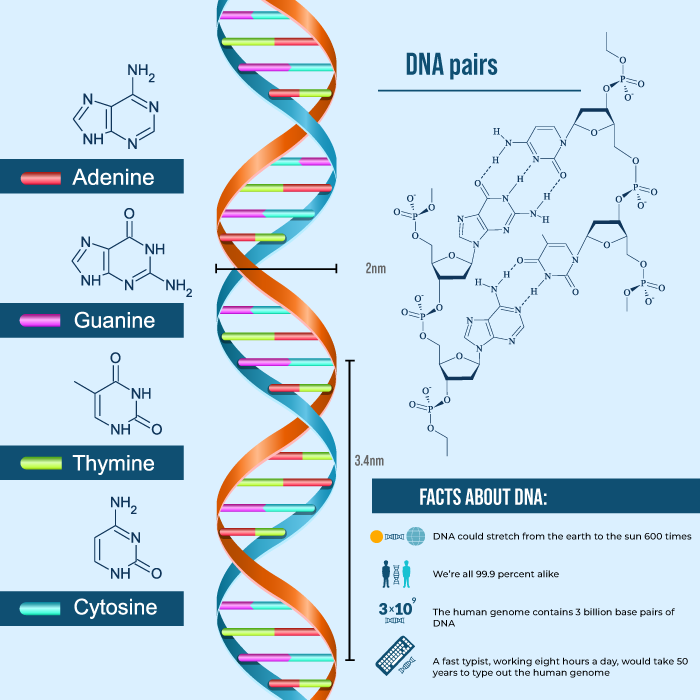
**The DNA full form is Deoxyribonucleic Acid. It is the genetic material that carries the genetic information of living organisms. The structure of DNA is a nucleotide-based double-stranded molecule that serves as the basis for DNA. Deoxyribose, a phosphate group, and one of the four nitrogenous bases i.e. adenine (A), thymine (T), cytosine (C), and guanine(G) are all components of the nucleotides.
There are different types of DNA. The main **function of DNA is to store genetic information and carry out gene expression. The **applications of DNA include genetic engineering, gene editing, gene therapy, etc. This article will cover DNA full form, structure and function.
Table of Content
- What is the Full Form of DNA?
- Types of DNA (Deoxyribonucleic Acid)
- Structure of DNA
- Functions of DNA
- Applications of DNA
- Conclusion: DNA Full Form - Deoxyribonucleic Acid
- Related Full Form Articles
- FAQs on DNA Full Form - Deoxyribonucleic Acid
What is the Full Form of DNA?
The full form of DNA is **deoxyribonucleic acid. DNA is the genetic material found in living organisms including **plants, animals and humans. Besides DNA, another genetic material, RNA is found in viruses and other organisms. The DNA consists of nitrogenous bases, a phosphate group and a deoxyribose sugar molecule which are joined together with the help of hydrogen bonds. The DNA molecule exists in a helical structure with the help of a sugar-phosphate backbone. The nitrogenous bases involved are adenine, guanine, thymine and cytosine.

Types of DNA (D**eoxyribonucleic Acid)
A-DNA, B-DNA, and Z-DNA are three different forms of DNA that can adopt distinct three-dimensional structures due to variations in the relative orientation of the nucleotide bases and the sugar-phosphate backbone.
- **A-DNA: These are **right-handed double helical DNA that have **11 bases per complete turn with a **2.3 nm diameter of the helix. In comparison to B-DNA, A-DNA is more tightly packed and has a narrower helix. A-DNA is crucial for DNA stability and protection against harm.
- **B-DNA: It is the typical **right-handed double helical DNA found in most of the cells. They have **10 bases per complete turn with a **1.9 nm diameter of the helix.This DNA is helpful in DNA replication and transcription.
- **Z-DNA: It has a zig-zag pattern with a **left-handed helix that has **12 bases per complete turn with a 1.8 nm diameter of the helix. Z-DNA is reported to be involved in the regulation of genes and the management of gene expression. This DNA is favored by the existence of alternating purine-pyrimidine sequences.
**Note: It's important to remember that these three varieties of DNA can coexist and are not mutually exclusive. Although B-DNA is the most prevalent one, the other two forms can also exist depending on the surrounding environment or the presence of other molecules, such as proteins.
Structure of DNA
The structure of DNA is a double helix composed of three major components:
- **Phosphate: A phosphate molecule and one oxygen atom make up the phosphate group. The phosphate groups in DNA bind to the deoxyribose sugars in the backbone to form the molecule's core. The DNA molecule is more stable overall because of the negative charge on the phosphate groups.
- **Nitrogenous Bases: Nitrogenous bases are the functional units that carry the genetic information in DNA. In DNA, nitrogenous bases come in four different varieties namely adenine (A), cytosine (C), guanine (G), and thymine (T).
- **Deoxyribose: It is a **five-carbon sugar molecule made up of a **sugar group, a hydroxyl group, and a base that contains nitrogen. The sides of the DNA backbone are formed by the deoxyribose sugars, which are joined to the phosphate groups. The DNA molecule's sugar-phosphate backbone offers the stability and support required to keep the nitrogenous bases in place.
**Also Read: Why is DNA Negatively Charged?
Functions of DNA
The following are the functions of the DNA:
- **Genetic information storage: The DNA serves as a genetic information repository, storing the genetic code that governs an organism's traits. The nucleotide sequence that makes up the genetic code contains this information.
- **DNA replication: The cells make copies of their genetic material during DNA replication in order to prepare for cell division. The transmission of genetic information to the subsequent generation of cells is ensured by this process, which is vital for cell development and reproduction.
- **DNA repair: DNA is continually at risk for damage from a variety of sources, including **UV radiation and chemical interactions. The integrity of the genetic material is maintained by DNA repair systems that are in place to identify and fix any damage.
- **Regulation of gene expression: The regulation of gene expression is helpful in governing, when and how genes are activated and deactivated. This regulation is essential for the healthy growth and operation of cells as well as for the ability to react to environmental changes.
- **Inheritance: The genetic information that defines the traits of the offspring, is passed down from parents to offspring by the process of inheritance. The continuation of life depends on inheritance.
Applications of DNA
The following shows the application of DNA in different fields:
- **Personalized Medicines: Personalized medicine has been made possible by the discovery of DNA, which has allowed for the detection of genetic mutations and variations that contribute to diseases like **cystic fibrosis and **sickle cell anemia.
- **Genetic engineering: Genetic engineering has advanced, thanks to our growing understanding of DNA's structure and function, which has sparked the creation of precise genome editing tools like CRISPR-Cas9.
- **Forensic science: DNA analysis is now an important instrument in both fields, enabling the identification of suspects and victims with the help of forensic science.
- **Evolutionary studies: DNA has made it possible for researchers to examine the evolutionary connections between various species, shedding light on the course of evolution and the first traces of life on Earth.
- **Conservation of biological variety: DNA analysis can be used to examine the genetic diversity of various species and aid in the preservation of endangered species.
- **Climate change and environmental studies: DNA can be utilized as a tool for biodiversity management and conservation as well as to investigate how climate change affects various species and ecosystems.
Conclusion: DNA Full Form - **Deoxyribonucleic Acid
The full form of DNA is **deoxyribonucleic acid. It is responsible for the genetic makeup of an individual. Deoxyribonucleic acid is present in the nucleus of the cell and determines the genotype and phenotype of an individual. The nitorgenous bases bond with each other through hydrogen bonds. The structure of the DNA was discovered in 1953 by Watson and Crick.
Related Full Form Articles
**Also Read: