Sexual Reproduction in Humans (original) (raw)
Last Updated : 1 May, 2026
Sexual reproduction in humans is a biological process that involves the formation and fusion of male and female gametes to produce a new individual. It is the primary mode of reproduction in humans and ensures the continuation of the species while introducing genetic variation among offspring.
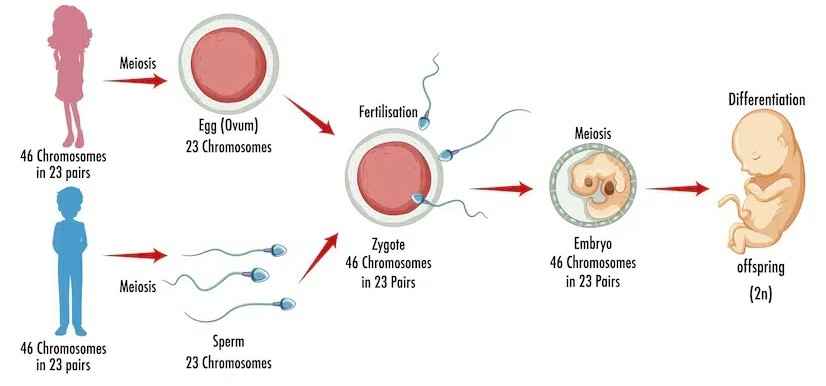
Reproduction in humans is sexual. It involves the maturation of gametes and the transfer of the male gamete to the female reproductive tract through sexual intercourse. A human individual begins to release viable gametes at a certain age in his or her life. This onset period is called puberty. Females typically start having menstrual cycles and secondary sexual development as they reach puberty. Human pregnancy lasts for about 40 weeks, and the child is born through the process of parturition.
Reproductive Organs in Humans
Human reproduction relies on specialised reproductive organs in both males and females, each with distinct roles and functions:

- **Male Reproductive System: The male reproductive system in humans includes the testes, epididymis, vas deferens, seminal vesicles, prostate gland, and penis. The primary function of this system is to produce (testes), store (epididymis), and deliver sperm cells (penis) to the female reproductive tract during sexual intercourse.
- **Female Reproductive System: The female reproductive system in humans comprises the ovaries, fallopian tubes, uterus, cervix, and vagina. Its primary functions include the production of egg cells during each menstrual cycle, the reception of sperm cells, the fertilisation and implantation of the zygote in the uterus, and the nurturing and development of the foetus during pregnancy.
Process of Reproduction in Humans
The process of reproduction in human class 10 is an important concept in the biology syllabus. There are several steps of reproduction in humans that can be divided into three significant periods:
1. Pre-Fertilization Period
The pre-fertilisation period in human reproduction is characterised by the development of the human reproductive system and the formation of viable gametes. The central event of this period is Gametogenesis.
**Gametogenesis
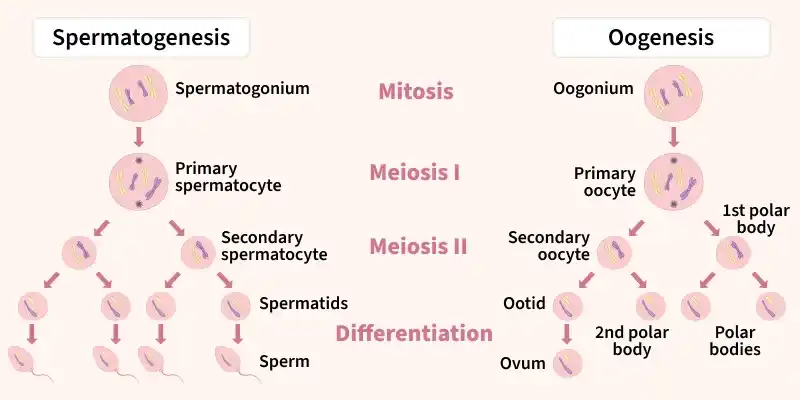
Gametogenesis in humans refers to the production of gametes—spermatozoa (sperm cells) in males and ova (egg cells) in females. In males, this process, known as spermatogenesis, occurs within the seminiferous tubules of the testes, where diploid germ cells undergo meiosis to produce haploid sperm cells. In females, oogenesis occurs in the ovaries, where oogonia develop into primary oocytes, which then undergo meiosis to yield a mature ovum.
2. Fertilization
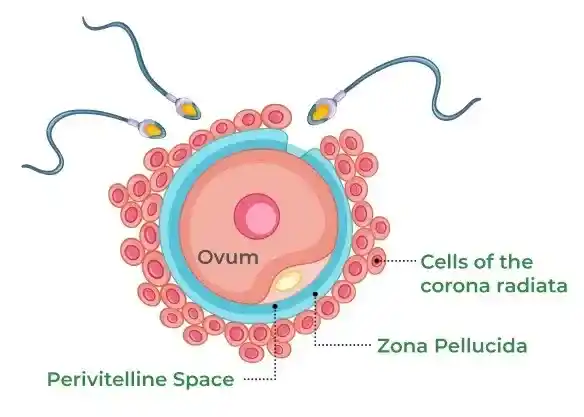
Fertilisation is the fusion of a sperm cell with an egg cell, forming a zygote. In humans, after successful copulation, fertilisation typically occurs in the fallopian tubes, where sperm cells travel through the female reproductive tract and fuse with the mature egg to form the zygote.
3. Post-Fertilization Period
The post-fertilisation period of humans has various distinct stages up until the birth of the baby, including embryonic development.
**Implantation in Humans
Implantation is the process by which the blastocyst attaches to the endometrium (uterine lining). It occurs about 6–9 days after fertilisation and is essential for further development.
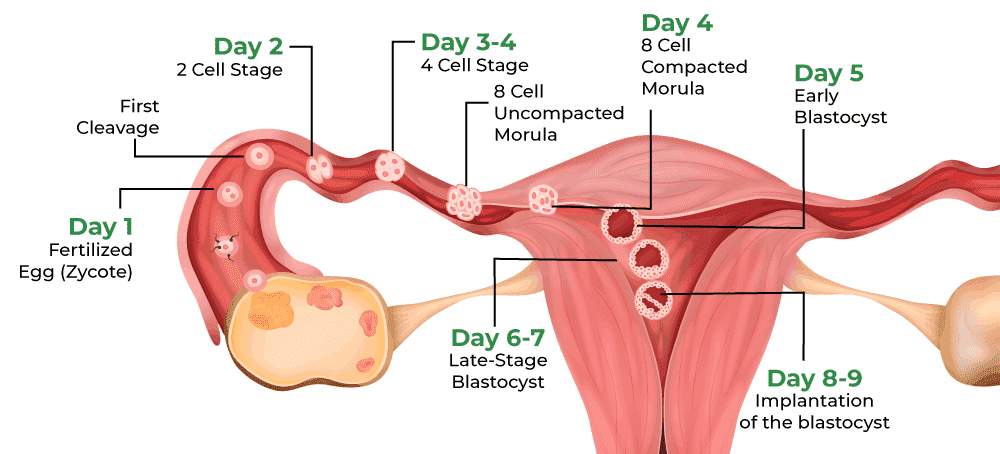
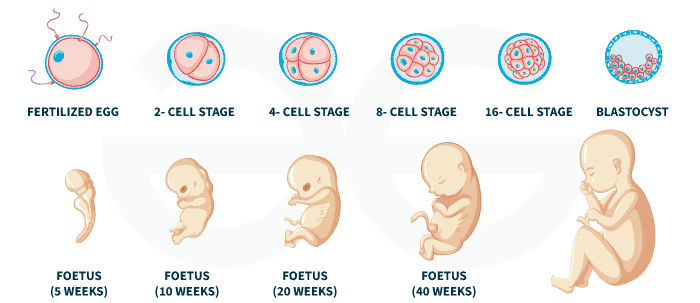
**Day 1 – Fertilized egg (zygote) is formed after fertilisation in the fallopian tube.
**Day 2 – First cleavage occurs and the embryo reaches the 2-cell stage.
**Day 3–4 – Rapid cell divisions form the 4-cell stage, 8-cell stage, and then an uncompacted morula.
**Day 4 – The 8-cell embryo becomes a compacted morula.
**Day 5 – Morula develops into an early blastocyst and enters the uterus.
**Day 6–7 – Late-stage blastocyst forms and prepares for implantation in the uterine wall.
**Day 8–9 – Implantation of the blastocyst begins in the endometrium.
**Early Embryonic Development
- **Cleavage: The zygote divides repeatedly by mitosis to form 2, 4, 8, and 16 cells. These cells are called blastomeres.
- **Morula: An embryo with 8–16 blastomeres is called a morula.
- **Blastocyst: The morula continues dividing and forms a blastocyst. The blastocyst has: Trophoblast – outer layer [helps in implantation] and Inner cell mass – forms the embryo.
**Gastrulation
The gastrulation process starts within the first 3 weeks. The formation of germinal layers is known as Gastrulation. Later, these cells (ectoderm, mesoderm, and endoderm) differentiated into different types of cells with specific functions.
- **Ectoderm- nervous system, brain, spinal cord, epidermis, hair, nails, etc.
- **Mesoderm- connective tissue, muscles, circulatory system, notochord, bone, kidney, gonads
- **Endoderm- internal organs, stomach, liver, pancreas, bladder, lung, gut lining
**Foetal Development
The embryo is called a foetus after about 8 weeks and the foetus grows and its organs mature. Development continues inside the uterus for about 9 months (gestation period).
| Weeks | Description |
|---|---|
| **Second Week | The placenta begins to form and secretes hormones like hCG, estrogen, and progesterone. |
| **Third Week | Gastrulation occurs, and the formation of ectoderm, mesoderm, and endoderm. |
| Fourth Week | The heart begins to beat (the first functional organ) |
| Fifth Week | The gall bladder, ears, spleen, pharyngeal arches, and pancreas would form |
| Sixth Week | The foetus'seyes, nose, stomach, and kidney precursors would be developed |
| Seventh Week | The foetus's primary sex organs, lungs, and lymphatic system would develop |
| Eighth Week | Follicles of hair and the ear start developing |
**Childbirth or Parturition
Childbirth, also known as parturition, marks the end of pregnancy. It involves the expulsion of the foetus and placenta from the mother's uterus through the birth canal (vagina). Childbirth is triggered by a series of hormonal changes, including a surge in oxytocin levels, which stimulate uterine contractions.
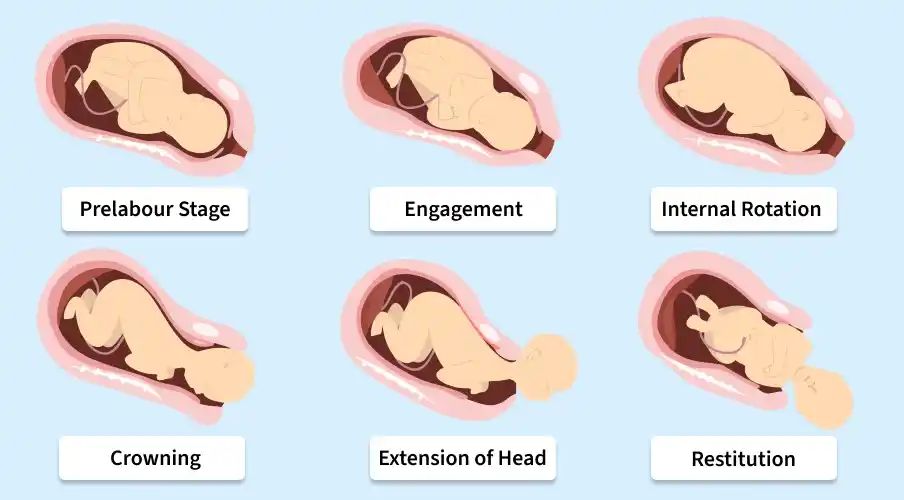
Parturition can be separated into six stages, which are as follows:
- **Pre-labour Stage – Mild, irregular uterine contractions begin, preparing the cervix and uterus for childbirth.
- **Engagement – The fetal head enters and settles into the pelvic cavity.
- **Internal Rotation – The fetal head rotates to align with the birth canal for easy passage.
- **Crowning – The widest part of the fetal head appears at the vaginal opening.
- **Extension of Head – The fetal head extends backward to pass out through the vaginal opening.
- **Restitution – After the head is delivered, it rotates back to its original position to allow shoulder delivery.