Mechanism of Hormone Action (original) (raw)
Last Updated : 15 May, 2026
Hormones are chemical messengers produced by endocrine glands that regulate various physiological processes in the body. They travel through the bloodstream to reach specific target cells and bring about changes in their activity. The mechanism by which hormones produce their effects depends mainly on their chemical nature and the location of their receptors.
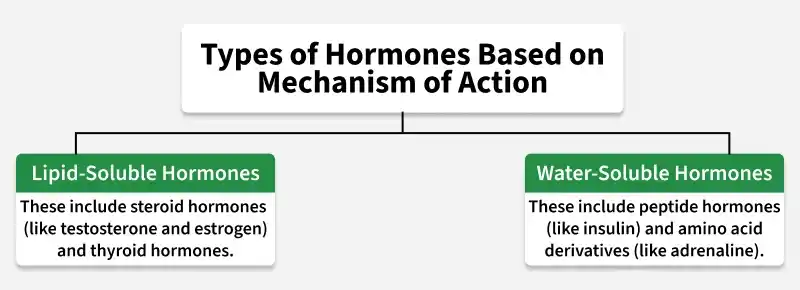
Types of Hormones Based on Mechanism of Action
**1. Water-Soluble Hormones (Membrane Receptor Mechanism)
These include peptide hormones (like insulin) and amino acid derivatives (like adrenaline). They cannot pass through the cell membrane.
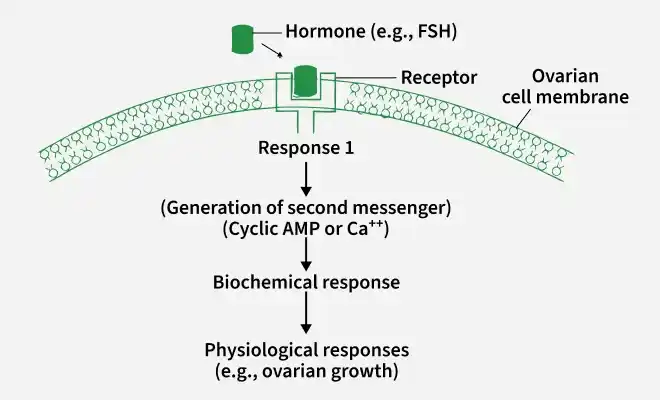
- These hormones bind to receptors present on the cell membrane.
- This activates a second messenger system inside the cell.
- The most common second messenger is cyclic AMP (cAMP).
- The second messenger activates enzymes and produces the desired cellular response.
**2. Lipid-Soluble Hormones (Intracellular Receptor Mechanism)
These include steroid hormones (like testosterone and estrogen) and thyroid hormones. Being lipid-soluble, they can easily pass through the cell membrane.
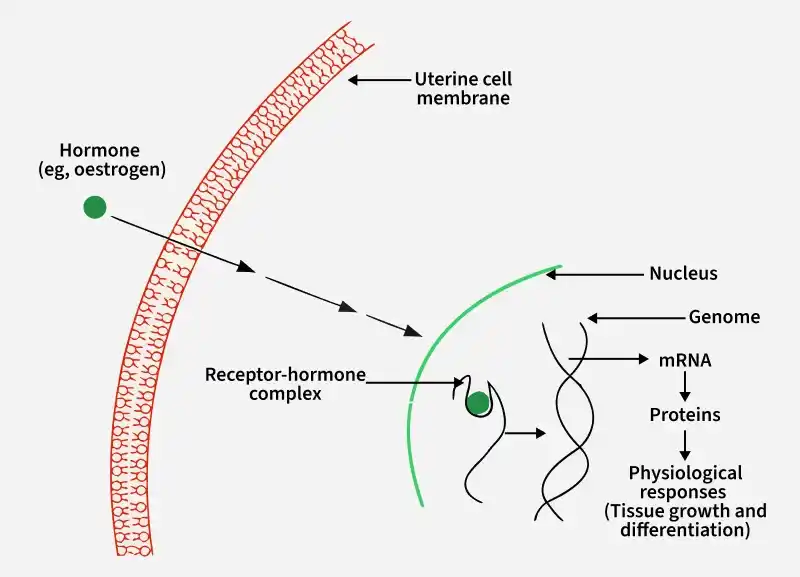
- These hormones diffuse through the cell membrane of the target cell.
- They bind to specific receptors present in the cytoplasm or nucleus.
- The hormone-receptor complex enters the nucleus (if not already there).
- It binds to DNA and regulates gene expression.
- This leads to the synthesis of specific proteins.
Factors Affecting Hormone Action
- Concentration of hormone in blood.
- Number of receptors on target cells.
- Sensitivity of receptors.
- Presence of other hormones (synergistic or antagonistic effects).
Importance of Hormone Action Mechanism
- It helps in understanding body regulation and coordination.
- It is useful in diagnosing hormonal disorders.
- Many medicines are designed based on hormone action pathways.