Human Health and Disease (original) (raw)
Last Updated : 2 Feb, 2026
Human health refers to a state of complete physical, mental, and social well-being, not merely the absence of disease. A healthy individual can perform daily activities efficiently, resist infections, manage stress, and maintain balanced bodily functions. Disease, on the other hand, is a condition that disturbs normal body functioning and may affect specific organs or the entire body.
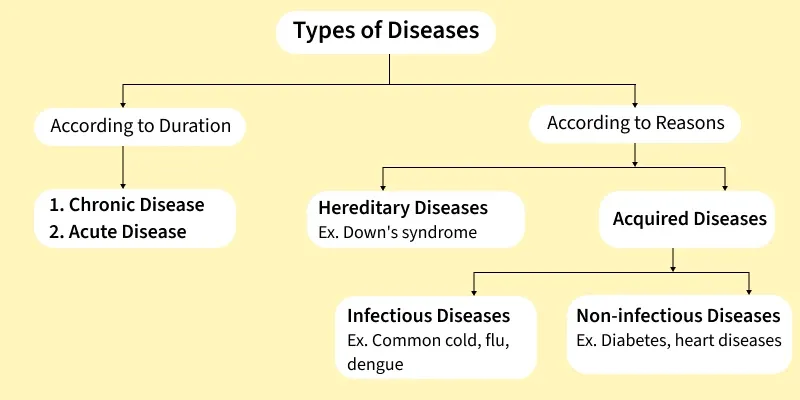
Disease
A disease is a condition of illness or sickness that is characterised by specific signs and symptoms. Diseases are caused by pathogens that enter the human body through various routes and multiply inside it. These pathogens interfere with the normal functioning of the body, leading to undesirable changes and, in severe cases, damage to organs and impairment of their functions.
Causes of Diseases
- **Heredity: It is the transmission of some deficiencies or defects that are inherited by a child from the parents at birth.
- **Infections: These can be caused by some pathogens, i.e. disease-causing organisms.
- **Unhealthy lifestyle: It includes a lack of exercise and consumption of tobacco and alcohol.
Diseases Can Be Classified Into
**1. Infectious or Communicable Diseases: Infectious diseases are diseases that are caused by some disease-causing organisms or pathogens, e.g. bacteria, viruses, fungi, or protozoans. These diseases can be passed from an unhealthy person to a healthy person.
**2. Non-infectious or Non-Communicable Diseases: Non-communicable diseases (NCDs) are diseases that are not transmitted by pathogens. They can be caused by unhealthy lifestyles, unbalanced diets, improper vaccination, etc. They are also known as chronic diseases as they remain for a long duration, e.g. diabetes, heart ailments, cancer, etc.
Diseases Caused by Bacteria
**Typhoid fever
- **Name of the Pathogen: Salmonella typhi
- **Affected Body Part: Small intestine
- **Mode of Entry or Transmission: Contaminated food and water
- **Symptoms: high fever (39° to 40°C), weakness, stomach pain, constipation, headache, loss of appetite
- **Diagnosis: WIDAL test
- **Prevention and Control: Awareness, hygienic surroundings
**Pneumonia
- **Name of the Pathogen: Streptococcus pneumoniae and Haemophilus influenzae
- **Affected Body Part: alveoli (air-filled sacs) of the lungs, which possess grapes-like structures
- **Mode of Entry or Transmission: fever, chills, cough and headache, severe problems in respiration
- **Symptoms: by inhaling droplets released by an infected or unhealthy person or by sharing personal belongings.
- **Prevention and Control: Isolation, hygienic surroundings
Diseases Caused by Viruses
**Common cold
- **Name of the Pathogen: Rhinoviruses
- **Affected Body Part: Nose and respiratory pathway
- **Mode of Entry or Transmission: By inhaling droplets released by an infected or unhealthy person or by sharing personal belongings
- **Symptoms: Nasal congestion and discharge, sore throat, wheezing, cough, headache, tiredness, etc.
Diseases Caused by Protozoans
**Malaria
- **Name of the Pathogen: Plasmodium (Plasmodium vivax, Plasmodium malariae and Plasmodium falciparum)
- **Affected Body Part: Red blood cells and liver
- **Mode of Entry or Transmission: Bite by an infected female mosquito, i.e. anopheles mosquito
- **Symptoms: High chills, vomiting, loose motions
**Amoebiasis (amoebic dysentery)
- **Name of the Pathogen: Entamoeba histolytica
- **Affected Body Part: Large intestine
- **Symptoms: Constipation, cramps, abdominal pain, stool with mucus and blood clots
Life Cycle of Plasmodium
Plasmodium falciparum is the most fatal species of Plasmodium. The life cycle of Plasmodium is shown below:

Stages Involved
- **Exoerythrocytic stage: It occurs in the liver of the infected person.
- **Erythrocytic stage: It occurs in the RBCs of the infected person.
- **Sporogonic stage: It occurs in the female mosquito, i.e. Anopheles.
Steps Involved
- Infected plasmodium enters the human body by a bite of an infected female anopheles mosquito (transmitting agent or vector)
- The plasmodium multiplies in the liver cells or hepatocytes and affects the RBCs, which rupture later as a result, hemozoin (toxic) is released, which causes a high fever and chills for three to four days.
- Plasmodium enters the body of a mosquito when an Anopheles bites the infected person and starts multiplying within the body and forming sporozoites (stored in salivary glands).
- When these mosquitoes bite a human, those sporozoites enter the human body, and the cycle repeats.
Diseases Caused by Helminthes
**1. Ascariasis
- **Name of the Pathogen: Ascaris (roundworm)
- **Affected Body Part: The intestine in the human body and contaminated soil, water, and plants
- **Mode of Entry or Transmission: Contaminated water, vegetables, and fruits.
- **Symptoms: Internal bleeding, muscular pain, fever, anaemia, and blockage of the intestinal pathway.
**2. Elephantiasis or filariasis
- **Name of the Pathogen: Wucheria bancrofti and Wucheria malayi
- **Affected Body Part: Lymphatic vessels of the lower limbs, genital organs
- **Mode of Entry or Transmission: By the bite of a female mosquito vector
- **Symptoms: Swelling in the pelvic region
Diseases Caused by Fungi
**1. Ringworms
- **Name of the Pathogen: Microsporum, Trichophyton, and Epidermophyton
- **Affected Body Part: Skin, nails, and scalp
- **Mode of Entry or Transmission: Contaminated soil, wet and moist towels or fabrics, or a comb
- **Symptoms: Itching because of the dry and scaly lesions on the skin, nails, and scalp
**Immunity
Immunity is the body's ability to sense germs and inhibit them from causing any illness. The immune system identifies and destroys germs that enter the body before they can start causing disease.
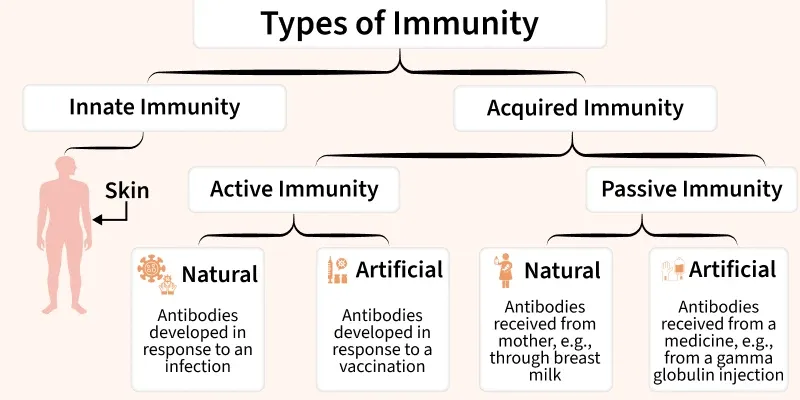
1. Innate immunity
Characteristics of Innate immunity are given below:
- It is present by birth.
- It is not dependent on previous exposure to pathogens or disease-causing organisms.
- It is genetic and is transmitted from parents to their offspring.
- Its effects can be seen immediately in the body.
- It consists of various types of barriers to provide defence against pathogens.

Some Examples of Barriers to Innate Immunity
- **Physical Barriers: Skin, gastrointestinal mucus, and the lining of the respiratory and urogenital tract.
- **Physiological Barriers: HCL production in the stomach, tear gland in the eyes, and secretion of saliva in the mouth.
- **Cellular Barriers: Leukocytes (WBCs) of our body destroy various microbes. They are known as the soldiers of our body.
- **Cytokine Barriers: The virus-infected cells produce some special proteins, known as interferons, which help to protect the other non-infected cells.
2. Acquired Immunity
Characteristics of acquired immunity are given below:
- It is also known as adaptive immunity.
- It is not present by birth. Instead, acquired during the lifetime of the person.
- It depends on the previous exposure to the pathogens or disease-causing organisms.
- It is not genetic.
- It can take a few days to show the effects or to be activated.
- It consists of some special cells that produce antibodies.

Special Cells Provide Acquired Immunity
The lymphocytes, B-lymphocytes, and T-lymphocytes are the special cells that help in the production of antibodies to provide acquired immunity.
| **B-lymphocytes | **T-lymphocytes |
|---|---|
| They form humoral or Antibody-Mediated Immune Systems (AMIS) | They form the Cell-Mediated Immune System (CMIS) |
| They protect against bacteria and viruses that enter the blood and lymph. | They protect against fungi and protists that enter the cell. |
| They form memory cells or mast cells and plasma cells. | They form killer, helper, and suppressor cells. |
Antibody Structure
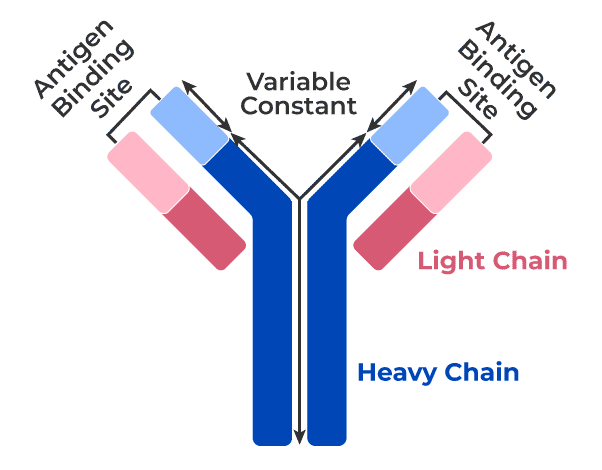
Antibodies are the 'Y' shaped structures, made up of four polypeptide chains, i.e. two heavy polypeptide chains and two light polypeptide chains. It is represented as H2 L2. Disulfide bonds are present between the chains, which keep their position fixed. The different types of antibodies found in our bodies are IgA, IgG, IgE, and IgM.
Active Immunity Vs Passive Immunity
The following table shows the major differences between active immunity and passive immunity.
| **Active Immunity | **Passive Immunity |
|---|---|
| It is developed by contact with pathogens or antigens. | It is developed when readymade antibodies are inserted or injected into the body by vaccination. |
| It shows no side effects. | It shows some reactions. |
| It is slow but has long-lasting effects. | It is fast but has short-term effects. |
**Vaccination Vs Immunisation
The key points of distinction between Vaccination Vs Immunisation are listed in the table below.
| **Vaccination | **Immunisation |
|---|---|
| In this process, the weakened or deactivated pathogens are injected into the body. | It is the process that occurs after injecting a vaccine when the body starts producing antibodies against pathogens. |
| It does not give complete protection against disease. | When a person fully recovers from a disease, they get immunity. |
| It is taken by injection or orally. | It is not taken orally or by injection; the body develops its own capacity. |
**Allergies (Allergic Diseases)
These are the conditions caused by the hypersensitivity of the immune system to many harmless substances present around us. When the immune system responds to any foreign substances like pollen, dust, or any food that does not cause any reactions in most people, then allergies occur. The antibodies produced against these reactions are of the IgE type (Ig stands for immunoglobulin class of protein).
Examples of Some Common Allergens (Allergens Cause Allergies)
Some common examples of allergens are outdoor pollutants, including ozone and diesel exhaust, indoor pollutants like tobacco smoke and nitrogen dioxide, some food items like peanuts and eggs, microbial products, mites in dust, pollens, animal dander, etc.
Symptoms of Allergies
Symptoms of allergies include sneezing, nasal discharge, watery eyes, and difficulty breathing.
- Allergies are caused by the production of histamine and serotonin****.**
- Anti-histamines, adrenaline, and steroids reduce the symptoms of allergy.
**Autoimmunity
It is a condition in which the body's immune system mistakes its own body tissues for foreign agents and starts attacking them.
- Autoimmune diseases cause inflammation, which affects many parts of the body.
- Examples are rheumatoid arthritis (attacks joints) and type 1 diabetes.
- In type 1 diabetes, the immune system starts destroying the Islets of Langerhans, the cells in the pancreas that produce the insulin hormone.
Immune System in the Body
It comprises lymphoid organs, cells, and antibodies.
Role Played by the Immune System
- It shows allergic reactions.
- It distinguishes between self and non-self cells and fights against non-self or foreign antigens.
- It is important in organ transplantation.
- It is responsible for the production of memory cells or mast cells.
Lymphoid Organs
Primary, secondary, and tertiary lymphoid organs include different types of leukocytes or white blood cells, which fight against infections. Bone marrow is the main lymphoid organ where all blood cells are produced, including lymphocytes.

Characteristics of the Lymphoid Organs:
- The thymus gland is found in the upper front part of the chest, behind the sternum, and is made up of two lobes. It is also known as the ‘Throne of immunity**’ or ‘training schools of T-lymphocytes**.’**
- The spleen is an organ that filters blood. They are also known as the 'graveyard of red blood cells'****.**
- The lymph nodes are the parts of the lymphatic system that trap antigens inside the tissue or lymph fluid. It leads to the activation of lymphocytes located in the lymph nodes. The lining of the major tracts, i.e., respiratory, digestive, and urogenital tracts, consists of lymphoid tissue. It is called 'Mucosal-Associated Lymphoid Tissue' (MALT).
AIDS (Acquired Immune Deficiency Syndrome)
HIV-AIDS is Acquired Immunodeficiency Syndrome, which is a life-threatening condition caused by the human immunodeficiency virus (HIV), the genome of which is RNA, enclosed in an envelope and consists of reverse transcriptase (transcribes single-stranded RNA into DNA). It interferes with the protein synthesis machinery and the body's ability to fight against infection.
- **Modes of Transmission: HIV is transmitted through contact with the infected blood, semen, or vaginal fluids
- **Symptoms: Flu-like symptoms can be seen, e.g., fever, fatigue, and sore throat. Other symptoms include weight loss, fever or night sweats, fatigue, and frequent infections.
- **Cure: There is no cure for AIDS, but antiretroviral regimens can minimise the effects by preventing some secondary infections.
- **Detection: AIDS can be detected by Enzyme-linked immunosorbent assay (ELISA), which is a biochemical test that helps in detecting the presence of an antibody or an antigen in a sample. Another test, i.e., Western Blot, is done to check the result of ELISA.
- **Treatment: A person suffering from AIDS can be given anti-retroviral drugs to increase the lifespan of a person up to a natural death process
Prevention and Control of AIDS
- Choose safe sexual practices like the use of a condom
- Limit the number of sexual partners
- syringes or needles must be sterilised
- Promoting regular check-ups for HIV
- Get a test for Sexually transmitted diseases
- Take precautions and double-check before having a blood transfusion
- Awareness among people, which is done with the help of the National AIDS Control Organisation (NACO) and other non-governmental organisations (NGOs)
Transmission of HIV Infection
- Direct contact with certain body fluids from a suffering person. These fluids are blood, semen, rectal fluids, vaginal fluids, breast milk, etc.
- Having sexual contact with multiple partners.
- Transfusion of contaminated blood and blood products. Contamination of blood can be considered if the person suffers from certain cancers, anaemia, or thalassemia.
- Sharing infected needles or syringes by drug addicts who take drugs intravenously.
- Infected pregnant mother to her child through the placenta.
Impact of HIV Infection on the Body
- HIV destroys T-cells or helper cells (CD4 cells), which are critical to the immune system.
- These cells are responsible for keeping us healthy and protecting against common diseases and infections.
- The macrophages, a type of WBC, are infected.
- The genomic RNA of the virus replicates with the help of an enzyme, reverse transcriptase, and forms viral DNA, which enters the host cell and produces viral particles.
- HIV enters the T-cells and multiplies in the blood, which further attacks other T-cells. This cycle goes on, and the T-lymphocytes decrease in the infected person. HIV weakens the body’s natural defence mechanisms, and then symptoms appear.

Cancer
Cancer is a disease in which the cells in the body grow in an uncontrollable fashion and spread to other parts of the body. Cancerous tumours spread and invade the surrounding tissues and can travel to distant places in the body to form new tumours. This process is called metastasis. Cancerous tumours may also be called malignant tumours.

Cancerous Cell Vs Normal Cell
- Cancerous cells grow in the absence of signals that instruct them to grow, while normal cells only grow when they receive such instructions.
- Cancerous cells ignore signals that normally instruct cells to stop dividing or to die (apoptosis or programmed cell death) while normal cells stop dividing after receiving signals.
- Cancerous cells invade into surrounding areas and spread, while normal cells stop growing when they come in contact with other cells (contact inhibition).
Types of Tumours
Different types of tumours are given below:
| Types of Tumors | Characteristics |
|---|---|
| **1. Benign tumours | They are smallThey are slow-growingThey are non-invasiveThey stay localised |
| **2. Malignant tumours | They are largeThey are fast-growingThey are invasiveThey are metastasised |
Causes of Cancer
The normal cells are transformed into cancerous cells through some agents, known as carcinogens.
Carcinogens
- **Ionising radiations: X-rays and gamma rays.
- **Non-ionising radiations: Both ionising and non-ionising radiations cause DNA damage and mutations.
- Some food items, like chemicals, used in processed and cured meat, may produce carcinogens.
- The chemical carcinogens that cause lung cancer are present in tobacco smoke.
- Oncogenic viruses (cancer-causing viruses) consist of viral oncogenes.
Detection and Diagnosis
- **Biopsy: In this process, a small and thin section of the suspected tissue is removed and examined.
- **Blood and bone marrow tests: This is done to detect leukaemia or blood cancer.
- **Radiography: Here, X-rays are used to expose the infected cell.
- **CT (computed tomography): This is done to obtain a 3-D structure of an infected organ through X-rays.
- **MRI (magnetic resonance imaging): It involves the use of strong magnetic fields and non-ionising radiation to detect changes in the cells or tissues.
- **Techniques of molecular biology: It is used to identify the genes that prevent cancers.
Treatment of Cancer
There are different ways to treat cancer, like surgery, radiation therapy, chemotherapy, and immunotherapy.
- In radiotherapy, the tumour cells are exposed to the X-rays, taking care of the normal cells surrounding them.
- There are certain drugs used to kill or burn cancerous cells, known as chemotherapeutics.
- These drugs show some side effects like hair loss, anaemia, excessive weight loss, etc.
**Drug Abuse
Drug abuse or substance abuse is the use of certain chemicals or use of illegal drugs in excessive quantities to have pleasurable effects on the brain. Commonly abused drugs are opioids, cannabinoids, and coca alkaloids.
1. Opioids
- **Sources: Latex of the poppy plant (Papaver somniferum)
- **Taken By: Injection or snorting
- **Action on the body: It acts as a depressant
2. Cannabinoids
- **Sources: Inflorescence of the Cannabis sativa plant
- **Taken By: Inhalation/orally
- **Action on the body: It shows effects on the cardiovascular system
3. Coca Alkaloids/cocaine
- **Sources: Coca plant (Erythroxylum coca)
- **Taken By: Snoring
- **Action on the body: It disturbs neurotransmitters and the CNS, also causing hallucinations
**Smoking
Smoking is a practice in which a substance is burned, and the smoke is breathed in, which is absorbed into the bloodstream. Smoking causes different types of diseases, which are given below:
- Smoking causes cancer, heart disease, stroke, lung diseases, diabetes, and chronic obstructive pulmonary disease (COPD), which includes emphysema and chronic bronchitis.
- Smoking also enhances the risk for tuberculosis, eye disorders, and problems related to the immune system, e.g., rheumatoid arthritis.
Adolescence and Drug/Alcohol Abuse
The period of adolescence starts when an individual reaches reproductive maturity, which is different in both girls and boys. Addiction and Dependence consist of the temporary feeling of well-being, which makes people have a drug or alcohol when there is no need at all.
| Parameters | Description |
|---|---|
| 1. Why Adolescents Lead Towards Drug Abuse | Curiosity Need for adventure Experimentation Perceived benefits of alcohol and drug use Stress and academic pressure Peer pressureUnstable family structure |
| 2. **Effects of Drug/Alcohol Abuse | Reckless behaviour.Vandalism and violence. The use of excessive doses of drugs may lead to coma Death due to respiratory failure, heart failure, or cerebral haemorrhage. Injecting drugs could lead to increased susceptibility to diseases like AIDS, Hepatitis, etc. Damage to the nervous system and Liver cirrhosis.Adverse effects on the fetus due to consumption during pregnancy. |
| 3. Side Effects of Performance-Enhancing Drugs for Sports | A feeling of a fast heartbeatA heartbeat that is too fast, too slow or irregular rhythmExcessive weight lossHigh blood pressureHallucinationStroke |
| 4. Common Warning Signs of Drug and Alcohol Abuse | Personality changesChanges in the friend circleSchool performance goes downSocial withdrawalPills or medication bottles become lostTaking an overdose of the medicationAbrupt changes in the finance/money lossMood swingsDisturbed sleep or appetite |
| 5. Prevention and Control | Avoid undue peer pressureCounselling sessionsSeeking help from parents andprofessionals |