Regulation of Cardiac Activity (original) (raw)
Last Updated : 5 Jun, 2026
The human heart continuously pumps blood throughout the body and supplies oxygen and nutrients to tissues. Although the heart can contract rhythmically on its own due to the presence of specialised cardiac muscles, its activity is regulated by the nervous system and hormones according to the needs of the body. The regulation of heart rate and force of contraction is called the regulation of cardiac activity.
The heart normally beats about 72 times per minute in a healthy adult under resting conditions. During exercise, fear, stress, or excitement, the heartbeat increases, while during rest and sleep, it decreases. This adjustment is achieved through neural and hormonal regulation.
Autorhythmicity of the Heart
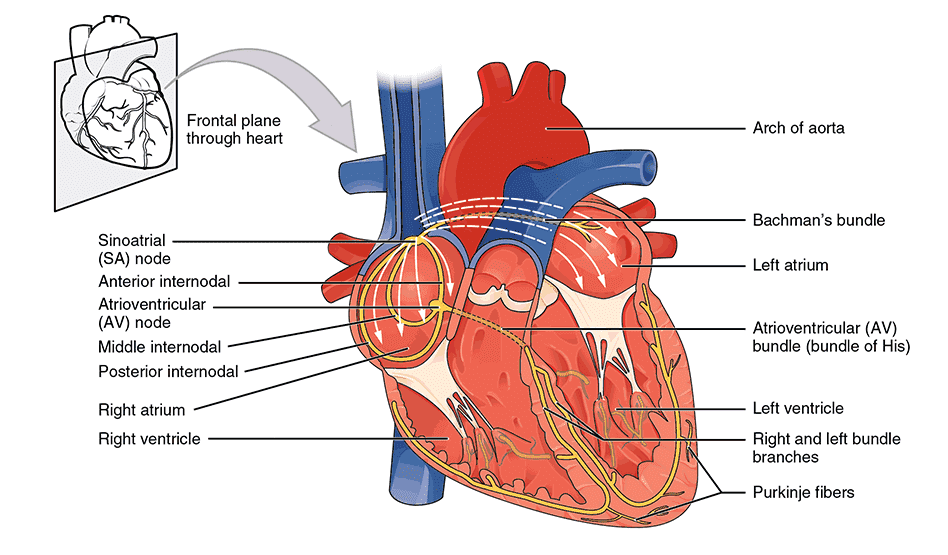
The human heart has myogenic properties, which means the heartbeat originates within the heart itself. The rhythmic contraction of the heart is initiated by a specialised tissue called the nodal tissue.
The nodal tissue includes:
- **Sinoatrial Node (SA Node): The SA node is present in the right atrial wall near the opening of the superior vena cava. It generates electrical impulses and initiates the heartbeat. Therefore, it is called the natural pacemaker of the heart. The impulses generated by the SA node spread through the atria and cause atrial contraction.
- **Atrioventricular Node (AV Node): The impulses then reach the AV node located in the lower part of the right atrium near the interatrial septum. The AV node passes the impulses to the Bundle of His.
- **Bundle of His and Purkinje Fibres: The Bundle of His divides into right and left bundle branches that further form Purkinje fibres in the ventricular walls. These fibres conduct impulses rapidly and cause ventricular contraction. Thus, the conduction system coordinates the heartbeat.
Neural Regulation of Cardiac Activity
The cardiac activity is regulated by the autonomic nervous system through sympathetic and parasympathetic nerves. The cardiac centre that regulates heart activity is present in the medulla oblongata of the brain.
Sympathetic Nervous System
- The sympathetic nervous system stimulates the heart during conditions that require increased blood supply, such as exercise, fear, anxiety, stress, excitement, and emergencies.
- Sympathetic nerve fibres release the neurotransmitter noradrenaline (norepinephrine) at the cardiac muscles and pacemaker regions of the heart.
- The action of sympathetic stimulation results in increase in heart rate, increase in force of contraction of cardiac muscles, increase in cardiac output, and faster conduction of cardiac impulses
- As a result, the heart pumps blood more rapidly and forcefully, thereby increasing the supply of oxygen and nutrients to the tissues.
Parasympathetic Nervous System
- The parasympathetic nervous system mainly acts through the vagus nerve, which extends from the brain to the heart. The vagus nerve releases the neurotransmitter acetylcholine.
- Parasympathetic stimulation produces effects opposite to sympathetic stimulation and results in decrease in heart rate , decrease in force of cardiac contraction, and slowing of cardiac impulse conduction.
- Thus, the parasympathetic nervous system helps maintain the normal resting heart rate and conserves energy during resting conditions.
Hormonal Regulation of Cardiac Activity
Certain hormones also regulate cardiac activity.
Adrenaline and Noradrenaline
- During stress, fear, excitement, or emergency conditions, the adrenal medulla secretes the hormones adrenaline (epinephrine) and noradrenaline (norepinephrine) into the bloodstream.
- These hormones act directly on the heart and produce effects similar to sympathetic stimulation increase heart rate, force of contraction, cardiac output, and blood pressure
- This hormonal response prepares the body for rapid action and is commonly called the “fight or flight response.”
Role of Ions in Cardiac Regulation
Certain ions present in body fluids are extremely important for maintaining normal cardiac activity and proper contraction of heart muscles.
- **Calcium Ions (Ca²⁺): Calcium ions play an important role in muscle contraction, including cardiac muscle contraction. Increased calcium ion concentration strengthens the force of contraction of the heart muscles and improves cardiac activity.
- **Potassium Ions (K⁺): Potassium ions are essential for maintaining the electrical activity of the heart. However, excess potassium ions can reduce heart rate and weaken cardiac contractions. Very high potassium levels may even disturb the normal rhythm of the heart.
Importance of Regulation of Cardiac Activity
The regulation of cardiac activity is essential for maintaining normal physiological functioning of the body.
- It maintains proper blood circulation throughout the body.
- It ensures the supply of oxygen and nutrients to tissues and organs.
- It helps remove carbon dioxide and metabolic wastes from tissues.
- It maintains normal blood pressure.
- It adjusts heart activity according to the body’s requirements during rest, exercise, and stress.
- It helps maintain homeostasis and proper functioning of all organ systems.