Carbohydrates (original) (raw)
Last Updated : 29 May, 2026
Carbohydrates are organic compounds that serve as the primary source of energy for living organisms. They are composed of carbon, hydrogen, and oxygen and are produced mainly by green plants during photosynthesis. Carbohydrates are essential for various body functions, including energy production, metabolism, growth, and maintenance of cellular activities.
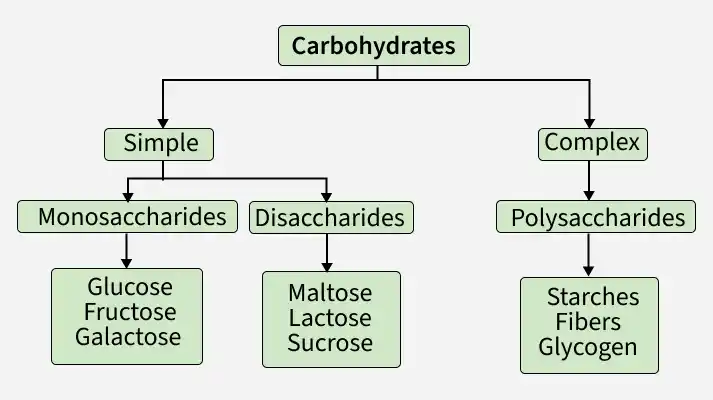
Characteristics of Carbohydrates
Carbohydrates possess several important characteristics that make them biologically significant.
- They are composed of carbon, hydrogen, and oxygen atoms.
- They serve as the main source of energy in living organisms.
- Most carbohydrates are synthesised by green plants through photosynthesis.
- They may exist as simple sugars or complex polysaccharides.
- They are soluble or insoluble in water depending on their structure.
- They are involved in energy storage and structural functions.
- They are essential components of cellular metabolism.
Classification of Carbohydrates
Carbohydrates are mainly classified into three major groups based on the number of sugar units present in their molecules.
1. Monosaccharides
Monosaccharides are the simplest form of carbohydrates and cannot be hydrolysed into smaller carbohydrate units. They are commonly known as simple sugars. Monosaccharides contain a single sugar molecule and are readily absorbed by the body.
- These carbohydrates are classified according to the number of carbon atoms present and the type of functional group they contain.
- Depending on the functional group, monosaccharides may be aldoses containing an aldehyde group or ketoses containing a ketone group.
- They are the simplest carbohydrates.
- They are sweet in taste and soluble in water.
- They act as building blocks for complex carbohydrates.
- They provide quick energy to cells.
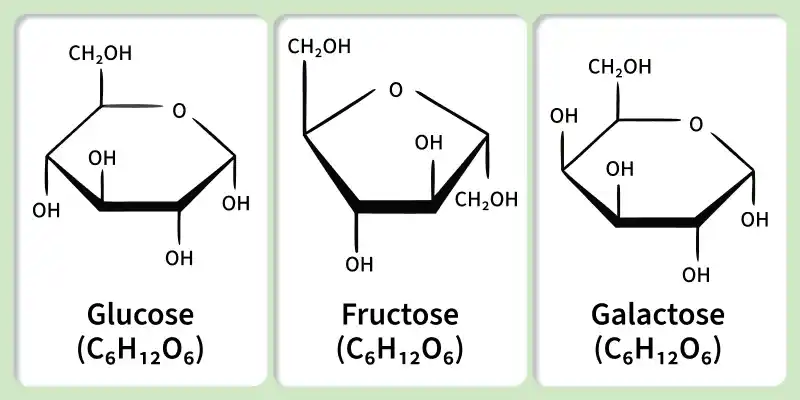
Examples of Monosaccharides
- Glucose
- Fructose
- Galactose
- Ribose
- Ribulose
Glucose is the most important monosaccharide because it serves as the main source of energy in living cells. Fructose is commonly found in fruits and honey, while galactose occurs in milk sugar.
2. Disaccharides
Disaccharides are carbohydrates formed by the combination of two monosaccharide molecules through a glycosidic bond. During their formation, one molecule of water is removed in a condensation reaction.
- Disaccharides can be hydrolysed into two monosaccharide units by enzymes or acids.
- They consist of two sugar molecules.
- They are soluble in water and generally sweet in taste.
- They provide energy after digestion into monosaccharides.

Examples of Disaccharides
- Sucrose = Glucose + Fructose
- Lactose = Glucose + Galactose
- Maltose = Glucose + Glucose
Sucrose is commonly known as table sugar and is obtained from sugarcane and sugar beet. Lactose is present in milk, while maltose is produced during starch digestion.
3. Polysaccharides
Polysaccharides are complex carbohydrates formed by the linkage of many monosaccharide molecules through glycosidic bonds. They are usually insoluble in water and are not sweet in taste.
- Polysaccharides mainly function as storage materials or structural components in living organisms.
- They are made up of long chains of monosaccharides.
- They are complex carbohydrates.
- They are usually insoluble in water.
- They serve as storage and structural substances.
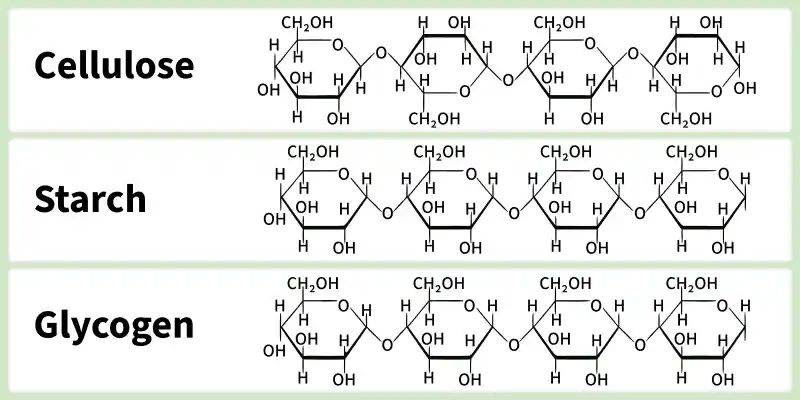
Examples of Polysaccharides
- Starch
- Glycogen
- Cellulose
- Chitin
Starch is the storage carbohydrate in plants, while glycogen is the storage carbohydrate in animals. Cellulose forms the cell wall of plants and provides structural strength.
Sources of Carbohydrates
Carbohydrates are obtained from both plant and animal sources.
- Plants are the major source of carbohydrates because they produce carbohydrates through photosynthesis.
- Grains such as wheat, rice, oats, maize, barley, and millet are rich sources of starch.
- Fruits such as bananas, apples, mangoes, grapes, oranges, and berries contain natural sugars like fructose and glucose.
- Vegetables such as potatoes, sweet potatoes, carrots, corn, peas, and beetroot contain starch and dietary fibre.
- Beans, peas, chickpeas, lentils, and soybeans are rich in carbohydrates as well as proteins.
- Sugarcane and sugar beet are important commercial sources of sucrose
- Milk and dairy products contain lactose, which is also called milk sugar.
- Honey contains glucose and fructose and provides quick energy.
- Animals store carbohydrates in the form of glycogen in the liver and muscles.
Functions of Carbohydrates
Carbohydrates perform several important functions in living organisms.
- Carbohydrates serve as the primary source of energy for the body. Glucose released during digestion is oxidised to produce ATP required for cellular activities.
- Plants store excess carbohydrates in the form of starch, while animals store them as glycogen.
- Cellulose forms the structural framework of plant cell walls, while chitin forms the exoskeleton of arthropods.
- Carbohydrates prevent the breakdown of proteins for energy and allow proteins to perform growth and repair functions.
- Carbohydrates help in the proper metabolism of fats and prevent the formation of ketone bodies.
- Dietary fibres improve digestion, prevent constipation, and maintain intestinal health.
- Carbohydrates are involved in cell recognition, communication, and the formation of important biomolecules.