Biotechnology and Its Principle (original) (raw)
Last Updated : 18 Dec, 2025
Biotechnology can be outlined as the vast area of biology that uses technology and the understanding of living organisms and their building blocks to develop, enhance, and produce applicable products for human well-being. Karoly Ereky was known as the Father of Biotechnology. Biotechnology results in the production of beneficial products that are altered according to the requirements of an individual.
The biotechnology field is further divided into different categories:
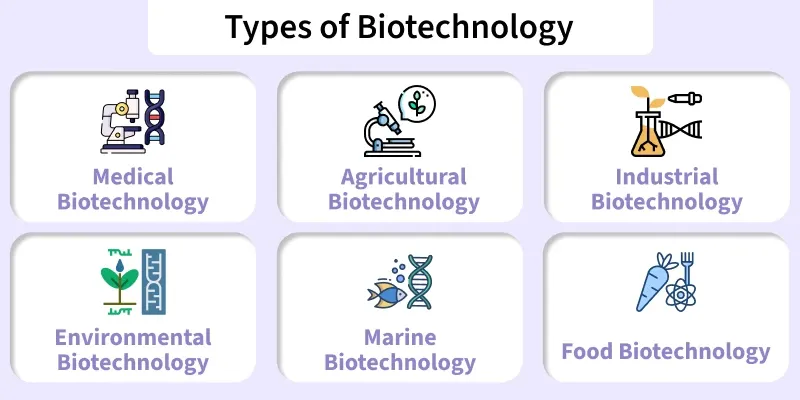
- **Medical Biotechnology: This field includes the development of medicines, vaccines, diagnostic tools and gene therapies.
- **Agricultural Biotechnology: This field deals with the development of pest-resistant crops using genetically modified organisms.
- **Environmental Biotechnology: This involves using microorganisms for treating pollution and developing sustainable practices.
- **Industrial Biotechnology: In this field, microorganisms and enzymes are utilised for the development of industrial products such as biofuels.
- **Bioinformatics: This involves utilising the biological data and converting it for analysing genomes and understanding the central dogma of biology.
- **Food Biotechnology: This covers the use of enzymes in food processing, the creation of food additives, and the genetic engineering of crops.
Principles of Biotechnology
Biotechnology encompasses a wide range of fields. The major principles are listed below:
- **Genetic Engineering: This part involves the manipulation of the gene to its base level, to produce artificially enhanced organisms. This further includes DNA cloning and Recombinant DNA technology. DNA cloning results in the production of multiple copies of a particular DNA, and recombinant DNA technology involves the removal or insertion of small gene/DNA parts to produce a different gene expression.
- **Chemical Engineering: In this, a large number of Microbes are produced under sterile conditions, which are further utilised to produce modified antibiotics, medicines, and vaccines. Biotechnology helps us in the development of quantitative and qualitative products.
Genetic Engineering and Its Process
DNA cloning and recombination are two major techniques that come under genetic engineering. They have been explained as follows:
DNA Cloning
DNA cloning helps in the production of multiple copies of the target DNA. It utilises the vector, which is a piece of the DNA that can replicate itself. The DNA to be replicated is inserted into the vector, which then replicates to produce multiple copies of the DNA.
.png)
A suitable vector should possess the following properties:
- It should be small in size, but can carry a large piece of DNA.
- It should possess an Origin of Replication, which allows it to replicate autonomously.
- It should have a restriction site, and multiple cloning sites should be available.
Recombinant DNA Technology
Another name for genetic engineering is Recombinant DNA technology. This process allows the joining of two DNA molecules from two different organisms using enzymes. The following are the steps required for recombining DNA:

Features of Recombinant DNA are given below:
- Recombinant DNA is a piece of DNA that is made by the combination of at least two genes from two different sources.
- Recombinant DNA is possible because the DNA of all organisms share the same chemical structure but different nucleotide sequences within the overall identical structure.
- Recombinant DNA is also known as chimeric DNA, as this DNA can be formed by different species of organisms, like mythical chimers.
Applications of Biotechnology Principles
Biotechnology can be employed in multiple fields, which are given below:
**Agriculture
- When Biotechnology was combined with agriculture, it resulted in the great Green Revolution.
- Crops that are resistant to diseases are called GM crops or Genetically Modified Crops.
- Tissue culture has been used to produce large copies of plants from only a piece of tissue.
- Chemical fertilisers were largely substituted with biofertilisers such as Rhizobium.
**Medicine
- Recombinant DNA technology has led to the production of therapeutic drugs.
- These are targeted drugs that work only for a specific receptor.
- E.g. Vaccines for diseases such as COVID-19, Hepatitis B and Hepatitis C are produced using recombinant DNA technology.
- Diseases such as SCID can be treated using gene therapy, in which a healthy gene is inserted into the host to correct the defective gene.
Industry
- Biofuel is produced from renewable sources such as corn and algae.
- These help in reducing greenhouse emissions.
- Bioremediation is the use of microorganisms to clean up pollution. The food industry also uses biotechnology to make wine, bread using the fermentation technique.
**Environmental Conservation
- Biotechnology offers solutions like bioremediation, using microorganisms to clean up pollutants in soil and water.
- Synthetic biology advancements lead to bio-based materials and sustainable production methods, contributing to a circular economy.