Time Management (original) (raw)
Last Updated : 12 Jan, 2026
Time Management is the process of planning and organizing how to use time effectively to achieve maximum productivity. It includes organizing, planning, and scheduling tasks based on priorities, goals, and individual abilities.
Good time management helps people deliver quality work, meet deadlines, avoid procrastination, and maintain a healthy work-life balance. It also increases efficiency, reduces stress, and supports personal and professional success.
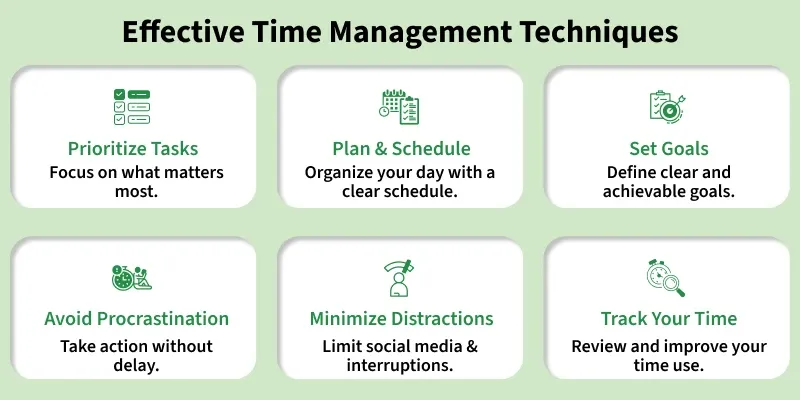
Key Techniques for Effective Time Management
Effective time management is achieved by following certain practical techniques that help in organising tasks and using time productively.
**1. Prioritisation of Tasks
Prioritisation means arranging tasks according to their importance and urgency. Important and urgent tasks should be completed first, followed by important but less urgent work. This technique ensures that critical activities are not delayed and time is not wasted on less meaningful tasks.
**2. Planning and Scheduling
Planning involves preparing a clear plan of activities to be completed within a specific time period. Scheduling through daily or weekly timetables helps in allocating fixed time slots to each task. A well prepared schedule provides direction, reduces confusion and improves efficiency.
**3. Goal Setting
Setting clear and realistic goals is an essential time management technique. Goals give purpose to activities and motivate individuals to complete tasks on time. Breaking large goals into smaller achievable steps makes work more manageable and reduces pressure.
**4. Avoiding Procrastination
Procrastination is the habit of delaying tasks unnecessarily. Avoiding procrastination requires self discipline and commitment to start work on time. Completing tasks as scheduled prevents last minute stress and improves the quality of work.
**5. Managing Distractions
Distractions such as excessive use of mobile phones, social media and unnecessary interruptions waste valuable time. Managing distractions by creating a focused work environment helps in better concentration and faster task completion.
**6. Time Monitoring and Review
Regularly reviewing how time is spent helps in identifying areas of improvement. Time monitoring allows individuals to eliminate unproductive activities and make better use of available time in the future.
Importance of Time Management
**Enhanced Productivity
Effective time management permits individuals to concentrate on essential tasks, avoiding being overwhelmed by less critical ones. Clear priorities and optimal time allocation lead to heightened productivity, allowing individuals to achieve more in the same time frame, resulting in a greater sense of accomplishment. This enhanced productivity boosts individual performance and leads to complete team success in professional settings.
**Reduced Stress Levels
A significant advantage of time management is stress reduction. Efficiently managed time empowers individuals to feel more in control of their daily activities, eliminating the constant burden of being overwhelmed. This contributes to a healthier work-life balance by reducing stress levels and enhancing creativity and problem-solving capabilities. As a result, individuals experience a more positive and fulfilling work environment.
**Improved Decision-Making
Time Management plays a crucial role in enhancing decision-making skills. Allocating time for reflection and critical thinking enables individuals to make well-informed choices. Effective time management provides the space to assess various options, leading to more thoughtful and successful decisions. Improved decision-making not only impacts individual outcomes but also positively influences the overall success of projects and initiatives.
**Increased Opportunities
Efficient time management creates avenues for new opportunities. By judiciously managing their time, individuals can allocate resources to learn new skills, explore personal hobbies, or pursue further education. This diversification fosters personal growth, expands networks, and opens doors to increased opportunities for career advancement. Embracing these opportunities not only enriches individual experiences but also contributes to a more dynamic and adaptable professional profile.
**Better Work-Life Balance
Time Management contributes to achieving a healthy work-life balance. Allocating time for both professional and personal commitments minimizes the risk of burnout, ensuring overall well-being. This approach prevents neglect of any life aspect, fostering stronger relationships, improved health, and heightened job satisfaction.
Benefits of Time Management
**Stress Reduction
Efficient time management boosts stress associated with overwhelming workloads and missed deadlines. By organizing tasks, individuals can approach responsibilities with a clear plan, reducing stress levels. This not only positively impacts mental health but also enhances the ability to cope with challenges.
**Productivity Boost
Prioritizing tasks and allocating time wisely result in increased productivity. This structured approach will permit individuals to accomplish more within a given timeframe, enhancing overall efficiency. As productivity increases, individuals experience a greater sense of achievement and fulfillment in their professional and personal lives.
**Positive Reputation and Work-Life Balance
Meeting deadlines and demonstrating reliability fosters a positive reputation among colleagues and superiors. Simultaneously, balancing work and personal life ensures more energy for relaxation and recreation. A positive reputation contributes to a healthy work environment, fostering positive relationships and opportunities for growth.
**Work-Life Integration and Time Awareness
Allocating time for work-related tasks while preserving personal pursuits improves overall well-being. Enhanced time awareness encourages conscious choices and prioritization and eliminates procrastination. Individuals become more attuned to their time usage, enabling them to make informed decisions about how to allocate their resources effectively.
**Goal Achievement and Improved Health
Time Management facilitates the accomplishment of short-term and long-term goals. Allocating time for exercise, relaxation, and self-care activities promotes physical and mental health, contributing to an individual's holistic well-being. Achieving goals, both personal and professional, instills a sense of purpose and satisfaction, positively impacting mental health and overall life satisfaction.