Management Audit (original) (raw)
Last Updated : 30 May, 2026
A management audit is a comprehensive evaluation of an organization’s managerial policies, actions, and procedures to assess how effectively and efficiently management performs its responsibilities. Unlike a simple compliance check, it examines how managers utilize resources, implement company strategies, and maintain legal and ethical standards while identifying strengths and weaknesses in the management system. The primary objective of a management audit is to improve organizational performance by detecting areas that require better resource allocation, updated policies, enhanced decision-making, or additional managerial training and support. When properly conducted, it promotes greater transparency, accountability, operational efficiency, and overall effectiveness within the organization’s management structure.
Objectives of Management Audit
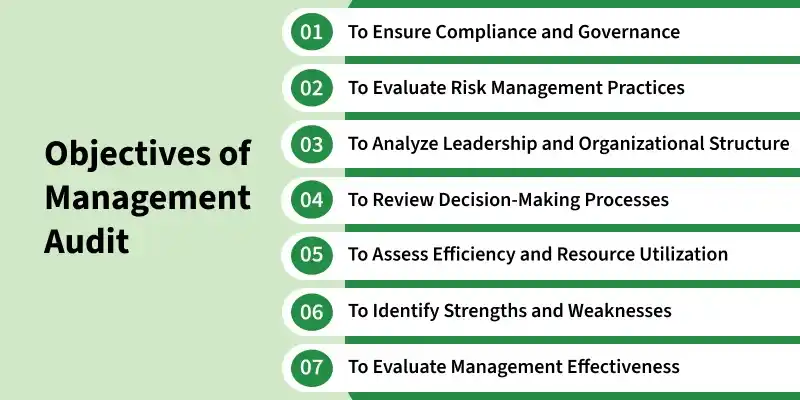
**To Evaluate Management Effectiveness: One of the primary objectives of a management audit is to assess how effectively management performs its key functions such as planning, organising, directing, and controlling. It examines whether managerial actions and strategies are helping the organisation achieve its goals in an efficient and systematic manner. This evaluation helps determine the overall quality of management performance
**To Identify Strengths and Weaknesses: A management audit aims to identify the strong areas of management that contribute positively to organisational success, as well as the weak areas that hinder performance. Recognising strengths allows the organisation to build upon them, while identifying weaknesses helps management take corrective measures for improvement
**To Assess Efficiency and Resource Utilisation: Another important objective is to evaluate how efficiently the organisation uses its resources, including financial, human and physical resources. The audit analyses whether resources are being utilised optimally or wasted due to poor planning or control. This helps in improving productivity and reducing unnecessary costs.
**To Review Decision Making Processes: The audit reviews the decision making processes followed by management to assess their effectiveness and relevance. It examines whether decisions are timely, logical and aligned with organisational objectives. This ensures that managerial decisions support both short term performance and long term goals.
**To Analyse Leadership and Organisational Structure: Management audits assess the leadership style and organisational structure to determine whether they promote effective communication, coordination and accountability. A suitable leadership approach and well defined structure contribute to smoother operations and better employee performance.
**To Evaluate Risk Management Practices: The audit evaluates how well the organisation identifies, assesses and manages various risks. It reviews the adequacy of risk management systems and controls in place. Effective risk management helps in minimising uncertainties and protecting organisational interests.
**To Ensure Compliance and Good Governance: Management audits also aim to ensure that the organisation complies with legal requirements, regulatory standards and internal governance policies. This helps in identifying gaps in compliance and strengthening transparency, accountability and ethical practices within the organisation.
Features of Management Audit
Some of the features of a Management Audit include:
**Comprehensive Evaluation: Management audit involves an overall review of managerial functions, policies and practices. It examines different areas of management to provide a complete picture of how the organisation is being managed.
**Objective and Impartial Analysis: The audit is conducted in an unbiased manner without any personal influence. This objectivity ensures that the findings and recommendations are fair and reliable.
**Systematic and Structured Approach: Management audit follows a planned and organised procedure for collecting and analysing information. This systematic approach improves the accuracy and effectiveness of the audit.
**Focus on Effectiveness and Efficiency: A management audit evaluates how well management achieves organisational objectives while using resources efficiently. It helps in improving productivity and performance.
**Identification of Strengths and Weaknesses: The audit highlights areas where management performs well and areas where improvement is required. This helps in strengthening strong areas and correcting weak ones.
Uses of Management Audit
Management Audit serves various useful purposes for organisations. Some of the key uses of management audits are:
**Performance Evaluation: Management audit helps in assessing the overall performance of management and its key functions. It provides an objective basis for improvement.
**Identification of Inefficiencies: The audit identifies inefficiencies in management processes and resource utilisation. This helps in reducing wastage and improving efficiency.
**Improvement in Decision Making: By reviewing decision making practices, management audit helps improve the quality and timeliness of decisions taken by managers.
**Risk Assessment and Control: Management audit evaluates potential risks in management systems and practices. It helps in strengthening controls to minimise future risks.
**Support in Strategic Planning: The results of a management audit support better strategic planning by aligning future plans with managerial capabilities and organisational goals.