Types of Audit (original) (raw)
Last Updated : 10 Nov, 2025
Auditing is the process of examining and verifying the financial statements, records, and operations of an organization to ensure their accuracy, reliability, and compliance with laws and accounting standards.
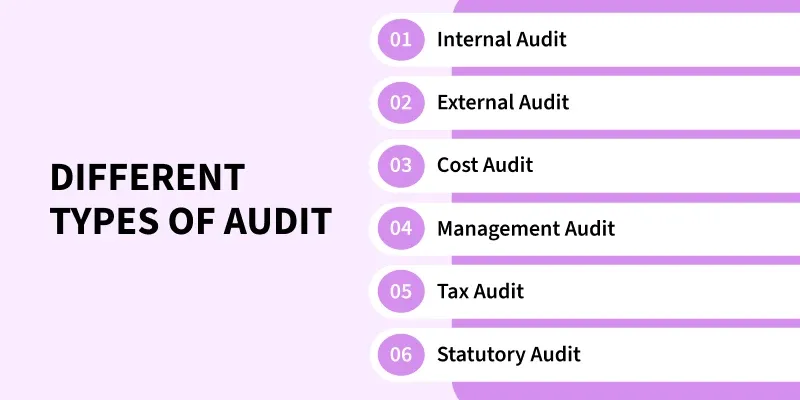
Audits can be classified into different types based on their objectives, scope, and areas of focus. Each type of audit serves a unique purpose and helps organizations maintain accuracy, transparency, and accountability in their operations.
Internal Audit
Internal audit is an independent appraisal activity conducted within an organization to evaluate and improve the effectiveness of risk management, control, and governance processes.
It ensures that all departments and functions operate according to policies and procedures, helping management identify weaknesses before they turn into major issues. Unlike statutory audits, internal audits are performed by employees of the organization or hired professionals, and their primary focus is on improving internal efficiency and compliance rather than expressing an opinion on financial statements.
Features of Internal Audit
- **Continuous Process: Internal audit is not conducted once a year. It is a continuous process carried out throughout the financial year. Regular reviews help in the early detection of errors, fraud, or inefficiencies.
- **Conducted by Internal Staff: It is usually performed by the organization’s own employees or internal audit department. However, some companies also engage independent professionals to maintain objectivity.
- **Evaluates Internal Controls: A key objective of internal audit is to examine whether internal controls, policies, and procedures are adequate and effectively implemented. Any weaknesses identified are reported to management for corrective action.
- **Advisory Nature: Internal audit is advisory rather than compulsory. It helps management improve processes, safeguard assets, and achieve organizational objectives through better control and efficiency.
- **Covers All Areas of Operations: It does not remain limited to financial records alone. Internal audit extends to production, sales, procurement, human resources, and other areas to ensure the organization functions smoothly.
- **Helps Prevent Fraud and Mismanagement: Through continuous monitoring and verification of transactions, the internal audit helps reduce the chances of fraud, errors, and misuse of resources.
- **Flexible Scope: The scope of the internal audit depends on the management’s requirements. It can be extended or restricted according to the size, nature, and complexity of the business.
External Audit
An external audit is an independent examination of an organization’s financial statements by qualified auditors who are not part of the company’s internal structure. The purpose of this audit is to verify whether the financial statements present a true and fair view of the company’s financial position and performance. It enhances the reliability and credibility of financial information provided to shareholders, investors, creditors, and regulatory authorities. Since external auditors work independently, their opinion is considered objective and trustworthy.
Features of External Audit
- **Independent Examination: An External audit is conducted by professionals who are completely independent of the organization. This ensures that the audit opinion is unbiased and based purely on evidence and accounting standards.
- **Mandatory for Certain Entities: For companies registered under the Companies Act and other regulated organizations, external audits are compulsory. They help maintain transparency and compliance with statutory requirements.
- **Focus on Financial Statements: The main objective of an external audit is to examine the accuracy and completeness of financial statements. It ensures that accounting records conform to generally accepted accounting principles and legal standards.
- **Expresses an Audit Opinion: After reviewing the financial statements, the external auditor issues an audit opinion stating whether they present a **true and fair view of the company’s financial position and performance.
- **Conducted Annually: After reviewing the financial statements, the external auditor issues an audit opinion stating whether they present a **true and fair view of the company’s financial position and performance.
Cost Audit
Cost audit refers to the detailed verification of cost accounts and cost records maintained by a company. It ensures that cost accounting principles, plans, and procedures are correctly applied in recording the cost of production, operations, and services. The primary goal of a cost audit is to check whether the cost of production has been correctly determined and whether resources are being used efficiently. It also helps management identify areas where cost reduction and better cost control are possible, leading to improved profitability.
**Features of Cost Audit
- **Verification of Cost Records: Cost audit involves the thorough examination of all cost-related records, such as material, labor, and overhead expenses. This verification ensures that every element of cost is accurately recorded and classified.
- **Ensures Accuracy of Costing Data: It confirms that cost information presented by the company is reliable and based on proper accounting procedures. Accurate costing data helps management in pricing, budgeting, and effective cost management.
- **Mandatory for Specific Industries: Under the Companies Act, a cost audit is compulsory for certain industries like manufacturing, cement, pharmaceuticals, and electricity.
- **Conducted by Cost Accountants: A cost audit is performed by a qualified and independent cost accountant. A cost accountant or cost auditor who is independent of the company. This ensures that the findings and recommendations are objective and unbiased.
- **Assists in Cost Control and Reduction: By analyzing the reasons behind rising costs and identifying inefficiencies, the cost audit helps management adopt effective cost control measures and enhance overall productivity.
Management Audit
Management audit is a systematic and comprehensive evaluation of the management’s efficiency, policies, and overall performance in achieving the organization’s objectives. Unlike financial or cost audits, a management audit focuses on the effectiveness of managerial decisions, organizational structure, and internal processes. Its main goal is to assess whether management resources are being used optimally to achieve growth and profitability. It acts as a tool for continuous improvement by highlighting areas where better planning, coordination, and control can enhance performance.
**Features of Management Audit
- **Evaluates Managerial Efficiency: Management audit examines how effectively managers perform their duties and utilize available resources. It measures the quality of leadership, communication, and decision-making within the organization.
- **Focuses on Policies and Procedures: This audit studies the existing policies, systems, and methods adopted by management to determine whether they are appropriate, up to date, and aligned with the organization’s goals.
- **Objective and Advisory in Nature: Unlike statutory audits, a management audit does not aim to detect fraud or verify accounts. Instead, it provides constructive suggestions to improve management efficiency and strategic planning.
- **Conducted by Independent Experts: Management audits are generally carried out by external professionals or consultants who specialize in organizational analysis. Their independence ensures an unbiased review and honest recommendations.
Tax Audit
Tax audit is an examination conducted to ensure that a business or professional entity complies with the provisions of the Income Tax Act. Its main objective is to verify that income, expenses, and deductions are accurately recorded and reported in the books of accounts. A tax audit ensures transparency and prevents tax evasion by confirming that all financial statements reflect a true and fair view of the taxpayer’s income. It also simplifies the process of tax assessment for both the taxpayer and the tax authorities.
**Features of Tax Audit
- **Conducted Under Section 44AB of the Income Tax Act: Tax audit is governed by Section 44AB of the Income Tax Act, 1961. It is mandatory for businesses and professionals whose turnover or gross receipts exceed the specified limit in a financial year.
- **Ensures Proper Maintenance of Books of Accounts: One of the main purposes of a tax audit is to verify whether the books of accounts are properly maintained as per tax regulations. It ensures that all transactions are accurately recorded and supported by evidence.
- **Checks for Tax Evasion and Irregularities: The audit helps detect cases of under-reporting or misreporting of income, false claims, or non-compliance with tax laws. It acts as a preventive measure against tax evasion and fraudulent practices.
- **Mandatory for Specific Turnover Thresholds: A tax audit becomes compulsory if a business exceeds the turnover limit of ₹1 crore or if a professional’s gross receipts exceed ₹50 lakh, although these limits can change with amendments in tax law.
Statutory Audit
**Statutory audit is a legally mandated examination of a company’s financial statements to ensure accuracy, fairness, and compliance with applicable laws and accounting standards. It is conducted by an independent auditor who verifies whether the financial statements reflect a true and fair view of the company’s financial position. The purpose of a statutory audit is not only to detect errors or fraud but also to build confidence among shareholders, investors, and regulatory bodies that the company’s accounts are maintained properly and in accordance with statutory requirements.
**Features of Statutory Audit
- **Mandatory by Law: A statutory audit is compulsory for companies registered under the Companies Act and for other entities specified by regulatory authorities. It ensures that organizations adhere to legal and financial reporting obligations.
- **Focuses on True and Fair View: The statutory auditor examines financial statements, supporting records, and internal controls to determine whether the company’s financial position and performance are presented fairly without material misstatements.
- **Annual Requirement: It is generally conducted once every financial year after the books of accounts are finalized. The auditor submits a detailed report to the shareholders or governing body of the organization.
- **Covers All Financial Aspects: Statutory audits include verification of assets, liabilities, income, expenditure, and disclosures. The auditor checks whether all transactions are properly authorized and recorded.
Government Audit
A government audit is an independent examination of the financial transactions, records, and operations of government departments, public sector undertakings, and other institutions that utilize public funds. The main objective of this audit is to ensure that money allocated from the public exchequer is used efficiently, economically, and for the intended purposes. It acts as a vital mechanism for accountability, ensuring that public officials and government agencies adhere to laws, financial regulations, and administrative procedures while managing public resources.
**Features of Government Audit
- **Conducted by the Comptroller and Auditor General (CAG): In India, the government audit is conducted by the Comptroller and Auditor General (CAG) of India. The CAG audits the accounts of the central and state governments and public sector enterprises to ensure transparency and accountability in the use of public funds.
- **Covers Both Financial and Performance Aspects: Government audit does not limit itself to financial scrutiny. It also includes performance audits to assess whether government programs and schemes have achieved their intended objectives effectively and efficiently.
- **Promotes Accountability and Transparency: By reporting audit findings to the legislature and the public, government audit holds officials accountable for their actions. It strengthens public confidence in the financial management of government institutions.
- **Helps in Policy Evaluation: Audit observations often highlight deficiencies in planning, execution, and monitoring of government programs. These insights assist policymakers in improving future schemes and ensuring better governance.