AWS Management Console (original) (raw)
Last Updated : 11 Jun, 2026
The AWS Management Console is a centralized platform designed for accessing and managing AWS cloud services. It offers a graphical user interface (GUI) that simplifies the management of various AWS resources, such as compute power (EC2), storage (S3), databases (RDS), and more.
Once you have created your AWS account, you can use the console to easily create, configure, monitor, and scale your AWS resources, all without the need to interact with complex command-line interfaces.
Accessing AWS Management Console
AWS provides several methods to access the AWS Management Console:
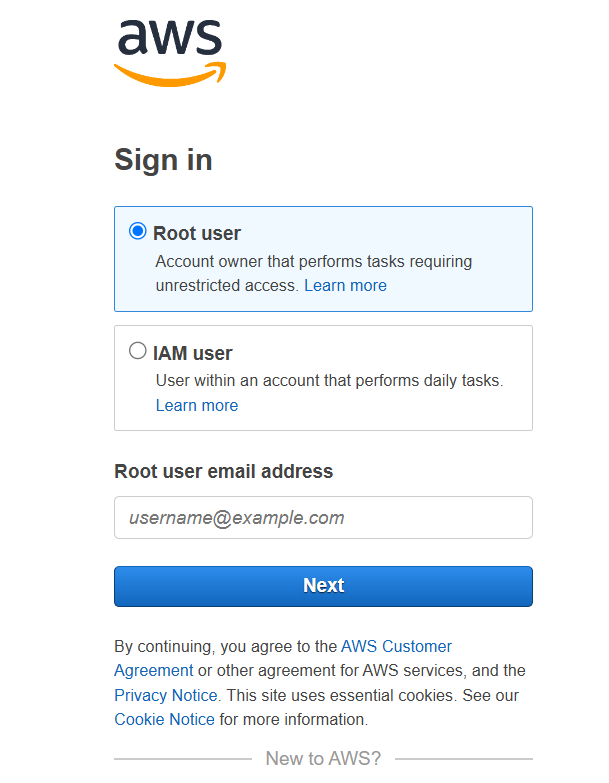
**Method 1: Sign in as the AWS account root user
This is the main account used when you first set up AWS.
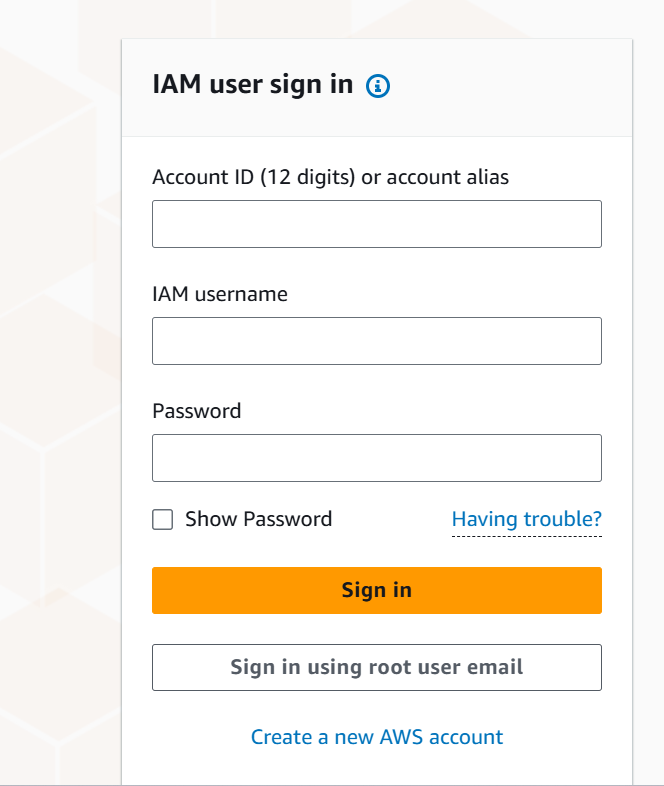
**Method 2: Sign in with an IAM user
An IAM (Identity and Access Management) user has specific permissions assigned by the account owner.
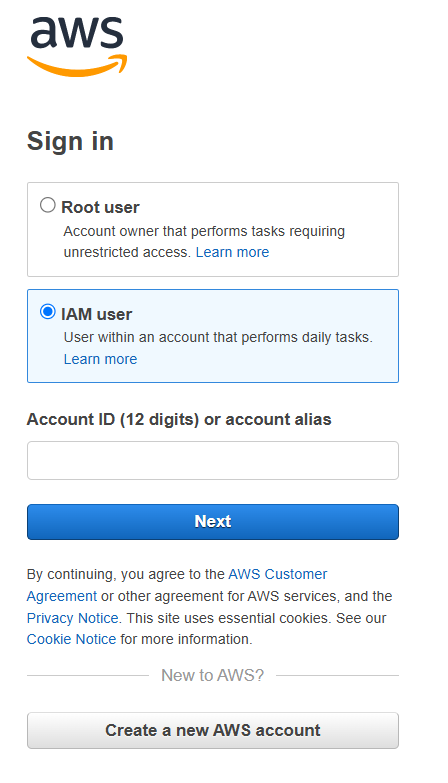
**Note: To Know more about how to login as IAM user Click here
**Method 3: Sign in as an IAM role
An IAM role is used based on your organization's settings to grant temporary access to specific services or resources.
To learn more about AWS IAM Role Click here
Overview and Navigation of AWS Management Console
Whether you are a beginner or have experience, the AWS Management Console provides an easy-to-use interface that helps you navigate AWS services and efficiently manage your cloud infrastructure.
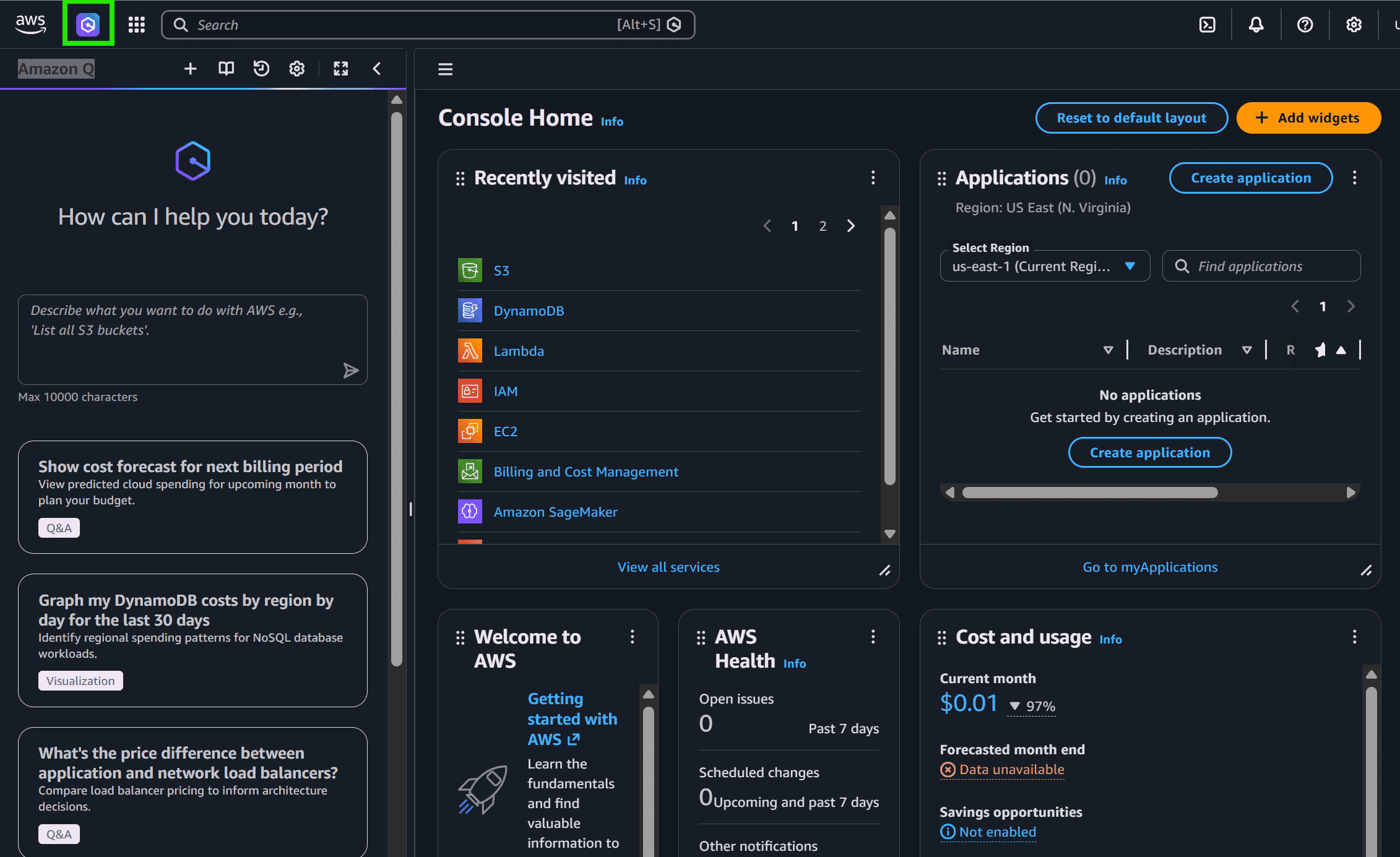
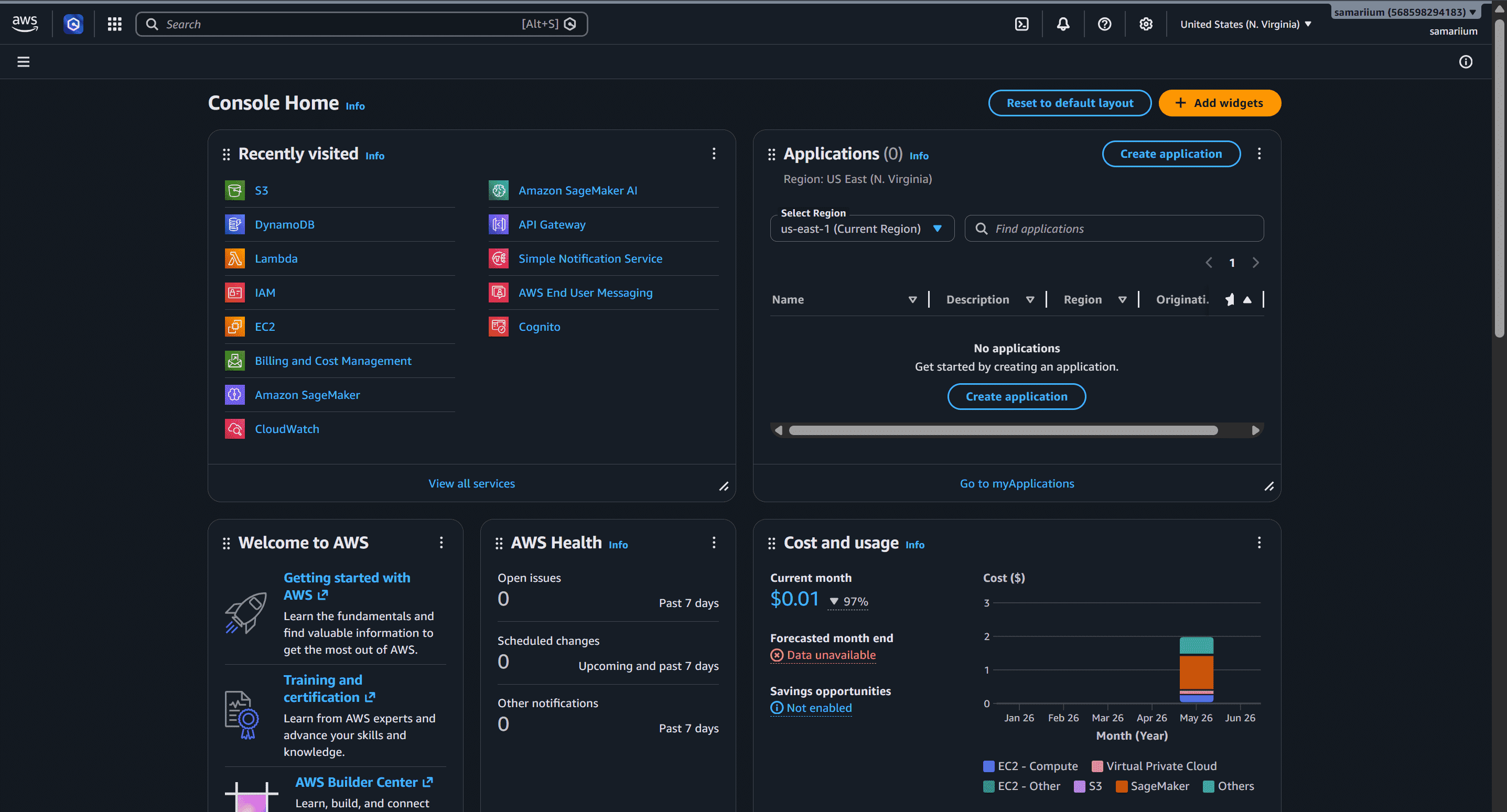
1. Console Home
- Once logged in, the first screen you will see is the Console Home.
- This page contains various components that allow you to manage your AWS services and resources.
- The layout of Console Home provides easy access to key areas for managing your cloud infrastructure.
2. Account Information
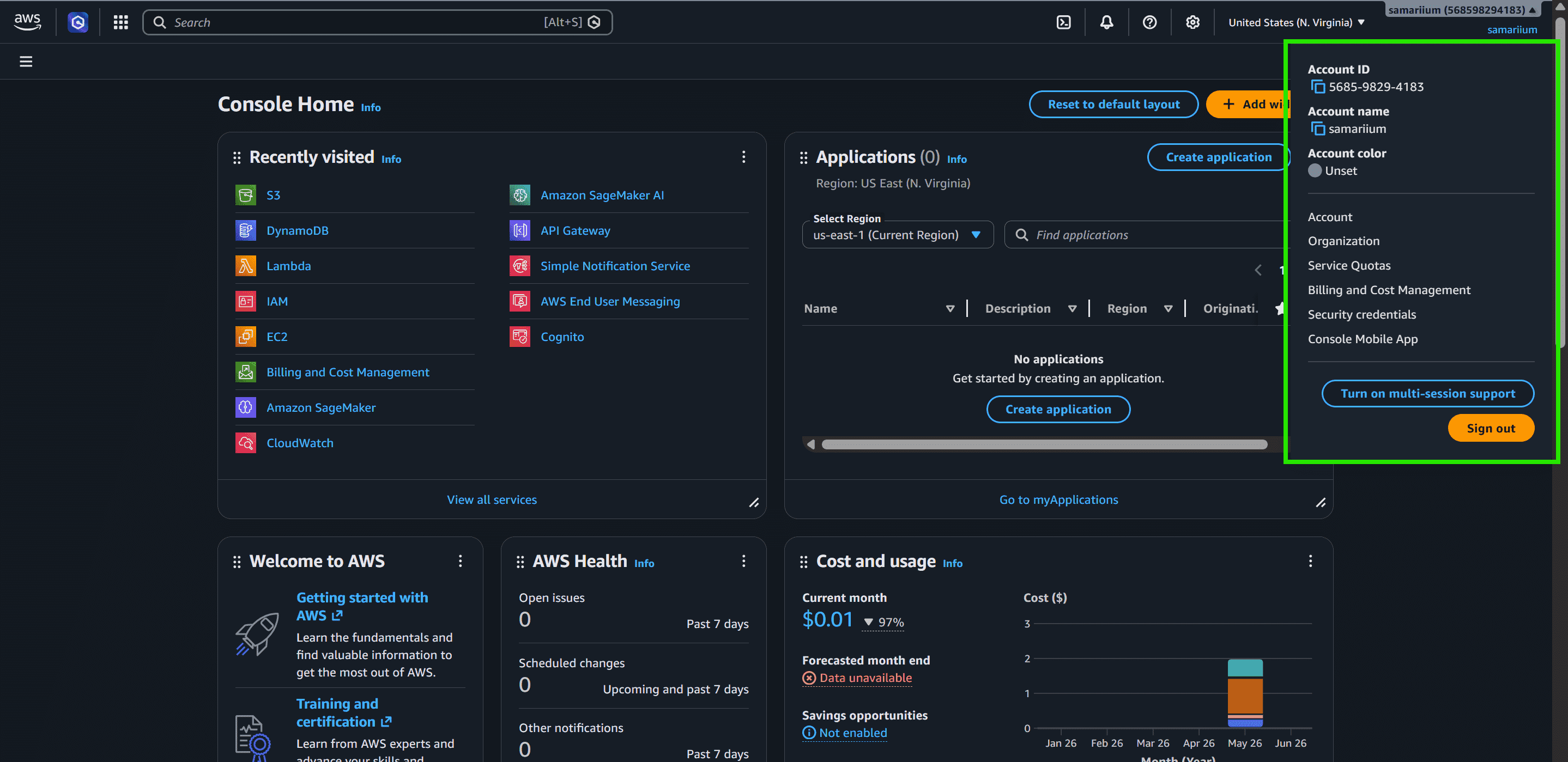
On top right corner there is option with username. Clicking on username gives various option related to AWS user account. User settings can be managed from these various options.
- **Account : Account option provides information about user account.
- **Organization: This option shows collection of multiple AWS accounts.
- **Service Quotas : This option shows maximum limits of services and resources in AWS account.
- **Billing and Cost management: Billing dashboard gives overview of billing for AWS account.
- **Security Credentials: This menu shows IAM menu where various security related stuff can be managed.
3. AWS Regions
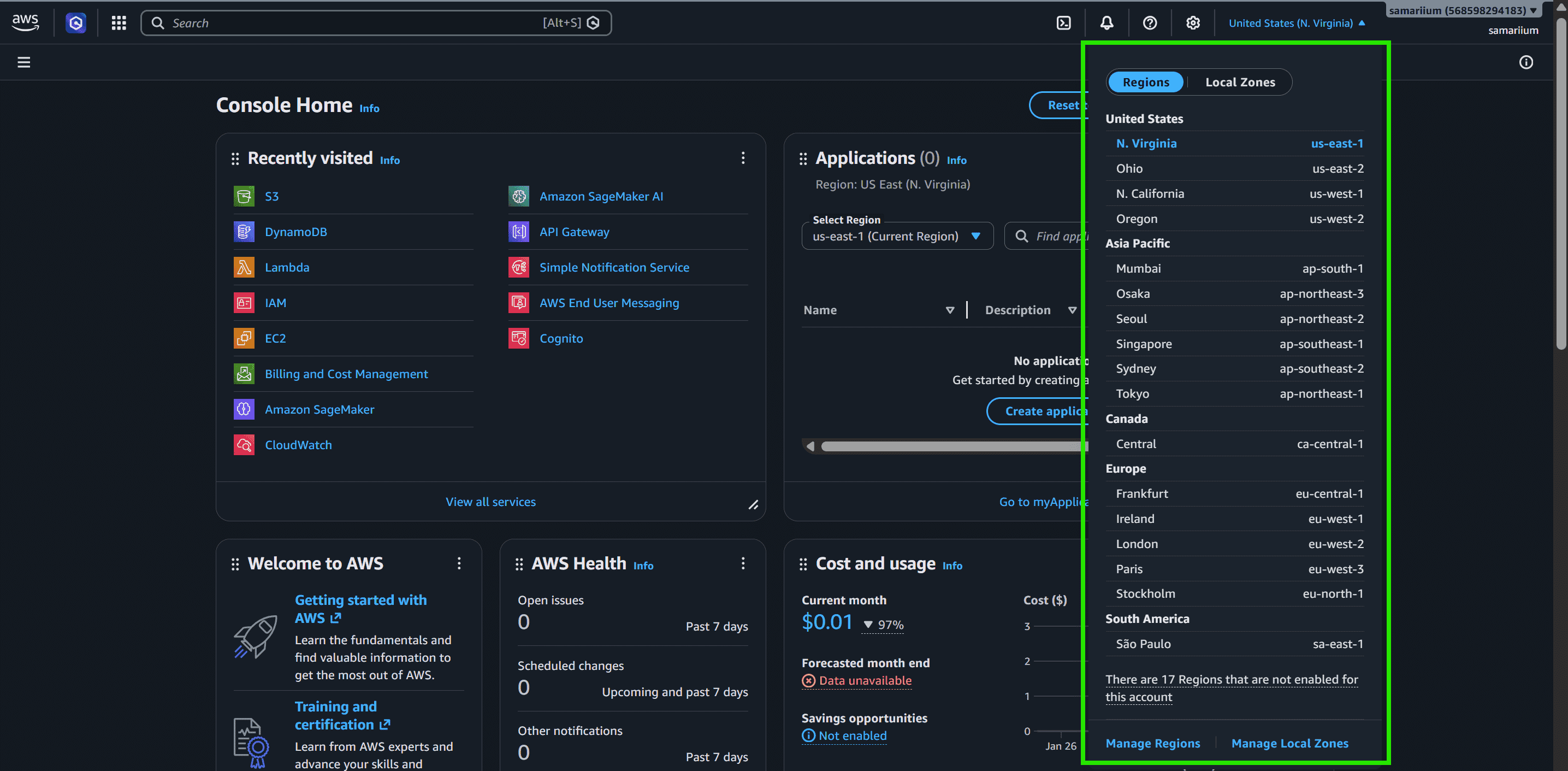
Next to the username, you’ll see the AWS Region indicator. Clicking it shows the current region and provides a list of all available AWS regions. You can select the region that best suits your needs for deploying resources.
4. AWS Settings
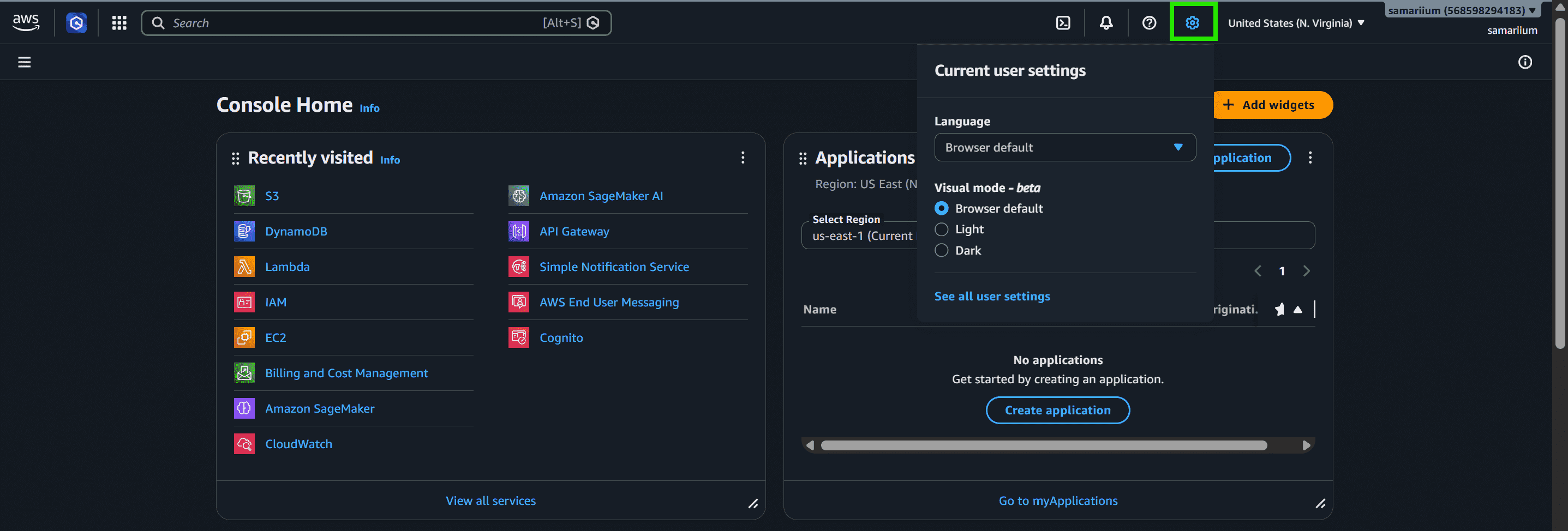
The small gear icon represents AWS Settings, where you can manage general settings for the AWS console:
- **Default Language: Select your preferred language.
- **Visual Appearance: Switch between different modes (e.g., dark mode or light mode).
- **More User Settings: Navigate to a full settings dashboard to manage all other console settings.
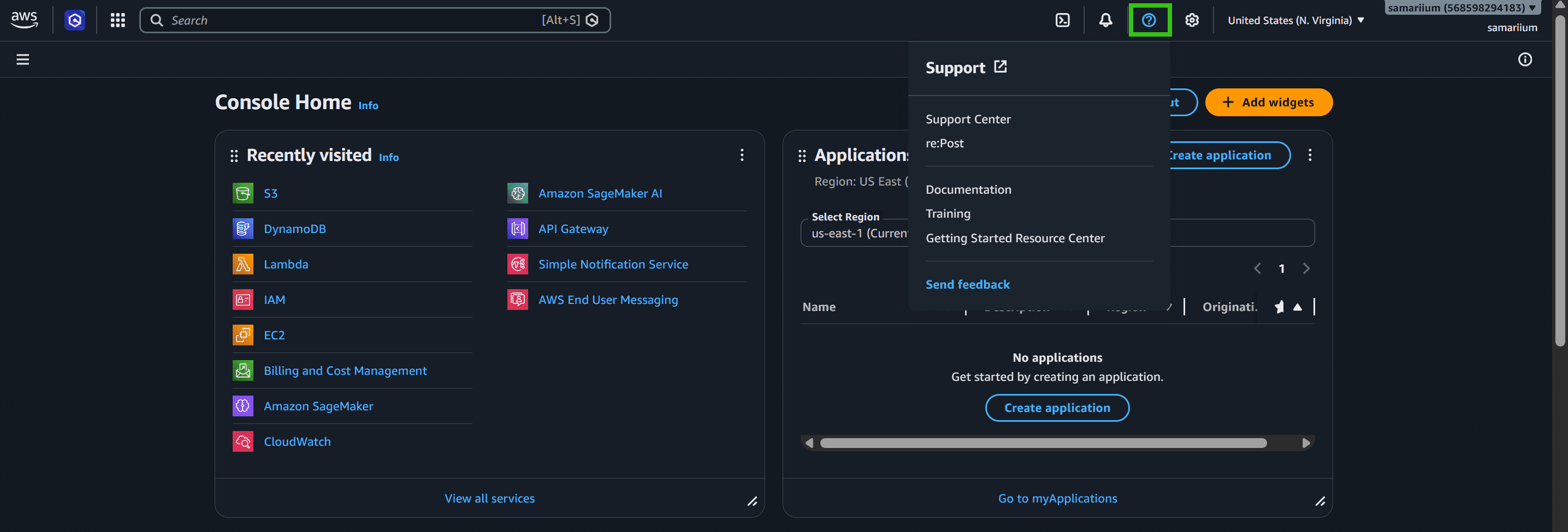
5. AWS Support
The support option shows all the support related menus. This option can be used in case of failure or issues with AWS service .
- **Support Center : This menu will take you to support dashboard where you can find support related services.
- **Expert Help : This will connect you to the any AWS expert available.
- **re:Post : this option provides access to AWS documentation and resources.
Various documentation and other related links are also present in support.
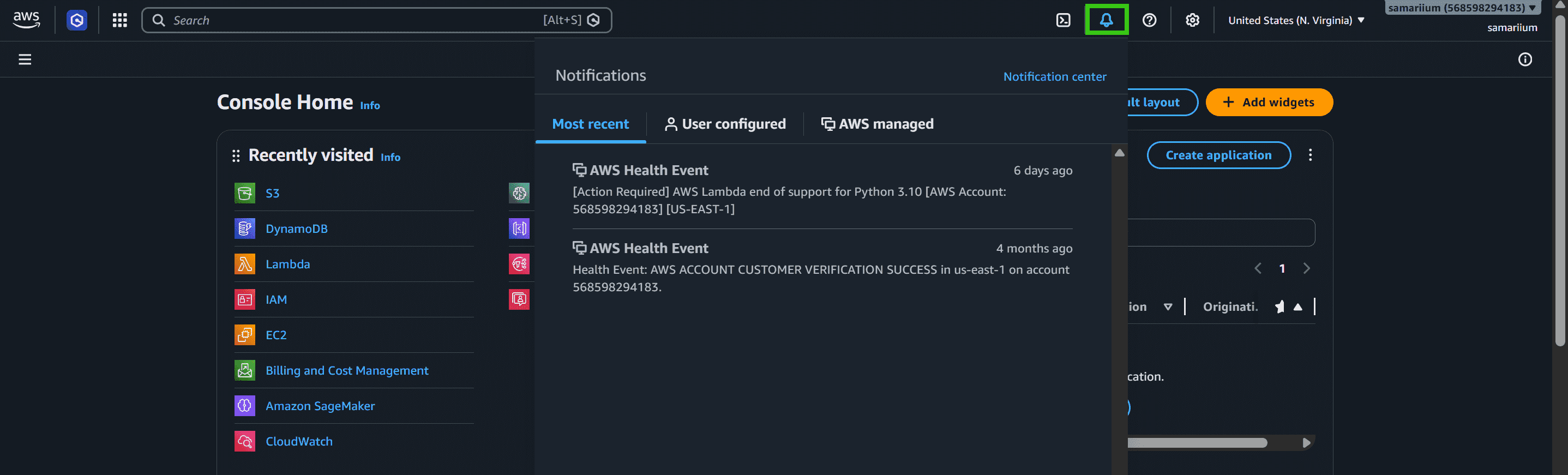
6. AWS Notifications
The bell icon provides AWS Notifications, displaying alerts related to your AWS services, including any health events that may affect your resources.
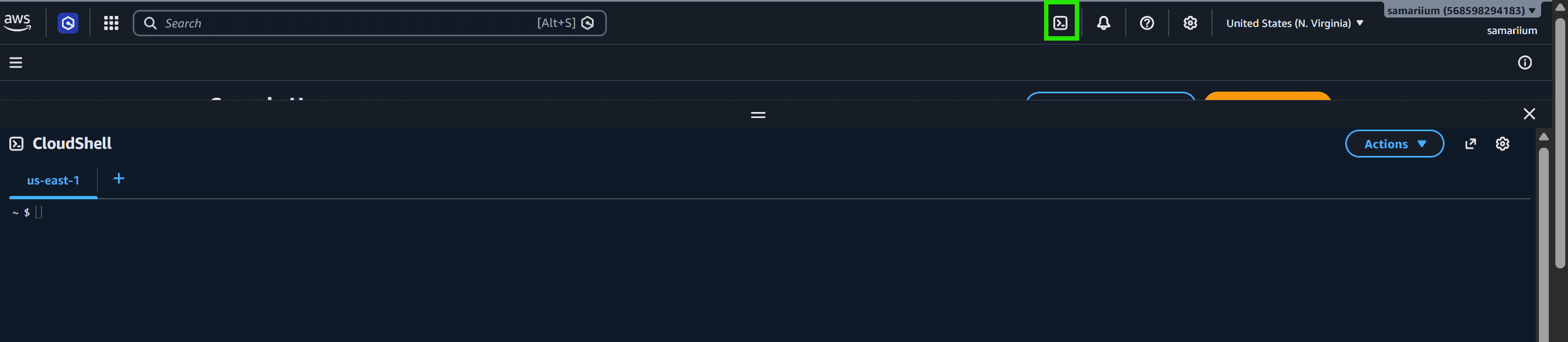
7. AWS Cloud Shell
AWS CloudShell is a browser-based shell that comes pre-authenticated with your console credentials. You can use it to run AWS CLI commands or scripts directly from your browser.
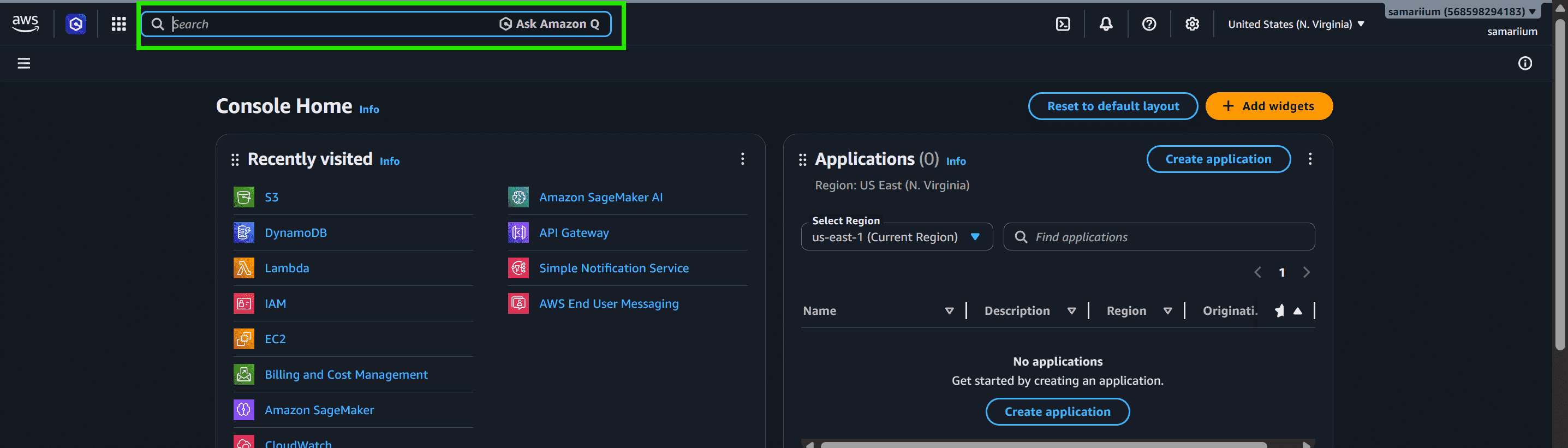
8. AWS Search
The Search option allows you to search across AWS for specific services, features, blogs, documentation, tutorials, and other resources. It helps you quickly locate relevant information:
- **Services: List of AWS services
- **Features: List of features of AWS services
- **Blogs: Posts from the AWS blog
- **Documentation: AWS Documentation
- **Knowledge Articles: AWS Premium Support Knowledge Center
- **Tutorials: Guides from the AWS Getting Started Resource Center
- **Events: AWS hosted events that are upcoming, or available on-demand
- **Marketplace: AWS Marketplace offerings that you can deploy in your AWS account
9. AWS Service Selector
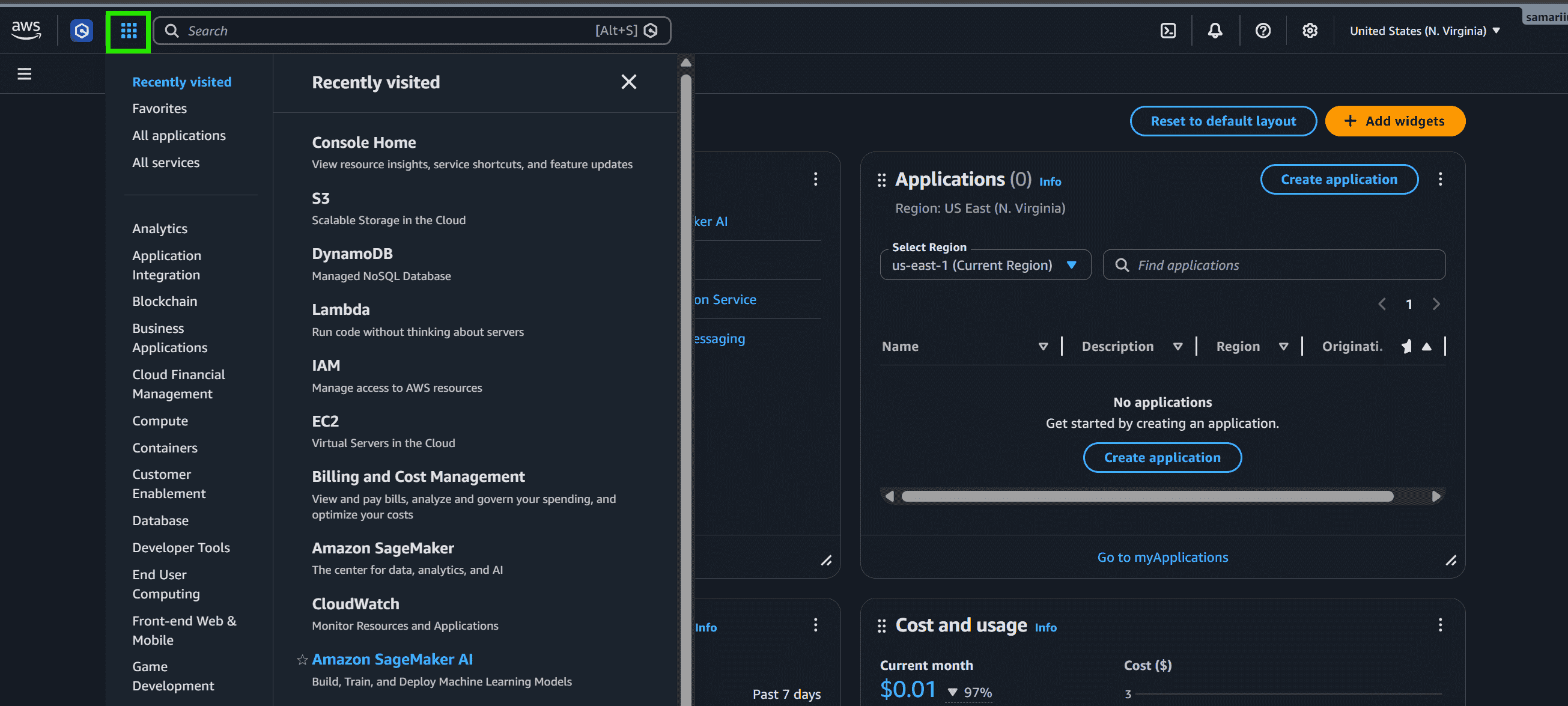
The Service Selector is located next to the search bar. It lists various AWS services and groups them for easy navigation. It also displays recently visited services, making it easier to return to services you've used before.
10. AWS Dashboard Widgets
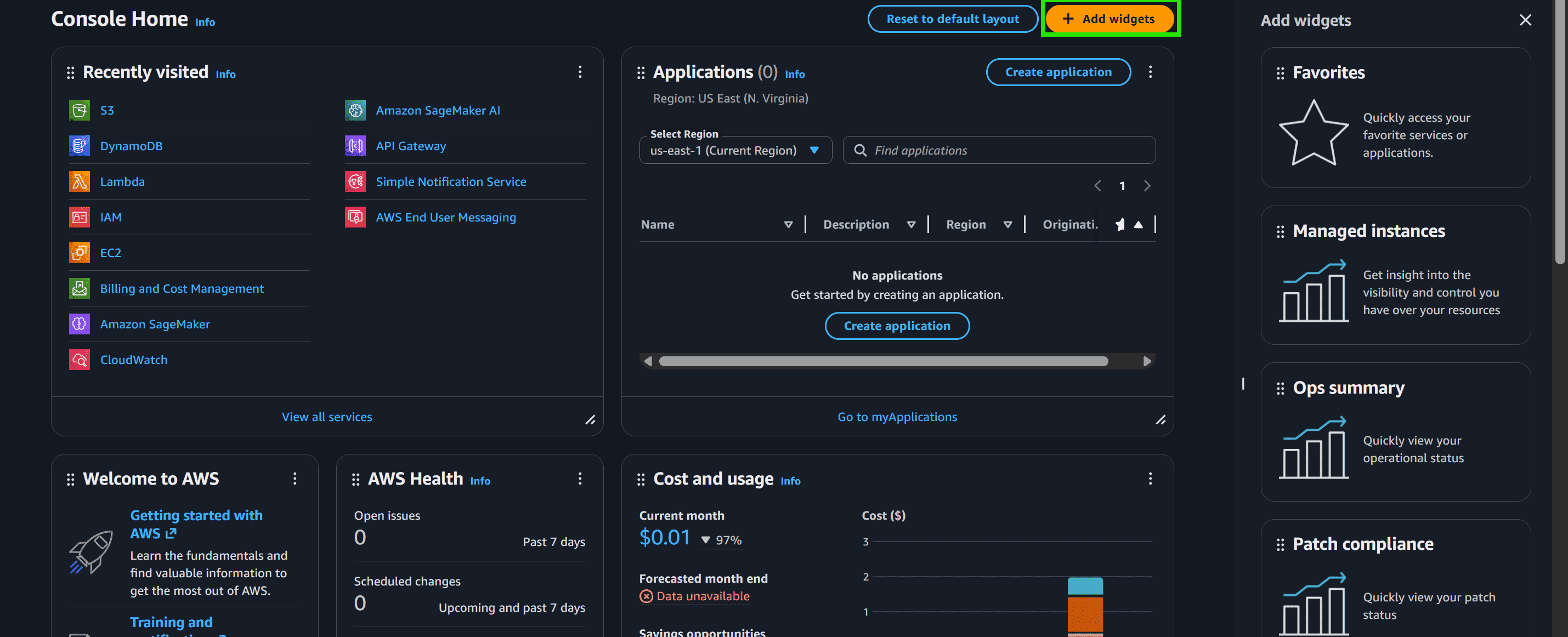
This contains number of widgets for various purposes. It helps user for easy navigation and overview of their services and resources in AWS. The widgets can be added or removed as per user preference. Add widget button can be used to add new widget.
- **AWS Health: information on events that might affect your AWS infrastructure and account.
- **Cost and usage: an overview of service costs, with a breakdown by AWS service
- **Favourites: a list of your favourite AWS services
- **Recently visited: a list of top recently visited services.
- **Trusted Advisor: recommendations to follow AWS best practices.
11. Amazon Q
In the AWS Management Console, you can access Amazon Q from the navigation panel or search bar. Amazon Q acts as an AI-powered assistant that helps users understand AWS services, generate code suggestions, troubleshoot issues, and get guidance directly within the console.