Difference Between 3G and 4G Technology (original) (raw)
Last Updated : 11 Jul, 2025
The evolution of mobile technology has significantly impacted our daily lives, and understanding the difference between 3G and 4G is necessary in appreciating this progress. Both 3G (Third Generation) and 4G (Fourth Generation) are mobile network technologies that allow us to connect to the internet and make calls on our phones.
However, they differ greatly in terms of speed, efficiency, and the range of services they offer. This guide explores the key differences between these two generations, helping you understand how each affects your mobile experience.
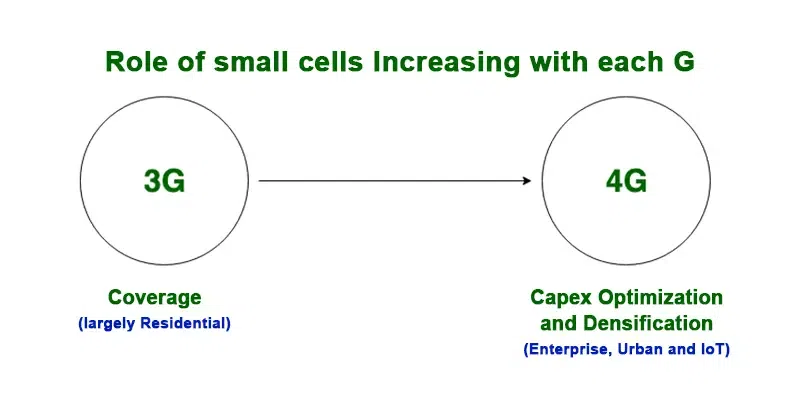
3G and 4G Technology
What is 3G?
Mobile telecommunications the third generation also known as 3G made its debut in the early 2000. It was far superior to the second generation and expanded the rates of data transmission, supported video connections, and mobile Internet.
Advantages of 3G
- **Wider Coverage: 3G networks are well developed, and the range of the signal is creating by covering the rural areas as well.
- **Lower Cost: However due to the introduction of even more superior technologies, the cost of using 3G has came down.
- **Adequate for Basic Use: For casual web surfing, and social network or instant messaging services, 3G is adequate.
Disadvantages of 3G
- **Slower Speeds: In comparison to 4G internet speed, 3G internet speed is much slower and this is not suitable for downloading, gaming and streaming activities.
- **Limited Support for Advanced Applications: Currently there are app and services that may not run so well on 3G network since the networks have lesser bandwidth.
What is 4G?
The mobile network technology that is referred to fourth generation or 4G was introduced at the close of the year 2000s and is currently the most prevalently used. It provides far higher data throughputs, lower delays and a higher reliability of the network, making it suitable for many applications.
Advantages of 4G
- **High-Speed Internet: 4G features top download and upload capabilities for high definition streaming of videos and useful for video calls and online gaming.
- **Low Latency: The latency of 4G network is lower compared to 3G that assists the real time services like online gaming and video calls.
- **Better Coverage in Urban Areas: 4G networks have a much better coverage in the regions and populated sized areas such as cities and other inhabited districts.
Disadvantages of 4G
- **Higher Costs: The new features that 4G brings are obviously costly, not just in the manner of the compared data tariffs but in the compatibility of devices too.
- **Battery Consumption: Mobiles and other communication facilities operating on 4G networks take more battery consumption than those of 3G.
Difference Between 3G and 4G Technology
| Comparison Parameter | 3G Technology | 4G Technology |
|---|---|---|
| **Full Form | It stands for 3rd generation technology. | While it stands for 4th generation technology. |
| **Max. Upload Rate | The maximum upload rate of 3G technology is 5 Mbps. | While the maximum upload rate of 4G technology is 500 Mbps. |
| **Max. Download Rate | The maximum download rate of 3G technology is 21 Mbps. | While the maximum download rate of 4G technology is 1 Gbps. |
| **Switching Technique | It uses a packet switching technique. | While it uses the packet switching technique as well as the message switching technique. |
| **Frequency | The frequency range of 3G technology is from 1.8 GHz to 2.5 GHz. | While its frequency range is from 2 GHz to 8 GHz. |
| **Latency | Higher latency, less responsive | Lower latency, more responsive. |
| **Coverage & Availability | Widely available due to longer market presence. | Increasing coverage, but varies by region. |
| **Error Correction Mechanism | Standard FEC and ARQ techniques. | Advanced FEC and HARQ (Hybrid ARQ) for improved reliability. |
| **Technology Used | The technology used in 3G is WCDMA (Wideband Code Division Multiple Access), Digital Broadband Packet Data CDMA 2000, UMTS, EDGE, etc. | The technology used in 4G is LTE (Long-Term Evolution), and WiMAX (Worldwide Interoperability for Microwave Access). |
| **Applications | Basic mobile browsing, simple video streaming. | HD video streaming, seamless video calls, online gaming. |
| **Battery Consumption | Lower data speeds can mean reduced battery impact. | Higher speeds may lead to slightly increased power usage. |
| **Frequency Bands | Commonly uses 850/900/1900/2100 MHz bands. | Uses a wider range (700/800/1800/2600 MHz), varies by region |
| **Bandwidth | Data bandwidth is 2 Mbps - 21 Mbps. | Data bandwidth is 2 Mbps - 1 Gbps. |
Conclusion
Evidently, 3G and 4G efficiently identify two successive phases on the advancement of mobile networks. Where 3G only provides coverage and low-cost, 4G is providing the required high-speed connection for most of the applications. This, therefore, depends on the certain factors such as speed, coverage and the price between the two.