Difference between MD5 and SHA1 (original) (raw)
Last Updated : 11 Jul, 2025
**MD5 stands for **Message Digest and **SHA1 stands for **Secure Hash Algorithm both are cryptographic hash algorithms used for security purposes. SHA-1 or Secure Hash Algorithm 1 is a cryptographic algorithm that takes an input and produces a 160-bit (20-byte) hash value. This hash value is known as a message digest. In this article, we will discuss the differences between MD5 and SHA1.
What is MD5?
**MD5 is a cryptographic hash function algorithm that takes the message as input of any length and changes it into a fixed-length message of 16 bytes. MD5 algorithm stands for the **message-digest algorithm. MD5 was developed as an improvement of MD4, with advanced security purposes. The output of MD5 (Digest size) is always **128 bits. MD5 wasdeveloped in 1991 by **Ronald Rivest.
Application Of MD5 Algorithm
- We use message digest to verify the integrity of files/ authenticates files.
- MD5 was used for data security and encryption.
- It is used to Digest messages of any size and also used for Password verification.
- For Game Boards and Graphics.
Advantages of MD5 Algorithm
- MD5 is faster and simple to understand.
- MD5 algorithm generates a strong password in 16 bytes format. All developers like web developers etc use the MD5 algorithm to secure the password of users.
- To integrate the MD5 algorithm, relatively low memory is necessary.
- It is very easy and faster to generate a digest message of the original message.
Disadvantages of MD5 Algorithm
- MD5 generates the same hash function for different inputs.
- MD5 provides poor security over SHA1.
- MD5 has been considered an insecure algorithm. So now we are using SHA256 instead of MD5
- MD5 is neither a symmetric nor asymmetric algorithm.
What is SHA1?
SHA1 is a cryptographic hash function which is designed by United States National Security Agency. It takes an input and produces a 160 bits hash value. Further the output produced by this function is converted into a 40 digits long hexadecimal number. It is a U.S. Federal Information Processing Standard. It was first published in 1995. It is successor to SH0 published in 1993.
**Applications of SHA1
- The main application of SHA1 is to protect communications from being intercepted by outside parties. From a given data input, SHA1 generates a fixed-size, singular, and irreversible hash value.
- In many industries, such as finance, healthcare, and government, data integrity is a major concern. Data integrity in a system is checked using the SHA1 algorithm.
- Digital signatures are used to confirm the legitimacy of digital documents and messages. The digital document or communication is hashed using the SHA1 technique, and its hash value is subsequently encrypted with the sender’s private key.
- SHA1 can be used to save passwords. A hash of the password is generated using SHA1 when a user creates a password. The password itself is then substituted in a database for the hash value.
Advantages of SHA1
- SHA-1 is relatively fast on most processors, making it suitable for less resource-intensive applications.
- Its 160-bit digest length provides adequate security against brute force attacks.
- The chance of finding hash collisions (where two different inputs produce the same hash output) is sufficiently low for most applications.
Disadvantages of SHA1
- Over time, SHA-1 has been found to have vulnerabilities, compromising its security.
- It is slower than other algorithms, limiting its use beyond password storage.
- The key length of SHA-1 is insufficient to withstand attacks.
- Finding collisions in SHA-1 is relatively simple and inexpensive
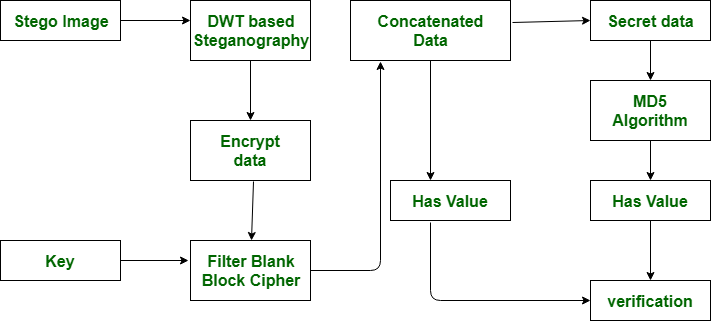
Some features of hash algorithms are given below:
- The functions can't be restrained.
- The size of the hash (or digest) is often fastened and doesn't rely upon the scale of the info.
- No 2 distinct information set square measure able to manufacture the same hash.
Difference Between MD5 and SHA1
| MD5 | SHA1 |
|---|---|
| MD5 stands for Message Digest. | While SHA1 stands for Secure Hash Algorithm. |
| MD5 can have 128 bits length of message digest. | Whereas SHA1 can have 160 bits length of message digest. |
| The speed of MD5 is fast in comparison of SHA1's speed. | While the speed of SHA1 is slow in comparison of MD5's speed. |
| To make out the initial message the aggressor would want 2^128 operations whereas exploitation the MD5 algorithmic program. | On the opposite hand, in SHA1 it'll be 2^160 that makes it quite troublesome to seek out. |
| MD5 is simple than SHA1. | While SHA1 is more complex than MD5. |
| MD5 provides indigent or poor security. | While it provides balanced or tolerable security. |
| In MD5, if the assailant needs to seek out the 2 messages having identical message digest then assailant would need to perform 2^64 operations. | Whereas in SHA1, assailant would need to perform 2^80 operations which is greater than MD5. |
| MD5 was presented in the year 1992. | While SHA1 was presented in the year 1995. |
Conclusion
MD5 and SHA1 are cryptographic hash methods that are used to ensure security. MD5 generates a 128-bit hash result and is faster, however it provides insufficient security, making it outdated because of its weaknesses. SHA1 generates a 160-bit hash value and provides higher security, but it is slower and has been discovered vulnerable to attacks over time. Due to these drawbacks, stronger hash algorithms such as SHA-256 are now recommended.