Types of Authentication Protocols (original) (raw)
Last Updated : 29 Apr, 2026
User authentication protocols are standardized rules that define how a system verifies a user’s identity and manages access to network resources. They ensure secure communication between users, servers, and authentication systems during login and access control.
- Define how credentials are checked and validated securely
- Enable secure communication between client and server systems
- Manage user sessions after successful authentication
- Support controlled access in distributed and networked environments
1. Kerberos
Kerberos is a network authentication protocol that uses secret-key cryptography for secure identity verification over insecure networks. It relies on a trusted third-party system called the Key Distribution Center (KDC) to issue authentication tickets for client-server communication.
- Provides secure mutual authentication between client and server
- Uses time-stamped tickets to prevent replay attacks
- Requires synchronized system clocks across network nodes
- Suitable for enterprise-level distributed authentication systems
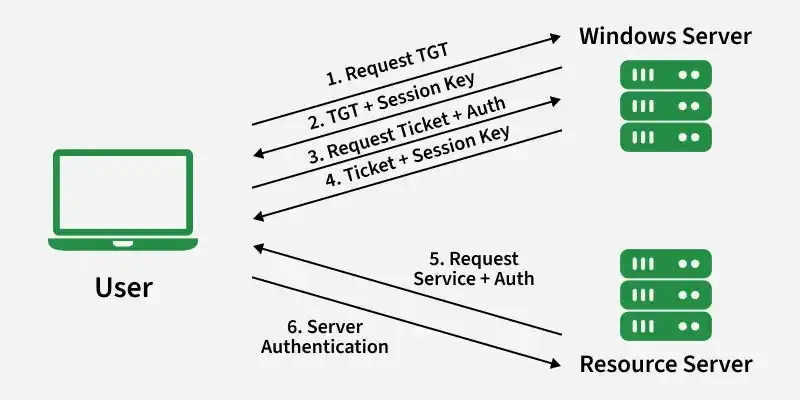
Kerberos
Advantages
- Supports multiple operating systems and platforms.
- Uses efficient secret-key mechanism for secure authentication.
- Provides strong protection against unauthorized access.
- Enables mutual authentication between client and server.
Disadvantages
- Limited mainly to authentication of clients and services.
- Vulnerable to weak or easily guessable passwords.
- Requires synchronized time across systems for proper functioning.
- Setup and maintenance can be complex in large environments.
2. Lightweight Directory Access Protocol (LDAP)
Lightweight Directory Access Protocol (LDAP) is a directory services protocol used for accessing and managing distributed information such as user credentials, organizational data, and system resources. It operates as a centralized authentication and directory management system.
- Enables centralized user and resource information management
- Supports hierarchical directory structure for data organization
- Commonly integrated with enterprise identity systems
- Used in authentication frameworks like Active Directory
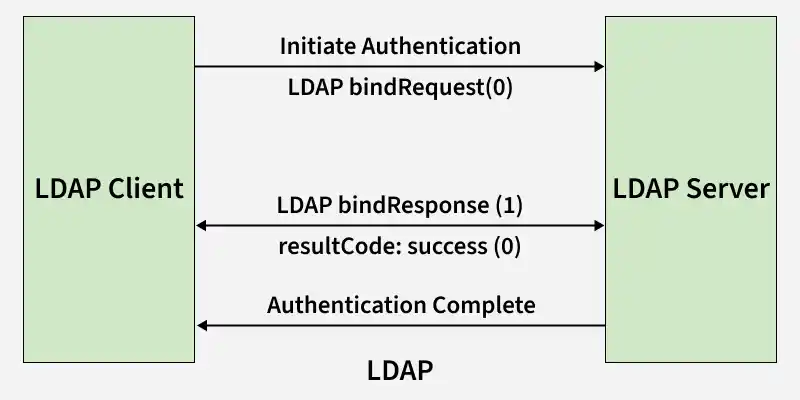
Advantages
- Provides automated directory management for efficient operations.
- Supports integration with existing technologies and systems.
- Allows management of multiple directories within network environment.
- Enables centralized access and control of user and resource information.
Disadvantages
- Requires expertise for proper deployment and configuration.
- Directory servers must comply with protocol standards for implementation.
- Initial setup and maintenance can be complex.
- Performance may be affected in large-scale directory structures.
3. OAuth 2.0
OAuth 2.0 is an authorization framework that enables secure delegated access to resources without exposing user credentials. It uses access tokens and defined scopes to control permissions between applications and services.
- Uses token-based authentication for secure access control
- Enables third-party application authorization without password sharing
- Supports multiple authorization flows for different application types
- Widely implemented in web APIs and cloud platforms
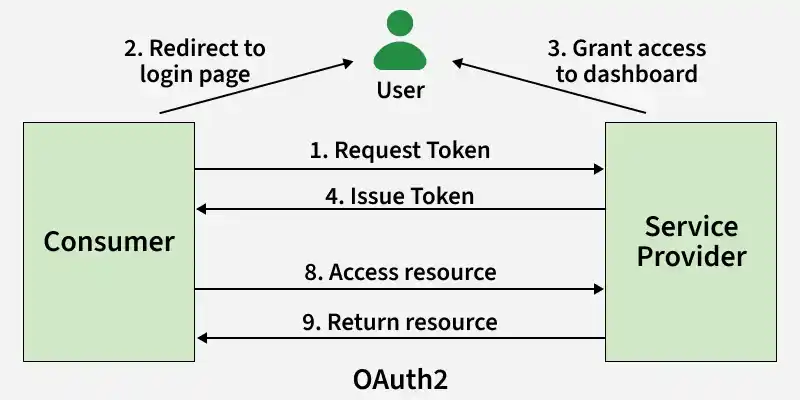
Advantages
- Simple and relatively easy to implement for authorization workflows.
- Supports secure server-side authorization using access tokens.
- Enables delegated access without sharing user credentials.
- Widely supported across APIs and modern web applications.
Disadvantages
- Managing multiple authorization flows and tokens can be complex.
- Misconfiguration may introduce security vulnerabilities.
- Dependency on external authorization servers can impact reliability.
- Security risks may propagate to connected systems if one is compromised.
4. Security Assertion Markup Language (SAML)
Security Assertion Markup Language(SAML) is an XML-based authentication protocol used for exchanging identity information between identity providers and service providers. It enables Single Sign-On (SSO) across multiple systems.
- Supports federated identity management across organizations
- Reduces repeated login requirements through SSO
- Uses centralized identity provider for authentication
- Commonly deployed in enterprise authentication systems
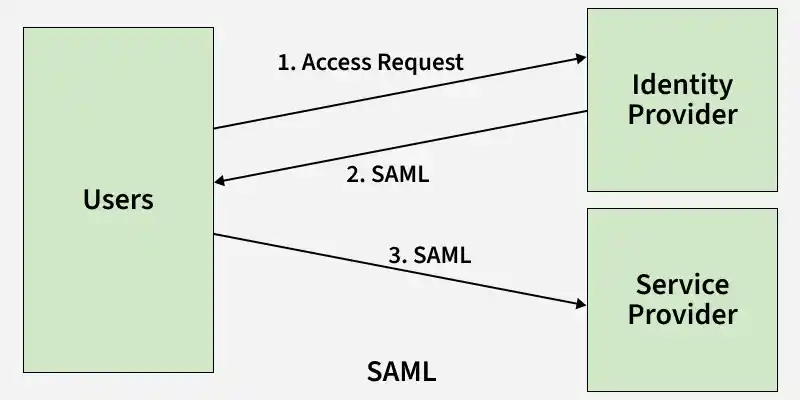
Advantages
- Reduces administrative overhead by simplifying user management
- Enables single sign-on (SSO) across multiple service providers
- Improves user experience by minimizing repeated logins
- Enhances security through centralized authentication mechanism
Disadvantages
- Strong dependency on identity provider for authentication
- Uses XML format, which can increase complexity and processing overhead
- Configuration and implementation can be complex
- Failure of identity provider can disrupt access to multiple services
5. Remote Authentication Dial-In User Service (RADIUS)
Remote Authentication Dial-In User Service(RADIUS) is a centralized authentication, authorization, and accounting protocol used for controlling access to network services. It validates user credentials and manages session-based access control.
- Provides centralized authentication for network access
- Supports user tracking and session accounting
- Commonly used in VPNs, Wi-Fi networks, and remote access systems
- Enhances scalability in large network infrastructures
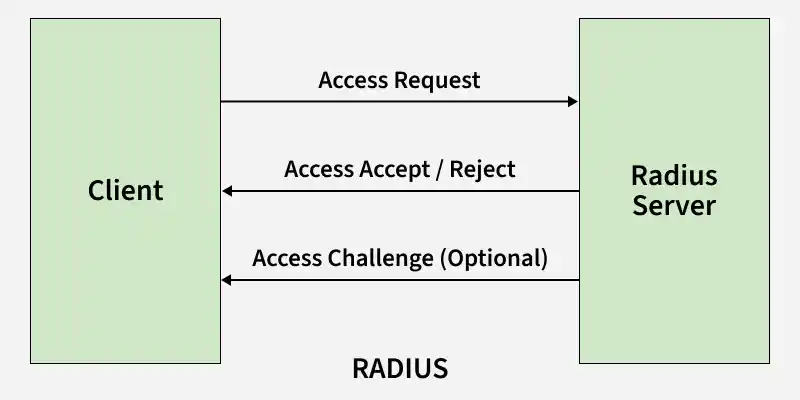
Advantages
- Enables centralized management of multiple administrative access points.
- Assigns unique identity to each user during every session.
- Improves security through centralized authentication and authorization control.
- Provides better scalability for managing large numbers of users and devices.
Disadvantages
- Initial setup can be complex and demanding on hardware resources.
- Multiple deployment models may require specialized technical expertise.
- Maintenance and configuration can increase operational cost.
- Dependency on central server can create single point of failure risks.