Applications of Cybersecurity (original) (raw)
Last Updated : 15 Jun, 2026
Cybersecurity helps protect personal, financial and online information from cyber threats such as hacking, malware and data breaches. As digital technology becomes part of daily life, cybersecurity awareness is important for everyone.
- Protects sensitive personal information.
- Ensures safe use of online services.
- Reduces risks of cyber attacks.
- Creates a secure digital environment.
Cybersecurity in Daily Life
Key applications of cybersecurity across different fields include:
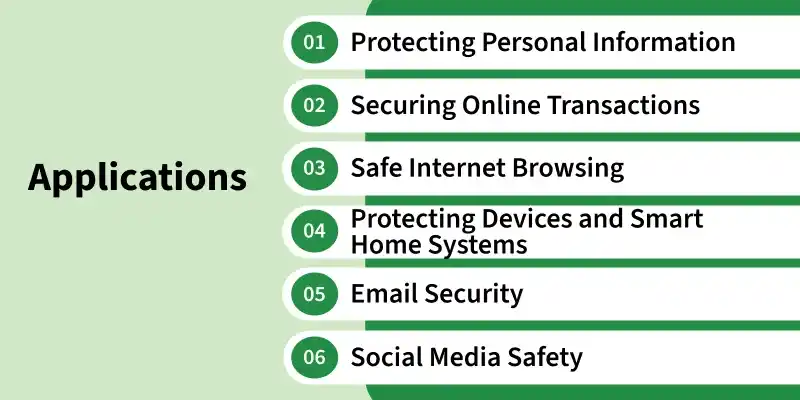
Applications of cybersecurity
1. Protecting Personal Information
Cybersecurity protects sensitive personal data such as identity credentials, financial records and confidential information from unauthorized access and cyber threats.
- Uses encryption and access control mechanisms.
- Ensures privacy across digital platforms and cloud services.
- **Example: Banking apps use AES encryption to secure customer account details.
2. Securing Online Transactions
Cybersecurity secures online banking, e-commerce and digital payment systems against fraud and unauthorized transactions.
- Uses HTTPS, SSL/TLS encryption and secure payment gateways.
- Protects transaction data from interception attacks.
- **Example: Online payment gateways use SSL certificates to encrypt card transactions.
3. Safe Internet Browsing
Safe browsing technologies protect users from malicious websites, phishing attacks and malware infections.
- Uses firewalls, antivirus and web filtering tools.
- Prevents phishing, spyware and ransomware attacks.
- **Example: Modern browsers block phishing websites using real-time threat detection.
4. Protecting Devices and Smart Home Systems
Cybersecurity secures computers, smartphones and IoT-enabled smart devices from unauthorized access and exploitation.
- Implements strong authentication and device encryption.
- Requires regular firmware and security updates.
- Protects IoT networks from cyber intrusions.
- **Example: Smart CCTV cameras use encrypted connections to prevent unauthorized access.
5. Email Security
Email security protects communication systems from phishing, spam, malware and unauthorized access.
- Filters suspicious and malicious emails automatically.
- Uses email encryption and sender authentication protocols.
- **Example: SPF and DKIM protocols verify legitimate email senders to stop spoofing attacks.
Cybersecurity safeguards social media accounts and personal data shared on digital platforms.
- Uses strong passwords and multi-factor authentication (MFA).
- Protects accounts from hacking and impersonation attacks.
- **Example: Two-factor authentication prevents unauthorized logins even if passwords are leaked.
- **DDoS Security: Protects servers from heavy malicious traffic and keeps websites available during attacks.
- **Web Application Firewall: Filters web traffic and blocks harmful requests to protect applications.
- **Bot Protection: BDetects and blocks fake automated users to prevent system abuse.
- **Antivirus & Antimalware: Scans and removes malware to keep systems secure from threats.
- **Threat Management Systems: TMonitors networks and detects cyber threats for quick response.
- **Critical Systems Protection: Secures important servers and systems with advanced monitoring.
- **Rules & Regulations: Defines cybersecurity policies and ensures legal compliance.