Count BST nodes that lie in a given range (original) (raw)
Last Updated : 23 Jul, 2025
Given a **Binary Search Tree (BST) and a **range [l, h], the task is to **count the number of nodes in the **BST that lie in the given range.
**Examples:
**Input:
**Output: 3
**Explanation: There are three nodes in range [5, 45] = 5, 10 and 40.**Input:
**Output: 4
**Explanation: There are four nodes in range [10, 100] = 10, 40, 50 and 100.

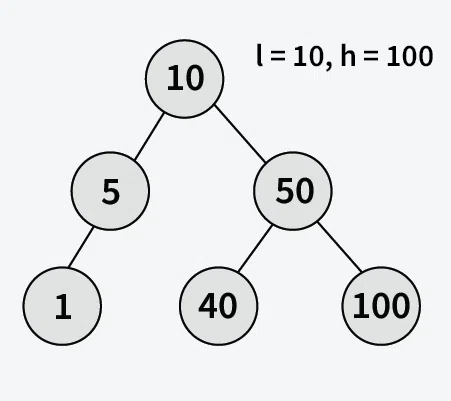

Table of Content
- [Expected Approach] Using Recursion - O(n) Time and O(h) Space
- [Alternate Approach] Using Queue - O(n) Time and O(n) Space
[Expected Approach] Using Recursion - O(n) Time and O(h) Space
The idea is traverse the given **binary search tree starting from root. For every node check if this node lies in **range, if **yes, then add **1 to **result and recursively check for both of its children. If **current node is **smaller than **low value of range, then recur for **right child, else recur for **left child.
Follow the below steps to Implement the idea:
- Traverse the tree starting from the root.
- If root->data is equal to **high and root->data is equal to **low return 1.
- If root->data <= high** and ****root->data >= low then **return 1 + count on left of root + count on right of root.
- Else if **root->data < low return count on right of root.
- Else if **root->data > high return count on left of root.
Below is the implementation of the above approach.
C++ `
// C++ program to count BST nodes within // a given range #include<bits/stdc++.h> using namespace std;
class Node{ public: int data; Node* left, *right; Node(int x) { data = x; left = nullptr; right = nullptr; } };
// Returns count of nodes in BST in range [l, h] int getCount(Node *root, int l, int h) {
// Base case
if (root == nullptr) return 0;

// If current node is in range, then
// include it in count and recur for
// left and right children of it
if (root->data <= h && root->data >= l)
     return 1 + getCount(root->left, l, h) +
                getCount(root->right, l, h);

// If current node is smaller than low,
// then recur for right child
else if (root->data < l)
     return getCount(root->right, l, h);

// Else recur for left child
else return getCount(root->left, l, h);
}
int main() {
// Create a hard coded bst.
//        10
//       /  \
//      5   50
//     /   /  \
//    1   40  100
Node *root = new Node(10);
root->left = new Node(5);
root->right = new Node(50);
root->left->left = new Node(1);
root->right->left = new Node(40);
root->right->right = new Node(100);

int l = 5;
int h = 45;

cout << getCount(root, l, h) << endl;

return 0;
}
C
// C program to count BST nodes // within a given range #include <stdio.h> #include <stdlib.h>
struct Node { int data; struct Node* left; struct Node* right; };
// Returns count of nodes in BST in range [l, h] int getCount(struct Node* root, int l, int h) {
// Base case
if (root == NULL) return 0;

// If current node is in range, then
// include it in count and recur for
// left and right children of it
if (root->data <= h && root->data >= l)
    return 1 + getCount(root->left, l, h) +
               getCount(root->right, l, h);

// If current node is smaller than low,
// then recur for right child
else if (root->data < l)
    return getCount(root->right, l, h);

// Else recur for left child
else return getCount(root->left, l, h);
}
struct Node* createNode(int x) { struct Node* newNode = (struct Node*)malloc(sizeof(struct Node)); newNode->data = x; newNode->left = NULL; newNode->right = NULL; return newNode; }
int main() {
// Create a hard coded bst.
//        10
//       /  \
//      5   50
//     /   /  \
//    1   40  100
struct Node* root = createNode(10);
root->left = createNode(5);
root->right = createNode(50);
root->left->left = createNode(1);
root->right->left = createNode(40);
root->right->right = createNode(100);

int l = 5;
int h = 45;

printf("%d\n", getCount(root, l, h));

return 0;
}
Java
// Java program to count BST nodes // within a given range
import java.util.ArrayList;
class Node { int data; Node left, right;
Node(int x) {
    data = x;
    left = null;
    right = null;
}
}
class GfG {
// Returns count of nodes in BST in range [l, h]
static int getCount(Node root, int l, int h) {

    // Base case
    if (root == null) return 0;

    // If current node is in range,
    // include it and recur for left and right
    if (root.data <= h && root.data >= l)
        return 1 + getCount(root.left, l, h)
        + getCount(root.right, l, h);

    // If current node is smaller
    // than low, recur for right child
    else if (root.data < l)
        return getCount(root.right, l, h);

    // Else recur for left child
    else
        return getCount(root.left, l, h);
}

public static void main(String[] args) {

    // Create a hard coded bst.
    //        10
    //       /  \
    //      5   50
    //     /   /  \
    //    1   40  100
    Node root = new Node(10);
    root.left = new Node(5);
    root.right = new Node(50);
    root.left.left = new Node(1);
    root.right.left = new Node(40);
    root.right.right = new Node(100);

    int l = 5;
    int h = 45;

    System.out.println(getCount(root, l, h));
}
}
Python
Python program to count BST nodes within
a given range
class Node: def init(self, data): self.data = data self.left = None self.right = None
def getCount(root, l, h):
# Base case
if root is None:
    return 0

# If current node is in range,
# include it and recur for left and right
if root.data <= h and root.data >= l:
    return 1 + getCount(root.left, l, h) \
              + getCount(root.right, l, h)

# If current node is smaller
# than low, recur for right child
elif root.data < l:
    return getCount(root.right, l, h)

# Else recur for left child
else:
    return getCount(root.left, l, h)
if name == "main":
# Create a hard coded bst.
#        10
#       /  \
#      5   50
#     /   /  \
#    1   40  100
root = Node(10)
root.left = Node(5)
root.right = Node(50)
root.left.left = Node(1)
root.right.left = Node(40)
root.right.right = Node(100)

l = 5
h = 45

print(getCount(root, l, h))
C#
// C# program to count BST nodes within // a given range using System;
class Node { public int data; public Node left, right;
public Node(int x) {
    data = x;
    left = null;
    right = null;
}
}
class GfG {
// Returns count of nodes in BST in range [l, h]
static int getCount(Node root, int l, int h) {

    // Base case
    if (root == null) return 0;

    // If current node is in range,
    // include it and recur for left and right
    if (root.data <= h && root.data >= l)
        return 1 + getCount(root.left, l, h) +
        getCount(root.right, l, h);

    // If current node is smaller
    // than low, recur for right child
    else if (root.data < l)
        return getCount(root.right, l, h);

    // Else recur for left child
    else
        return getCount(root.left, l, h);
}

static void Main(string[] args) {

    // Create a hard coded bst.
    //        10
    //       /  \
    //      5   50
    //     /   /  \
    //    1   40  100
    Node root = new Node(10);
    root.left = new Node(5);
    root.right = new Node(50);
    root.left.left = new Node(1);
    root.right.left = new Node(40);
    root.right.right = new Node(100);

    int l = 5;
    int h = 45;

    Console.WriteLine(getCount(root, l, h));
}
}
JavaScript
// JavaScript program to count BST nodes // within a given range
class Node { constructor(data) { this.data = data; this.left = null; this.right = null; } }
// Returns count of nodes in BST in range [l, h] function getCount(root, l, h) {
// Base case
if (root === null) return 0;

// If current node is in range, include
// it and recur for left and right
if (root.data <= h && root.data >= l)
    return 1 + getCount(root.left, l, h)
    + getCount(root.right, l, h);

// If current node is smaller than
// low, recur for right child
else if (root.data < l)
    return getCount(root.right, l, h);

// Else recur for left child
else
    return getCount(root.left, l, h);
}
// Create a hard coded bst.
// 10
// /
// 5 50
// / /
// 1 40 100
let root = new Node(10);
root.left = new Node(5);
root.right = new Node(50);
root.left.left = new Node(1);
root.right.left = new Node(40);
root.right.right = new Node(100);
let l = 5; let h = 45;
console.log(getCount(root, l, h));
`
[Alternate Approach] Using Queue - O(n) Time and O(n) Space
The idea is traverse the given binary search tree in level order manner using a **queue. For every node check if this node lies in **range, if **yes, then add 1 to **result and **push both of its children into queue. If current node is smaller than **low value of range, then push **right child, else push **left child.
Below is the implementation of the above approach:
C++ `
// C++ program to count BST nodes within a // given range #include<bits/stdc++.h> using namespace std;
class Node{ public: int data; Node* left, *right; Node(int x) { data = x; left = nullptr; right = nullptr; } };
// Returns count of nodes in BST in range [l, h] int getCount(Node *root, int l, int h) {
// Base case
if (root == nullptr) return 0;

queue<Node*> q;
q.push(root);
int ans = 0;

while (!q.empty()) {
    Node* curr = q.front();
    q.pop();

    // If current node is in range, then
    // increment the count and push the
    // left and right children into queue.
    if (curr->data <= h && curr->data >= l) {
        ans++;
        if (curr->left != nullptr)
            q.push(curr->left);
        if (curr->right != nullptr)
            q.push(curr->right);
    }

    // If current node is smaller than low,
    // then push right child into queue.
    else if (curr->data < l) {
        if (curr->right != nullptr)
            q.push(curr->right);
    }

    // Else push left child
    else {
        if (curr->left != nullptr)
            q.push(curr->left);
    }
}

return ans;
}
int main() {
// Create a hard coded bst.
//        10
//       /  \
//      5   50
//     /   /  \
//    1   40  100
Node *root = new Node(10);
root->left = new Node(5);
root->right = new Node(50);
root->left->left = new Node(1);
root->right->left = new Node(40);
root->right->right = new Node(100);

int l = 5;
int h = 45;

cout << getCount(root, l, h) << endl;

return 0;
}
Java
// Java program to count BST nodes // within a given range import java.util.*;
class Node { int data; Node left, right;
Node(int x) {
    data = x;
    left = null;
    right = null;
}
}
class GfG {
// Returns count of nodes in BST in range [l, h]
static int getCount(Node root, int l, int h) {

    // Base case
    if (root == null) return 0;

    Queue<Node> q = new LinkedList<>();
    q.add(root);
    int ans = 0;

    while (!q.isEmpty()) {
        Node curr = q.poll();

        // If current node is in range, then
        // increment the count and push the
        // left and right children into queue.
        if (curr.data <= h && curr.data >= l) {
            ans++;
            if (curr.left != null)
                q.add(curr.left);
            if (curr.right != null)
                q.add(curr.right);
        }

        // If current node is smaller than low,
        // then push right child into queue.
        else if (curr.data < l) {
            if (curr.right != null)
                q.add(curr.right);
        }

        // Else push left child
        else {
            if (curr.left != null)
                q.add(curr.left);
        }
    }

    return ans;
}

public static void main(String[] args) {

    // Create a hard coded bst.
    //        10
    //       /  \
    //      5   50
    //     /   /  \
    //    1   40  100
    Node root = new Node(10);
    root.left = new Node(5);
    root.right = new Node(50);
    root.left.left = new Node(1);
    root.right.left = new Node(40);
    root.right.right = new Node(100);

    int l = 5;
    int h = 45;

    System.out.println(getCount(root, l, h));
}
}
Python
Python Program to count BST nodes
within a given range
from collections import deque
class Node: def init(self, x): self.data = x self.left = None self.right = None
Returns count of nodes in BST in
range [l, h]
def getCount(root, l, h):
# Base case
if root is None:
    return 0

q = deque([root])
ans = 0

while q:
    curr = q.popleft()

    # If current node is in range, then
    # increment the count and push the
    # left and right children into queue.
    if l <= curr.data <= h:
        ans += 1
        if curr.left is not None:
            q.append(curr.left)
        if curr.right is not None:
            q.append(curr.right)

    # If current node is smaller than low,
    # then push right child into queue.
    elif curr.data < l:
        if curr.right is not None:
            q.append(curr.right)

    # Else push left child
    else:
        if curr.left is not None:
            q.append(curr.left)

return ans
if name == 'main':
# Create a hard coded bst.
#        10
#       /  \
#      5   50
#     /   /  \
#    1   40  100
root = Node(10)
root.left = Node(5)
root.right = Node(50)
root.left.left = Node(1)
root.right.left = Node(40)
root.right.right = Node(100)

l = 5
h = 45

print(getCount(root, l, h))
C#
// C# Program to count BST nodes within // a given range using System; using System.Collections.Generic;
class Node { public int data; public Node left, right;
public Node(int x) {
    data = x;
    left = null;
    right = null;
}
}
class GfG {
// Returns count of nodes in BST in range [l, h]
static int GetCount(Node root, int l, int h) {

    // Base case
    if (root == null) return 0;

    Queue<Node> q = new Queue<Node>();
    q.Enqueue(root);
    int ans = 0;

    while (q.Count > 0) {
        Node curr = q.Dequeue();

        // If current node is in range, then
        // increment the count and push the
        // left and right children into queue.
        if (curr.data >= l && curr.data <= h) {
            ans++;
            if (curr.left != null)
                q.Enqueue(curr.left);
            if (curr.right != null)
                q.Enqueue(curr.right);
        }

        // If current node is smaller than low,
        // then push right child into queue.
        else if (curr.data < l) {
            if (curr.right != null)
                q.Enqueue(curr.right);
        }

        // Else push left child
        else {
            if (curr.left != null)
                q.Enqueue(curr.left);
        }
    }

    return ans;
}

static void Main(string[] args) {

    // Create a hard coded bst.
    //        10
    //       /  \
    //      5   50
    //     /   /  \
    //    1   40  100
    Node root = new Node(10);
    root.left = new Node(5);
    root.right = new Node(50);
    root.left.left = new Node(1);
    root.right.left = new Node(40);
    root.right.right = new Node(100);

    int l = 5;
    int h = 45;

    Console.WriteLine(GetCount(root, l, h));
}
}
JavaScript
// JavaScript Program to count BST nodes // within a given range class Node { constructor(x) { this.data = x; this.left = null; this.right = null; } }
// Returns count of nodes in BST in range [l, h] function getCount(root, l, h) {
// Base case
if (root === null) return 0;

let q = [];
q.push(root);
let ans = 0;

while (q.length > 0) {
    let curr = q.shift();

    // If current node is in range, then
    // increment the count and push the
    // left and right children into queue.
    if (curr.data >= l && curr.data <= h) {
        ans++;
        if (curr.left !== null)
            q.push(curr.left);
        if (curr.right !== null)
            q.push(curr.right);
    }

    // If current node is smaller than low,
    // then push right child into queue.
    else if (curr.data < l) {
        if (curr.right !== null)
            q.push(curr.right);
    }

    // Else push left child
    else {
        if (curr.left !== null)
            q.push(curr.left);
    }
}

return ans;
}
// Create a hard coded bst.
// 10
// /
// 5 50
// / / \
// 1 40 100
let root = new Node(10);
root.left = new Node(5);
root.right = new Node(50);
root.left.left = new Node(1);
root.right.left = new Node(40);
root.right.right = new Node(100);
let l = 5; let h = 45;
console.log(getCount(root, l, h));
`