Iterative diagonal traversal of binary tree (original) (raw)
Last Updated : 26 Sep, 2024
Given a Binary Tree, the task is to print the **diagonal traversal of the binary tree.
Note: If the diagonal element are present in two different subtrees, then left subtree diagonal element should be taken first and then right subtree.
**Example:
**Input:
**Output: 8 10 14 3 6 7 13 1 4
**Explanation: The above is the diagonal elements in a binary tree that belong to the same line.
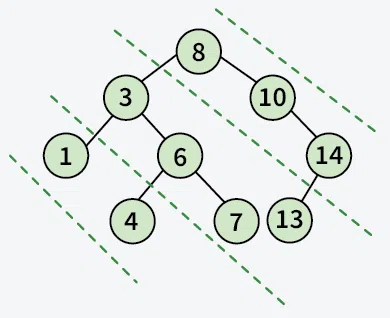
Table of Content
- [Expected Approach - 1] Using Queue with delimiter - O(n) Time and O(n) Space
- [Expected Approach - 2] Using Queue without delimiter - O(n) Time and O(n) Space
[Expected Approach - 1] Using Queue with delimiter - O(n) Time and O(n) Space
The idea is to traverse the binary tree in level order manner using a queue. Push the **root node and **null pointer into the queue. For each node (starting from root), append its value to the **resultant list. Push its left child node into queue if it exists, and set it to its **right child node. If the current node is null, it means the starting of the next diagonal. So set the current node to the front node of the queue and **pop from queue.
Below is the implementation of the above approach:
C++ `
// C++ program to print diagonal view #include <bits/stdc++.h> using namespace std;
class Node { public: int data; Node *left, *right; Node (int x) { data = x; left = nullptr; right = nullptr; } };
// Iterative function to print diagonal view vector diagonal(Node* root) { vector ans;
// base case
if (root == nullptr)
    return ans;

queue<Node*> q;

q.push(root);

q.push(nullptr);

while (!q.empty()) {

    Node* curr = q.front();
    q.pop();

    // if current is delimiter then insert another
    // null for next diagonal
    if (curr == nullptr) {

        // if tree has been traversed
        if (q.empty()) break;

        q.push(nullptr);
    }

    // Else print the current diagonal
    else {
        while (curr != nullptr) {
            ans.push_back(curr->data);

            // if left child is present
            // push into queue
            if (curr->left != nullptr)
                q.push(curr->left);

            // current equals to right child
            curr = curr->right;
        }
    }
}

return ans;
}
void printList(vector v) { int n = v.size(); for (int i=0; i<n; i++) { cout << v[i] << " "; } cout << endl; }
int main() {
// Create a hard coded tree
//         8
//       /   \
//     3      10
//    /      /  \
//   1      6    14
//         / \   /
//        4   7 13
Node* root = new Node(8);
root->left = new Node(3);
root->right = new Node(10);
root->left->left = new Node(1);
root->right->left = new Node(6);
root->right->right = new Node(14);
root->right->right->left = new Node(13);
root->right->left->left = new Node(4);
root->right->left->right = new Node(7);

vector<int> ans = diagonal(root);
printList(ans);
}
Java
// Java Program to print diagonal view import java.util.*;
class Node { int data; Node left, right; Node(int x) { data = x; left = null; right = null; } }
class GfG {
// Iterative function to print diagonal view
static ArrayList<Integer> diagonalPrint(Node root) {
    ArrayList<Integer> ans = new ArrayList<>();

    // base case
    if (root == null)
        return ans;

    Queue<Node> q = new LinkedList<>();

    q.add(root);
    q.add(null);

    while (!q.isEmpty()) {

        Node curr = q.poll();

        // if current is delimiter then insert another
        // null for next diagonal
        if (curr == null) {

            // if tree has been traversed
            if (q.isEmpty()) break;

            q.add(null);
        }

        // Else print the current diagonal
        else {
            while (curr != null) {
                ans.add(curr.data);

                // if left child is present
                // push into queue
                if (curr.left != null)
                    q.add(curr.left);

                // current equals to right child
                curr = curr.right;
            }
        }
    }

    return ans;
}

static void printList(ArrayList<Integer> v) {
    for (int i = 0; i < v.size(); i++) {
        System.out.print(v.get(i) + " ");
    }
    System.out.println();
}

public static void main(String[] args) {

    // Create a hard coded tree
    //         8
    //       /   \
    //     3      10
    //    /      /  \
    //   1      6    14
    //         / \   /
    //        4   7 13
    Node root = new Node(8);
    root.left = new Node(3);
    root.right = new Node(10);
    root.left.left = new Node(1);
    root.right.left = new Node(6);
    root.right.right = new Node(14);
    root.right.right.left = new Node(13);
    root.right.left.left = new Node(4);
    root.right.left.right = new Node(7);

    ArrayList<Integer> ans = diagonalPrint(root);
    printList(ans);
}
}
Python
Python Program to print diagonal view
class Node: def init(self, x): self.data = x self.left = None self.right = None
Iterative function to print diagonal view
def diagonal_print(root): ans = []
if root is None:
    return ans

q = []

q.append(root)
q.append(None)

while len(q) > 0:

    curr = q.pop(0)

    # if current is delimiter then insert another
    # null for next diagonal
    if curr is None:

        # if tree has been traversed
        if len(q) == 0:
            break

        q.append(None)

    # Else print the current diagonal
    else:
        while curr is not None:
            ans.append(curr.data)

            # if left child is present
            # push into queue
            if curr.left is not None:
                q.append(curr.left)

            # current equals to right child
            curr = curr.right

return ans
def print_list(v): for i in range(len(v)): print(v[i], end=" ") print()
if name == "main":
# Create a hard coded tree
#         8
#       /   \
#     3      10
#    /      /  \
#   1      6    14
#         / \   /
#        4   7 13
root = Node(8)
root.left = Node(3)
root.right = Node(10)
root.left.left = Node(1)
root.right.left = Node(6)
root.right.right = Node(14)
root.right.right.left = Node(13)
root.right.left.left = Node(4)
root.right.left.right = Node(7)

ans = diagonal_print(root)
print_list(ans)
C#
// C# Program to print diagonal view using System; using System.Collections.Generic;
class Node { public int data; public Node left, right;
public Node(int x) {
    data = x;
    left = null;
    right = null;
}
}
class GfG {
// Iterative function to print diagonal view
static List<int> DiagonalPrint(Node root) {
    List<int> ans = new List<int>();

    // base case
    if (root == null)
        return ans;

    Queue<Node> q = new Queue<Node>();

    q.Enqueue(root);
    q.Enqueue(null);

    while (q.Count > 0) {

        Node curr = q.Dequeue();

        // if current is delimiter then insert another
        // null for next diagonal
        if (curr == null) {

            // if tree has been traversed
            if (q.Count == 0) break;

            q.Enqueue(null);
        }

        // Else print the current diagonal
        else {
            while (curr != null) {
                ans.Add(curr.data);

                // if left child is present
                // push into queue
                if (curr.left != null)
                    q.Enqueue(curr.left);

                // current equals to right child
                curr = curr.right;
            }
        }
    }

    return ans;
}

static void PrintList(List<int> v) {
    for (int i = 0; i < v.Count; i++) {
        Console.Write(v[i] + " ");
    }
    Console.WriteLine();
}

static void Main() {

    // Create a hard coded tree
    //         8
    //       /   \
    //     3      10
    //    /      /  \
    //   1      6    14
    //         / \   /
    //        4   7 13
    Node root = new Node(8);
    root.left = new Node(3);
    root.right = new Node(10);
    root.left.left = new Node(1);
    root.right.left = new Node(6);
    root.right.right = new Node(14);
    root.right.right.left = new Node(13);
    root.right.left.left = new Node(4);
    root.right.left.right = new Node(7);

    List<int> ans = DiagonalPrint(root);
    PrintList(ans);
}
}
JavaScript
// JavaScript Program to print diagonal view
class Node { constructor(x) { this.key = x; this.left = null; this.right = null; } }
// Iterative function to print diagonal view function diagonalPrint(root) { let ans = [];
// base case
if (root === null)
    return ans;

let q = [];

// push root
q.push(root);

// push delimiter
q.push(null);

while (q.length > 0) {

    let curr = q.shift();

    // if current is delimiter then insert another
    // null for next diagonal
    if (curr === null) {

        // if tree has been traversed
        if (q.length === 0) break;

        q.push(null);
    }

    // Else print the current diagonal
    else {
        while (curr !== null) {
            ans.push(curr.key);

            // if left child is present
            // push into queue
            if (curr.left !== null)
                q.push(curr.left);

            // current equals to right child
            curr = curr.right;
        }
    }
}

return ans;
}
function printList(v) { for (let i = 0; i < v.length; i++) { process.stdout.write(v[i] + " "); } console.log(); }
// Create a hard coded tree
// 8
// /
// 3 10
// / /
// 1 6 14
// / \ /
// 4 7 13
let root = new Node(8);
root.left = new Node(3);
root.right = new Node(10);
root.left.left = new Node(1);
root.right.left = new Node(6);
root.right.right = new Node(14);
root.right.right.left = new Node(13);
root.right.left.left = new Node(4);
root.right.left.right = new Node(7);
let ans = diagonalPrint(root); printList(ans);
`
Output
8 10 14 3 6 7 13 1 4
**Time Complexity: O(n), where n is the total number of nodes in the binary tree.
**Auxiliary Space: O(n)
[Expected Approach - 2] Using Queue without delimiter - O(n) Time and O(n) Space
The idea is similar to level order traversal, use a **queue, but here **delimiteris not used. Little modification is to be done.
- if****(curr.left != null)**, then add it to the **queue and move curr pointer to **right of curr.
- if **curr = null, then remove a node from queue.
Below is the implementation of the above approach:
C++ `
// C++ program to print diagonal view #include <bits/stdc++.h> using namespace std;
class Node { public: int data; Node *left, *right; Node (int x) { data = x; left = nullptr; right = nullptr; } };
// Iterative function to print diagonal view vector diagonalPrint(Node* root) { vector ans;
// base case
if (root == nullptr)
    return ans;

queue<Node*> q;

// push root
q.push(root);

while (!q.empty()) {

    Node* curr = q.front();
    q.pop();

    while (curr != nullptr) {
        ans.push_back(curr->data);

        // if left child is present
        // push into queue
        if (curr->left != nullptr)
            q.push(curr->left);

        // current equals to right child
        curr = curr->right;
    }

}

return ans;
}
void printList(vector v) { int n = v.size(); for (int i=0; i<n; i++) { cout << v[i] << " "; } cout << endl; }
int main() {
// Create a hard coded tree
//         8
//       /   \
//     3      10
//    /      /  \
//   1      6    14
//         / \   /
//        4   7 13
Node* root = new Node(8);
root->left = new Node(3);
root->right = new Node(10);
root->left->left = new Node(1);
root->right->left = new Node(6);
root->right->right = new Node(14);
root->right->right->left = new Node(13);
root->right->left->left = new Node(4);
root->right->left->right = new Node(7);

vector<int> ans = diagonalPrint(root);
printList(ans);
}
Java
// Java Program to print diagonal view import java.util.*;
class Node { int data; Node left, right; Node(int x) { data = x; left = null; right = null; } }
class GfG {
// Iterative function to print diagonal view
static ArrayList<Integer> diagonalPrint(Node root) {
    ArrayList<Integer> ans = new ArrayList<>();

    // base case
    if (root == null)
        return ans;

    Queue<Node> q = new LinkedList<>();

    // push root
    q.add(root);

    while (!q.isEmpty()) {

        Node curr = q.poll();

        while (curr != null) {
            ans.add(curr.data);

            // if left child is present
            // push into queue
            if (curr.left != null)
                q.add(curr.left);

            // current equals to right child
            curr = curr.right;
        }
    }

    return ans;
}

static void printList(ArrayList<Integer> v) {
    for (int i = 0; i < v.size(); i++) {
        System.out.print(v.get(i) + " ");
    }
    System.out.println();
}

public static void main(String[] args) {

    // Create a hard coded tree
    //         8
    //       /   \
    //     3      10
    //    /      /  \
    //   1      6    14
    //         / \   /
    //        4   7 13
    Node root = new Node(8);
    root.left = new Node(3);
    root.right = new Node(10);
    root.left.left = new Node(1);
    root.right.left = new Node(6);
    root.right.right = new Node(14);
    root.right.right.left = new Node(13);
    root.right.left.left = new Node(4);
    root.right.left.right = new Node(7);

    ArrayList<Integer> ans = diagonalPrint(root);
    printList(ans);
}
}
Python
Python Program to print diagonal view
class Node: def init(self, x): self.data = x self.left = None self.right = None
Iterative function to print diagonal view
def diagonal_print(root): ans = []
# base case
if root is None:
    return ans

q = []

# push root
q.append(root)

while len(q) > 0:

    curr = q.pop(0)

    while curr is not None:
        ans.append(curr.data)

        # if left child is present
        # push into queue
        if curr.left is not None:
            q.append(curr.left)

        # current equals to right child
        curr = curr.right

return ans
def print_list(v): for i in range(len(v)): print(v[i], end=" ") print()
if name == "main":
# Create a hard coded tree
#         8
#       /   \
#     3      10
#    /      /  \
#   1      6    14
#         / \   /
#        4   7 13
root = Node(8)
root.left = Node(3)
root.right = Node(10)
root.left.left = Node(1)
root.right.left = Node(6)
root.right.right = Node(14)
root.right.right.left = Node(13)
root.right.left.left = Node(4)
root.right.left.right = Node(7)

ans = diagonal_print(root)
print_list(ans)
C#
// C# Program to print diagonal view using System; using System.Collections.Generic;
class Node { public int data; public Node left, right;
public Node(int x) {
    data = x;
    left = null;
    right = null;
}
}
class GfG {
// Iterative function to print diagonal view
static List<int> DiagonalPrint(Node root) {
    List<int> ans = new List<int>();

    // base case
    if (root == null)
        return ans;

    Queue<Node> q = new Queue<Node>();

    // push root
    q.Enqueue(root);

    while (q.Count > 0) {

        Node curr = q.Dequeue();

        while (curr != null) {
            ans.Add(curr.data);

            // if left child is present
            // push into queue
            if (curr.left != null)
                q.Enqueue(curr.left);

            // current equals to right child
            curr = curr.right;
        }
    }

    return ans;
}

static void PrintList(List<int> v) {
    for (int i = 0; i < v.Count; i++) {
        Console.Write(v[i] + " ");
    }
    Console.WriteLine();
}

static void Main() {

    // Create a hard coded tree
    //         8
    //       /   \
    //     3      10
    //    /      /  \
    //   1      6    14
    //         / \   /
    //        4   7 13
    Node root = new Node(8);
    root.left = new Node(3);
    root.right = new Node(10);
    root.left.left = new Node(1);
    root.right.left = new Node(6);
    root.right.right = new Node(14);
    root.right.right.left = new Node(13);
    root.right.left.left = new Node(4);
    root.right.left.right = new Node(7);

    List<int> ans = DiagonalPrint(root);
    PrintList(ans);
}
}
JavaScript
// JavaScript Program to print diagonal view
class Node { constructor(x) { this.key = x; this.left = null; this.right = null; } }
// Iterative function to print diagonal view function diagonalPrint(root) { let ans = [];
// base case
if (root === null)
    return ans;

let q = [];

// push root
q.push(root);

while (q.length > 0) {

    let curr = q.shift();

    while (curr !== null) {
        ans.push(curr.key);

        // if left child is present
        // push into queue
        if (curr.left !== null)
            q.push(curr.left);

        // current equals to right child
        curr = curr.right;
    }
}

return ans;
}
function printList(v) { for (let i = 0; i < v.length; i++) { process.stdout.write(v[i] + " "); } console.log(); }
// Create a hard coded tree
// 8
// /
// 3 10
// / /
// 1 6 14
// / \ /
// 4 7 13
let root = new Node(8);
root.left = new Node(3);
root.right = new Node(10);
root.left.left = new Node(1);
root.right.left = new Node(6);
root.right.right = new Node(14);
root.right.right.left = new Node(13);
root.right.left.left = new Node(4);
root.right.left.right = new Node(7);
let ans = diagonalPrint(root); printList(ans);
`
Output
8 10 14 3 6 7 13 1 4
**Time Complexity: O(n), where n is the total number of nodes in the binary tree.
**Auxiliary Space: O(n)
**Related articles: