How Does TwoFactor Authentication (2FA) Work? (original) (raw)
Last Updated : 23 Jul, 2025
Two-factor authentication (2FA) is a security system that requires two distinct forms of identification in order to access something. Two-factor authentication can be used to strengthen the security of an online account, a smartphone, or even a door. 2FA does this by requiring two types of information from the user a password or personal identification number (PIN), a code sent to the user's smartphone, or a fingerprint before whatever is being secured can be accessed.
Two-factor authentication consists of combining two of the following:
- Something you are aware of (your password).
- Something you own (such as a text with a code sent to your smartphone or another device, or a smartphone authenticator app).
- Something you're doing (biometrics using your fingerprint, face, or retina).
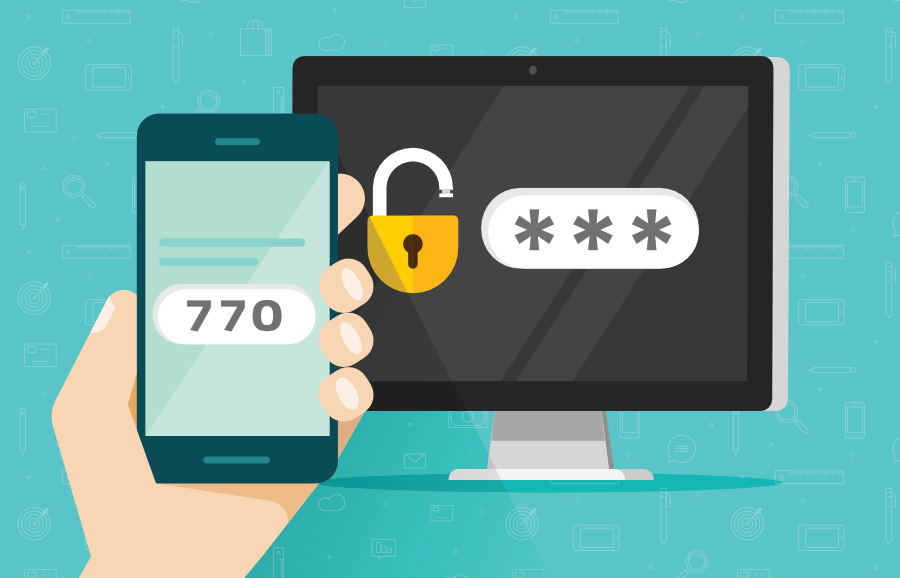
Working of Two-Factor Authentication:
The process of enabling two-factor authentication differs based on the application or vendor. But the general processes are as follows :
**Step 1: User Initiates Login
- In the first step the user need to enters their **username and password (the "something you know" factor).
- After the entering the credentials the server verifies these credentials against its database.
- **Example: When you logging into Gmail with your email and password.
**Step 2: Second Factor Activation
- When the password is verified the system begins the second authentication step.
- In this step the user must prove ownership of a physical device (**possession) or provide a biometric **inherence.
- **Examples: User receiving an **SMS in which the OTP (one-time password) is present on your phone or scanning your fingerprint via **biometric authentication.
**Step 3: Unique Code Generation
- Than the server generates a **time-sensitive code (e.g., 6-digit OTP) or requests a physical token.
- This code is sent via SMS, email, or generated by an **authenticator app (e.g., Google Authenticator).
Note: Codes expire in 30-60 seconds so that to preventing reuse.
**Step 4: User Submits Second Factor
- After receiving SMS the user enters the OTP, taps a **security key, or scans their face/fingerprint.
- **Example: Typing the SMS code sent to your phone or using a **YubiKey.
**Step 5: Server Validation
- Than the server checks if the second factor matches its records.
- If both factors are validated than the sever access is granted.
5 Pillars of Authentication Factors
Authentication factors verify a user's identity based on what they know, possess, are, where they are, or when they are trying to access a system.
- **Knowledge Factor: A knowledge factor is something that the user is aware of, such as a password, personal identification number (PIN), or another sort of shared secret.
- **Possession Factor: To approve authentication messages, a possession factor is something that the user owns, such as an ID card, a security token, a telephone, a mobile device, or a smartphone app.
- **Biometric Factor: A Biometric factor, also known as an inference factor, is anything that is inherent in the physical self of the user. Personal traits mapped from physical characteristics, such as fingerprints confirmed by a fingerprint reader, may be included. Facial and voice recognition, as well as behavioral biometrics such as keyboard dynamics, gait, or speech patterns, are other often employed inference variables.
- **Location Factor: The location from which an authentication attempt is conducted is typically used to identify a location factor. This can be enforced by limiting authentication attempts to specific devices in a specific location or by tracking the geographic source of an authentication attempt based on the source Internet Protocol address or some other geolocation information derived from the user's mobile phone or another device, such as Global Positioning System (GPS) data.
- **Time Factor: A time factor limits user authentication to a defined time window for logging on and prevents access to the system outside that window.
Types of Second Factors in Two-Factor Authentication (2FA)
The second layer factors are designed to make sure that even if an attacker has your password, they will not be able to access your account without something you have, are, or hold in your physical possession.
1. Possession-Based 2FA (Something You Have)
This is the most common form of two-factor authentication. It confirms your identity by requiring you to have something in your possession.
**Example:
- **SMS OTP (One-Time Password): A 6-digit code sent via text when you log in.
- **Email OTP: Similar to SMS, but the code is sent to your email address.
- **Authenticator Apps: Like Google Authenticator, Microsoft Authenticator, or Authy, these generate time-based codes on your smartphone.
- **Hardware Tokens: Small devices that generate OTPs or plug into your computer.
2. Inherence-Based 2FA (Something You Are)
This type of second factor uses biometric authentication—a physical characteristic that’s unique to you.
**Examples:
- **Fingerprint Scanning: Used in phones, laptops, and secure systems.
- **Face ID: Facial recognition used in iPhones and other modern devices.
- **Iris Scan or Retina Scan: More advanced, used in government and military systems.
3. Physical Tokens
This factor requires you to plug in or tap a physical security device to authenticate your login.
Examples:
- **YubiKey: A tiny USB or NFC device used for passwordless or two-factor authentication.
- **Smart Cards: Physical cards used by enterprises and government for secure access.
- **FIDO2 Security Keys: Compatible with passwordless login protocols.
For more deatils refer Types of Two-factor Authentication
Two-Factor Authentication Security
A 2FA-enabled account is far more secure than a simple username and password login, but it is not completely foolproof.
- **2FA Security through Text Message: One of the most important 2FA security issues for text messaging is the ability of users to preserve their cell phone numbers even when switching providers. Hackers can use mobile number portability to represent you and swap your number to a phone they control.
- **Applications for Authentication: Because leaving your smartphone unattended at work or losing it while traveling puts your accounts at risk, 2FA Security Authentication apps like Google Authenticator are inclined to devise theft.
Similarly, security tokens, which are often regarded as one of the most secure types of 2FA, can be compromised at the manufacturer level.
Also Read: Two Factor Authentication Implementation Methods and Bypasses
Two-Factor Authentication Best Practices
Two-factor authentication provides ample protection but can be best practiced using the following ways :
- **Do not use your personal phone number: Phone companies are renowned for being duped into changing account information by skilled hackers. Instead, create a personal Google Voice number that you may keep indefinitely and that no phone carrier can modify.
- **Account resets through email should not be used: It is more convenient to reset your passwords via email. This is because it allows a hacker to easily overcome other 2FA techniques and access the account with just a username and password.
- **Use a mix of authentication mechanisms: Multiple 2FA methods can be used to safeguard multiple accounts. And the more 2FA options you employ, the more secure your data will be.
Two-Factor Authentication Examples
- **In Google: To guard against the ongoing threat of phishing - fraudulent efforts to get passwords and other sensitive details through trustworthy appearing emails or websites. Google provides several types of two-factor authentication. In addition to the usual password, users can enter a one-time security code received through SMS or voice call or generated on the Google Authenticator app, which is available on Android and Apple's mobile operating system iOS. Within their Google Account, users can also submit a list of trusted devices. If a user attempts to log in from a device that is not on the list, Google will issue a security warning.
- **Epic Games: Windows Central explains why you should double-protect this account in particular: a lot of scammers target the game's younger users with enticing links that offer free Vbucks, and Fortnite in-game money. These are phishing scams designed to steal your login credentials and gain access to your account (as well as any payment information you've saved to purchase Vbucks). If you have Fortnite-obsessed children, you should probably enable 2FA on your Epic Games account. To enable 2FA for Fortnite, go to your account settings page, click on the PA tab, and then select either enable authentication app or enable email authentication under the two-factor authentication title.
- **In Apple: Apple account holders can utilize two-factor authentication (2FA) to ensure that their accounts can only be accessed from trustworthy devices. If a user attempts to access their iCloud account from a separate computer, they will require not only their password but also a multi-digit code sent by Apple to one of their devices, such as their iPhone.
Conclusion
Hackers don’t need to break in—they just log in. From social media accounts to banking apps, cybercriminals use phishing, password leaks, and credential stuffing to gain access. Two-factor authentication (2FA) is your next line of defense—and it works.
According to Microsoft, 2FA blocks 99.9% of automated cyberattacks. That’s huge. Whether it’s an SMS OTP, a fingerprint scan, or a physical security key, adding that extra step stops attackers even if your password is stolen.