Human Capital Formation (original) (raw)
Last Updated : 5 Jun, 2026
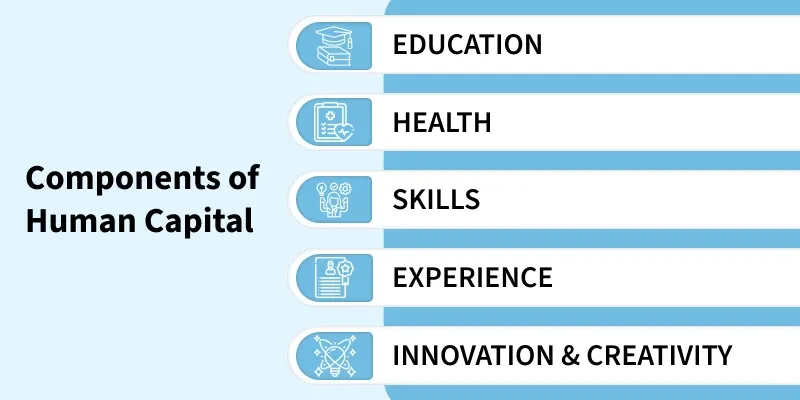
Human capital refers to the stock of knowledge, skills, experience, and health possessed by individuals that enables them to contribute effectively to economic and social activities. It is developed through investments in education, training, and healthcare, which enhance productivity and earning capacity. Unlike physical capital, which consists of tangible assets such as machines and buildings, human capital is intangible but plays a crucial role in long-term development. In a developing country like India, human capital formation is essential for achieving inclusive growth, improving living standards, fostering innovation, and increasing participation in the modern economy. Therefore, human capital formation is not merely the accumulation of knowledge and skills but also the creation of opportunities that allow individuals to realize their potential and contribute to national progress.
**Sources of Human Capital Formation
Human capital formation refers to the process by which a nation’s people acquire and enhance their productive capacities through education, training, and health improvement. In a developing country like India, it is essential for accelerating growth, reducing poverty, and achieving self-reliance. Human capital is what transforms physical and natural resources into productive output. The main sources of human capital formation include:
**Education: Education is the most fundamental source of human capital formation. It enriches individuals with knowledge, skills, and discipline, enabling them to perform complex economic, social, and technological tasks more effectively. Investment in education not only improves an individual’s earning capacity but also contributes to the nation’s development by fostering innovation and social progress.
- It raises productivity and efficiency of labour.
- It improves employment opportunities and income levels.
- It promotes scientific thinking and adoption of modern technology.
- It contributes to nation-building by reducing poverty and inequality.
**Health: Health is an equally critical aspect of human capital. A healthy individual can work more effectively, think clearly, and contribute meaningfully to production and social welfare. Spending on health—such as hospitals, nutrition, clean drinking water, and sanitation—must be viewed as an investment rather than a cost. A weak or sick workforce limits productivity, while a healthy population supports sustained growth.
- Ensures higher physical and mental efficiency of workers.
- Reduces absenteeism and loss of working hours.
- Enhances life expectancy and quality of life.
- Promotes greater participation in education and skill-building.
**On-the-Job Training: Training received at the workplace helps employees gain practical experience and hands-on skills. It enhances efficiency and the ability to handle advanced machinery or new processes. Industries that invest in employee training experience higher productivity, fewer errors, and stronger innovation.
- Builds specific job-related competencies.
- Improves morale and motivation among workers.
- Increases adaptability to technological and organizational changes.
- Helps in career advancement and professional growth.
**Migration: Migration contributes to human capital formation by enabling individuals to utilize their skills in regions or countries with better employment opportunities. Workers who migrate often gain access to modern tools, higher wages, and advanced work practices, which improve their overall efficiency.
- Leads to optimal use of human resources across regions.
- Facilitates transfer of knowledge and skills.
- Helps in reducing disguised unemployment in rural areas.
- Generates foreign exchange through remittances from international migrants.
**Information: Access to reliable information is essential for efficient human capital formation. Awareness about educational opportunities, job openings, healthcare services, and training programs enables individuals to make informed decisions about where to invest their time and resources.
- Helps individuals choose the right education and career paths.
- Reduces mismatch between skills and job requirements.
- Encourages participation in government skill and employment programs.
- Promotes equal access to development opportunities.
Together, these sources contribute to building a strong foundation for human development, economic productivity, and social well-being.
Role and Importance of Human Capital Formation
Human capital plays a vital role in promoting economic growth and improving the overall standard of living. The development of a nation depends not only on physical and natural resources but also on how effectively its people can utilize these resources. A skilled, educated, and healthy population acts as both a means and an end of economic development.
**Enhances Productivity and Efficiency: Education and training improve workers’ knowledge and technical abilities, enabling them to perform tasks more efficiently. A skilled workforce increases output per worker, reduces wastage, and helps industries operate at higher levels of productivity.
**Promotes Innovation and Technological Advancement: A well-educated and creative population contributes to research, innovation, and adoption of new technologies. Scientists, engineers, and entrepreneurs help in developing modern production techniques that boost competitiveness and economic progress.
**Facilitates Utilisation of Natural and Physical Resources: Human capital helps convert natural and physical resources into productive use. For example, skilled farmers can use modern machinery effectively, and trained engineers can build better infrastructure, thereby increasing the value derived from available resources.
**Encourages Entrepreneurship and Economic Diversification: Education and exposure to new ideas encourage individuals to start their own ventures. Entrepreneurial activity promotes job creation, innovation, and balanced regional development, reducing dependence on agriculture and traditional sectors.
**Improves Income and Living Standards: Investment in education and health leads to better job opportunities and higher earnings. With increased income, people can afford better living conditions, healthcare, and education for their families, which further enhances human capital formation.
**Reduces Poverty and Unemployment: A more skilled and productive workforce can find or create employment more easily. This reduces dependence on low-income jobs, raises the standard of living, and helps alleviate poverty over time.
**Strengthens Social and Economic Institutions: Human capital formation also promotes social awareness, political participation, and civic responsibility. Educated citizens are better equipped to make informed decisions, contributing to transparent governance and stable economic systems.
Human Capital and Human Development
Human capital and human development are closely related concepts, but they differ in their focus and scope. Both emphasize investment in people, yet their ultimate objectives are distinct.
Human Capital refers to the stock of skills, knowledge, and health that enhances an individual’s productivity and contributes directly to economic growth. It focuses on improving efficiency to increase income and output.
Human Development, on the other hand, is a broader concept that focuses on improving people’s overall well-being. It includes not just education and health but also freedom, equality, and opportunities to lead meaningful lives.
| **Basis | **Human Capital | **Human Development |
|---|---|---|
| **Main Focus | Productivity and economic growth | Overall improvement in quality of life |
| **Purpose | Means to achieve higher income and output | End in itself for human welfare |
| **Key Components | Education, training, and health | Education, health, equality, and freedom |
| **Measurement | Often measured in terms of income and productivity levels | Measured using indicators like HDI (Human Development Index) |
| **Perspective | Economic and utilitarian | Social and holistic |
| **Outcome | Enhances individual earning capacity | Promotes human dignity and social justice |
**Interdependence Between the Two
Though different, both concepts are interlinked. Investment in human capital through education and health contributes to human development, while human development ensures that individuals can utilize their capabilities effectively. Sustainable growth requires progress in both.
State of Human Capital Formation in India
India has made significant progress in human capital formation since independence through consistent investments in education, health, and skill development. However, challenges such as unequal access, quality gaps, and regional disparities continue to affect its overall growth potential. The government has implemented several initiatives aimed at strengthening the human resource base of the country. Educational expansion, vocational training programs, and health infrastructure development have been key priorities.
**Education Sector Growth: India has improved literacy and educational access through the expansion of schools, colleges, and universities. Government programs have also promoted vocational and digital learning.
**Health Sector Improvements: Healthcare facilities and services have expanded, leading to better health outcomes. Life expectancy has increased while infant mortality and disease rates have declined.
**Skill Development Initiatives: Skill development programs provide training to improve employability and entrepreneurship. They help youth acquire industry-relevant skills for modern job markets.
**Persistent Challenges: India still faces issues such as unequal access to education and healthcare, quality concerns, and skill mismatches. These challenges limit the full development of human capital.
**Role of Human Capital in Economic Development
**Enhances Productivity and Efficiency: A skilled and knowledgeable workforce performs tasks more effectively and makes better use of available resources. Educated workers can handle modern technologies, reduce wastage, and increase overall production efficiency. As productivity rises in both industrial and agricultural sectors, the economy experiences faster and more balanced growth.
**Encourages Innovation and Entrepreneurship: Human capital fosters creativity and problem-solving abilities, leading to innovation and new business ventures. When people are trained and educated, they are better equipped to develop new technologies and improve production methods. This promotes entrepreneurship, generates employment, and strengthens the foundation for long-term development.
**Improves Employment Opportunities: Education and skill development expand employment opportunities by preparing individuals for diverse professions. A well-trained workforce can adapt to market needs, reducing both unemployment and underemployment. This not only increases income levels but also enhances job security and economic stability.
**Promotes Inclusive Growth: Investment in human capital ensures that development benefits reach all sections of society. Better access to education and healthcare empowers marginalized groups, promotes gender equality, and reduces poverty. Inclusive human development thus leads to a more equitable and cohesive economy.
**Supports Technological Advancement: Human capital enables economies to adopt and innovate with modern technologies. Skilled individuals drive research and innovation, improving industrial competitiveness and export potential. Moreover, the ability to adapt to global technological changes strengthens the country’s position in international markets.
Challenges in Human Capital Formation in India
Despite progress in education, health, and skill development, India continues to face several challenges that limit the full potential of human capital formation. These challenges are both structural and qualitative in nature.
**Regional and Gender Disparities: Access to education and healthcare remains uneven across regions. Rural and backward areas often lack proper schools, hospitals, and training facilities. Women, in particular, face limited opportunities due to social and economic constraints, leading to underutilization of human resources.
**Quality of Education and Skill Mismatch: While enrollment levels have improved, the quality of education and training often falls short of global standards. Many graduates lack practical and job-oriented skills, creating a mismatch between industry requirements and workforce capabilities.
**Inadequate Health Facilities: Public health infrastructure in several regions remains weak. Shortages of doctors, hospitals, and medicines in rural areas reduce the effectiveness of health programs. Poor nutrition and sanitation also affect labor productivity and learning outcomes.
**Low Public Expenditure: Government spending on education and health as a percentage of GDP remains below international norms. Limited financial resources hinder the expansion and modernization of schools, colleges, and healthcare centers.
**Brain Drain: A significant portion of India’s highly educated and skilled professionals migrate abroad for better opportunities. This results in a loss of talent and expertise that could otherwise contribute to national development.
**Unemployment Among Educated Youth: Rapid expansion of education without corresponding job opportunities has led to rising unemployment among graduates. This not only wastes human potential but also affects economic stability.