Selenium WebDriverInstallation (original) (raw)
Selenium WebDriver-Installation
Last Updated : 25 Jul, 2025
Selenium WebDriver is an open-source tool that provides a flexible programming interface, compatible with multiple programming languages, which helps in the automation of web browsers.
Before installation, complete below requirements to install the web driver:
- Install JDK (Java Development Kit).
- Install Eclipse.
- Selenium WebDriver dependencies.
1. Installation of JDK (Java Development Kit)
Java Development Kit (JDK)is one of the most important tools for developers who use it to build, compile, and run Java applications. We need java as a programming language to run the Selenium automation scripts.
Step 1: Visit the Official Website
Go to the Official JDK website to download the file.
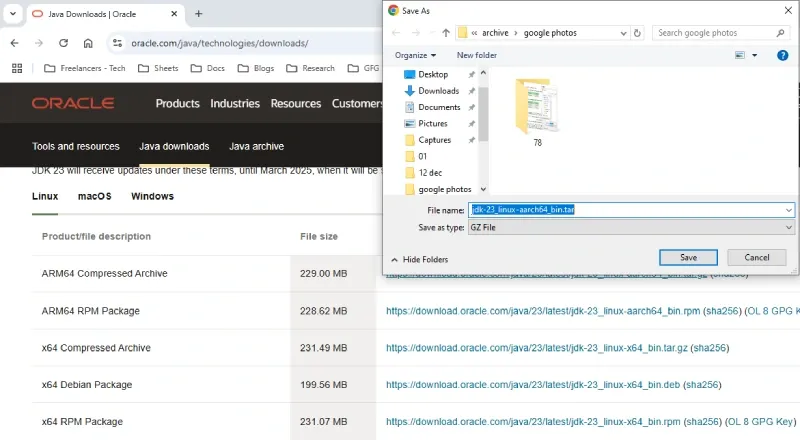
Oracle Official Website
Since JDK is an open-source, so you can get it from OpenJDK in a few clicks.
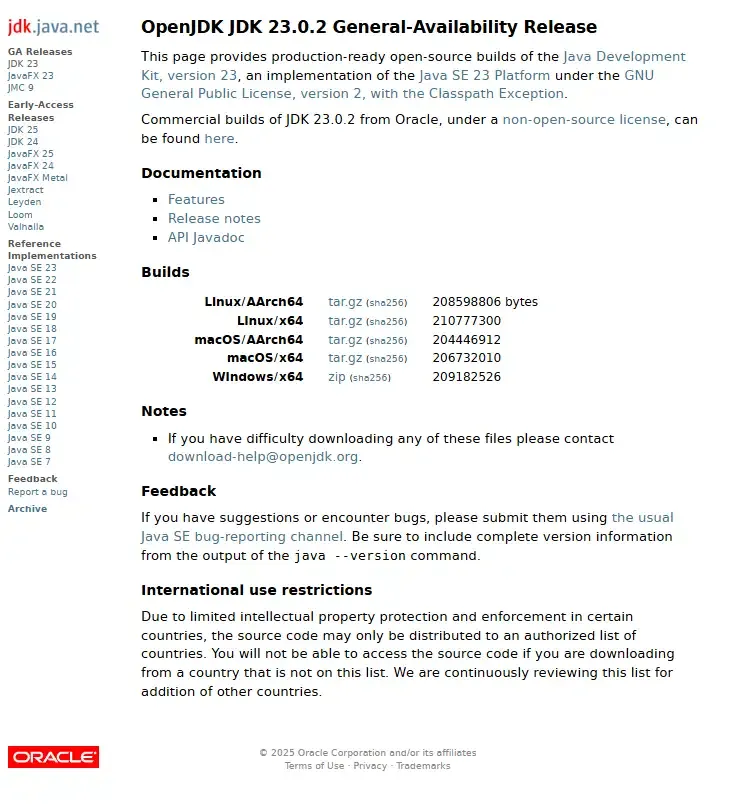
OpenJDK
Step 2: Select the Appropriate Version
As of 2025, the latest stable versions are **JDK 23 (SE) and **JDK 21 (LTS). Select the compatible version as per your operating system (Windows, Mac or Linux)
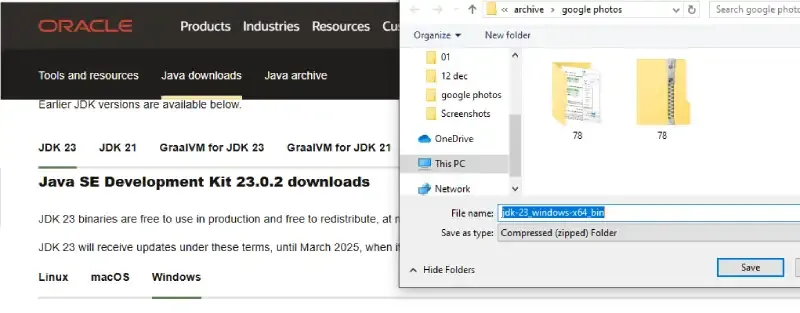
JDK Latest Version - Download
Step 3: License and Agreement
Go through all the License and Agreement before downloading (from Oracle website), it will not ask if you'll download it from OpenJDK website. Follow the below steps to install JDK on Windows environment __i.e._Windows 7, Windows 8, Windows 8.1, Windows 10, and Windows 11.
**Step 1: Run the Java Development Kit (JDK) Installer
Locate the downloaded .exe file ****(e.g. jdk-23-windows-x64_bin.exe)** and make the double click to begin the Installation process. Follow the installation wizard prompts to complete the installation process.
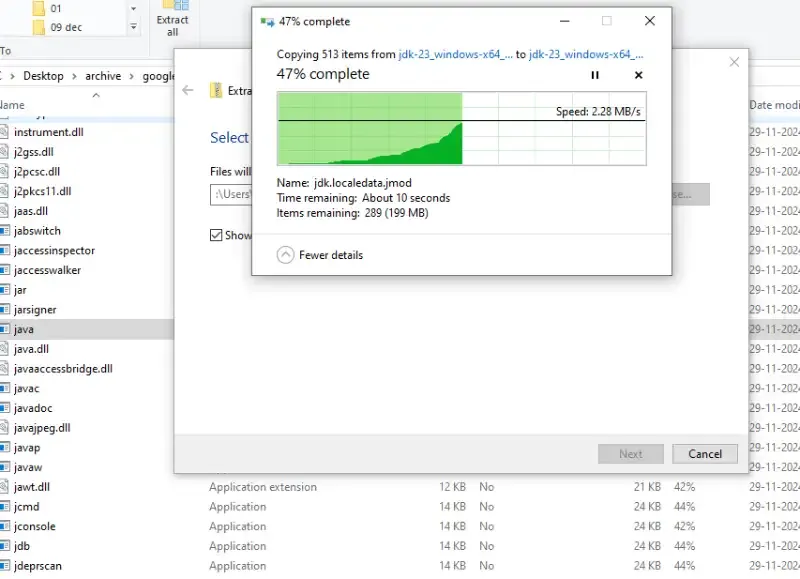
JDK Installer for Windows
**Step 2: Setup the Environment Variables
Once the installation gets completed, you need to configure environment variables to notify the system about the directory in which the **JDK files are located.
Proceed to **C:\Program Files\Java\jdk-{YOUR_JDK_VERSION}**\bin (replace {-} with your JDK version)
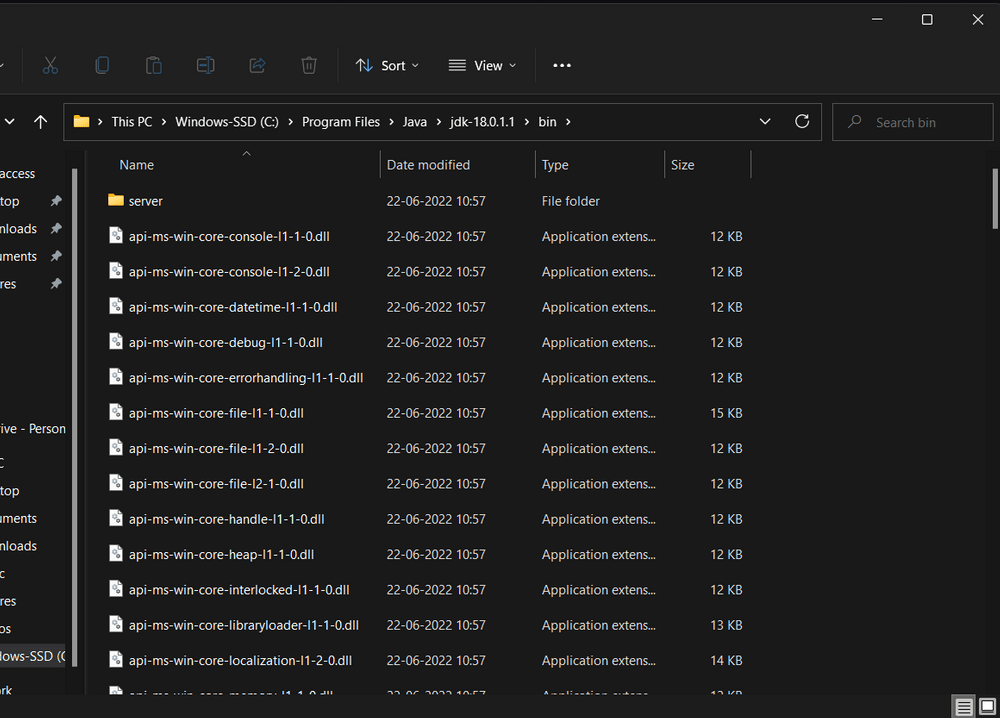
Program Files
**Step 2.1: To set the Environment Variables, you need to search Environment Variables in the Task Bar and click on **“Edit the system environment variables”.
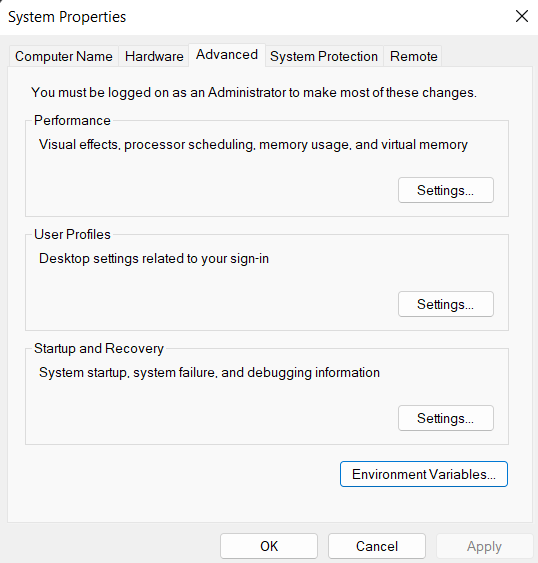
System Properties
**Step 2.2: Under the **Advanced section, Click on ****"Environment Variables"**.
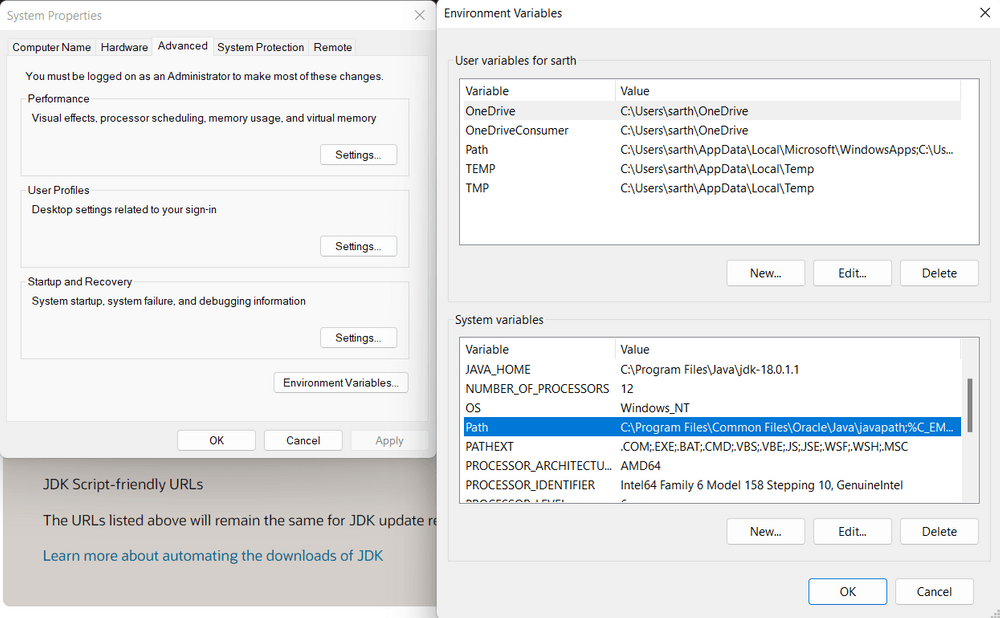
Environment Variables
**Step 2.3: Under **System variables, select the ****"Path"** variable and click on ****"Edit"**. Click on ****"New"** then paste the Path Address i.e. **C:\Program Files\Java\jdk-{YOUR_JDK_VERSION}**\bin. Click on ****"OK"**.
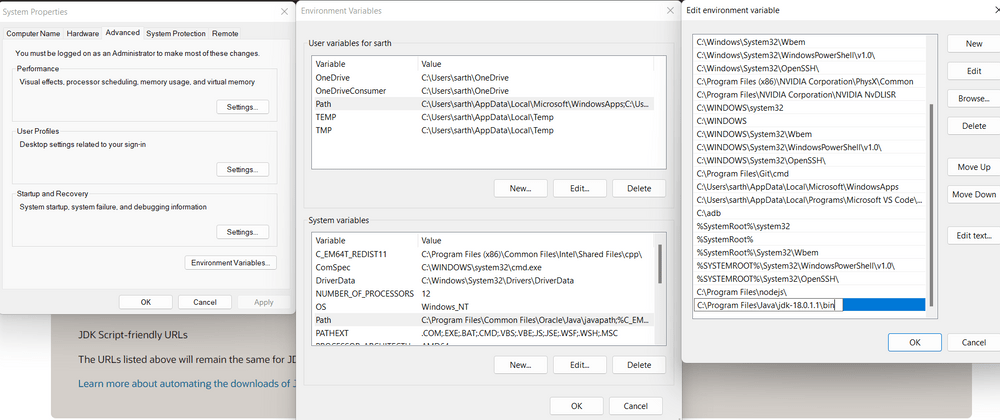
Path
**Step 2.4: Now, in the **Environment Variables dialogue, under **System variables, click on ****"New"** and then under **Variable name: JAVA_HOME and **Variable value: paste address i.e.
**C:\Program Files\Java\jdk-{YOUR_JDK_VERSION}. Click on **OK => OK => OK.
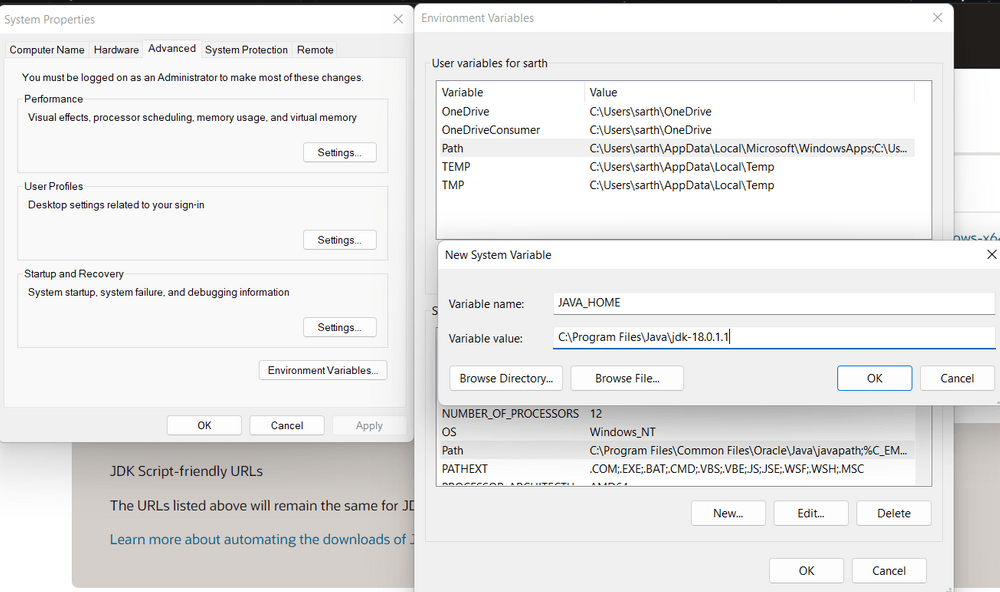
System Properties
**Step 3: Check the Java Version
Open Command Prompt and enter the following commands:
java -version
javac -version
2. Install Eclipse
Eclipse is one of the most widely used Integrated Development Environments (IDEs) among developers worldwide. Whether you're programming in **Java, Python, C++, or other languages, Eclipse offers a powerful and customizable platform to code, debug, and test applications.
Now let's look at the step-by-step process to download and install Eclipse on Windows:
Step 1: Open Browser
- Open your browser and go to the official Eclipse Download Official Site.

**Step 2: Download Eclipse Installer
- Then, click on the "**Download" button to download Eclipse IDE.

**Step 3: Download EXE
- Now, click on the "**Download x86_64" button.

- Then click on the "**Download" button. After clicking on the **download button the .exe file for the eclipse will be downloaded.

**Step 4: Open Download EXE
- Now go to File Explorer and click on "**Downloads" after that click on the "**eclipse-inst-jre-win64.exe" file for installing Eclipse IDE.
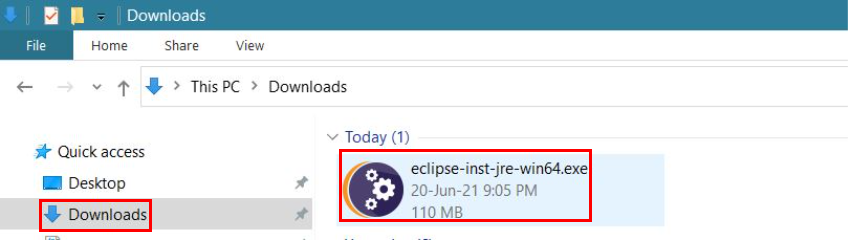
**Step 6: Install Eclipse
- Then, click on "**Eclipse IDE for Java Developers".

- Then, click on the "**Install" button.

**Step 8: Create New Project
- Now click on "Create a new Java project".

- Now, you're prepared to make new Java initiatives the usage of eclipse IDE and the display screen will appear like this :
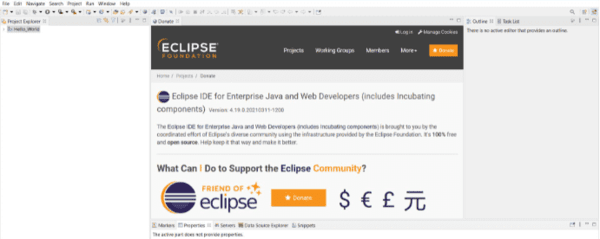
Now you have successfully installed Eclipse software on your Windows PC. After these we are installing Selenium WebDriver.
Installing Selenium WebDriver
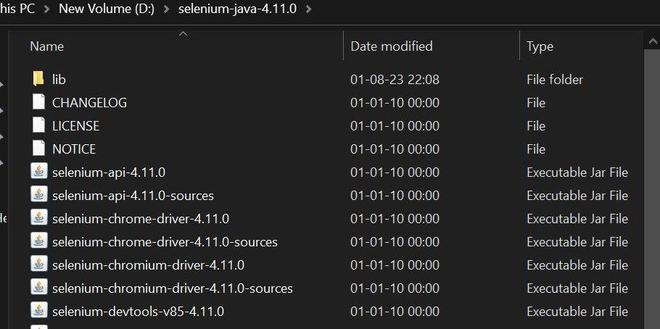
1. Install Selenium WebDriver for Java on your system. Download the latest version of Selenium WebDriver for Java from Selenium Download page. Download the Zip file.
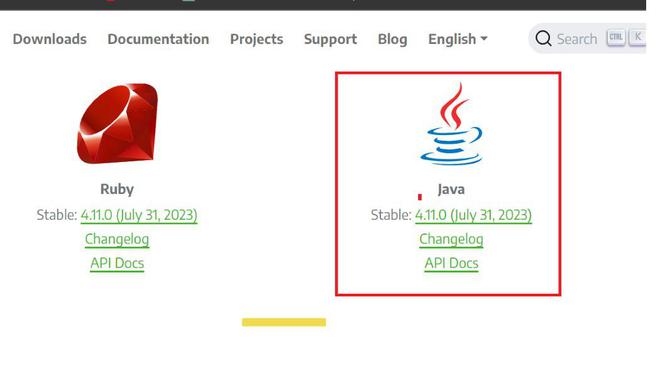
2. Extract the ZIP file to the desired folder and extract the ZIP file to the desired folder.
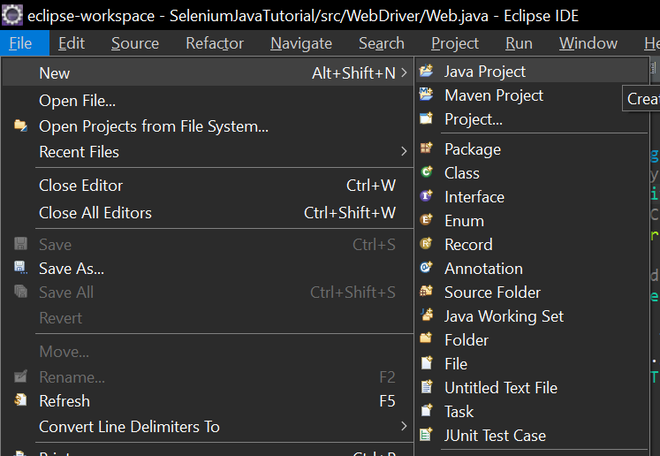
3. Launch Eclipse and select File -> New -> Java Project. Enter a name for your project (e.g., SeleniumTest) and click Finish.
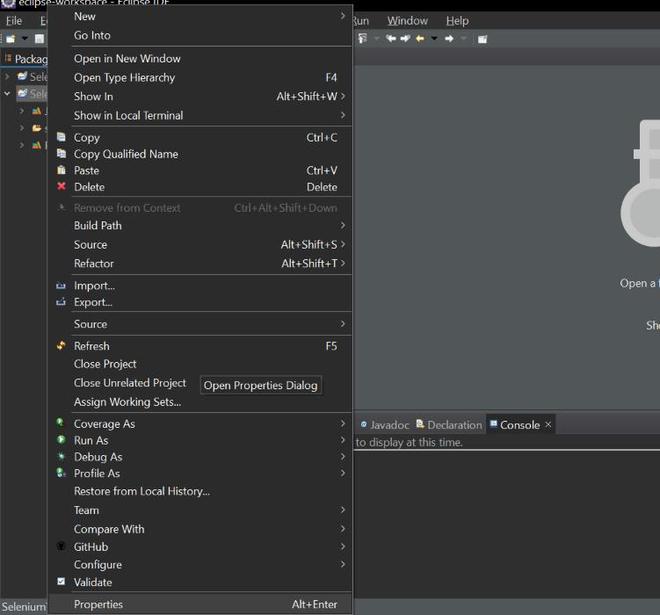
4. Right-click on your project in Package Explorer and select Properties.
5. Select Java Build Path from the left panel and click on the Libraries tab and then select Classpath.
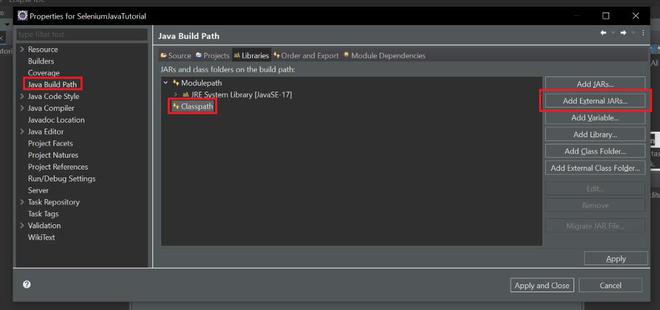
6. Click on Add External JARs and browse to the location where you downloaded and extracted the zip file of the Selenium WebDriver library (e.g., selenium-java-4.1.0).
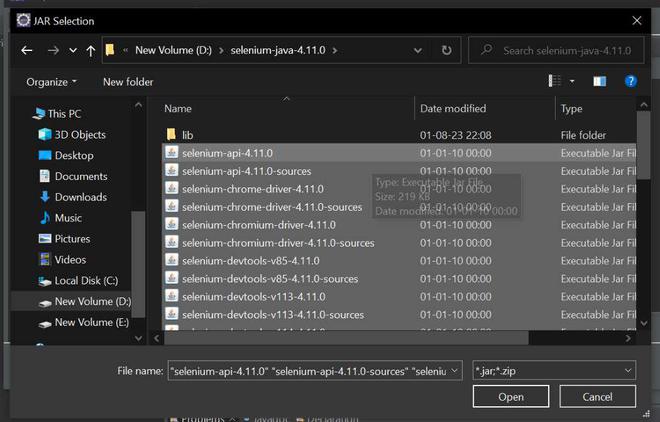
7. Select all the JAR files inside the zip file and click Open and also all the files inside the lib folder.
(D:\selenium-java-4.11.0, D:\selenium-java-4.11.0\lib). . Click Apply and Close to save the changes.
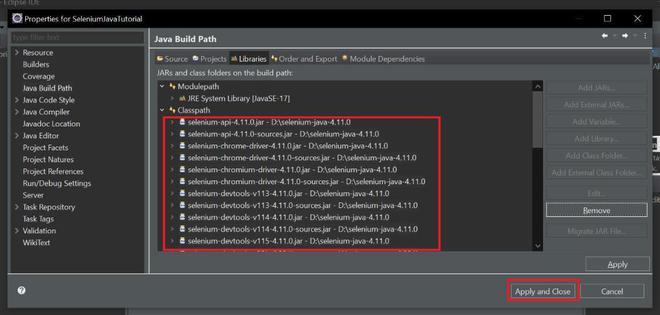
8. Verify that selenium is configured. Click on 'SeleniumTest'->Reference Libraries.
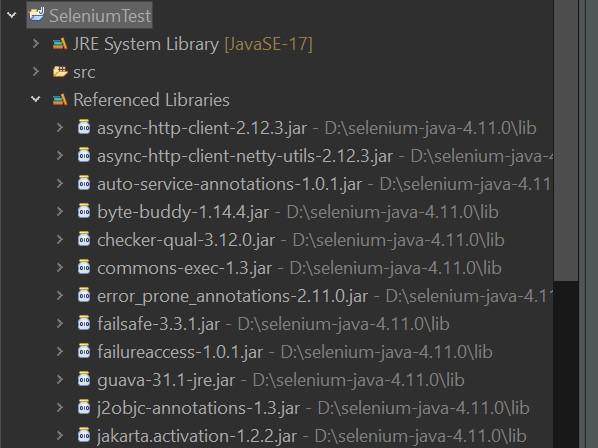
Hence, successfully installed Selenium WebDriver and now eclipse is ready to write the test script and automate web applications for testing.