Logging in Distributed Systems (original) (raw)
Last Updated : 18 Nov, 2025
Logging in distributed systems is the process of capturing and storing events from multiple services running across different machines. It helps track system behaviour, identify failures, and debug issues in complex, distributed environments.
- Tracks events across multiple services.
- Helps in debugging and error detection.
- Provides visibility into system performance.
- Uses centralized log storage.
- Often paired with monitoring and tracing tools.
This image shows how application logs are segmented and stored reliably using a layered architecture:
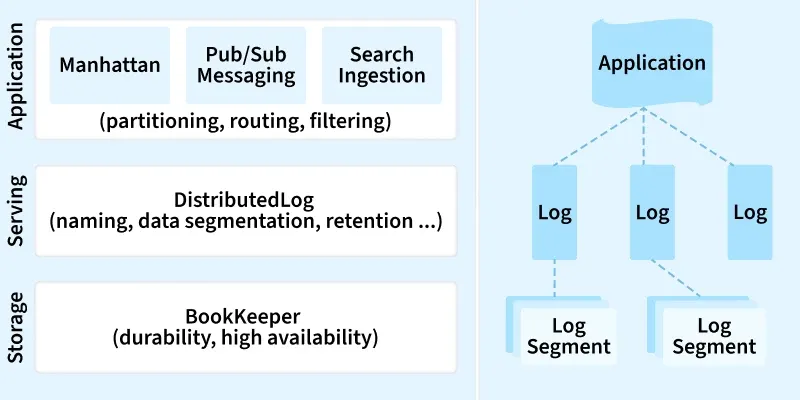
- The left side shows a three-layer architecture: Application - Serving - Storage.
- The Application layer (Manhattan, Pub/Sub Messaging, Search Ingestion) handles partitioning, routing, and filtering.
- The Serving layer (DistributedLog) manages naming, data segmentation, and data retention.
- The Storage layer (BookKeeper) ensures durability and high availability of data.
- The right side shows an application writing data into multiple logs, each log split into log segments for efficient storage and retrieval.
Types of Logs
In distributed systems, various types of logs help us keep track of what’s happening and fix problems.
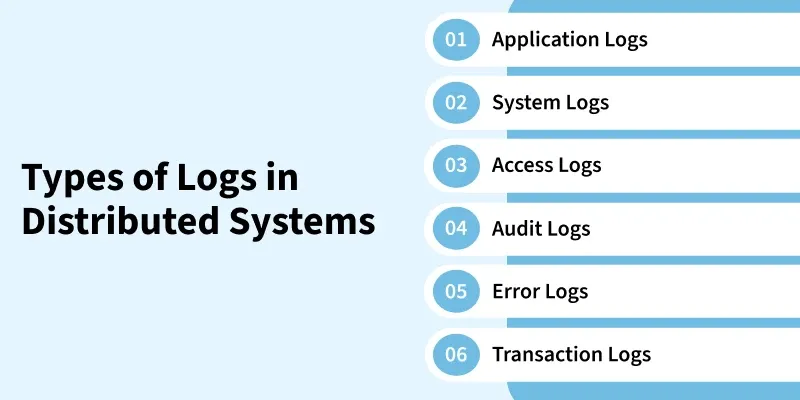
1. Application Logs
- These logs come from the software or services running in the system.
- They record events like errors, warnings, and normal activities.
- For example, if a web application crashes, the application log will show what went wrong. This helps developers understand and fix problems in the software.
2. System Logs
- System logs track what happens at the operating system level.
- They record details like when the server starts up, any issues with the hardware, or if the system is running low on resources.
- These logs help system administrators keep the servers healthy and troubleshoot issues that might affect performance.
3. Access Logs
- Access logs keep a record of who is using the system and what they are doing.
- For example, they log when a user visits a website, what pages they view, and if there are any errors. This helps in monitoring user activity and ensuring everything is working as expected.
4. Audit Logs
- Audit logs track changes and actions within the system for security and compliance.
- They record who made changes, what changes were made, and when.
- For example, if someone updates their profile or an admin changes settings, an audit log will capture this. It’s important for checking that everything is done correctly and for security reviews.
5. Error Logs
- Error logs focus on problems and mistakes in the system.
- They provide details about errors that occur, such as error messages and what caused the problem.
- For instance, if a service can’t connect to a database, the error log will help identify the issue. These logs are crucial for fixing issues quickly.
6. Transaction Logs
- Transaction logs track actions like transactions or updates to the system.
- For example, they record when a purchase is made or a database entry is changed. These logs are important for keeping track of data changes, making sure everything is consistent, and recovering data if something goes wrong.
A Modern Logging Pipeline
A modern centralized logging system functions as a multi-stage pipeline rather than a single tool. Each stage has a clear responsibility, from log creation to final visualization.
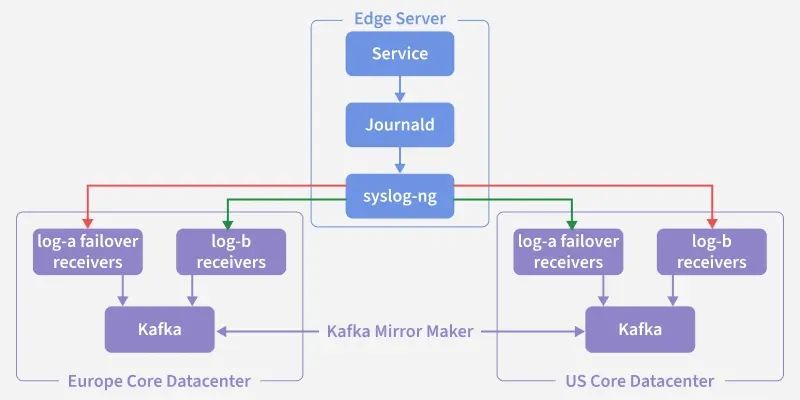
1. Generation
- Applications produce logs, ideally in structured formats like JSON.
- In containerized environments, logs are commonly written to stdout instead of local files.
2.Collection (Shipping)
- A lightweight log shipper runs on each server or container host.
- Tools such as Filebeat, Fluentd, or Loki Promtail continuously read log files or capture stdout streams and forward them to the processing layer.
3.Aggregation and Processing
A log processing engine (e.g., Logstash, Vector) receives data from all shippers and performs essential ETL functions:
- **Parsing: Converts raw text into structured fields (e.g., extracting IP addresses or timestamps).
- **Enrichment: Adds additional metadata, such as GeoIP data or service information.
- **Filtering: Removes unnecessary or noisy logs to reduce storage costs and increase efficiency.
4.Storage and Indexing
Processed logs are forwarded to a database optimized for large-scale search.
- **Elasticsearch: Most widely used, provides fast indexing and querying.
- **Loki: A cost-efficient alternative that indexes labels/metadata instead of full log content.
5. Analysis and Visualization
- A user interface on top of the storage layer allows engineers to search logs, troubleshoot issues, and build dashboards.
- Common tools include Kibana, Grafana, and Splunk, each providing querying, visualization, and alerting capabilities.
Log Collection and Aggregation in Distributed Systems
Log Collection and Log Aggregation are important steps in managing and using logs from a distributed system.
1. Log Collection
Log Collectionis about gathering logs from different parts of the system and sending them to a central place. Each part of the system, like different servers or services, creates its own logs.
- Log collection involves taking these logs and sending them to a central server or storage area where they can be kept together.
- This process makes sure that all the logs from various parts of the system are collected in one place so they can be reviewed and used later.
2. Log Aggregation
Log Aggregation happens after collection. It involves combining all these collected logs into a single, organized view. Once the logs are gathered, aggregation tools sort and organize them, making it easier to find and understand the information.
- Aggregation helps put together logs from different sources to see a complete picture.
- For example, if several services are involved in a single user action, log aggregation can bring together all the related logs, helping to understand what happened across the whole system.
Log Storage and Management in Distributed Systems
Log Storage and Log Management is very important in Distributed Systems:
1. Log Storage
Log Storage is about where you keep the logs after they are collected. In large systems, logs can grow quickly, so you need a good place to store them.
- Logs are usually stored in databases, cloud storage, or special log storage systems. The storage system should be able to handle a lot of data and keep it safe over time.
- It’s also important to organize the logs so that you can easily find what you need later. This might involve labeling logs with tags, dates, or categories to keep them sorted.
2. Log Management
Log Managementis about taking care of the logs after they’ve been stored. This includes deciding how long to keep logs, which is known as setting a retention policy.
- Some logs are important and need to be kept for a long time, while others can be deleted after a while.
- Log management also means keeping logs secure, making sure only the right people can see them, especially since logs can have sensitive information.
- Another part of log management is making sure you can easily search through the logs to find specific events or problems.
Log Analysis and Monitoring in Distributed Systems
Log Analysis and Log Monitoring are important for keeping track of what’s happening in a system.
1. Log Analysis
is about looking at logs to find useful information. Logs are records of events that happen in a system, like errors, user actions, or system performance. By analyzing these logs, you can understand what has happened in the system and why.
- For example, if there’s a problem, you can look at the logs to figure out what went wrong.
- Log analysis also helps you spot patterns, like repeated issues or unusual activity, which can help prevent future problems.
- There are tools that make it easier to search and analyze logs, even when there are a lot of them.
2. Log Monitoring
is about watching logs in real-time to quickly find and fix problems. Unlike log analysis, which usually looks at past events, log monitoring happens continuously. It involves keeping an eye on the logs as they come in and setting up alerts to warn you if something unusual happens, like a system crash or a security threat.
- Monitoring helps you catch issues early so you can fix them before they cause bigger problems.
- For example, if a server is having trouble, log monitoring can alert you right away, so you can take action before it affects users.
Handling Log Latency and Consistency in Distributed Systems
Handling Log Latency and Log Consistency are important for managing logs in a distributed system.
1. Log Latency
Log Latency is the delay between when something happens and when you see it in the logs. In a big system with many parts, this delay can happen because logs need time to travel from different places to a central storage or because of slow network connections.
- High log latency is a problem because it means you might not see important events quickly, making it harder to fix issues right away.
- To reduce log latency, you can use faster ways to transfer data, store logs locally for a short time, or process logs close to where they are created before sending them to central storage.
2. Log Consistency
Log Consistency means making sure that logs from different parts of the system are in sync and tell the full, accurate story of what happened. In a distributed system, different servers or services might record logs at different times, or logs might arrive out of order.
- This can make it hard to understand what really happened, especially when trying to solve a problem.
- To handle this, logs should have accurate timestamps, and the system should be able to sort logs correctly, even if they come in out of order.
- Using synchronized clocks across servers can also help keep logs consistent.
Key Challenges in Distributed Logging
While powerful, building a centralized logging pipeline presents significant challenges.
- **Log Volume & Cost: Distributed systems generate a tsunami of log data. Storing, indexing, and processing terabytes of data per day is extremely expensive and can become a major operational cost.
- **Loss of Context: A user's click might involve five services. How do you find the five specific log entries for that one click amidst millions of other logs? This is the single biggest problem.
- **Log Latency: The delay between an event happening and it appearing in your search UI. High latency makes real-time debugging impossible.
- **Inconsistent Timestamps: If server clocks are not perfectly synchronized (using NTP - Network Time Protocol), logs from different services will be out of order, making the story impossible to read correctly.
- **Security & PII: Logs often contain sensitive user data (passwords, API keys, personal info). This creates a massive security risk and can violate compliance laws like GDPR or HIPAA if not handled properly.