What is UserCentered Design Process? (original) (raw)
What is User-Centered Design Process?
Last Updated : 23 Jul, 2025
User-Centered Design (UCD) is a design approach that places the needs, preferences, and behaviors of the end users at the forefront of the development process. By focusing on real users from the very beginning, UCD ensures that the final product is not only functional but also intuitive and satisfying to use. This process involves continuous user feedback and iterative design, making it a powerful method for creating products that truly resonate with their target audience. In this article, we will explore the **User-Centered Design Process, breaking down each stage to understand how it contributes to creating products that users love.
**What is User-Centered Design?
User-Centered Design (UCD) is an approach to design that prioritizes the needs, preferences, and behaviors of users at every stage of the design process. The goal of UCD is to create products, websites, or applications that are intuitive, accessible, and satisfying to use. This design method involves gathering user feedback, conducting usability testing, and iterating designs based on real user insights. By focusing on the end-user, UCD ensures that the final product is not only functional but also delivers a positive experience, ultimately leading to higher user satisfaction and engagement.
Importance of User-Centered Design Process
The **User-Centered Design (UCD) process is crucial because it focuses on creating products that genuinely meet the needs of the users. Here’s why UCD is so important:
- **Enhanced User Satisfaction: UCD puts users at the heart of the design process, ensuring that the final product aligns with their expectations and needs. When users find a product easy to use and relevant to their needs, their overall satisfaction increases, leading to positive reviews and repeat usage.
- **Cost-Effective Development: By identifying usability issues early in the design phase, UCD helps prevent costly revisions later in the development process. This proactive approach reduces the need for expensive redesigns and ongoing maintenance, saving time and money.
- **Increased Market Success: Products designed with UCD principles are more likely to resonate with users and address their core needs effectively. This user alignment boosts a product’s chances of success in the market, leading to greater adoption and positive word-of-mouth.
- **Improved Accessibility: UCD ensures that products are designed to be accessible to a broader audience, including individuals with disabilities. This not only expands the potential user base but also demonstrates a company’s commitment to inclusivity and social responsibility.
Benefits of Implementing User-Centered Design Principles
- **Better Product Adoption: Products designed with users in mind are more intuitive and easier to use, leading to quicker adoption rates. Users are less likely to abandon a product out of frustration or confusion, which increases the likelihood of success.
- **Higher User Retention: Products that effectively meet user needs and are enjoyable to use tend to retain users over time. High user retention is crucial for the long-term success of any product in a competitive market.
- **Reduced Development Costs: By addressing potential issues early in the design process, UCD minimizes the need for costly revisions later. This streamlined approach to development ensures that resources are used efficiently.
- **Faster Time to Market: With a clear focus on user needs from the beginning, the development process becomes more efficient, allowing products to reach the market faster. This speed can be a significant advantage in competitive industries.
- **Market Competitiveness: Products developed using UCD principles often outperform those that are not user-centered. By focusing on what users truly want and need, companies can create products that stand out in the market and achieve greater success.
Principles of User-Centered Design
User-Centered Design (UCD) revolves around a few core principles that ensure the end product meets real user needs effectively:
- **Early and Continuous User Involvement: Involving users from the very beginning of the design process is crucial. Continuous user feedback throughout the development cycle ensures the product remains aligned with user expectations, resulting in a truly user-centered outcome.
- **Empathetic Understanding: Designers must deeply understand the users' needs, motivations, and pain points. By empathizing with users, designers can create products that resonate with them on a personal level, leading to a more meaningful and satisfying user experience.
- **Iterative Design: UCD is an ongoing, cyclical process where designs are continuously refined based on user feedback. This iterative approach allows designers to identify and fix issues early, improving the product's overall quality and usability.
- **Usability Testing: Testing with real users is a cornerstone of UCD. Usability testing helps identify any problems, bottlenecks, or areas that need enhancement. This evidence-based approach ensures that design decisions are informed by actual user behavior and feedback.
- **User-Centric Metrics: Measuring success through user-centric metrics like user satisfaction, task success rates, and retention levels provides valuable insights into how well the product meets user needs. These metrics help gauge the effectiveness of UCD efforts and guide future improvements.
Elements of User-Centered Design
- **User Research: The foundation of UCD is thorough user research. Techniques such as surveys, interviews, usability testing, ethnographic observations, and focus groups help designers understand users' needs, behaviors, and motivations. Creating user personas based on this research further guides the design process.
- **Prototyping and Testing: Designers create prototypes and mock-ups to test and validate their design ideas with real users. Prototyping allows for early detection of issues and refinement of the design, ensuring it aligns with user needs.
- **Usability Testing: Observing users as they interact with the product helps identify pain points, usability issues, and areas for improvement. This testing phase is crucial for making evidence-based design decisions and enhancing the overall user experience.
- **Iterative Design: UCD is inherently iterative. Designers use feedback and test results to make continuous improvements, cycling through design revisions until the product reaches its best possible version.
- **User-Centric Metrics: Metrics like user satisfaction, task success rates, and user retention are vital for measuring the success of UCD efforts. These metrics provide clear indicators of how well the product meets user expectations and where further improvements can be made.
By following these principles and elements, UCD ensures that the final product is not only functional and effective but also provides a satisfying and intuitive user experience, which is key to its success in the market.
User-Centered Design Process
The User-Centered Design (UCD) process is a systematic approach focused on creating products that meet the needs and preferences of users. It involves the following key steps:
**Step 1. Research
- **Identify Target Users: Start by understanding who your users are and what they need. This involves identifying different user types and creating detailed user personas to represent them.
- **Gather Data: Collect information through various methods such as surveys, interviews, and direct observation. This data helps in understanding users' behaviors, pain points, and desires.
**Step 2. Design
- **Develop Prototypes or Wireframes: Use the insights from your research to create initial designs, whether they are low-fidelity wireframes or more detailed prototypes. These designs should align with user preferences and effectively address their needs.
- **Incorporate User Needs: Ensure that the design reflects what users want and expect, focusing on usability, aesthetics, and functionality.
**Step 3. Testing
- **Conduct Usability Testing: Test the prototypes with real users to see how they interact with the product. Observe their behavior to identify any usability issues or areas for improvement.
- **Gather Feedback: Collect user feedback during testing to understand what works well and what needs enhancement.
**Step 4. Refinement
- **Analyze and Iterate: Review the feedback and test results to identify necessary changes. Make iterative design adjustments to resolve any issues and improve the overall user experience.
- **Final Validation: Once the design has been refined, conduct a final round of testing to ensure it meets user expectations.
**Step 5. Launch
- **Release the Product: After the design has been validated and refined, launch the product. Ensure it aligns with user expectations and provides a seamless experience.
- **Post-Launch Feedback: Continue to collect feedback from users even after the launch. Use this feedback to make further improvements and keep the product user-centered.
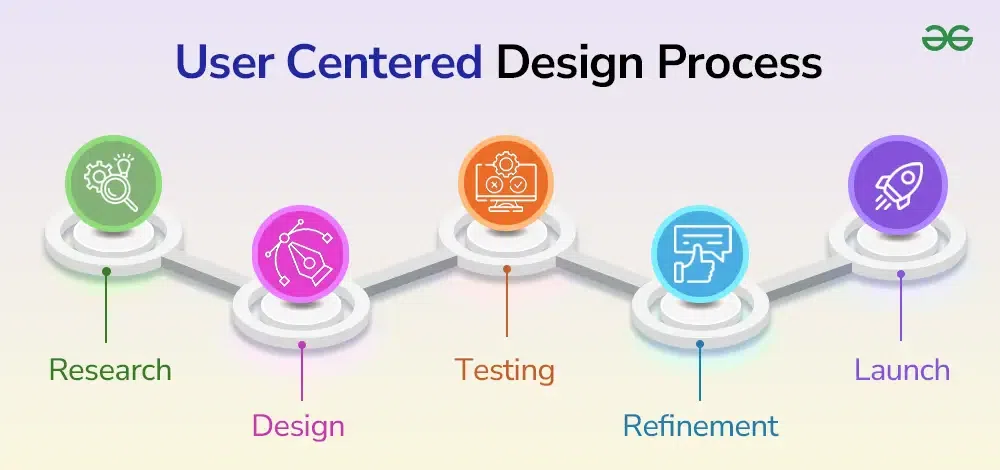
User Centered Design Process
By following this UCD process, you can create products that not only meet user needs but also enhance user satisfaction, leading to better market success and long-term engagement.
Conclusion
The **User-Centered Design Process is essential for creating products that align with user needs and expectations. By integrating users into every stage of design—from research to refinement—UCD not only improves usability but also increases the chances of a product's success in the market. Emphasizing empathy, iteration, and continuous feedback, this approach helps designers create meaningful, user-friendly experiences. Adopting UCD is not just about making a product that works; it’s about making a product that works for the people who use it.