Rubio says US position "unchanged" as Trump silent on Taiwan in China (original) (raw)
Chinese leader Xi Jinping warned the U.S. leadership in their summit on Thursday that differences over Taiwan could trigger a major conflict between the nations, moments after President Donald Trump had publicly heaped praise on his host.
Beijing's longstanding claim to the self-ruled island was "the most important issue" in China’s relations with the United States, Xi said.
"If it is handled properly, the bilateral relationship will enjoy overall stability. Otherwise, the two countries will have clashes and even conflicts, putting the entire relationship in great jeopardy," Xi said, according to a readout published by the Chinese Foreign Ministry.
Trump, who went into the landmark talks with a business-heavy agenda, did not respond when asked by reporters whether the topic of Taiwan was raised in the meeting. Later on Thursday, Secretary of State Marco Rubio said the U.S. position on the issue remained "unchanged."
The brief U.S. readout of the meeting did not mention Taiwan but highlighted trade ties and referred to the Iran war, saying both China and the U.S. wanted the Strait of Hormuz not to be controlled by Iran. Critically, China had also expressed interest in buying oil from the U.S., the White House said.
"Both countries agreed that Iran can never have a nuclear weapon," the readout said, in another sign of common ground between Beijing and Washington.
Before the state visit, foreign policy analysts in the U.S. and elsewhere raised concerns that Beijing could use its leverage over Tehran to help Trump secure an off-ramp and, in turn, extract concessions from Washington over material and rhetorical support for Taiwan.
Earlier, in spontaneous remarks before the summit, the U.S. leader was quick to offer platitudes and played up his personal relationship with Xi, who in contrast had used his prepared statement to caution America about the perils of great power war.
"It's an honor to be with you. It's an honor to be your friend. And the relationship between China and the U.S.A. is going to be better than ever before," Trump said.
Why Taiwan Matters
Democratically governed Taiwan is one of America's top trading partners and in recent years has solidified its place as the world's leading maker of advanced computer chips used in everything from smartphones and computers to fighter jets and missiles.
Beijing's claim to the island just off the Chinese mainland goes back decades—but so does the U.S.'s deep economic and security ties with Taipei, which buys most of its weapons from American defense companies.
The U.S. has no formal diplomatic relations with Taiwan but is bound by domestic law—the Taiwan Relations Act of 1979—to help the island's government defend itself from an ambitious China. Xi is expected to press Trump again to dial back American support for Taipei and also to stop the flow of arms to Taiwan's military.
Rubio in an interview with NBC News stressed that the U.S. stance on Taiwan and its right to self-governance "is unchanged as of today."
"It was raised," Rubio said of the Chinese demand. "They always raise it on their side. We always make clear our position and we move on to the other topics."
However, Rubio noted that the U.S. had laid out its position to Xi with "strategic ambiguity" and made clear that "there would be repercussions…globally" if China attempted to use force to unify Taiwan with the mainland.
"Taiwan is committed to maintaining the status quo and ensuring that the security of the Taiwan Strait is not threatened,” Taiwan’s Foreign Ministry spokesperson Hsiao Kuang-wei told Newsweek in a written statement.
“On the other hand, China continues to carry out threatening and aggressive maneuvers in the East China Sea, the South China Sea, the Taiwan Strait and the surrounding areas of Taiwan. The only destabilizing factor in the Taiwan Strait is China's authoritarian expansionism,” Hsiao said.
A senior U.S. official said in a media call before the summit that there would be no change in U.S. policy on Taiwan.
“Trump likely anticipated that there would be a mismatch in priorities in his agenda versus Xi Jinping's agenda, and likely was already prepared to be presented with a demand. One thing that remains to be seen post-summit is whether Trump continues to delay the approval of the $14 billion arms package to Taiwan that the Congress had already approved,” said William Yang, a senior analyst for the International Crisis Group.
“If he continues to delay that, it means he is to some extent willing to accommodate Xi’s demand. And in that case, Taiwan cannot completely rest assured that Trump would never consider undermining U.S. policies toward Taiwan for the sake of maintaining stability with China, or to secure a deal with China,” Yang told Newsweek.
“China's calculation likely is that they may not secure any concession on the seriousness that they attach to the issue of Taiwan in the U.S.-China bilateral context, but that Trump will understand their long-term expectation. And when they meet next time, they will gauge his willingness to actually honor the demand and then decide if Beijing will continue to pledge more agricultural purchases down the line,” he said.
Trump Wants Business First
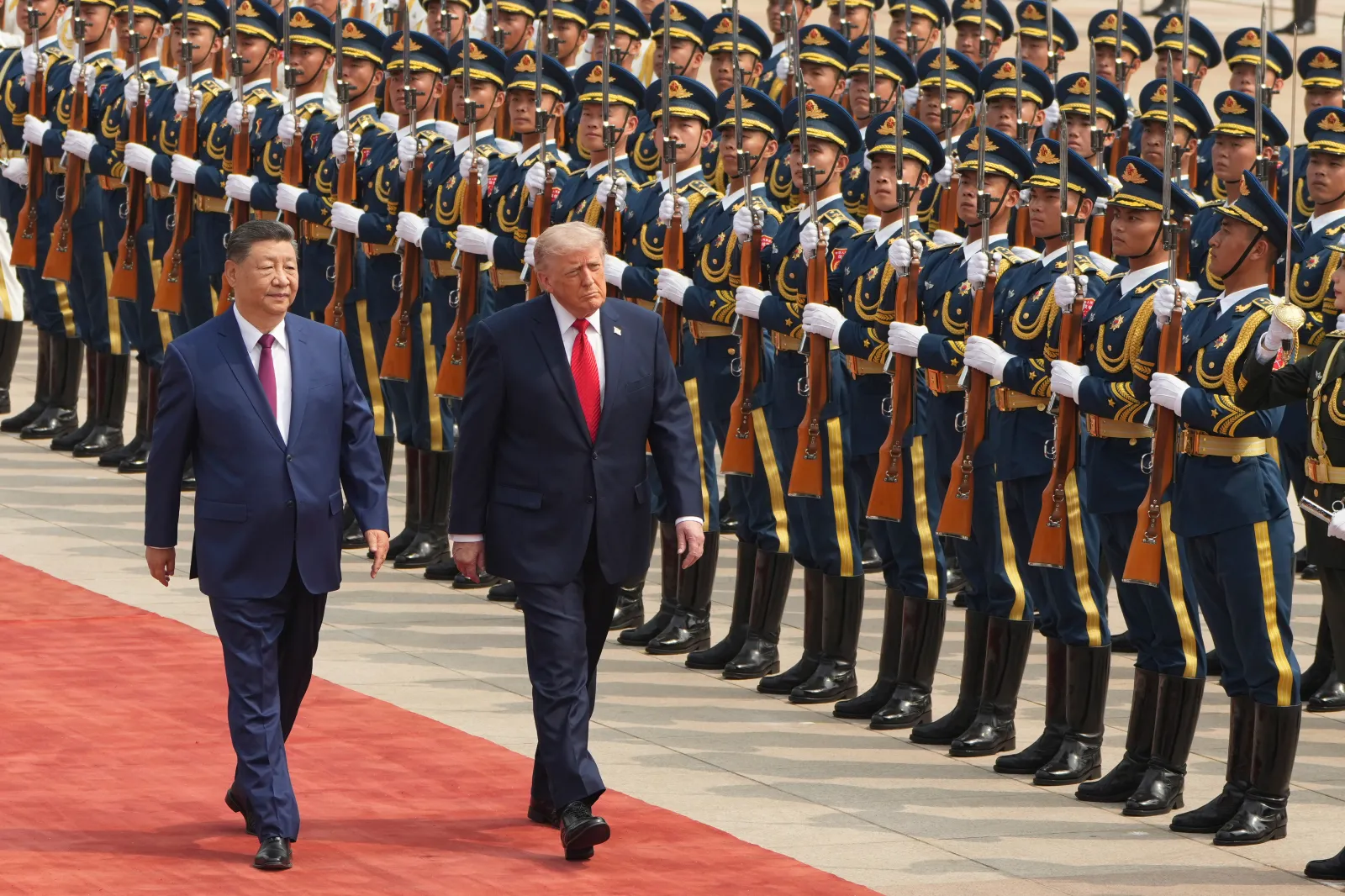
The summit between Trump and Xi began with much ceremony in front of the Great Hall of the People in Beijing, before they closed the conference room doors in search of substance.
Trump said earlier this week that he wanted to “open up” China to U.S. businesses, and he told Xi that the U.S. offer would be “totally reciprocal.”
His proposal was a throwback to the early 2000s, when the U.S. backed China’s entry into the World Trade Organization in the hope of tapping a market with massive potential—before the Chinese economy grew to become America’s fiercest rival.
For American business, the otherwise competitive Chinese market now presents real challenges for mainstays hoping for new breakthroughs.
Xi’s industrial policy has fed national champions like Huawei and BYD now competing on the global stage. His securitization of strategic commodities like rare earth metals—mirroring America's moves to protect its most advanced chipmaking expertise—now has come to define the front lines of the tech war.
It was former President Joe Biden who dealt the first and biggest blow to China in the current chip war, restricting the export of advanced semiconductors and of licenses to the allied tech that makes them.
Trump has maintained tight export controls on the most cutting-edge chips of American design—seen as a key advantage in the race to dominate artificial intelligence and other emerging technologies—but he has permitted the sale of some second-tier NVIDIA chips to Chinese companies. Xi doubtless will be asking for more.
But opportunities remain. While Elon Musk’s Tesla is losing market share in China to the country’s homegrown electric car giants, his Gigafactory in Shanghai has helped close the distance between the American carmaker and other burgeoning markets in Asia.
And even as Apple diversifies its supply chains under Tim Cook, the majority of its flagship iPhones are still assembled in Chinese plants, in the same industrial zones that have birthed competitors like Xiaomi.
"China will only open its door wider. U.S. businesses are deeply involved in China’s reform and opening up. China welcomes more mutually beneficial cooperation from the U.S.," Xi told Trump. "The two countries should expand exchanges and cooperation in areas such asthe economy and trade, health, agriculture, tourism, people-to-people ties and law enforcement."
Xi later met with U.S. business leaders across sectors including aerospace, agriculture and IT who had accompanied Trump on the trip. Xi "believes that American businesses will enjoy broader prospects in China," China's Foreign Ministry spokesperson Mao Ning said on X.
The White House said Trump and Xi discussed "expanding market access for American businesses into China and increasing Chinese investment into our industries."
"The Presidents also highlighted the need to build on progress in ending the flow of fentanyl precursors into the United States, as well as increasing Chinese purchases of American agricultural products," the readout said.
'Thucydides Trap'
In a midterm election year, the U.S. economy is on Trump’s mind. New trade deals with China, no matter how small, could move the needle in the American heartland, and any help on ending the Iran war could alleviate rising gas prices back home.
Xi, too, is searching for stability and relief, on the economy and from years of American political and military pressure on its growing influence around the world.
“The whole world is watching our meeting,” Xi told Trump earlier on Thursday, to see whether the two countries can “overcome the Thucydides Trap"—the political science theory that assumes a hegemon like the U.S. and a rising superpower like China will inevitably go to war over global supremacy.
"Building a constructive China-U.S. relationship of strategic stability is not a slogan. It means actions in the same direction," Xi later said.
It appeared from the outside that Trump had gone into the room to talk business while Xi was looking for ways to prevent mutually assured destruction. Trump's pleasantries also were a change from the more hawkish approach adopted in the final year of his first administration, a strategy of containment that Beijing saw as overtly confrontational, and which Biden found difficult to reverse.
The summit demonstrated “a widening mismatch between Beijing’s highly strategic and security-centric framing of the bilateral relationship in comparison to Washington’s more transactional, economically oriented approach,” Bryce Barros, an associate fellow at the GLOBSEC think tank, told Newsweek.
“There seems to be an earnestness in Xi's words that Trump and his entourage have not matched, yet. Unfortunately, that asymmetry between both parties will shape perceptions in Taipei, across the Indo-Pacific and beyond. This is particularly plausible when messaging from Beijing is clear, concise and faster than what the White House has provided so far,” Barros said.
“I am also struck by the confidence from Xi. Directly raising the ‘Taiwan question’ to Trump reinforces that confidence. It also flags concerns of how prepared the U.S. side was for Xi's hardball approach,” he said.
Xi said 2026 could be “a historic, landmark year that opens up a new chapter in U.S.-China relations.”
Ahead of the summit, his government had already set its red lines: no U.S. support for Taiwan; no U.S. lectures on democracy and human rights in China; no U.S. finger-pointing about China’s political system; and no U.S. obstruction of China’s economic development.
While few expected major breakthroughs on central sticking points in the relationship, for Trump, the promise of more Chinese investment in the U.S. might just be worth the trade.
At the state banquet on Thursday evening, Xi said he and Trump agreed that the U.S.-China relationship "is the most important bilateral relationship in the world."
"We must make it work and never mess it up," he said.
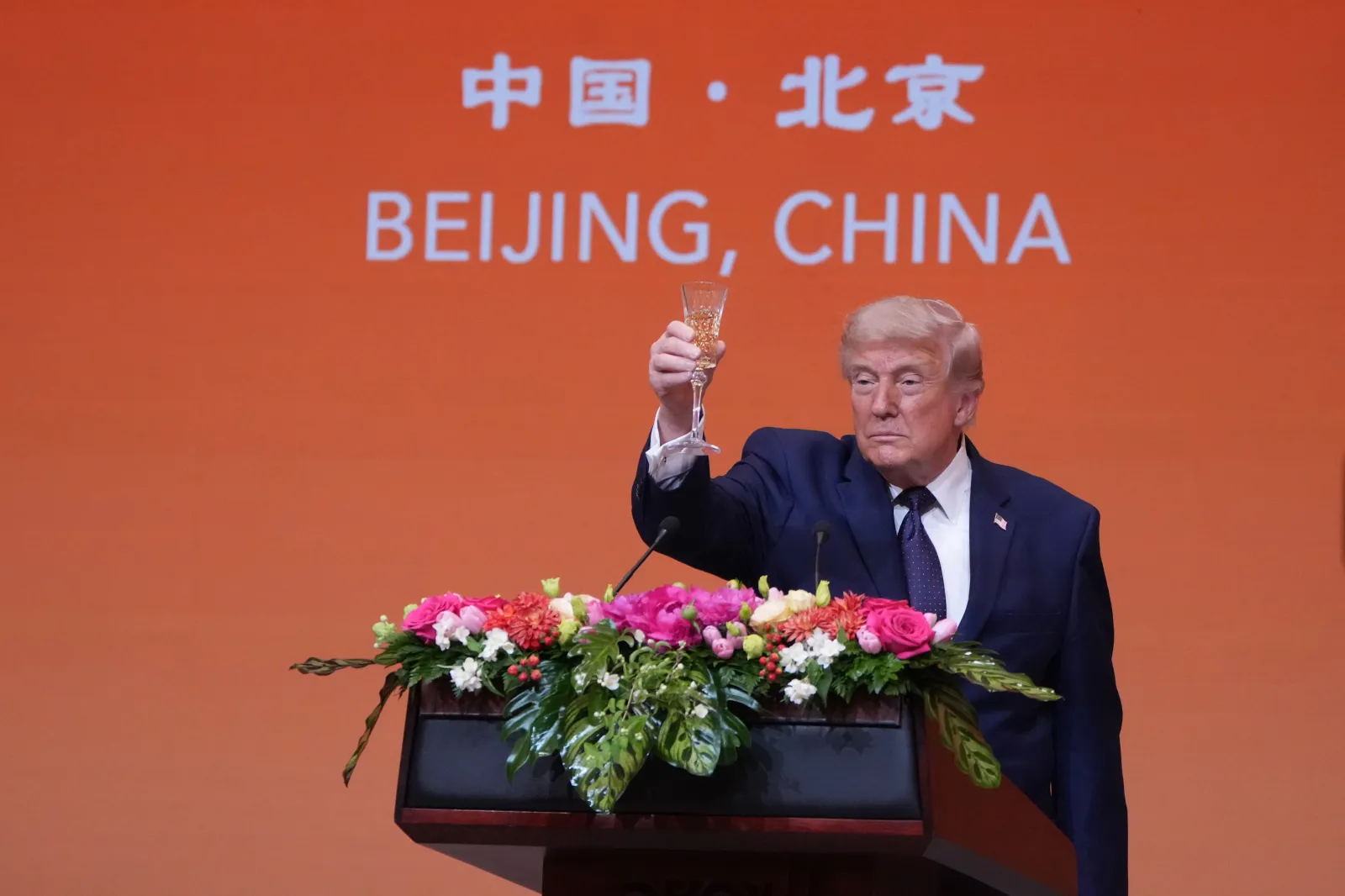
Trump invited Xi and Peng Liyuan, China's first lady, to visit the White House on September 24, and toasted the enduring ties between the two nations.
"It's a very special relationship," Trump said.