Conjugate - Definition and Examples - Biology Online Dictionary (original) (raw)
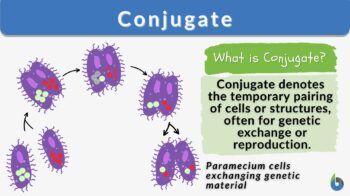
Conjugate
n., plural: conjugates
[ˈkɑn.dʒəˌɡeɪt/]
Definition: Paired biological structures for genetic exchange
Table of Contents
Toggle
- Conjugate Definition
- Conjugate Examples
- Conjugation in Bacteria
- Principle of Bacterial Conjugation
- Interdisciplinary Significance of Conjugate
- Quiz
- Further Reading
- References
Conjugate in a broader sense refers to related pairs of substances or entities that are interconnected or linked in some way due to a specific chemical or biological relationship. In science, the precise meaning of “conjugate” may vary depending on the specific field or discipline:
- Chemistry/Biochemistry: Conjugate pertains to a substance made up of two or more other compounds that have been chemically joined together. It may also refer to an acid or base that is related to another by the gain or loss of a proton (H+ ion) during a chemical reaction. In chemistry, there are two types: conjugate acid and conjugate base.
- Microbiology/Protistology: Conjugation refers to the process where two microorganisms swap genetic material. Unlike how animals or plants reproduce, where they combine genes through mating, conjugation is a direct sharing of genetic information. This mostly happens among bacteria and ciliates, which are two different types of tiny organisms, i.e., prokaryotes and eukaryotes, respectively.
- Genetics: The term “conjugate” describes alleles or genes located close to each other on the same chromosome. Such genes are referred to as “conjugate genes” or “linked genes”. It may also describe the pair of homologous chromosomes.
- Immunology: “Conjugate” refers to a complex of an antigen with a molecule, such as a polysaccharide or a carrier molecule, often a protein, to enhance immune responses, as seen in vaccines.
- Botany: A conjugate describes a pinnate leaflet, with only only one pair of leaflets attached to a common petiole, such as the paired leaflets of the honey locust tree where two leaflets are joined at the end of the leaf’s petiole or rachis.
Let us first focus on the conjugate microorganisms involved in the process.of conjugation.
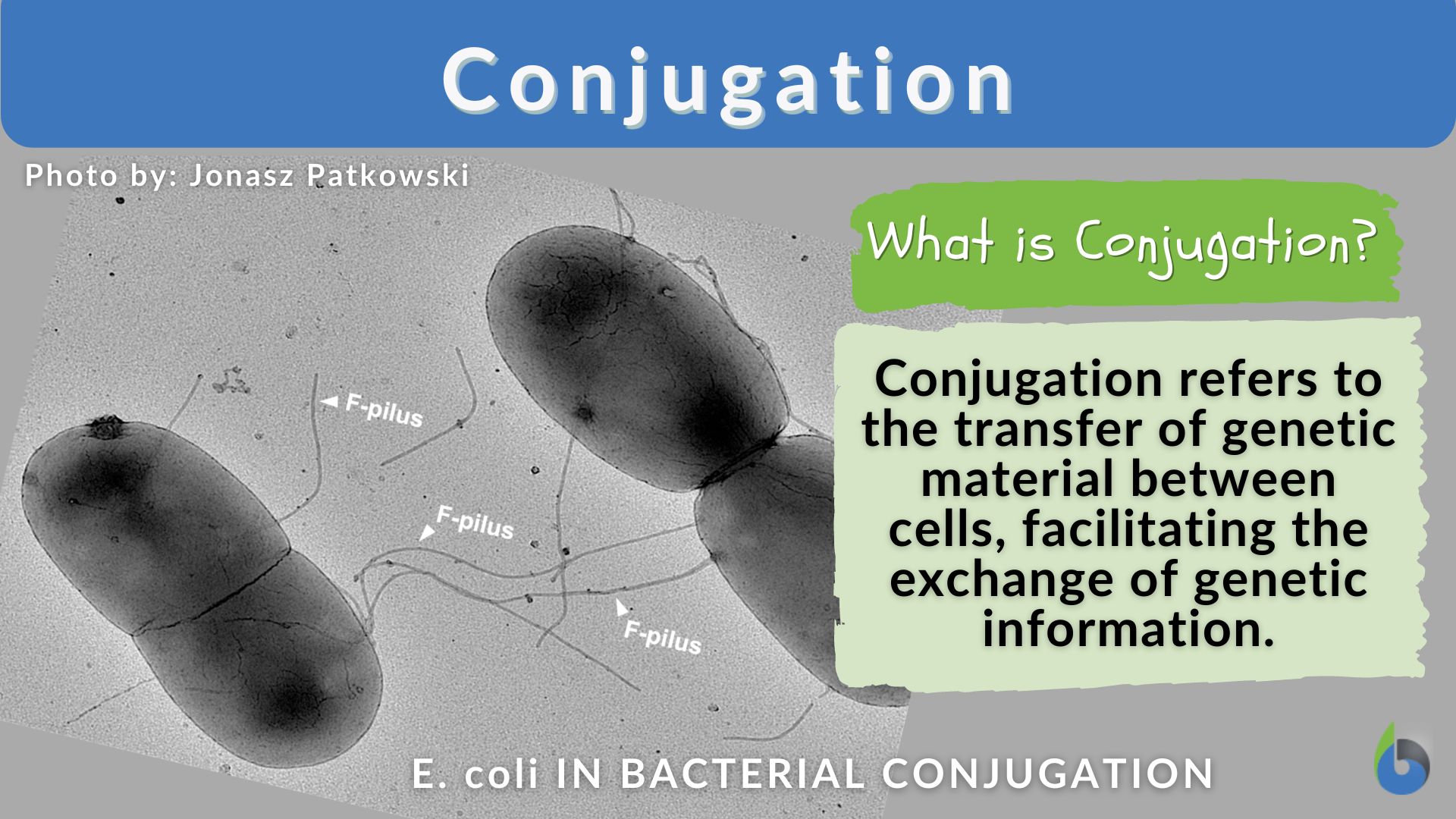
Figure 1: Conjugation as a biological process where genetic information is exchanged, such as between a pair of bacterial cells. Image prepared by Maria Victoria Gonzaga for Biology Online
Biology definition:
“Conjugate” refers to related pairs of substances or entities that are interconnected or linked in a specific chemical or biological relationship. In chemistry or biochemistry, a “conjugate” refers to substances or species related through the gain or loss of a proton (H+) during a chemical reaction. Acids and bases are paired or combined to make a new substance that’s less strong. Or, it may refer to a complex formed from the joining together of two or more molecules, especially by a covalent bond. In microbiology and protistology, a conjugate is when a pair of bacteria or protozoa exchange genetic material. In genetics, “conjugate” may describe pairs of alleles or homologous chromosomes, which play roles in genetic inheritance and recombination. In immunology, “conjugate” refers to the combination of antigens with carrier molecules to enhance immune responses, as seen in vaccines, or when a marker protein is linked to an antibody molecule in order to detect an antigen. In botany, conjugate describes a pinnate leaflet, with only only one pair of leaflets.
Etymology: The term “conjugate” in biology has its roots in Latin, from “conjugatus,” meaning “joined together.”
Conjugate Examples
Ciliate Conjugation (Paramecium):
Micronuclei: Paramecium, a ciliate, has two types of nuclei — macronuclei for daily functions and micronuclei for reproduction.
Process:
- Two Paramecium organisms come into contact.
- They exchange micronuclei, which contain genetic material.
- The exchanged genetic material contributes to genetic diversity.
Significance: Ciliate conjugation enhances genetic diversity within Paramecium populations, aiding in adaptation.
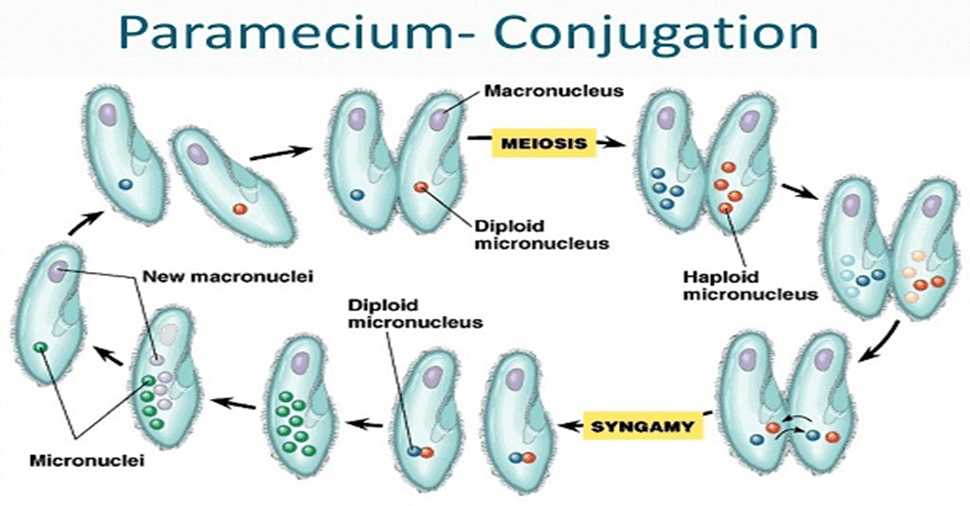
Figure 2: Conjugation in Paramecium. Image Credit: onlinesciencenotes
Bacterial Conjugation (Escherichia coli)
Donor Cell: A bacteria called Escherichia coli (E. coli) with a plasmid that has genes for antibiotic resistance.
Recipient Cell: Another E. coli bacterium that doesn’t have the plasmid and is therefore sensitive to drugs.
Process:
- The donor cell makes a tiny appendage called a pilus.
- The pilus links the given cell to the cell that will receive it.
- The bacterial cell that gives the plasmid with the genes for drug resistance gives it to the bacterial cell that gets it.
- The plasmid is added to the DNA of the cell that gets it.
- The target cell stops responding to antibiotics, which makes it a transconjugant.
Note: For bacterial conjugation to occur, two or more liquids containing donor and recipient bacterial cells must come into close contact for the exchange of genetic material to occur effectively.
Significance: This process helps germs become resistant to antibiotics, which makes them harder to kill.
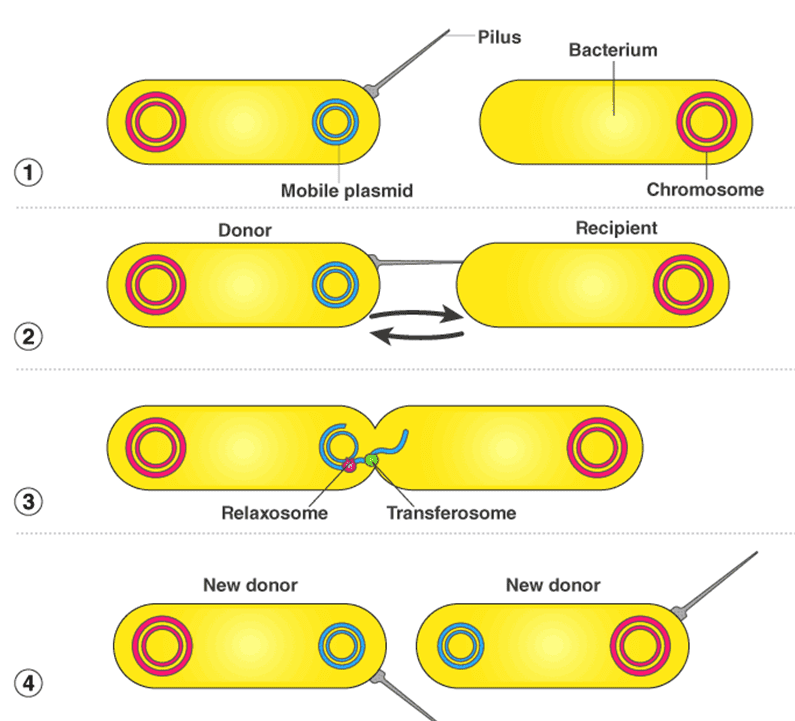
Figure 3: Bacterial conjugation. Image Credit: BYJUS
Let us learn more about bacterial conjugation below.
Conjugation in Bacteria
- Plasmid Transfer: When bacteria mate, they pass on their genes mostly through plasmids, which are small, circular DNA units that are different from the bacterial chromosome. Most of the time, the genes on these plasmids give the cell that gets them specific benefits, like resistance to antibiotics or the ability to break down certain chemicals.
- Donor Cells and Recipient Cells: Usually, there are two types of cells involved in the process of conjugation: donor cells and recipient cells. Often in the form of plasmids, the genetic material to be passed on is stored in the donor cells. On the other hand, receiver cells don’t have these genetic parts, so they are the ones who benefit from the genetic exchange.
- Cell-to-Cell Contact: For conjugation to start, two microbes have to physically touch each other. A special part called a pilus or conjugation tube makes this link possible. The pilus acts as a bridge between the source cell and the cell that will receive the genetic material.
- Transfer of Genetic Material: The donor cell extends its “pilus” to connect to the recipient cell, bridging the gap between them. The donor cell sends a copy of its DNA to the receiving cell through this spicule. Depending on the organisms involved, the copied genetic material can include more than one gene or plasmid.
- Integration of Genetic Material: When the transferred genetic material gets into the receiver cell, it becomes part of the genome of the recipient cell. In this way, genes that were originally on the plasmid become part of the genetic makeup of the cell that receives them.
- Formation of Transconjugants: A transconjugant is a receiving cell that has now taken on the genetic material of the donor cell. Transconjugants have a mix of genetic traits from both the donor and recipient cells. This has a big effect on how well they can respond.
Bacterial Conjugation
Principle of Bacterial Conjugation
Bacterial conjugation operates on the principle of transferring plasmids or other genetic material from the donor cell to the recipient cell through direct physical contact.
The F (fertility) plasmid within Escherichia coli (E. coli) was the initial conjugative plasmid discovered and remains one of the most extensively researched.
The F plasmid, notably substantial at approximately 100 kilobases, exists in one or two copies per cell. Cells of E. coli carrying the F plasmid are termed donor (F+ or male) cells, while those lacking it are referred to as recipient (F– or female) cells. The transfer of the F plasmid exclusively occurs from donor cells to recipient cells.
To enable the transfer of the F plasmid from donor to recipient, it necessitates close cellular contact, culminating in the formation of a mating pair.
Genetic material is exchanged following the fusion of cell membranes, catalyzed by various enzymes.
After membrane fusion, donor DNA is replicated and subsequently transferred into the recipient cell.
NOTE IT!
In the world of microbiology, bacteria engage in a remarkable biological phenomenon known as “conjugation”. During conjugation, bacteria transfer genetic material from one cell to another through a specialized structure called a pilus. This genetic exchange mechanism allows for the rapid sharing of advantageous traits, such as antibiotic resistance, contributing to bacterial adaptability and evolution.
Interdisciplinary Significance of Conjugate
In mathematics, the concept of conjugates extends to various domains, such as algebra, complex numbers, and the conjugating of Latin verbs. For instance, in algebra, conjugate algebraic numbers represent a pair of complex numbers with the same real part but opposite imaginary parts, reflecting their importance in polynomial equations. Similarly, in complex numbers, a complex conjugate involves changing the sign of the imaginary part, yielding a reflection across the real axis. (CUEMATH, 2023)
In linguistics, the term finds relevance both in Latin verbs, where conjugating Latin verbs involves inflected forms in the present tense, past participle, and present participle, essential for grammatical accuracy where conjugate words refer to words sharing a common root with variations in tense, mood, or voice.
In terms of chemistry, conjugate relationships manifest most notably in the concept of acid-base chemistry. Here, an acid’s strength is characterized by its conjugate base, and conversely, a base’s strength is evaluated by its conjugate acid.
This concept underpins the understanding of chemical reactions involving proton transfer. Moreover, in the field of medicinal chemistry, antibody drug conjugates (ADCs) exemplify the conjugation of an antibody to a drug molecule, thereby enabling targeted drug delivery to specific cells. These conjugate substances have revolutionized the field of cancer therapy.
In the organic domain, double bonds in organic compounds often undergo conjugation, influencing the compound’s reactivity and stability. Furthermore, in the study of mixtures and solutions, the term “conjugate substances” is employed to describe two or more substances that are present in equilibrium with each other, signifying their interconnected chemical relationship. (BYJU’S, 2023)
In optics, conjugate points play a crucial role, denoting two points in an optical system that maintain a specific relationship, essential for sharp imaging.
In terms of complex numbers in maths, a conjugate complex number always pairs with its counterpart, forming only one pair characterized by opposite imaginary components.
In geometry, a parabola often intersects its axis of symmetry at two conjugate points, representing one element of its essential features.
Ultimately, the concept of “conjugate” underscores the interconnectedness and structured relationships between elements in various disciplines, whether in the fields of science, mathematics, linguistics, or beyond.
Take the Conjugate – Biology Quiz!
Further Reading
References
- Somkiat Phornphisutthimas, Arinthip Thamchaipenet, & Bhinyo Panijpan. (2007). Conjugation inEscherichia coli. Biochemistry and Molecular Biology Education, 35(6), 440–445. https://doi.org/10.1002/bmb.113
- CUEMATH. (2023). Conjugate in Math. Retrieved 09 September, 2023, from https://www.cuemath.com/numbers/conjugates-and-rationalization/
- Nature.com. (2023). conjugation Retrieved 09 September, 2023, from https://www.nature.com/scitable/definition/conjugation-prokaryotes-290/
- Cancer.gov. (2023). conjugate. Retrieved 09 September 2023, from https://www.cancer.gov/publications/dictionaries/cancer-terms/def/conjugate
- Jang, M. (2016). Optical Phase Conjugation and Its Applications in Biology. California Institute of Technology.
- Microbenotes.com. (2023). Bacterial Conjugation. Retrieved 09 September, 2023, from https://microbenotes.com/bacterial-conjugation/#:\~:text=called%20mobilizable%20plasmids.-,Examples%20of%20bacterial%20conjugation,into%20the%20plant%20cell’s%20genome.
- Study&Score. (2023). Paramecium: Sexual Reproduction and Asexual Reproduction. Retrieved 09 September 2023, from https://www.studyandscore.com/studymaterial-detail/paramecium-sexual-reproduction-and-asexual-reproduction#:\~:text=In%20Paramecium%2C%20Conjugation%20is%20a,and%20rejuvenation%20of%20the%20race.
©BiologyOnline.com. Content provided and moderated by Biology Online Editors.