Autotrophic Nutrition Definition, Types and Examples (original) (raw)
Last Updated : 23 Jul, 2025
**Autotrophic nutrition is the process by which an autotrophic organism utilizes inorganic substances from the environment and produces organic compounds that are further used to produce energy and perform various cellular processes. In simple terms, nutrition is the most common way of taking in food and changing it over it into energy and other essential nutrients expected forever. There are two forms of nutrition among living life forms, that are;
- Autotrophic mode
- Heterotrophic mode
What are Nutrients?
Nutrients are substances that give energy and are utilized for synthesizing biomolecules important to completing the different body capabilities. All living organic entities need nutrients for legitimate work and development. Be that as it may, A few creatures feed on straightforward inorganic mixtures to meet their supplement necessity, while others use complex mixtures. The method of nutrition varies from organism to organism.
**Autotrophic Nutrition
Autotrophic word is formed from the combination of two words: **auto and **trophic i.e., Self and nutrition. In the autotrophic mode, living beings utilize straightforward inorganic substances like water and carbon dioxide with the help of a source of energy. Such living beings are called **autotrophs. They are also called **producers are they responsible for the production of organic food that is required for the survival of each and every living organism on the planet. Plants, green algae, and microbes (cyanobacteria) are a few organisms where autotrophic nutrition can be seen.
Autotrophs are the producers of organic food. The food produced by autotrophs is additionally utilized by individuals and many, numerous different creatures or consumers. Autotrophs can be of two types;
**Photosynthetic Autotrophs or Photoautotrophs
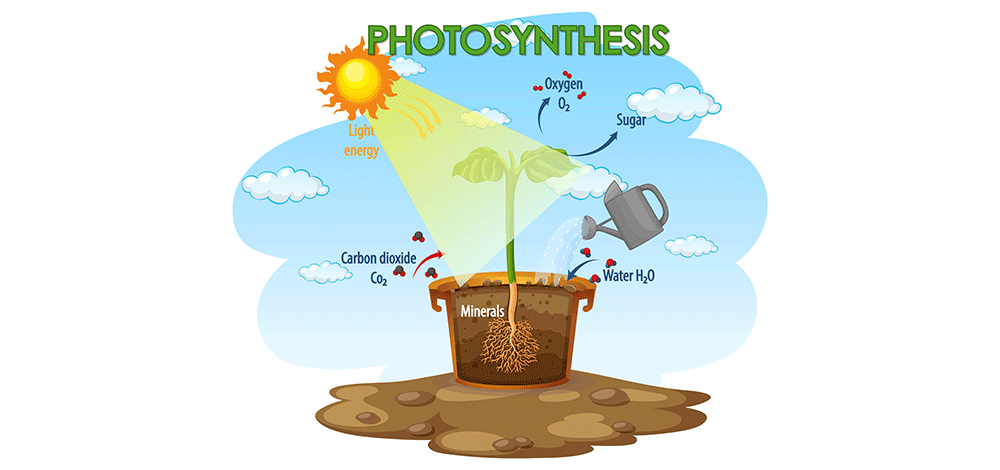
Photosynthesis is the process by which the sun's light energy is trapped with the help of chlorophyll pigment present in green leaves, which is used to convert carbon dioxide, and water to synthesize organic food i.e. glucose. This process is non-oxygenic i.e. it does not utilize oxygen but instead releases oxygen and the organisms are called photoautotrophs. Examples are; green plants, green algae, etc.
**Chemosynthetic Autotrophs or Chemoautotrophs
Chemoautotrophs utilize synthetic energy rather than light energy for the synthesis of organic food that is produced by the oxidation of synthetic mixtures, for example, natural or inorganic. Chemosynthetic microscopic organisms assume a huge part in reusing supplements like nitrogen, phosphorus, iron, and sulfur. These can be of the following sub-types:
- **Nitrifying microorganisms: They oxidize nitrogenous and get energy. It performs nitrifying activity in the accompanying two stages:
- Stage 1. Change of NH3 to NO2-by Nitrosomonas and Nitrococcus
- Stage 2. Change of NO2-to NO3-by Nitrobacter and Nitrocystis
- **Iron microscopic organisms: for example Ferrobacillus, which changes Fe2+ over completely to Fe3+
- **Hydrogen microscopic organisms: for example Hydrogenomonas, which changes H2 over completely to H2O
- **Methane microbes: for example Methanomonas, which changes CH4 over completely to CO2
- **Sulfur microscopic organisms: These are of the accompanying two sorts
- Which changes H2S over completely to S., Example Beggiatoa
- Which covers S to H2SO4. For example Thiobacillus and Thiooxidans.
**Heterotrophic Nutrition
Each living being isn't fit for the synthesis of organic food on its own. Such organisms rely upon the producers or autotrophs directly or indirectly for their nutrition. These organisms are called heterotrophs and the method of nutrition is known as **heterotrophic nutrition. Animals, parasites, etc. are some of the examples.