Cell Cycle (original) (raw)
Last Updated : 19 Nov, 2025
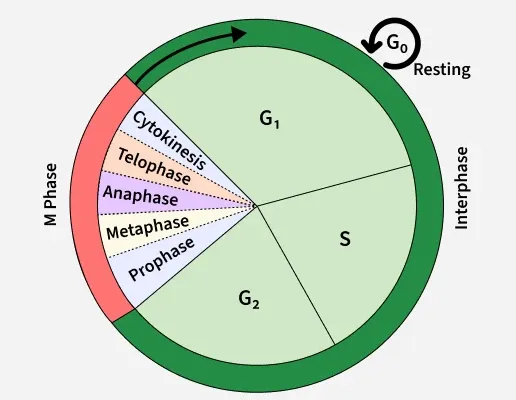
The cell cycle is the series of ordered events that a cell goes through to grow, prepare for division, and divide to form two new cells. It ensures that each new cell gets the right amount of DNA and cellular material.
Phases of the Cell Cycle
The cell cycle is divided into two major phases:
- Interphase
- Mitotic phase (M-Phase)
1. Interphase
In this phase, the cell is prepared for cell division and DNA replication and is also known as the resting phase, as it occupies 95% time of the overall cycle. The interphase is further divided into three phases:
G1 phase:
The first gap phase of the cell occurs between mitosis and the initiation of DNA replication and is called the G1 phase or Gap 1 phase. The main characteristics of this phase are:
- **Cell growth: the main function in this phase is cell growth, the cell increases in size and also synthesises enzymes that are required for DNA replication and cell division.
- **Biosynthesis: the synthesis of RNA and proteins that are required for cell growth.
- **Energy storage: ATP is accumulated during this phase, which is required for the synthesis of DNA.
- **Checkpoint is monitored: A crucial checkpoint called the G1 checkpoint is monitored during this phase
S Phase (Synthesis Phase)
In this phase, replication of DNA takes place, and this phase is followed by the G1 Phase and preceded by the G2 phase.
The characteristics of this phage are listed below:
- The chromosomes duplicate themselves and form two sister chromatids that are held together in the centre by the centromere so that the resulting daughter cells will get identical sets of chromosomes.
- The replication forks are formed, where the replication begins.
- The DNA unwinds at these points and forms the replication fork where the new DNA strand is synthesised. The type of replication that takes place is called semi-conservative replication, as it has one old strand and one new strand.
A variety of enzymes are required for the replication are listed below:
- DNA polymerase adds the nucleotides to the growing DNA chain.
- The helicase enzymes help to unwind the DNA.
- The ligase enzymes join **Okazaki fragments on the lagging strand.
Accurate replication of DNA is required to maintain the integrity of the genetic material and also to prepare the cell for mitosis.
G2 phase
This is the second gap phase, which is a crucial stage that follows the S phase and precedes the actual cell division. The characteristics of this phage are given below:
- In this phase, the final preparation, like protein synthesis and formation of microtubules that are required for spindle fibre formation during mitosis, takes place.
- The newly replicated DNA is checked for errors so that the transmission of the damaged DNA can be prevented.
2. Mitotic phase (M-phase)
This phase is where cell division takes place, which includesmitosis and cytokinesis.Mitosis is divided into four stages:
- **Prophase: The chromosomes condense and become visible, the nuclear envelope breaks down, and spindle fibres start forming during this stage
- **Metaphase: In this stage, the chromosome aligns with the equator region of the cell and gets attached to the spindle fibre at the centromere region
- **Anaphase: The sister chromatids are pulled apart in this stage, and they move toward the opposite poles of the cell
- **Telophase: The chromosome begins to decondense and the nuclear envelope is formed around the chromosome sets while the spindle fibres begin to disintegrate.
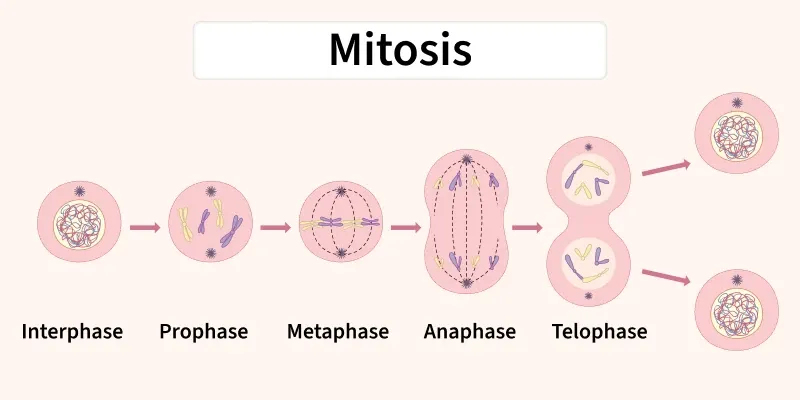
**Note: Cytokinesis is the division of the cytoplasm that takes place immediately after the telophase, resulting in the formation of two daughter cells.
Regulation of the Cell Cycle
The regulation of the cell cycle takes place through many checkpoints, enzymes, and proteins to ensure that the incomplete or damaged DNA is not passed to the daughter cells and also to maintain genetic stability and prevent certain diseases like cancer, which is caused due to uncontrolled cell division.
There are three checkpoints in the cell cycle:
- **G1 checkpoint: This checkpoint ensures whether the cell is of sufficient size with the required nutrients and also checks if the DNA is undamaged and ready for replication
- **G2 checkpoint: This checkpoint checks that the replication of DNA is completed in the S phase without any damage
- **M phase checkpoints: This checkpoint ensures that the chromosomes are properly aligned and distributed to the daughter cells without any errors.
Apart from the checkpoints, enzymes like CDKs, Cyclins,p53, and tumour suppressors contribute to the regulation of the cell cycle.
Cell Cycle Disorders
The disease is caused due to improper cell cycle cancer, which is mainly related to uncontrolled cell growth and cell division. The uncontrolled cell division occurs due to mutation, and it leads to the overactivation of proteins that promote the oncogene and inactivation of the tumour suppressor gene.
The genomic instability is caused due to errors during DNA replication and mitosis that lead to mutations and chromosome abnormalities. Other conditions caused due to cell cycle dysregulation are:
- Developmental disorders
- Autoimmune disease
- Degenerative disease
- Benign tumours