Central Nervous System (original) (raw)
Last Updated : 25 May, 2026
The Central Nervous System is the key component of the human nervous system. It controls, coordinates and integrates all the activities of the body. It is the main centre of the human body. It receives sensory information from different parts, and after processing it, the CNS sends out appropriate responses. The CNS consists of the brain and the spinal cord. These two help in communicating different parts of the body.
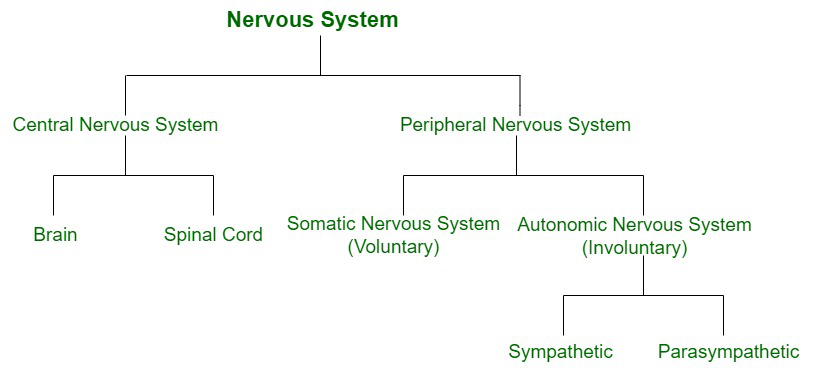
Parts of the CNS
1. Brain
The brain is a fascinatingly intricate organ protected by the skull. It consists of a huge number of neurons (nerve cells), supported by other cells called neuroglia. Brain functions include interpreting the senses, deciding on and starting movements, as well as controlling the body's vital processes without our awareness.
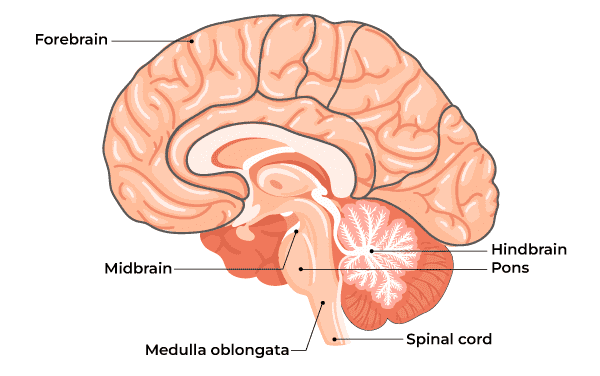
The brain has three main parts:
****(a) Forebrain**
The forebrain constitutes the largest and most sophisticated section of the brain. It encompasses the cerebrum, thalamus, and hypothalamus.
- **Cerebrum: The cerebrum refers to the largest portion of the brain, which is split into two halves called hemispheres (left and right). It is the centre of higher mental abilities such as thinking, reasoning, remembering, learning, and deciding. Apart from this, it also governs the body's voluntary movements.
- **Thalamus: The thalamus serves as the hub for sensory information transportation. It gets the input from sense organs and sends it to the proper parts of the cerebrum for understanding.
- **Hypothalamus: Despite being very small, the hypothalamus is one of the most important parts of the brain that sustains life. It controls body temperature, hunger, thirst, and sleeping. It manages the endocrine system as it interacts with the pituitary gland.
****(b)** **Midbrain
The midbrain acts as a connecting link between the forebrain and the hindbrain. It takes part in controlling reflex actions related to hearing and seeing. In addition to this, it also assists in controlling eye movement and head movement as per the visual and auditory stimuli.
****(c) Hindbrain**
The hindbrain is made up of three main components, which include the cerebellum, pons, and medulla oblongata.
- **Cerebellum: The cerebellum maintains balance in the body, controls posture, and helps in coordinating the body's movements. Body movements occur smoothly and accurately with the help of the cerebellum.
- **Pons: It acts as a connection between various brain structures, and it coordinates the relay of nerve impulses. Furthermore, it regulates the breathing process in the body.
- **Medulla Oblongata: The medulla oblongata controls some involuntary actions in the body, such as breathing and heartbeat.
2. Spinal Cord
The spinal cord is a tubular structure extending from the medulla oblongata through the vertebral column. It acts as a conduit for carrying nerve impulses between the brain and other parts of the body. The spinal cord is made up of grey matter (internal substance) and white matter (external substance). Grey matter comprises nerve cell bodies, whereas white matter comprises nerve fibres that transmit nerve impulses.
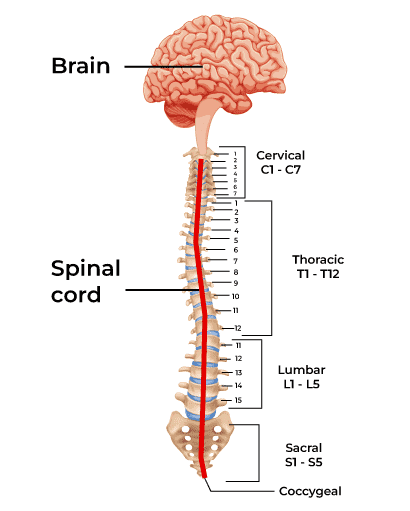
**Functions of the Spinal Cord:
- Transmits sensory impulses from the body to the brain.
- Transmits motor impulses from the brain to muscles and glands.
- Controls reflex actions without involvement of the brain.
Protection of the CNS
The central nervous system is fragile and needs protection from any injury. There are different ways in which the CNS is shielded:
- **Bone Structures: The brain is located inside the skull, while the spinal cord lies within the vertebral column.
- **Meninges: Three different layers encase the brain and spinal cord, which include Dura Mater, Arachnoid Mater, and Pia Mater.
- **Cerebrospinal Fluid (CSF): This is a liquid substance that fills the space between the meninges.
Functions of CNS
- Controls and coordinates body activities.
- Processes sensory information.
- Initiates motor responses.
- Maintains homeostasis.
- Responsible for higher functions like thinking, learning, and emotions.