Endocrine System (original) (raw)
Last Updated : 25 May, 2026
Endocrine glands are called ductless glands because they release hormones directly into the bloodstream, and from there, the hormones travel to the targeted organ to perform its function. Major endocrine glands are the adrenal gland, thymus, pancreas, pineal gland, pituitary gland, gonads, thyroid gland, parathyroid gland and hypothalamus. Hormones secreted by these Glands control mood, growth and development, reproduction and metabolism.
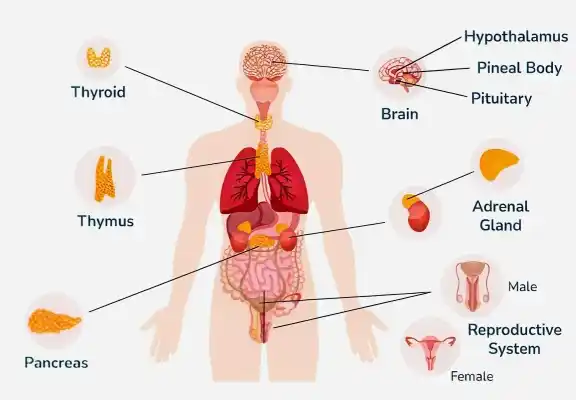
Characteristics of the Endocrine Glands
- Hormones are chemical messengers that travel through the bloodstream to different tissues and organs. Once within the body, they govern several physiological processes and preserve homeostasis, or the state of internal equilibrium.
- Pituitary, thyroid, parathyroid, adrenal, pancreas, ovaries, and testes glands are some of the main organs that make up the endocrine system (males and females).
- To maintain the proper operation of diverse organs and systems, the Endocrine system collaborates with the nervous system to regulate and govern a range of physiological processes.
- Dysregulation of the endocrine system is linked to several disorders and diseases.
Parts of the Endocrine System
A complex system of glands and organs makes up the Endocrine system. The endocrine system is made up of the following parts:
**1. Hypothalamus
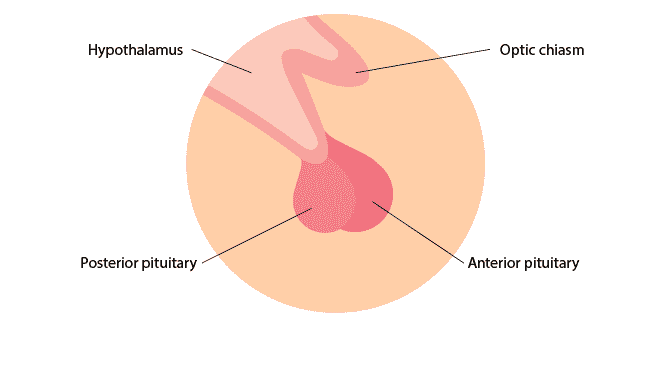
The hypothalamus is a small but extremely important part of the brain located at the base of the forebrain, just below the thalamus. It acts as a major link between the nervous system and the endocrine system, and helps maintain the body’s internal balance (homeostasis). The hypothalamus produces releasing and inhibiting hormones that control the secretion of hormones from the pituitary gland.

Hypothalamus
**2. Pituitary Gland
The pituitary gland is a small endocrine gland, about the size of a pea. The pituitary gland is situated underneath the hypothalamus at the base of the brain. The anterior lobe and the posterior lobe are the two sections of the pituitary gland. The pituitary gland and hypothalamus together form the hypothalamus-pituitary complex, which serves as the brain's central command centre for controlling important bodily functions.
3. Thymus Gland
The thymus gland is located in the upper chest region, behind the sternum and above the heart. Unlike other endocrine glands, the thymus gland is exclusively active before puberty. At puberty, the gland expands to its maximum size before being gradually replaced by adipose tissue.

**4. Thyroid Gland
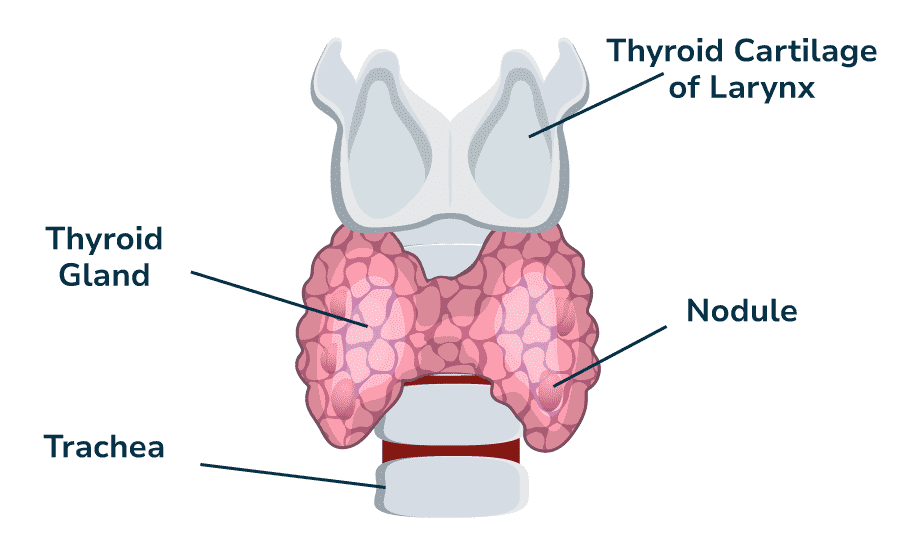
In the front lower area of the neck, there is a thyroid gland. The thyroid gland makes thyroid hormones, which control the body's metabolism. The release of thyroid hormones is regulated by the pituitary gland. Additionally, thyroid hormones support healthy digestion, muscular tone, blood pressure, heart rate, and reproductive processes.
**5. Parathyroid Glands
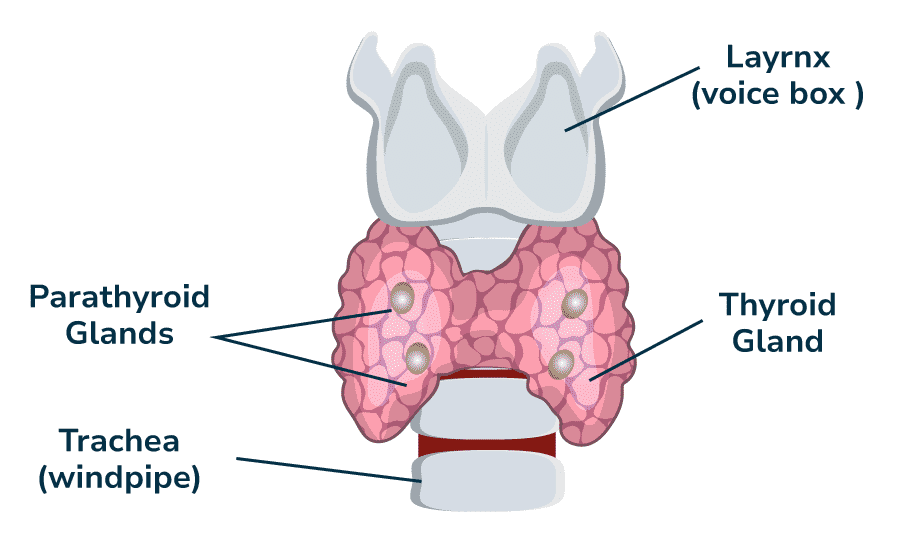
The parathyroid glands are two pairs of tiny glands, one pair on each side, implanted in the thyroid gland's surface. The calcium concentrations in our blood, bones and other body tissues are regulated by the parathyroid glands. The production of the substance known as Parathyroid Hormone by the parathyroid organs regulates calcium (PTH).
**6. Adrenal Glands
Two triangular-shaped adrenal glands are located on top of each kidney. There are two components to the adrenal Glands. The inner portion is known as the adrenal medulla, and the outside portion is known as the adrenal cortex. The glands typically measure 5 by 3 cm and weigh 7 to 10 grams when combined. The colour of healthy glands is yellowish.

Adrenal Glands
7. Pineal Glands
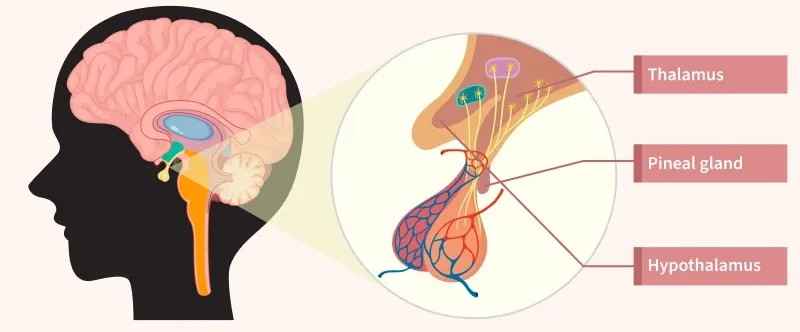
The pineal gland is present in the centre of the brain, beneath the corpus callosum. Melatonin, a hormone it generates, helps the body in recognising when it is time to sleep. The pineal gland secretes melatonin, which regulates sleep-wake cycles (circadian rhythm).
**8. Pancreas
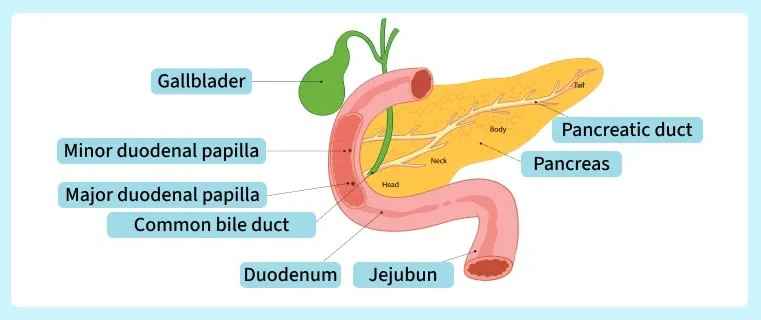
The pancreas functions as both an endocrine and an exocrine gland. Its endocrine part secretes hormones such as insulin and glucagon, which regulate blood glucose levels. The pancreas is a six-inch-long gland located in the abdomen. It has the shape of a flat pear and is surrounded by the stomach, small intestine, liver, spleen, and gallbladder. The head refers to the wide end of the pancreas on the right side of the body.
**9. Ovary
The ovaries of a woman are situated below the opening of the fallopian tubes on both sides of the uterus (tubes that extend from the uterus to the ovaries). The ovaries produce ova (egg cells) and secrete the hormones oestrogen and progesterone. An ovary is a small, oval-shaped reproductive organ of females. It produces ova and hormones that regulate fertility, pregnancy, and the menstrual cycle. Ovaries are located in the lower left and right quadrants of the abdomen.

Ovary
**10. Testis
The male reproductive system has two oval-shaped structures called testes. Males possess a pair of testes located in a pouch called the scrotum. Testicles are available externally on the body in a pocket called the scrotum. They are oval bodies, around 4 to 5 cm long and 2 to 3 cm wide. For the most part, the left testis hangs somewhat lower than the right one.

Functions of Endocrine Glands
Endocrine Glands play an important role in various physiological processes by secreting different hormones according to need. Here are the lists of functions.
- **Regulation of Metabolism: endocrine glands help in metabolic regulation by secreting hormones. Thus helping cells in utilising nutrients.
- **Growth and development: Growth hormones secreted by endocrine glands play an important role in the growth and development of tissues, thus promoting height, etc, in childhood.
- **Sexual hormones: endocrine glands secrete progesterone, estrogen, and testosterone in females and males, respectively.
- **Stress hormones: Cortisol is known as the stress hormone because it helps the body respond to stress and maintain metabolism during stressful conditions.
- **Regulation of blood glucose level: Insulin and glucagon are the two hormones secreted by the pancreas that help in the regulation of blood glucose level.
- **Ca 2+ and P homeostasis: Homeostasis of Ca2+ and P in blood is regulated by the thyroid and parathyroid glands.
- **Regulation of electrolyte level: The Adrenal Gland releases the aldosterone hormone to maintain electrolyte levels.
Disorders of Endocrine Glands
Some of the disorders of the endocrine glands are:
1. Hypothyroidism
- Hypothyroidism occurs when the thyroid gland does not produce enough thyroid hormone, leading to symptoms such as fatigue, weight gain, sensitivity to cold, and constipation.
- It can result from iodine deficiency, autoimmune disease, or thyroid surgery.
2. Hyperthyroidism
- Hyperthyroidism is the overproduction of thyroid hormone, causing symptoms like weight loss, rapid heartbeat, sweating, and anxiety.
- Graves' disease, an autoimmune disorder, is a common cause, as well as thyroid nodules and inflammation.
3. Diabetes Mellitus
- Diabetes mellitus is a metabolic disorder characterised by high blood sugar levels.
- Type 1 diabetes occurs due to the immune system attacking insulin-producing beta cells in the pancreas, while type 2 diabetes results from insulin resistance or insufficient insulin production.
4. Addison's Disease
- Addison's disease occurs when the adrenal glands don't produce enough cortisol and sometimes aldosterone.
- Symptoms include fatigue, weight loss, low blood pressure, darkening of the skin, and salt cravings.
- It's usually caused by autoimmune destruction of the adrenal glands.
5. Cushing's Syndrome
- Cushing's syndrome is characterised by prolonged exposure to high levels of cortisol.
- It can result from excessive use of corticosteroid medications or overproduction of cortisol by the adrenal glands.
- Symptoms include weight gain, central obesity, thinning of the skin, and muscle weakness.
6. Hypoparathyroidism
- Hypoparathyroidism occurs when the parathyroid glands produce too little parathyroid hormone (PTH), leading to low calcium levels in the blood.
- Symptoms include muscle cramps, tingling sensations, seizures, and weakened bones. It can be caused by surgery, autoimmune disease, or genetic factors.
7. Hyperparathyroidism
- Hyperparathyroidism is characterised by excessive production of parathyroid hormone (PTH), leading to high calcium levels in the blood.
- It can result from a benign tumour in one or more of the parathyroid glands or from kidney disease.
- Symptoms include kidney stones, bone pain, fatigue, and digestive issues.