Diagram of Animal Cell (original) (raw)
Last Updated : 12 Mar, 2026
An animal cell is the basic structural and functional unit of animals. Unlike plant cells, animal cells do not have a cell wall or chloroplasts. The diagram of an animal cell helps us understand the location, structure, and function of different cell organelles simply and clearly.
Animal cells can generate a wide variety of cell types, tissues, and organs since they lack a cell wall.
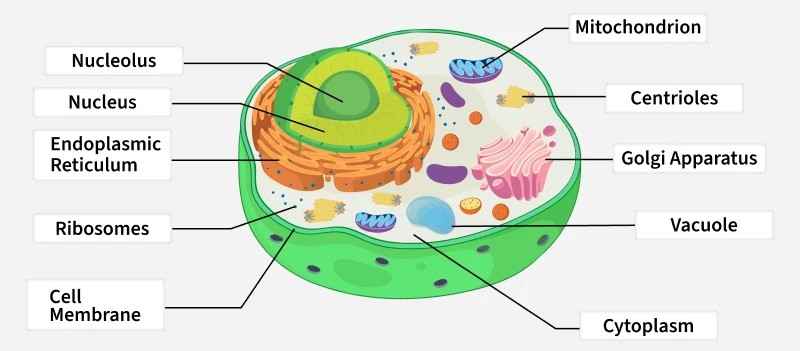
Due to the absence of a cell wall, they are typically uneven in shape and might be round, oval, rod-shaped, spherical, or rectangular. When a cell wall is present or absent, animal cells can easily be recognised from plant cells. These cells have several membrane-bound organelles surrounding the nucleus.
Structure of an Animal Cell
The different animal cell organelles are listed below.:
- **Cell Membrane: The double-layered membrane that covers the entire cell and is formed of phospholipids is known as the cell membrane. Only specific molecules can flow through the membrane since it only permits selective permeation.
- **Cytoskeleton: The tubule and filament network known as the cytoskeleton is present throughout the cytoplasm. It gives the cell the right shape and participates in cell signalling.
- **Nucleus: DNA is found in the nucleolus portion of the nucleus, which is where the genetic material is stored. A nuclear membrane separates the nucleus from the remainder of the cell. It controls how cells divide and grow as well.
- **Cytosol: The liquid found inside cells, known as cytosol, contains water, ions like potassium, proteins, and tiny molecules.
- **Ribosomes: Ribosomes can be seen floating around in a cell's cytoplasm or bound to endoplasmic reticulum membranes. They support the production of proteins.
- **Endoplasmic Reticulum: The nuclear membrane splits off into a network of membranous sacs called cisternae that make up the endoplasmic membrane. The two different types are smooth endoplasmic reticulum and rough endoplasmic reticulum. It facilitates the transportation of proteins made by ribosomes.
- **Vesicles: A vesicle is a structure inside or outside of a cell that is made up of cytoplasm or liquid and is surrounded by a lipid bilayer. The vesicles aid in the movement of chemicals between organelles.
- **Golgi Apparatus: The endoplasmic reticulum delivers proteins to the Golgi apparatus, which then packages them into vesicles.
- **Mitochondria: The "powerhouse of the cell" is yet another name for the mitochondria. During this process of cellular respiration, energy is liberated as ATP.