Plant Cell (original) (raw)
Last Updated : 23 Apr, 2026
A plant cell is the basic structural and functional unit of plants. It belongs to the field of Cell Biology and is classified as a eukaryotic cell, meaning it has a well-defined nucleus enclosed by a membrane and contains specialised structures called organelles.
Plant cells are unique compared to animal cells because they possess certain features that allow them to perform essential functions like photosynthesis and provide structural support to the plant.

Characteristics of Plant Cells
Plant cells have several unique characteristics that distinguish them from animal cells. Some of these include:
- Plant cells have a rigid cell wall made of cellulose.
- They contain chloroplasts for photosynthesis.
- Plant cells have a large central vacuole for storage and turgor pressure.
- They often have a regular or rectangular shape.
- Besides chloroplasts, they may have other plastids like chromoplasts.
- Plant cells generally lack centrioles.
- Plant cells are autotrophic and carry out photosynthesis.
- They make up various tissues and structures in plants.
Plant Cell Organelles
The structure of a plant cell is made up of several parts known as cell organelles that serve the cell's various needs for survival. Among these organelles are:
1. Cell Wall
The polysaccharides cellulose, pectin, and hemicellulose make up this hard layer known as the cell wall. The cell wall is present outside the cell membrane in plant cells. It contains polymers like lignin, cutin, and suberin as well as glycoproteins. The main purpose of the cell wall is to protect and support the cell from the external environment.

2. Cell Membrane
The plant cell consists of a semipermeable membrane within the cell wall. A thin coating of protein and fat makes up its structure. The cell membrane is crucial in controlling how certain molecules enter and leave the cell. For instance, the cell membrane transports nutrients and vital minerals while preventing the entry of contaminants.
.png)
3. Nucleus
The nucleus is present in every eukaryotic cell, a structure that is membrane-bound. A nucleus's essential function is to store the DNA or genetic material needed for cell division, metabolism, and growth.
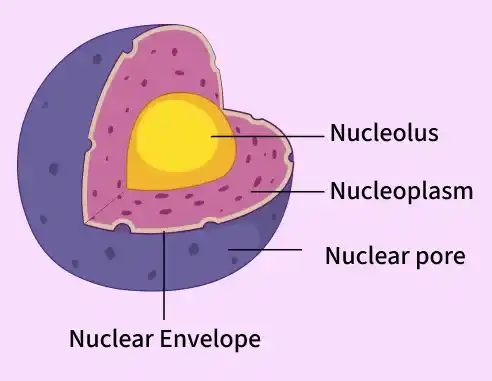
Nucleus is further divided into:
- **Nucleolus: It synthesises rRNA and assembles ribosomal subunits
- **Nuclear pores: These are openings in the nuclear membrane that allow the exchange of materials.
4. Plastids
Plastids are DNA-containing membrane-bound organelles of a plant cell. They help in photosynthesis and store starch. Additionally, it is employed in the synthesis of several compounds, which serve as cellular building blocks.
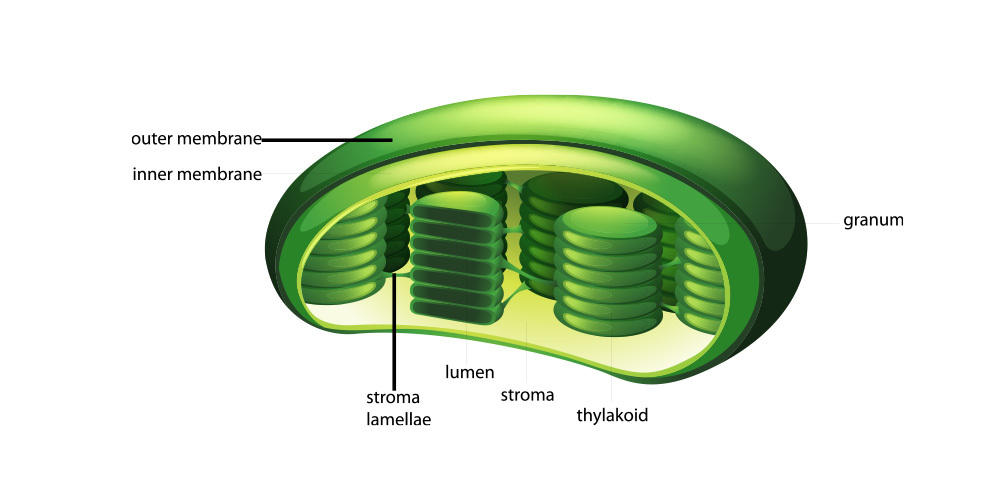
Following is a list of some important plastid kinds and their roles:
| Types of Plastids | Characteristics |
|---|---|
| **1. Leucoplasts | They are located in plants' non-photosynthetic tissue. They are employed for carbohydrate, fat, and protein storage. |
| **2. Chloroplasts | It is an extended organelle with a phospholipid membrane surrounding it. The fluid contained within the disc-shaped chloroplast, known as the stroma, contains circular DNA. Chlorophyll, a pigment with a green colour needed for photosynthesis, is found in every chloroplast. The sun's light energy is captured by chlorophyll, which is then used to convert water and carbon dioxide into glucose. |
| **3. Chromoplasts | They are a type of coloured, heterogeneous plastid that produces and stores pigment in plant cells. Red, orange, and yellow pigments found in chromoplasts give all ripe fruits and flowers their colour. |
5. Central Vacuole
In an adult plant cell, vacuoles take up around 30% to even 90% of the total volume. In mature plant cells, the central vacuole can occupy up to 90% of the cell volume. A membrane called the tonoplast encircles the core vacuole. Aside from storage, the central vacuole's essential job is to maintain turgor pressure on the cell wall. Cell sap fills the central vacuole of the body. Salts, enzymes, and other compounds are mixed in with it.

6. Golgi Apparatus
The Golgi Apparatus is present in all eukaryotic cells and is responsible for dispersing synthesised macromolecules to different cell regions. The Golgi body is made up of five to eight cisternae, or cup-shaped series of compartments. The Golgi apparatus is made up of layered pouches that are flattened and disc-shaped.
.jpg)
7. Ribosomes
They are the smallest non-membrane-bound organelles in cells that are made up of both protein and RNA. They are also known as the cell's proteinfactoriessince they are the sites of protein synthesis. Both prokaryotic and eukaryotic cells contain ribosomes, which are specialised cell organelles. Ribosomes are essential for the synthesis of proteins in every living cell.

8. Mitochondria
All plant cells have these double-membraned organelles in their cytoplasm. Mitochondria produce energy via the breakdown of sugar and carbohydrate molecules into the energy-rich molecule, i.e., ATP, and are known as the "Powerhouse of the Cell." They play a crucial role in the breakdown of nutrients and the production of molecules that are high in energy for the plant cell.

9. Endoplasmic Reticulum
These are the cell organelles that are formed by a complex network of membranous tubules that are located in the cell cytoplasm. The ER is of two types: rough endoplasmic reticulum, and smooth endoplasmic reticulum. The RER is embedded with ribosomes that are responsible for protein synthesis. The SER is responsible for lipid synthesis and metabolism.
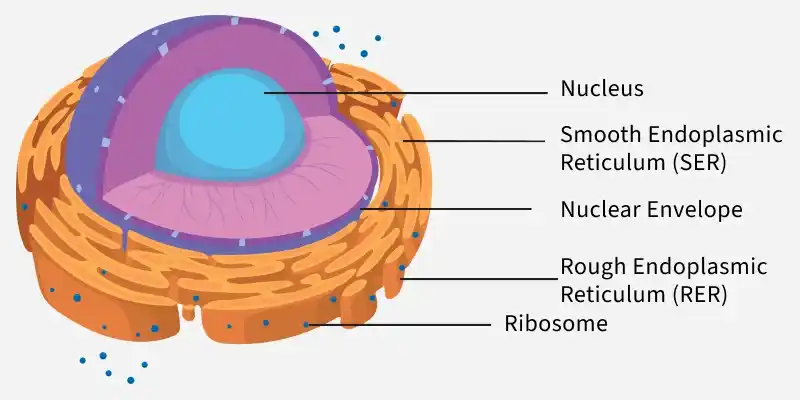
10. Peroxisomes
These are the plant cell organelles that have a single membrane and a small structure. They also contain oxidise fatty acids and detoxify harmful substances. They also help in the detoxification of the cell.
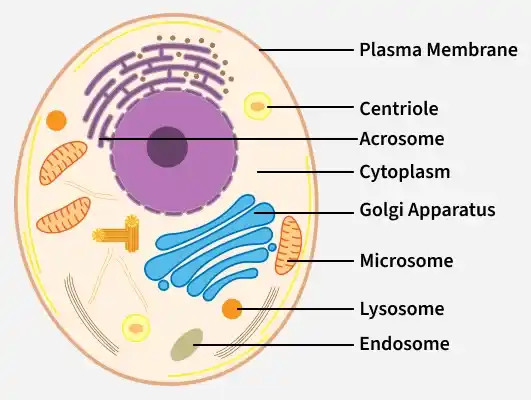
Types of Plant Cell
A mature and higher plant develops specialised cells that carry out specific, crucial functions that are necessary for its survival. A small number of plant cells are responsible for transporting nutrients and water, while others are responsible for storing food. Here are a few examples of the various plant cell types:
**Parenchyma Cells
- In all plant cells, parenchyma cells perform a crucial role.
- They play a role in the development of leaves. Additionally, they have a role in the metabolism of cells, food generation, storage of organic materials, and gas exchange.
- Because they are thinner than other cells, these cells are usually more flexible.
**Collenchyma Cells
- They provide support to growing parts due to uneven thickening of cell walls
**Sclerenchyma Cells
- Due to the presence of a hardening agent, these cells are more rigid than collenchyma cells.
- These cells are found in various plant parts and mainly provide support.
**Xylem Cells
- In vascular plants, the transport cells are called xylem cells.
- They help in moving minerals and water from the roots of the plant to the leaves and other regions.
**Phloem Cells
- Other transport cells in vascular plants are called phloem cells.
- They move the food that the leaves have prepared to other plant components.
Function of Plant Cell
- The primary function of the plant cell is photosynthesis. Photosynthesis is the process by which the sun's light energy is converted into chemical energy. It takes place in the chloroplasts of plant cells.
- Some plant cells transport water and minerals from roots to leaves
- They perform cellular respiration to synthesise energy.
- They store nutrients and water in their vacuoles.
- They perform the synthesis of organic compounds like carbohydrates, proteins, lipids, etc.
- They perform cell-to-cell communication to share chemical signalling.
- They provide support and protection with the help of sclerenchyma and collenchyma cells.