Factors Affecting Photosynthesis (original) (raw)
Last Updated : 1 Jun, 2026
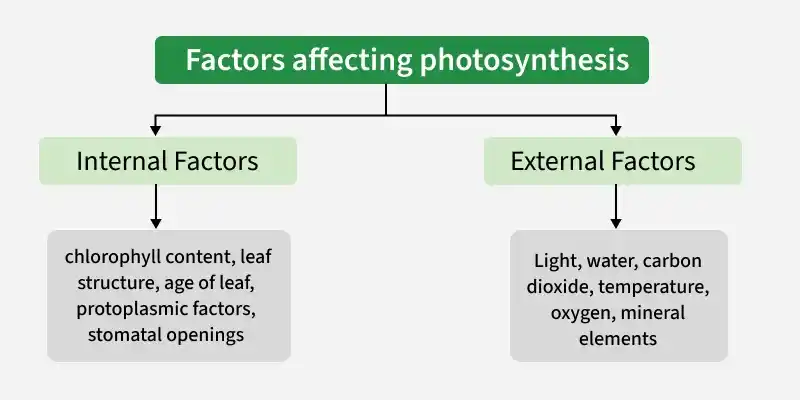
Photosynthesis is an important biological process in which green plants prepare food using sunlight, carbon dioxide, and water in the presence of chlorophyll. During this process, light energy is converted into chemical energy, and oxygen is released as a by-product. The rate of photosynthesis depends upon several external and internal factors such as light, temperature, water, carbon dioxide, and chlorophyll content.
If any one factor becomes insufficient, it limits the overall rate of photosynthesis even when other factors are present in adequate amounts.
External Factors Affecting Photosynthesis
External factors are environmental conditions present outside the plant body that influence the rate of photosynthesis.
1. Light
Light is one of the most important factors affecting photosynthesis because sunlight provides the energy required for the process. The rate of photosynthesis depends upon the intensity, quality, and duration of light.
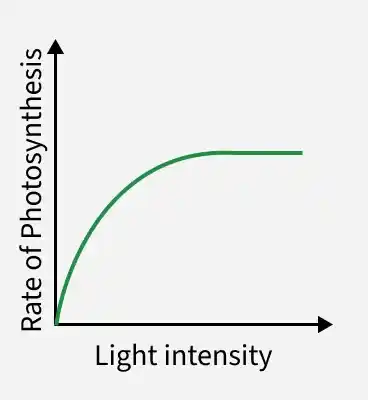
- **Light Intensity: As the intensity of light increases, the rate of photosynthesis also increases because more light energy becomes available for the light-dependent reactions. However, this increase occurs only up to a certain limit. Extremely high light intensity may even damage chlorophyll and reduce the rate of photosynthesis.
- **Light Quality: Different wavelengths or colours of light influence photosynthesis differently. Red and blue light are most effective for photosynthesis because chlorophyll absorbs these wavelengths efficiently. Green light is the least effective because most of it is reflected by leaves instead of being absorbed.
- **Duration of Light: The duration of exposure to light also affects photosynthesis. Longer exposure to suitable light conditions generally increases the total amount of photosynthesis occurring in a plant.
2. Carbon Dioxide
- Carbon dioxide is one of the raw materials required for photosynthesis. It enters the plant through stomata present on the leaf surface. The concentration of carbon dioxide greatly influences the rate of photosynthesis.
- Under normal atmospheric conditions, carbon dioxide is present in limited amounts, and therefore it often acts as a limiting factor.
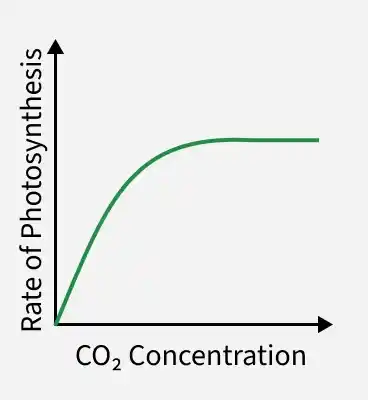
- When the concentration of carbon dioxide increases, the rate of photosynthesis also increases up to an optimum level. Beyond this level, no further increase occurs because other factors become limiting.
- C3 plants usually show an increase in photosynthetic rate when carbon dioxide concentration rises, while C4 plants are more efficient even at lower carbon dioxide concentrations.
3. Temperature
- Photosynthesis is an enzyme-controlled biochemical process, and therefore, temperature has a significant effect on its rate. Different enzymes involved in photosynthesis function best within a particular temperature range.
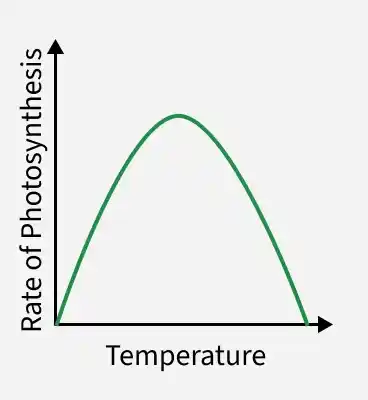
- At low temperatures, enzymatic activities slow, and the rate of photosynthesis decreases.
- As temperature increases, the rate of photosynthesis also increases until the optimum temperature is reached. Beyond the optimum level, enzymes become denatured, and the process slows down or stops completely.
- The optimum temperature for photosynthesis differs among different plants. Tropical plants generally have higher optimum temperatures compared to plants growing in colder regions.
4. Water
- Water is another essential raw material required for photosynthesis. Plants absorb water from the soil through their roots and transport it to the leaves.
- It provides hydrogen ions and electrons during the light reaction.
- It helps maintain cell turgidity, and it keeps stomata open for gaseous exchange.
- Deficiency of water causes stomata to close to reduce water loss through transpiration. When stomata close, carbon dioxide entry decreases, resulting in reduced photosynthesis. Severe water deficiency may also damage chlorophyll and other cellular structures.
5. Oxygen
- Oxygen also influences the rate of photosynthesis indirectly. High concentrations of oxygen may reduce the efficiency of photosynthesis in C3 plants through a process called photorespiration.
- During photorespiration, oxygen competes with carbon dioxide and decreases the formation of glucose, thereby lowering the photosynthetic efficiency.
6. Mineral Nutrients
- Plants require several mineral nutrients such as nitrogen, magnesium, iron, phosphorus, and potassium for proper photosynthesis.
- Nitrogen is essential for the synthesis of chlorophyll and enzymes.
- Magnesium forms the central component of the chlorophyll molecule.
- Iron is necessary for chlorophyll formation and electron transport.
- Phosphorus helps in ATP formation.
- Deficiency of these minerals reduces chlorophyll formation, enzyme activity, and overall photosynthetic efficiency.
Internal Factors Affecting Photosynthesis
Internal factors are factors present within the plant body that influence the rate of photosynthesis.
1. Chlorophyll Content
- Chlorophyll is the green pigment responsible for trapping solar energy.
- The amount of chlorophyll present in leaves directly affects the rate of photosynthesis.
- Leaves containing more chlorophyll can absorb more sunlight and perform photosynthesis more efficiently.
- Deficiency of chlorophyll due to nutrient deficiency, disease, or ageing reduces the photosynthetic capacity of plants.
2. Leaf Structure
- The internal structure of leaves greatly influences photosynthesis.
- Broad, thin leaves with a large surface area absorb more sunlight and allow efficient gaseous exchange.
- The arrangement of mesophyll tissues, stomata, and vascular bundles also affects the movement of gases and water required for photosynthesis.
3. Age of Leaf
- Young leaves do not contain fully developed chloroplasts, while old leaves may lose chlorophyll due to ageing.
- Mature leaves generally show the highest rate of photosynthesis because they possess fully developed photosynthetic machinery.
4. Protoplasmic Factors
- The condition of the protoplasm and enzyme activity inside cells also influences photosynthesis.
- Healthy and active cells carry out photosynthesis more efficiently than damaged or unhealthy cells.
5. Stomatal Opening
- Stomata regulate the exchange of gases between the plant and the atmosphere.
- Open stomata allow carbon dioxide to enter the leaf, which is essential for photosynthesis.
- If stomata close due to water stress or environmental conditions, carbon dioxide supply decreases, reducing the rate of photosynthesis.
Blackman’s Law of Limiting Factors
Blackman’s Law of Limiting Factors states that when a process depends on several factors, the rate of the process is controlled by the factor that is present in the least amount. Even if all other factors are favourable, the process cannot proceed faster unless the limiting factor is increased.
For example, if light intensity and temperature are adequate but carbon dioxide concentration is low, the rate of photosynthesis will remain limited by carbon dioxide availability.
Importance of Factors Affecting Photosynthesis
- Farmers and scientists can improve crop productivity by controlling factors such as light, water, temperature, and nutrient supply.
- In greenhouses, artificial control of environmental conditions helps increase the rate of photosynthesis and crop yield.
- Knowledge of these factors also helps in understanding plant adaptation to different environments and improving agricultural practices under changing climatic conditions.