Pineal Gland Function, Structure, Location, and Disorders (original) (raw)
Last Updated : 13 May, 2026
Deep inside your brain, there's a tiny but powerful organ called the pineal gland. Despite its small size, it plays a big role in regulating your sleep patterns, mood, and even how your body responds to different seasons. Known as the "third eye" in ancient times, the pineal gland produces a hormone called melatonin that helps control when you feel sleepy and when you're wide awake. But its influence goes beyond just sleep; it also helps balance your mood and keep your body in sync with the natural world around you. Here, we'll discuss what the pineal gland is, how it works, and why it’s so important for your overall health.
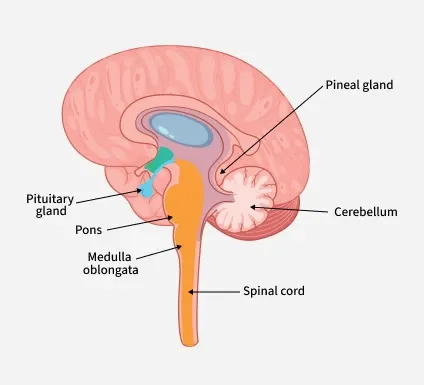
Pineal Gland
The pineal gland not only helps with sleep and mood but may also affect how clear your mind feels, impacting your ability to think clearly and stay focused.
Some research even suggests that the pineal gland could be connected to your emotional and spiritual health, with its role in sensing light and darkness being seen as a symbol of deeper awareness or consciousness.
Functions of the Pineal Gland
- The pineal gland produces melatonin, a hormone that helps regulate the sleep-wake cycle by signalling when it’s time to sleep and when to wake up.
- It helps maintain the body's circadian rhythm, keeping the internal body clock in sync with the 24-hour day-night cycle.
- The gland adjusts the body’s response to seasonal changes, influencing sleep patterns and mood as the length of daylight changes throughout the year.
- Melatonin, produced by the pineal gland also helps to stabilise mood and may reduce the risk of mood disorders, such as depression and anxiety.
- In some animals, the pineal gland plays a role in regulating reproduction cycles by responding to the amount of light in the environment, though its exact influence on human reproduction is still being explored.
- The pineal gland also serves as a natural antioxidant, with melatonin protecting the body’s cells from damage caused by stress and harmful free radicals.
Location of the Pineal Gland
- The pineal gland is located deep inside the brain, right at the centre.
- It sits between the two halves (hemispheres) of the brain, in a small groove.
- The gland is positioned near the third ventricle, which is a fluid-filled space in the middle of the brain.
- It’s part of a larger region called the epithalamus, which is located in the brain’s diencephalon area.
- Despite its deep location, the pineal gland is easily seen in X-rays because it contains calcium, making it visible on scans
Hormones of Pineal Gland - Melatonin
- The pineal gland is responsible for producing melatonin, a hormone that plays a key role in regulating several important functions in the body.
- Melatonin is created from tryptophan, an amino acid that gets converted into serotonin and then into melatonin in the pineal gland.
- When it gets dark, melatonin levels rise in the body, signalling that it’s time to sleep and helping regulate the body’s natural internal clock.
- During daylight, the pineal gland produces less melatonin, which helps you stay awake and alert.
- The amount of melatonin produced also changes with the seasons. This helps animals with behaviours like reproduction and hibernation. In humans, it adjusts to changes in daylight throughout the year, especially during shorter winter days.
- Besides regulating sleep, melatonin acts as an antioxidant, protecting the body from stress and free radical damage that can affect cells.
- Keeping melatonin levels balanced is important for mood regulation. When levels are off, it can contribute to mood disorders like depression and anxiety.
- Melatonin also supports the immune system, helping the body fight infections and manage inflammation, particularly during sleep when the body is healing.
- Although melatonin is the most well-known hormone from the pineal gland, serotonin, which is involved in its production, also helps control mood, appetite, and the sleep-wake cycle.
Pineal Gland Calcification
Pineal Gland Calcification occurs when calcium deposits build up in the pineal gland, which is a natural process that typically happens with age. While it is usually harmless, excessive calcification can affect the gland's function and its ability to produce melatonin.
- Common in older adults, the pineal gland often accumulates calcium deposits as people age, leading to calcification, which is typically observed in most individuals.
- Calcification can interfere with the pineal gland’s ability to produce melatonin, potentially disrupting sleep patterns and circadian rhythms.
- Due to the calcium buildup, the pineal gland becomes visible on X-rays and brain scans, making it easy to detect during imaging studies.
- In most cases, calcification does not cause any noticeable symptoms, and many people remain unaware of its presence.
- Excessive calcification may contribute to sleep disorders such as insomnia or irregular sleep cycles in some instances.
- The degree of calcification increases with age but can also be influenced by factors like diet and exposure to toxins.
**Disorders of the Pineal Gland
The pineal gland, though small, plays a significant role in regulating various bodily functions. When it is not functioning properly, several disorders can arise, affecting sleep, mood, and even overall health.
- Pineal gland cysts are fluid-filled sacs, usually harmless, but can cause headaches or sleep problems if they grow large.
- Pineal tumours, though rare, can cause headaches, nausea, and vision issues; treatment may require surgery or radiation.
- Melatonin deficiency leads to sleep problems like insomnia or irregular sleep cycles, especially in older adults or shift workers.
- Excess melatonin production, often caused by tumours, results in drowsiness and daytime fatigue.
- Calcification of the pineal gland is common with age, but excessive buildup can disrupt melatonin production and sleep.
- Seasonal Affective Disorder (SAD) is linked to changes in melatonin levels during the winter months, causing depression and fatigue.
- Pineal gland dysfunction may contribute to neurodegenerative diseases like Alzheimer’s and Parkinson’s, affecting sleep and cognitive function.