Plant Sensory Systems and Responses (original) (raw)
Last Updated : 16 Jan, 2026
Plant sensory systems and responses refer to a plant’s ability to sense changes in its environment and respond appropriately, even though plants do not have a nervous system or sense organs like animals. Since plants cannot move, they rely on internal signaling mechanisms, mainly phytohormones, to coordinate these responses.
- They help plants sense external stimuli such as light, gravity, water, touch, and temperature.
- These systems are crucial for growth, survival, and reproduction.
- Plants perceive stimuli, process signals within their tissues, and respond accordingly.
- Responses occur through growth movements, directional changes, and physiological adjustments.
- Phytohormones play a key role in transmitting signals and regulating responses.
Types of Responses
Responses are divided into six parts:
1. Geotropism
Geotropism, also known as Gravitropism, is the response to gravity for the growth and development of the plant. For survival, it causes the orientation of the shoot and roots of the plant. It can be positive and negative geotropism, which is shown below:

- In roots, the auxin accumulates on the lower side and inhibits cell elongation, for which upper sides of cells grow faster; because of this root bends downwards.
- In shoots, the auxin also accumulates on the lower side but promotes cell elongation, and then the shoot bends upward.
- **Example: Potato tubers growing underground.
2. Hydrotropism
These types of plants give responses to water for directional growth and development. Since water is essential for plant survival, roots naturally grow in the direction where more water is present in the soil.
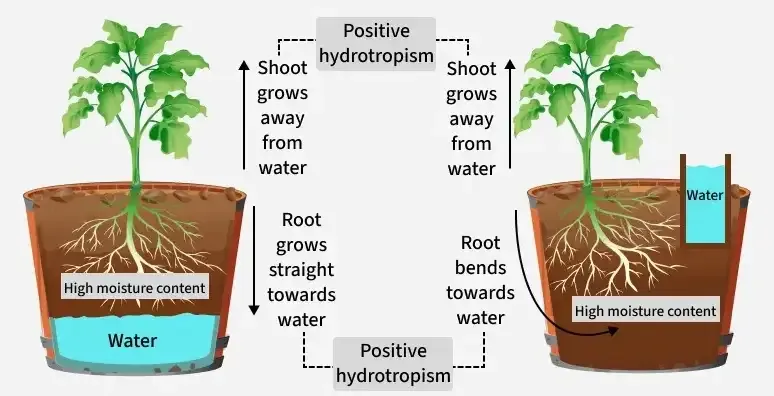
- **Water-sensing cells arefound inroot tips. When one side of the root senses more water compared to others, and then direct root growth happens on that side.
- The main function of hydrotropism is the absorption of water and minerals.
- **Example: Roots growing deeper into the soil where water is present.
3. Thigmotropism
These types of plants give responses to touch and physical contact for directional growth and development.
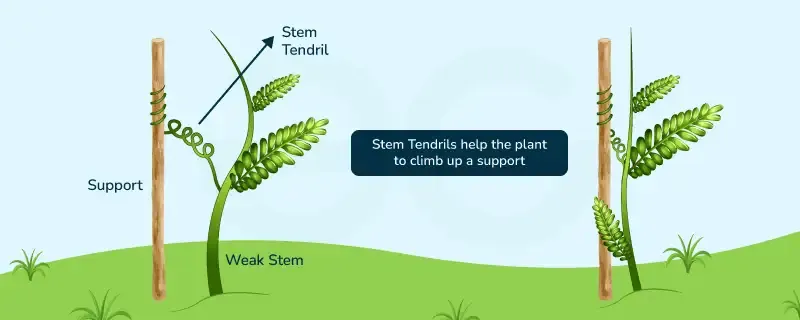
- When one side of the tendril touches the support, the auxin hormone moves to the opposite side, then the opposite side grows faster, and the tendril bends and coils around the support.
- The main function of thigmotropism is to give support and stability to the plant.
- **Example: Tendrils of peas, grapes, and pumpkins coiling around support.
4. Thermotropism
Thermotropism is the response to temperature variations for the directional growth and development of the plant and plays a very important role in plant adaptation.
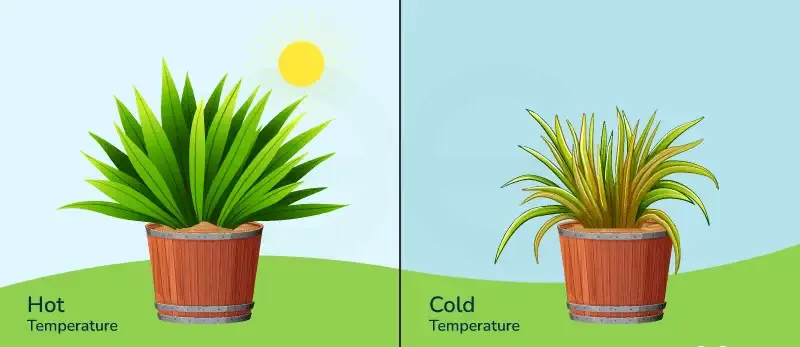
- Plant membranes contain proteins that act as thermoreceptors, which detect a rise or fall in temperature. This triggers hormonal signalling, then auxin redistributes on one side of the plant tissue, which causes bending away or toward the warmer areas.
- Auxin tends to move away from excessively warm places to promote growth on the opposite side and causes the bending of the plant.
- **Example: Roots grow toward warmer soil for better nutrient uptake and microbial activity.
5. Phototropism
These types of plants give responses to light for growth and development. And for maximum photosynthesis, the plant shoot bends towards the side where more sunlight falls.

- Because auxin (phytohormone) moves to the shaded area of the stem and causes cells there to elongate more, it bends toward the sunlight.
- **Example: A young shoot bending toward a window.
There are two types of phototropism: positive and negative phototropism.
| Features | Positive Phototropism | Negative Phototropism |
|---|---|---|
| Direction of growth | Towards the light | Away from light |
| Plant parts that show | shoot or stem | Root |
| Functions | To obtain maximum light for the photosynthesis process | To help roots for more absorption of minerals and water |
| Example | Stem bending toward sunlight | Roots growing deeper into the soil and away from the light. |
6. Chemotropism
Chemotropism is the response to chemicals for the directional growth and development of the plant. This process is generally responsible for reproduction and nutrient acquisition. The structure of Chemotropism is shown below:
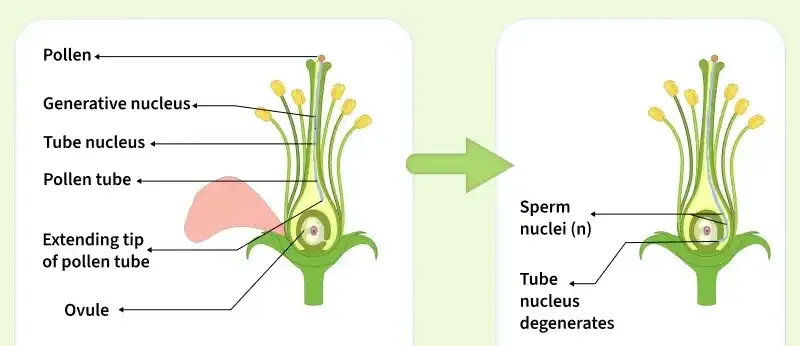
- In the environment, the plant senses the chemicals which help hormones and signalling molecules guide growth in the cells, then this cell elongates and bends away or towards the chemical side.
- It ensures successful fertilisation in flowering plants, helps roots find nutrients and minerals, and protects plants from toxic substances.
- Example: Pollen tube growth and Roots avoiding toxins.