Importance of Vaccines, Vaccination and Immunization (original) (raw)
Last Updated : 24 Jul, 2025
**Vaccination and immunization play a crucial role in protecting individuals and communities from infectious diseases. They help to stimulate the immune system and prepare it to recognize and fight off specific pathogens. Vaccination classes 6 and 12 are important topics frequently asked in examinations. In this article, we will read about the **importance of vaccination, **immunization, different types of vaccines, and their **importance.

Importance of Vaccine, Vaccination and Immunization
Table of Content
- What is Vaccine?
- How Does a Vaccine Work?
- What are the Types of Vaccines?
- What is Vaccination?
- What is Immunisation?
- What is the Importance of Immunization and Vaccination?
- Conclusion: Importance of Vaccines, Vaccination and Immunization
- FAQs on Importance of Vaccines, Vaccination and Immunization
What is Vaccine?
**Definition: A vaccine is a substance that helps to stimulate the immune system and creates protection against specific diseases.
A vaccine is an artificially produced biological preparation that helps to stimulate the immune system and provides acquired immunity against specific infections or diseases. Vaccination is the process of administering vaccines to an individual's body through oral, intramuscular, or intravenous shots or injections. Vaccination provides acquired immunity against the introduced antigen in the vaccine.
**Also Read: Difference between Innate and Adaptive Immunity
How Does a Vaccine Work?
Vaccination works by evoking an immune response against the introduced pathogen or its part called the antigen and providing acquired immunity against it.
First, the weakened or inactivated forms of the pathogen or pieces of the pathogen, such as proteins or sugars, stimulate the body's immune response without causing the disease.
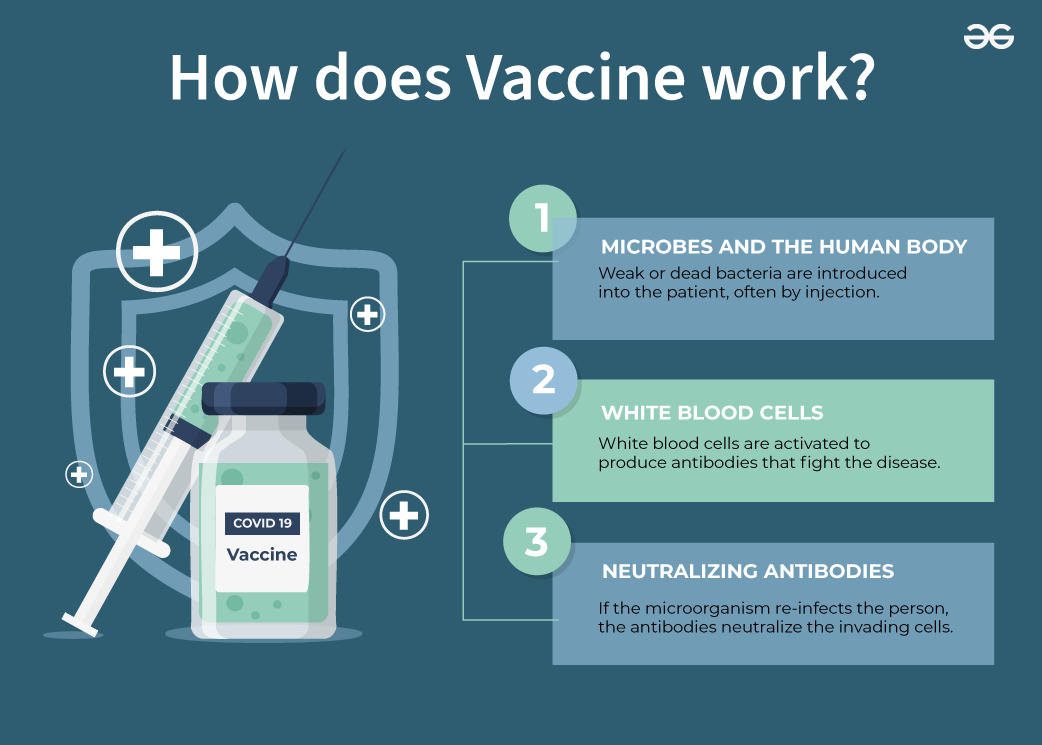
This leads to the production of antibodies against the specific antigen. These antibodies defend the body against the introduced antigen in the vaccine and produce memory cells to prepare the body for any secondary/subsequent exposure to the same antigen, thus building immunity against it.
What are the Types of Vaccines?
Vaccines are of several types based on their composition, mechanism of action, and production method. Here are some common types of vaccines:
- **Live Attenuated Vaccines: These vaccines contain **weakened forms of the disease-causing virus or bacteria that stimulate a strong immune response, providing long-lasting immunity. Examples include the measles, **mumps, **and rubella (MMR) vaccine and the **oral polio vaccine (OPV).
- **Inactivated Vaccines: Inactivated vaccines contain viruses or bacteria that have been **killed or inactivated using heat, **chemicals, or radiation, they still stimulate an immune response that is not very long-lasting. Examples include the **inactivated polio vaccine (IPV) and the **influenza vaccine.
- **Subunit, Recombinant, and Conjugate Vaccines: These vaccines contain only certain parts, subunits, specific antigens, or proteins from the pathogen, rather than the whole organism. Subunits of the pathogen are then combined with conjugate carrier molecules to enhance the immune response. Examples include the **hepatitis B vaccine (recombinant) and the **Haemophilus influenzae type B (Hib) vaccine (conjugate).
- **Toxoid Vaccines: Toxoid vaccines contain **inactivated toxins that are harmless but still stimulate an immune response against the toxin. Examples include the **tetanus toxoid vaccine and the **diphtheria toxoid vaccine.
- **mRNA Vaccines: mRNA vaccines are a newer type of vaccine that use messenger RNA (mRNA) molecules to mount an immune response. mRNA vaccines include **Pfizer-BioNTech and **Moderna COVID-19 vaccines.
- **DNA vaccines: These vaccines use **pathogenic DNA but are still under development
What is Vaccination?
Vaccination is the process or treatment with the vaccine to produce immunity against a disease. It utilizes body’s natural defences to build resistance to specific infections and makes immune system stronger.
There are many diseases for which vaccination is available. For example:
| Vaccine | Constituent | Disease Prevented | Type of Vaccine | Administration Time |
|---|---|---|---|---|
| Covaxin | mRNA | Covid-19 | Inactivated | Intramuscular |
| Hepatitis B Vaccine | RDNA | Hepatitis B | Subunit | Intramuscular-recommended within 24 hours of birth. |
| Polio Vaccine | Live attenuated Virus | Polio | Live attenuated | Oral |
| Varicella Vaccine | Oka/Merck Strain | Chickenpox | Attenuated | Subcutaneous |
What is Immunisation?
Immunization is the process of getting a vaccine to protect yourself from certain diseases. It helps your body build up immunity so that if you come into contact with the actual disease, your immune system can fight it off more effectively. Vaccines contain weakened or inactive parts of the disease-causing organism, which stimulate your immune system to produce antibodies. These antibodies help your body recognize and fight off the disease if you ever encounter it.
**Role of Immunization Programs
Immunization programs are very important to promote the development of acquired immunity in a population that targets diseases or infections. Immunization programs are important because
- **Reduction of Morbidity and Mortality: Immunization programs reduce the chances of contracting of illness, hospitalization, and death associated with infectious diseases. Vaccines have been historically used in controlling diseases such as polio, measles, and tetanus, leading to significant reductions in morbidity and mortality rates worldwide.
- **Protection of Vulnerable Populations: Immunization programs prioritize the immunization of vulnerable populations, including infants, young children, pregnant women, the elderly, and individuals with compromised immune systems and provide them protection.
- **Herd Immunity: Immunization programs aim to achieve herd immunity or community immunity. This means when a sufficiently high proportion of the population is vaccinated it prevent the sustained transmission of a disease.
What is the Importance of Immunization and Vaccination?
Vaccines and Immunization plays a crucial role against diseases few of them are listed below :
- **Disease prevention: Vaccines are one of the most effective ways to prevent the spread of infectious diseases. They help protect individuals and communities from illnesses that can cause severe complications or even death.
- **Eradication of diseases: Vaccines have played a crucial role in eradicating diseases like smallpox and are working towards eliminating others, such as polio, smallpox.
- **Herd immunity: Vaccination not only protects individuals but also helps create herd immunity. When a large portion of the population is vaccinated, it reduces the overall transmission of diseases, protecting those who cannot be vaccinated due to medical reasons.
- **Safe and effective: Vaccines undergo rigorous testing and monitoring to ensure their safety and effectiveness. They are continuously evaluated for any potential side effects.
- **Long-term cost savings: Vaccines can help reduce healthcare costs by preventing expensive treatments and hospitalizations associated with vaccine-preventable diseases.
- **Global health impact: Vaccines have had a significant impact on improving global health, saving millions of lives worldwide.
- **Protecting vulnerable populations: Vaccination is crucial for protecting vulnerable populations, such as infants, the elderly, and individuals with weakened immune systems.
- **Individual protection: Vaccines boost our immune system, making us less susceptible to infections and reducing the severity of illnesses if we do get infected.
- **Public health impact: Vaccinations have significantly reduced illness, hospitalizations, and deaths caused by vaccine-preventable diseases, leading to improved overall public health.
Conclusion: Importance of Vaccines, Vaccination and Immunization
Vaccines, vaccination and immunization are important for preventing the spread of diseasesand keeping us healthy. They provide protection against several diseases through immunity. There are many diseases which have been eradicated by the help of these techniques. Therefore vaccination has been helped historically, leading to the eradication or near-elimination of diseases such as smallpox and polio, etc. Though they have all the beneficial properties but can sometimes cause allergies to some people like redness , joint pain ,fever ,etc. for some time.
**Also Read: