Matrix Organisation: Meaning, Features, Suitability, Advantages and Disadvantages (original) (raw)
Last Updated : 9 Jan, 2026
A matrix organisation is a type of organisational structure in which employees have two bosses or dual reporting relationships—usually one to a functional manager and one to a project or product manager.
In a matrix organisation, people work in teams on different projects while still belonging to their functional department (like finance, marketing, HR, production, etc.).
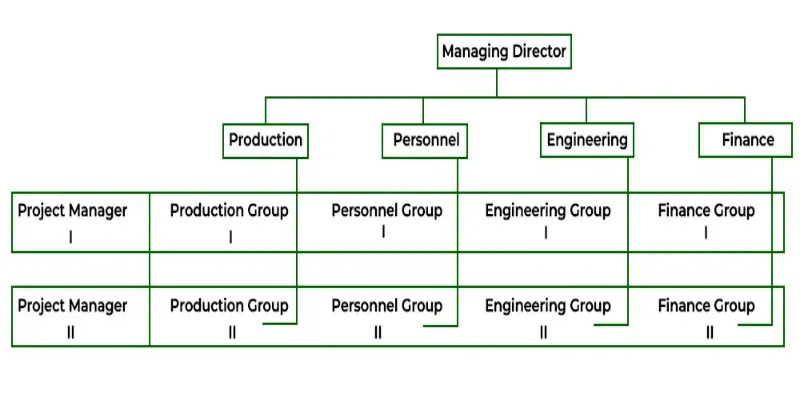
**Example: A company manufacturing smartphones:
- Ravi works in the Marketing Department → reports to Marketing Manager
- At the same time, Ravi is assigned to a Product Launch Project → reports to Project Manager
So, Ravi reports to two managers.
Features of Matrix Organisation
A matrix organisation has some unique features that make it different from other types of organisations.
**Dual Reporting Lines
Employees work under two authorities—one functional manager and one project manager. The functional manager guides skill development and routine work, while the project manager directs project-related tasks. This dual authority helps combine technical expertise with project goals.
**Functional Departments
The organisation is divided into specialised departments such as marketing, finance, HR, and production. Each department provides expert support and ensures that employees receive the necessary training, resources, and guidance to perform their tasks effectively.
**Project Teams
Teams are formed by selecting members from various functional departments to work on specific projects. These cross-functional teams bring together diverse skills, improving coordination and helping achieve project targets efficiently.
**Efficient Resource Allocation
A key feature of the matrix structure is the ability to share resources across multiple projects. Employees, equipment, and expertise can be used wherever needed, reducing wastage and improving overall productivity.
**Flexibility and Adaptability
The matrix structure can quickly adjust to changing project requirements. Resources can be shifted, teams can be re-organised, and work priorities can be realigned, making it suitable for dynamic and uncertain environments.
**Collaboration
Since people from different departments work together, communication naturally improves. The structure encourages teamwork, knowledge-sharing, and innovation as employees collaborate to solve complex problems.
**Dual Focus
Employees contribute both to their functional roles and to project goals. This dual responsibility helps the organisation maintain strong departmental expertise while also completing projects successfully.
**Complex Reporting Relationships
Because employees report to two managers, role clarity becomes extremely important. Proper communication and coordination are needed to avoid confusion and ensure smooth functioning.
Suitability of Matrix Organisation
While a matrix structure has its benefits, it may not be the right fit for every situation. Some considerations for determining if a matrix organisation is suitable are:
- Useful for businesses that require specialised skills and allow employees to focus on a specific function.
- Suitable when an organisation has clearly defined roles and responsibilities within each department.
- Helps in optimising resources by grouping similar functions and reducing duplication of work.
- Ideal for industries where deep specialisation in each functional area is essential.
- Supports clear career development and growth within each functional department.
- Works well when different functions need independence and authority to make their own decisions.
Advantages of Matrix Organisation
A matrix organisation offers several advantages that can benefit both employees and the overall performance of the organisation. Some of these advantages are as follows:
**Efficient Resource Use: Skills and expertise can be shared across projects, helping the organisation make full use of its workforce. This reduces duplication of efforts and ensures that talented employees are deployed where they are needed most.
**Collaboration and Communication: Working with different departments encourages smoother communication. Teams share ideas, learn from one another, and develop better solutions, improving overall performance.
**Flexibility and Responsiveness: Because resources can be shifted quickly, the organisation can respond faster to market changes or new opportunities. This adaptability keeps the business competitive and agile.
**Integrated Organisational Approach: Employees understand both departmental goals and project objectives. This broad perspective helps align individual efforts with the organisation’s overall mission, improving coordination and outcomes.
**Learning and Skill Development: Employees gain hands-on experience with different projects, technologies, and teams. This enhances their skills and prepares them for future leadership roles.
**Customer-Centric Work: Project teams analyse customer needs from multiple perspectives, ensuring well-rounded solutions. This improves customer satisfaction and leads to better project outcomes.
**Better Decision-Making: Diverse viewpoints from different departments lead to more informed and creative decisions. This reduces risks and increases the chances of project success.
Disadvantages of Matrix Organisation
While a matrix organisation has its advantages, it also has certain drawbacks to consider. Some of these disadvantages are as follows:
**Complexity and Confusion: Dual reporting can confuse employees about priorities and responsibilities. Without clear communication, the structure may lead to delays and inefficiencies.
**Power Struggles: Functional and project managers may disagree over work allocation, deadlines, or resource needs. These conflicts can slow down decisions and create tension within teams.
**Communication Overload: With multiple managers and teams involved, communication becomes more time-consuming. Regular meetings and coordination efforts may reduce the time available for actual work.
**Unclear Accountability: Because responsibility is shared, employees struggle to understand who they are answerable to. This can lead to unclear ownership of tasks and slower work progress.
**Workload Pressure: Employees may be assigned to several projects at the same time. This heavy workload increases stress, reduces focus, and may lead to burnout if not managed well.
**Slow Decision-Making: Since decisions require inputs from many people, the process becomes slower. Consensus-building takes time and may delay urgent responses.
**Difficult to Implement: Transitioning to a matrix structure requires training, planning, and strong coordination. It can be expensive and challenging for organisations not used to teamwork-based systems.
**Loss of Functional Depth: Because employees divide their attention between projects and functional work, their specialisation may suffer. They may not get enough time to focus deeply on improving their core skills.