Project Organisation (original) (raw)
Last Updated : 9 Jan, 2026
A project organization is a type of organizational structure that is formed temporarily to complete a specific project. Once the project is finished, the organisation or team is dissolved.
It provides a systematic roadmap for managing the project by clearly defining participants, their responsibilities, reporting relationships, and communication channels.
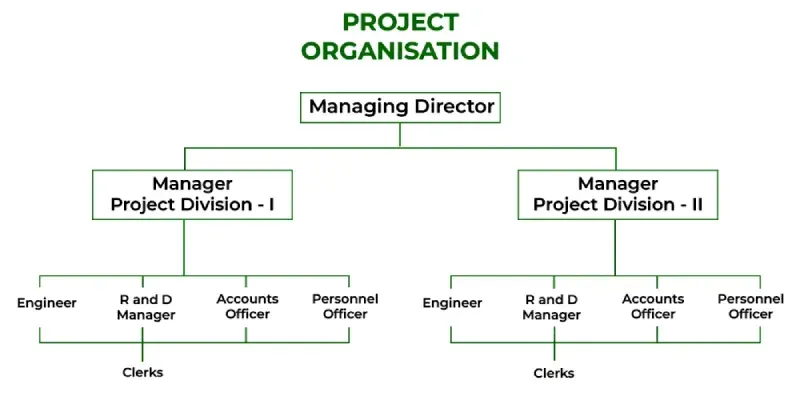
- At the centre is the Project Manager, who ensures that activities are executed as planned, resources are used efficiently, and timelines are maintained.
- The project team supports the manager by performing specialised tasks required to achieve project objectives.
**Learn- Project Management
Features of Project Organisation
Project organisation comes with a set of helpful features that make running a project smoother:
**Everyone knows their job
Each team member has a clearly defined role and responsibility, so they know exactly what tasks they must handle. This prevents confusion, avoids overlapping work, and keeps the team organised.
**Leadership and order
A single project manager leads the project, guides the team, makes major decisions, and ensures all activities stay coordinated. This helps reduce delays and keeps the project running smoothly.
**Teamwork
All members work together towards the same project goal, which builds unity and cooperation. Since every task is connected, teamwork becomes stronger and more effective.
**Communication is key
Regular communication through updates and discussions keeps everyone informed about progress, issues, and changes. This helps maintain transparency and ensures no one is left uninformed.
**Breaking down tasks
The project is divided into smaller and manageable tasks, making planning and supervision easier. This step-by-step approach helps track progress smoothly and reduces workload stress.
**Responsibility
Clear roles make it simple to identify who is responsible for each task. The project manager monitors the entire process to ensure tasks are completed on time and the project stays on track.
**Adaptable
Project organisation can be adjusted depending on what the project needs. It can easily fit different working styles like Agile or Waterfall and adapt when requirements change.
**Goal-focused
The team is created specifically for one project, so all time, energy, and resources are dedicated to achieving that project’s goals. This improves productivity and overall performance.
**Customer-focused
Many projects aim to meet customer requirements, and this structure helps the team stay aligned with customer expectations to deliver a satisfying result.
**Clear timeline
Every project has a fixed start and end date, which helps the team plan tasks properly, manage deadlines, avoid delays, and complete work efficiently.
Suitability of Project Organisation
Project organisation is a great choice in several situations. Here are some examples where it might work well:
- Suitable for large, complex projects that need specialised expertise.
- Useful when a project requires experts from multiple departments to work together.
- Ideal for projects that have a clear start and end timeline.
- Great for new, unique, or innovative projects needing flexibility and creativity.
- Works well when the project has clearly defined goals and objectives.
- Effective for projects focused on fulfilling specific customer needs.
- Best for situations where quick and efficient decision-making is required.
Advantages of Project Organisation
Project organisation comes with a lot of perks that can make managing a project a smoother experience. Here are some of them:
**Staying on Target: When a team is formed only for one project, members can fully concentrate on that specific goal without other distractions. This clear focus helps them stay aligned with what needs to be achieved, improving commitment, direction, and overall project performance.
**Working Smarter: When everyone clearly understands their roles and tasks, work becomes more organised and efficient. This reduces unnecessary delays, avoids repetition of tasks, and ensures that the right person handles the right job, leading to faster and higher-quality results.
**Better Teamwork and Updates: With a structured communication system in place, team members stay informed about progress, challenges, and upcoming tasks. This constant flow of information boosts teamwork, reduces misunderstandings, and helps everyone coordinate smoothly throughout the project.
**Everyone’s Responsible: Clear division of responsibilities ensures each person knows exactly what they are accountable for. The project manager can easily monitor individual performance, guide the team when needed, and ensure that every part of the project is progressing as planned.
**Being Adaptable: Project organisation is flexible and can be modified to match the project’s size, complexity, and working method. Whether the project follows Agile, Waterfall, or any other approach, the structure can adjust to changing needs, priorities, or unexpected situations.
**Managing Problems: The organised setup helps the team identify risks, challenges, and issues early in the process. This allows the project manager and team members to take quick action, avoid bigger problems later, and keep the project running smoothly without major interruptions.
**Happy Customers: Since project organisation strongly focuses on meeting the customer’s expectations, the team works closely with the client and incorporates their feedback. This increases the chances of delivering results that satisfy or even exceed customer requirements.
**Thinking Outside the Box: A project team often includes people from different backgrounds and skills, which encourages creative thinking. This diversity helps generate innovative ideas, unique solutions, and new ways of handling challenges within the project.
**Learning New Things: Working on a project exposes team members to new tools, responsibilities, and experiences. This helps them build new skills, improve their knowledge, and grow professionally, which can benefit them in future roles and assignments.
**Clear Goals: Every project has a clearly defined start and end date, along with specific objectives. This gives the team a strong sense of direction, helps them manage their time properly, and ensures that everyone works towards completing the project within the given deadline.
Disadvantages of Project Organisation
Project organisation can be really helpful, but it also has some downsides that are worth keeping in mind:
**Sharing Resources: When multiple projects run at the same time, people, money, or equipment may need to be shared. This can lead to shortages, scheduling conflicts, or delays, especially when different teams require the same resources at the same time.
**Conflicts: Team members may sometimes have to report to both their department manager and the project manager. This dual reporting can create confusion, conflicting instructions, or disagreements about which task should be done first.
**Teamwork Challenges: Bringing together people from different departments or backgrounds can cause coordination issues in the beginning. It may take time for the team to adjust, build trust, and develop smooth working relationships.
**Starting from Scratch: After a project ends, the team is usually dissolved. Because of this, valuable experience, teamwork, and knowledge gained during the project may be lost when members return to their original roles or move to other projects.
**Career Worries: Employees working in project-based environments may feel uncertain about their future roles. They might worry about their next assignment, growth opportunities, or long-term stability once the project is completed.
**Dependence on the Leader: The success of the entire project often depends heavily on the project manager. If the manager lacks experience, makes poor decisions, or leaves mid-way, the project can face delays and major difficulties.
**Too Focused on the Project: Sometimes the team becomes so involved in achieving project goals that they overlook the broader organisational objectives. This narrow focus can lead to a mismatch between the project’s direction and the company’s long-term plans.
**Who's in Charge: In some project organisations, authority may not be clearly defined. Unclear responsibilities can slow decision-making, confuse team members, and reduce overall efficiency.
**Going Over Budget: Unexpected challenges, changes in requirements, or poor planning can cause the project to exceed the planned budget. This can lead to financial strain and impact other projects or organisational operations.
**Deadline Stress: Projects often have strict timelines, which can create pressure on team members. The need to finish tasks quickly may cause stress, fatigue, and burnout, especially during the final stages.
_Keep in mind that while project organisation can be a great choice in these situations, it might not be the best fit for everything. It's important to think about what the project needs, what resources are available, and the overall context before deciding on the best way to organise things.