Total Quality Management (TQM), Just in Time (JIT) & KANBAN (original) (raw)
Last Updated : 22 May, 2026
Modern organisations operate in a highly competitive environment where quality, cost efficiency, and timely delivery are crucial for success. To achieve these objectives, firms increasingly adopt integrated management approaches such as Total Quality Management (TQM), Just in Time (JIT), and Kanban. These techniques focus on continuous improvement, waste reduction, and efficient utilisation of resources.
Total Quality Management (TQM)
Total Quality Management (TQM) is a management approach that focuses on continuous improvement, customer satisfaction, and employee participation. It aims to improve products, services, and work processes by understanding customer needs and maintaining high quality standards. TQM encourages all employees to work together, identify problems, reduce waste, and take responsibility for improving quality and organisational performance.
Principles of Total Quality Management
The principles of Total Quality Management (TQM) encompass the following:
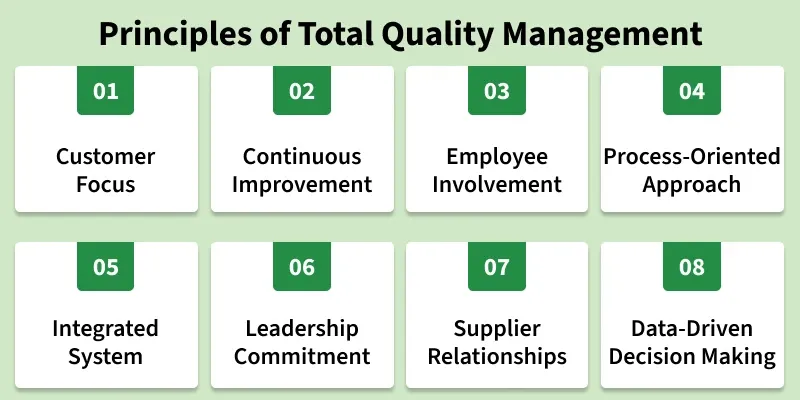
**Customer Focus: TQM places a strong emphasis on understanding and meeting customer needs and expectations. It involves gathering customer feedback, conducting market research, and using that information to improve products, services, and overall customer satisfaction.
**Continuous Improvement: TQM promotes a culture of continual improvement throughout the organisation. It encourages all employees to actively participate in identifying opportunities for enhancement, eliminating waste, and implementing incremental improvements in processes, products, and services.
**Employee Involvement: TQM recognizes the importance of involving employees at all levels in quality improvement initiatives. It fosters a collaborative and empowered work environment, where employees are encouraged to contribute ideas, make decisions, and take ownership of quality-related activities.
**Process-Oriented Approach: TQM focuses on managing and improving processes rather than individual tasks or departments. It involves mapping, analysing, and optimizing workflows to enhance efficiency, effectiveness, and consistency.
**Data-Driven Decision-Making: TQM relies on the collection and analysis of relevant data to support decision-making. It emphasizes the use of facts and figures to identify areas for improvement, measure performance, and monitor progress toward quality objectives.
**Supplier Relationships: TQM recognizes the significance of strong relationships with suppliers. It emphasizes collaboration, communication, and mutually beneficial partnerships with suppliers to ensure the quality of inputs and optimize the overall value chain.
**Leadership Commitment: TQM requires committed leadership that actively supports and promotes quality principles throughout the organisation. Leaders serve as role models, set clear quality goals, provide necessary resources, and foster a culture that prioritizes continuous improvement and customer satisfaction.
Just in Time (JIT)
Just-in-Time (JIT) is a production and inventory management method that focuses on reducing waste and improving efficiency by producing goods only when they are needed. It helps reduce excess inventory, lower costs, minimize delays, and improve responsiveness to customer demand. JIT follows a demand-based system where production starts only after receiving customer orders. It also requires close coordination between suppliers and manufacturers for timely delivery of materials and smooth production processes.
**Just-in-Time (JIT) techniques
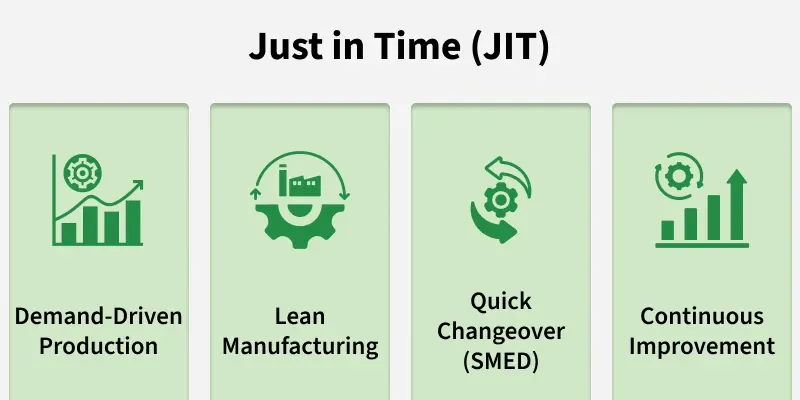
**Demand-Driven Production: JIT emphasizes producing goods or services based on actual customer demand rather than relying on forecasts. This approach allows companies to avoid overproduction and minimize inventory holding costs by closely monitoring customer orders and adjusting production accordingly.
**Lean Manufacturing: JIT incorporates lean manufacturing principles to eliminate waste and improve efficiency. Techniques such as Value Stream Mapping (VSM) help identify and eliminate non-value-added activities, streamline processes, and optimize resource utilization.
**Quick Changeover (SMED): JIT focuses on reducing setup or changeover times between different product runs or production processes. Techniques like Single-Minute Exchange of Die (SMED) enable companies to minimize downtime and enhance flexibility by standardizing setups, utilizing tooling techniques, and implementing parallel operations.
**Continuous Improvement: JIT fosters a culture of continuous improvement, empowering employees to identify and address inefficiencies. Techniques like Kaizen (continuous improvement through small incremental changes) and Poka-Yoke (error-proofing) are applied to enhance processes, quality, and productivity.
Kanban
Kanban is a visual scheduling system that supports Just-in-Time (JIT) production. It uses cards or signals to manage the flow of work and materials in the production process. Kanban provides real-time information about inventory, production, and customer demand. When materials are used, signals are sent to replenish them, helping to avoid overproduction and reduce excess inventory. It improves workflow, production flexibility, visibility, and efficient use of resources.
**Kanban techniques
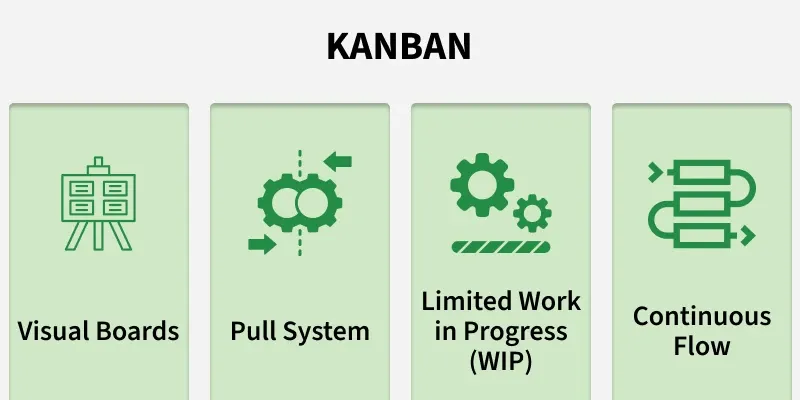
**Visual Boards: KANBAN utilizes visual boards or cards to provide a clear representation of work progress and status. These visual tools enable teams to easily track and manage workflow, displaying essential information such as task or product details, quantity, and location.
**Pull System: KANBAN operates on a pull-based system, where work or materials are pulled through the production process based on actual demand. As one stage completes its work, it signals the previous stage to produce and supply the required quantity, ensuring a smooth flow and avoiding overproduction.
**Limited Work in Progress (WIP): KANBAN sets limits on the number of tasks or items in progress at any given time. By implementing WIP limits, teams prioritize completing existing work before starting new tasks, reducing bottlenecks, and improving overall throughput.
**Continuous Flow: KANBAN strives to establish a continuous flow of work by maintaining a balanced workload across different stages or teams. This technique prevents work from accumulating and promotes a steady and efficient production rhythm.