Taiwan says it wasn't informed of US pause on major arms sale (original) (raw)
Taiwan said Friday that it had not been informed of a U.S. decision to freeze a $14 billion arms package, after a Pentagon official announced the move the previous day.
Presidential spokesperson Karen Kuo told local media that the administration of Taiwan President Lai Ching-te had noted the comments by Hung Cao, the U.S. acting navy secretary, but was not aware of any change to the deal, which has been pending President Donald Trump's approval for months.
The U.S. has no formal diplomatic relations with Taipei but has been its main arms supplier for decades amid growing military pressure from China, which claims Taiwan as its own and has vowed to bring the island under its control, if necessary by force.
"The Chinese side firmly opposes the U.S. selling arms to the Taiwan region," Chinese Foreign Ministry spokesperson Guo Jiakun said at a regular press conference in Beijing on Friday.
Before traveling to China last week, Trump said he would discuss the issue with Chinese leader Xi Jinping. And after the trip, the U.S. president said he would speak to Lai too. Both actions would be departures from longstanding U.S. policy on the dispute across the Taiwan Strait.
Why Are Taiwan Arms Delayed?
Cao told the Senate Appropriations subcommittee on defense on Thursday that the pause on the major arms package for Taiwan was intended to preserve weapons stockpiles should the war with Iran escalate again.
"Right now we're doing a pause in order to make sure we have the munitions we need for Epic Fury—which we have plenty," he said, adding that foreign military sales would continue "when the administration deems necessary."
The Trump administration has repeatedly denied U.S. reports that its munitions stockpiles could be running low, after American forces were said to have used up more interceptors than expected to defend against Iran's Iran's retaliatory drone and ballistic strikes across the Gulf region.
From February 28, the U.S. and Israeli militaries exchanged fire with Iran for nearly two months before the April 7 ceasefire.
Trump has acknowledged Taiwan's wait for weapons deliveries but did not link it to war in the Middle East. After his summit with Xi, Trump said the arms sale could be a "very good negotiating chip for us" in subsequent talks with China.
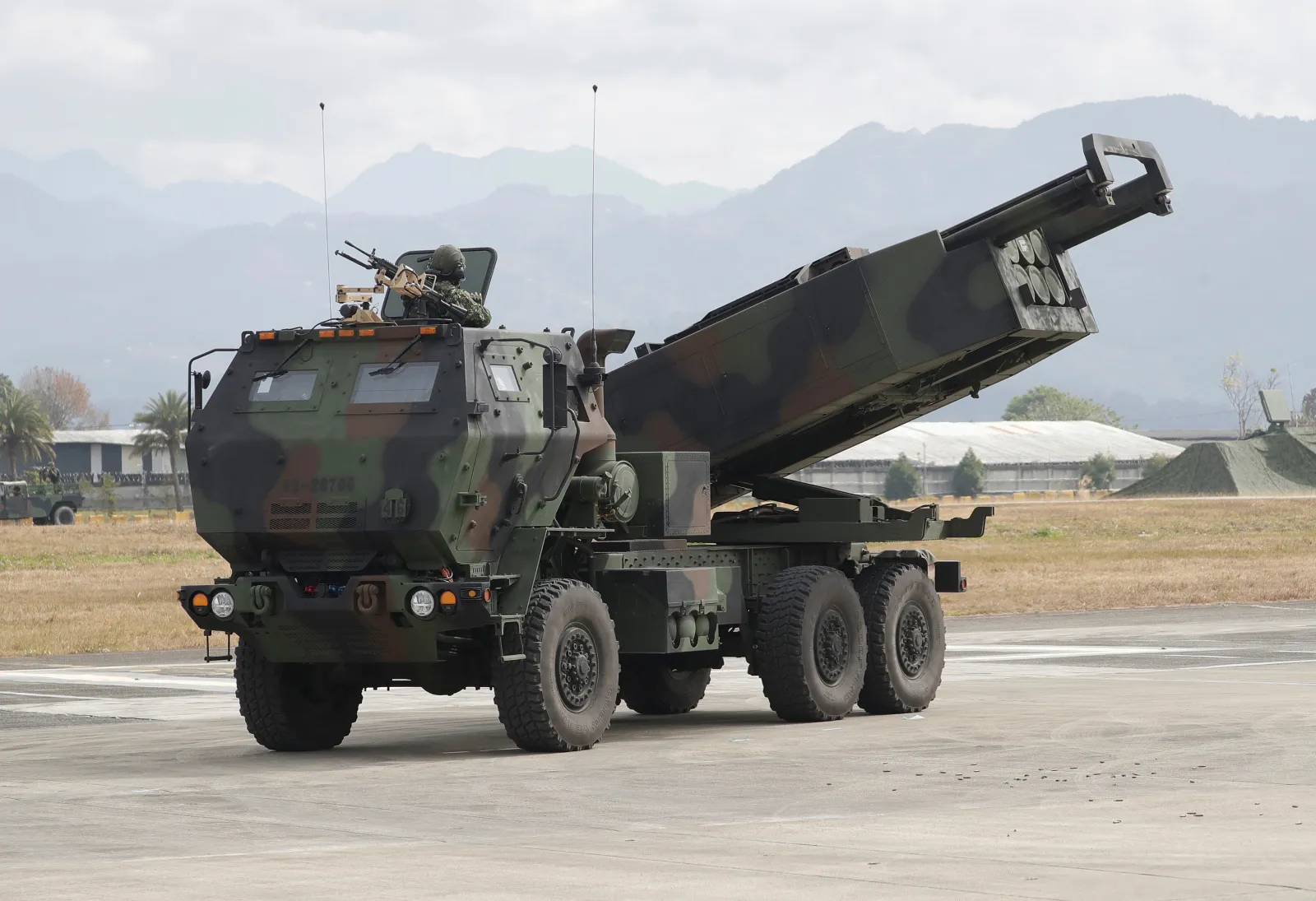
At stake for Taiwan are interceptor missiles for its Patriot PAC-3 system, HIMARS rocket launchers, counter-drone systems and a wide range of other equipment, adding to a delivery backlog totaling nearly $30 billion as of April, according to the Taiwan Security Monitor group at George Mason University in Virginia.
The White House and Taiwan's Presidential Office did not immediately respond to separate written requests for comment.
What Is U.S. Policy on Taiwan Arms Sales?
Trump's readiness to put Taiwan arms sales on the negotiating table with Beijing could violate the Six Assurances, experts say, referring to a set of guarantees given to Taipei after the U.S. and China issued a joint communique in 1982 which included a commitment to gradually reduce weapons transfers to the island.
The assurances, which included a pledge not to consult with China on arms sales to Taiwan, were non-binding, but they have been a mainstay in U.S. policy on cross-strait issues ever since.
"The Trump administration will face a great deal of domestic pressure to approve the arms package soon; if they don't it will look like a unilateral concession to Xi, so the political cost of not approving the sale just increased further," Kharis Templeman, head of the Hoover Institution's Taiwan program, told Newsweek.
Trump’s conundrum, Templeman said, can be traced back to past U.S. administrations, which conditioned the timing of arms sale announcements to avoid angering China.
“That has encouraged Beijing to try to delay or deter arms sales by threatening to hold up unrelated things that the U.S. cares about in the relationship," Templeman said.
This week, the Financial Times newspaper reported that China was delaying the visit of Pentagon policy chief Elbridge Colby until Trump makes a determination on Taiwan's $14 billion arms deal.
Trump's apparent intention to speak directly with Lai—a possible first since Washington and Taipei cut diplomatic ties in 1979—could also derail any lasting detente he hopes to secure with Xi and would almost certainly result in the cancelation of the Chinese president's upcoming U.S. state visit in the fall.