Classification of Biomolecules (original) (raw)
Last Updated : 29 May, 2026
Biomolecules are naturally occurring chemical compounds present in all living organisms that help in maintaining life and carrying out various biological processes. Biomolecules perform important functions such as providing energy, forming cellular structures, regulating metabolic reactions, and storing genetic information. The major types of biomolecules include carbohydrates, proteins, lipids, nucleic acids, and enzymes.
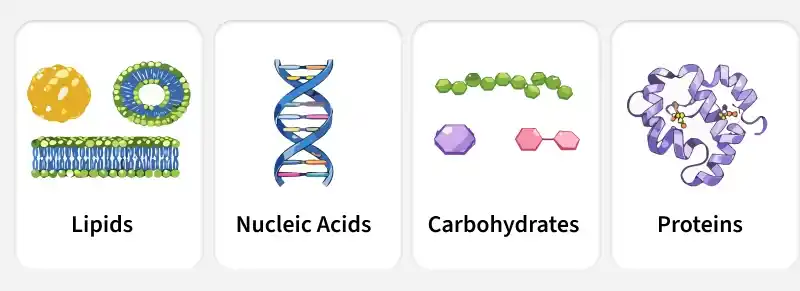
Characteristics of Biomolecules
- Biomolecules possess several important characteristics that distinguish them from non-biological compounds. They are usually organic compounds containing carbon atoms bonded with hydrogen, oxygen, nitrogen, sulphur, or phosphorus.
- Most biomolecules are highly specific in their structure and function, meaning that even a slight alteration in their arrangement may significantly affect their biological activity.
- Biomolecules are synthesised inside living cells through various metabolic pathways and participate in both anabolic and catabolic reactions.
- Many biomolecules are polymeric in nature, meaning they are formed by the repeated joining of smaller units called monomers.
- For example, proteins are formed from amino acids, polysaccharides are formed from monosaccharides, and nucleic acids are formed from nucleotides.
- Biomolecules are also capable of interacting with one another through chemical bonds and molecular forces, thereby contributing to the formation of complex cellular structures and biological systems.
Types of Biomolecules
There are four major classes of biomolecules found in living organisms. These include carbohydrates, proteins, nucleic acids, and lipids. In addition to these major groups, enzymes are also considered extremely important biological molecules because they regulate biochemical reactions occurring within cells.
1. Carbohydrates
- Carbohydrates are organic compounds composed primarily of carbon, hydrogen, and oxygen atoms and are generally represented by the empirical formula (CH₂O)n.
- Carbohydrates are defined as polyhydroxy aldehydes or ketones or substances that yield such compounds upon hydrolysis.
- They are among the most abundant organic compounds found in nature and serve as the major source of energy for living organisms.
- Carbohydrates are commonly referred to as sugars or saccharides because many of them possess a sweet taste. These biomolecules play a vital role in cellular respiration, energy storage, and structural support.
- In plants, carbohydrates such as cellulose form the structural components of cell walls, while in animals carbohydrates like glycogen serve as stored food reserves.
- Glucose, which is a simple carbohydrate, is one of the most important energy-producing molecules used by cells during respiration.
- Carbohydrates are classified into monosaccharides, oligosaccharides, and polysaccharides depending upon the number of sugar units they contain.
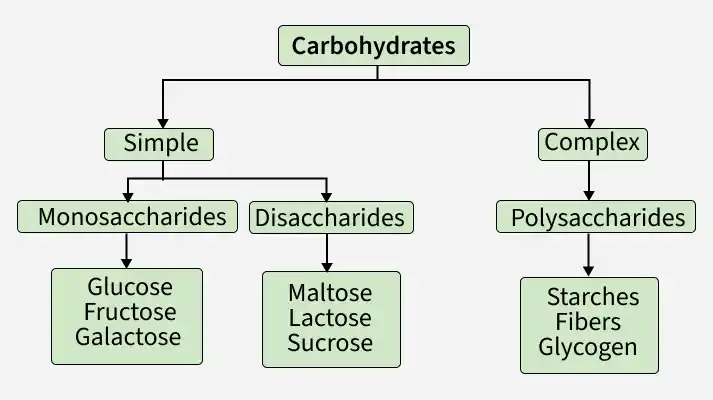
**Types of Carbohydrates
- **Monosaccharides: Monosaccharides are the simplest form of carbohydrates and cannot be hydrolysed into smaller carbohydrate units. They usually contain three to seven carbon atoms arranged in an unbranched chain. Common examples of monosaccharides include glucose, fructose, and galactose.
- **Oligosaccharides: Oligosaccharides are carbohydrates formed by the combination of two to ten monosaccharide units linked together through glycosidic bonds. Disaccharides such as sucrose, lactose, and maltose belong to this category.
- **Polysaccharides: Polysaccharides are highly complex carbohydrates formed by the repeated joining of numerous monosaccharide units through glycosidic linkages. These molecules are generally insoluble in water and function mainly as storage or structural materials. Starch, glycogen, and cellulose are important examples of polysaccharides.
**Reducing and Non-Reducing Sugars
Reducing sugars are carbohydrates capable of donating electrons because they possess free aldehyde or ketone groups. These sugars can reduce reagents such as Fehling’s solution and Benedict’s solution. Examples include glucose and lactose. Non-reducing sugars lack free aldehyde or ketone groups and therefore do not reduce such reagents. Sucrose is a common example of a non-reducing sugar.
2. Proteins
- Proteins are highly complex nitrogenous biomolecules composed of amino acids linked together by peptide bonds.
- They are among the most abundant organic substances present in living cells and constitute a major portion of the dry weight of cells.
- Proteins perform a wide variety of structural, functional, regulatory, and catalytic roles in living organisms.
- Amino acids are regarded as the building blocks of proteins. Each amino acid contains an amino group, a carboxyl group, a hydrogen atom, and a variable side chain attached to a central carbon atom.
- Different combinations and sequences of amino acids give rise to the enormous diversity of proteins found in nature.
- Proteins are essential for the growth and repair of tissues, muscle contraction, transportation of substances, immune defence, hormone regulation, and metabolic activities.
- Haemoglobin transports oxygen in blood, antibodies protect the body against pathogens, insulin regulates blood glucose levels, and enzymes accelerate biochemical reactions.
**Classification of Proteins
Proteins are generally classified into fibrous proteins and globular proteins based on their structure and solubility.
- **Fibrous Proteins: Fibrous proteins possess long and elongated polypeptide chains arranged parallel to one another. These proteins are generally insoluble in water and mainly perform structural functions. Keratin present in hair and nails, collagen present in connective tissues, and myosin present in muscles are examples of fibrous proteins.
- **Globular Proteins: Globular proteins possess compact and spherical structures formed by extensive folding of polypeptide chains. These proteins are generally soluble in water and participate in metabolic and regulatory activities. Examples include enzymes, albumin, insulin, and haemoglobin.
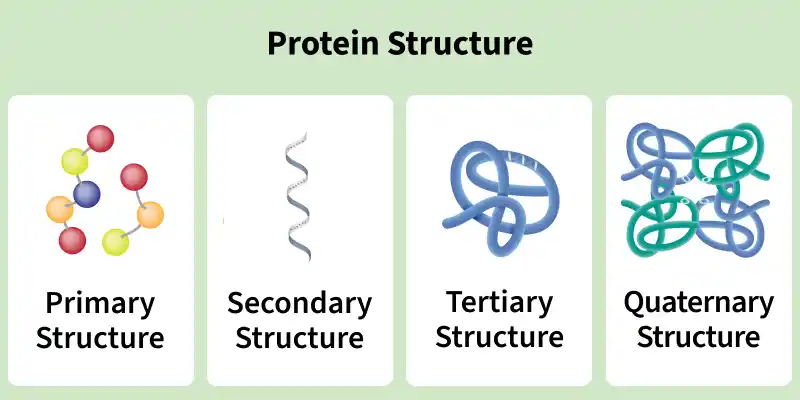
**Levels of Protein Structure
Proteins exhibit four levels of structural organization known as primary, secondary, tertiary, and quaternary structures.
- **Primary Structure: The primary structure of a protein refers to the specific sequence of amino acids in a polypeptide chain. This sequence determines the ultimate structure and biological function of the protein.
- **Secondary Structure: The secondary structure results from the folding of the polypeptide chain into regular arrangements such as alpha helices and beta-pleated sheets due to hydrogen bonding between peptide groups.
- **Tertiary Structure: The tertiary structure represents the three-dimensional configuration of a protein formed by further folding and twisting of the secondary structure. This structure is stabilized by hydrogen bonds, ionic interactions, disulfide bonds, and Van der Waals forces.
- **Quaternary Structure: The quaternary structure develops when two or more polypeptide chains combine together to form a functional protein complex. Haemoglobin is an example of a protein possessing quaternary structure.
3. Nucleic Acids
- Nucleic acids are complex biomolecules responsible for storing, transmitting, and expressing genetic information in living organisms.
- They control hereditary characteristics and regulate protein synthesis within cells.
- The two major types of nucleic acids are deoxyribonucleic acid (DNA) and ribonucleic acid (RNA).
- The basic structural unit of nucleic acids is the nucleotide, which consists of a nitrogenous base, a pentose sugar, and a phosphate group.
- Nucleotides are joined together through phosphodiester bonds to form long polynucleotide chains.
- DNA contains the nitrogenous bases adenine, guanine, cytosine, and thymine, whereas RNA contains uracil instead of thymine.
- DNA possesses a double helical structure formed by two antiparallel strands held together by hydrogen bonds between complementary bases.
- RNA is generally single-stranded and plays an important role in protein synthesis.
- Nucleic acids are essential for inheritance because they carry genetic instructions from parents to offspring. They also direct the synthesis of proteins through the processes of transcription and translation.

4. Lipids
- Lipids are a diverse group of organic compounds that are insoluble in water but soluble in organic solvents such as ether, chloroform, and benzene.
- Lipids include fats, oils, waxes, phospholipids, steroids, and fat-soluble vitamins. Unlike proteins and carbohydrates, lipids are generally non-polymeric molecules.
- Lipids perform several important biological functions.
- They act as concentrated sources of stored energy, provide insulation against heat loss, protect internal organs from mechanical injury, and form important structural components of cell membranes.
- Phospholipids and cholesterol are essential constituents of biological membranes.
- Fatty acids and glycerol are important components of many lipids. Triglycerides are formed by the combination of glycerol with three fatty acid molecules.
- Saturated fats contain single bonds between carbon atoms, whereas unsaturated fats contain one or more double bonds.
.png)
Enzymes
- Enzymes are specialized biological catalysts that accelerate biochemical reactions occurring within living cells without themselves undergoing permanent changes.
- Most enzymes are proteins, although certain RNA molecules called ribozymes also exhibit catalytic activity.
- Enzymes are essential for maintaining life because metabolic reactions would occur extremely slowly in their absence.
- Each enzyme possesses a specific three-dimensional structure containing an active site where substrate molecules bind.
- The interaction between the enzyme and substrate forms an enzyme-substrate complex, which facilitates the conversion of substrates into products.
- Enzymes exhibit remarkable specificity, meaning that each enzyme generally catalyses only a particular type of reaction.
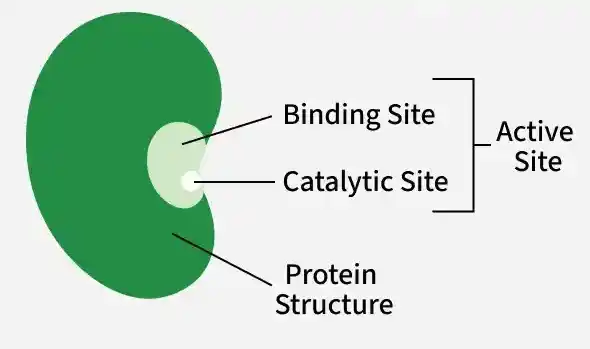
Enzymes are classified into six major groups depending upon the type of reaction they catalyse.
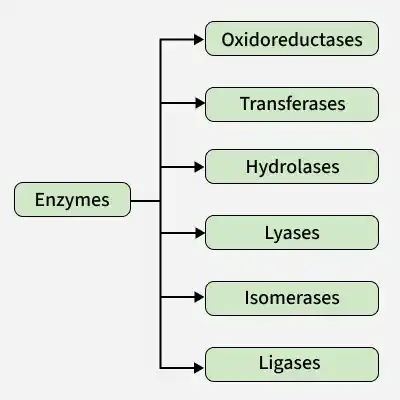
- **Oxidoreductases: These enzymes catalyse oxidation-reduction reactions involving the transfer of electrons between molecules.
- **Transferases: These enzymes transfer functional groups such as amino, methyl, or phosphate groups from one molecule to another.
- **Hydrolases: These enzymes catalyse the breakdown of compounds through the addition of water molecules.
- **Lyases: These enzymes catalyse the breaking of chemical bonds without hydrolysis or oxidation.
- **Isomerases: These enzymes catalyse the rearrangement of atoms within molecules to form isomers.
- **Ligases: These enzymes join two molecules together using energy derived from ATP hydrolysis.
Importance of Biomolecules
- Biomolecules are indispensable for the survival and proper functioning of all living organisms.
- They provide structural support to cells and tissues, store and release energy, regulate metabolic pathways, transport substances, protect organisms against diseases, and ensure the continuity of life through genetic inheritance.
- Every physiological process occurring in the body depends upon the coordinated interaction of various biomolecules.
- The study of biomolecules has immense importance in fields such as medicine, biotechnology, agriculture, genetics, nutrition, and molecular biology.
- Understanding biomolecules helps scientists develop medicines, diagnose diseases, improve crop varieties, and study the molecular basis of life.