Excretion In Plants (original) (raw)
Last Updated : 1 May, 2026
Excretion in plants is the process by which plants eliminate waste products and other unwanted substances from their cells and tissues. Just like other living organisms, plants produce metabolic wastes, and these must be removed to maintain the plant’s health and proper functioning.
Excretory Products
In animals, a complex excretory system (like kidneys, lungs, and skin) helps remove waste. But in plants, the excretory system is not complex, because they do not have special organs for excretion. Instead, plants remove waste through various parts of their body, such as leaves, stems, roots, bark, and old tissues.
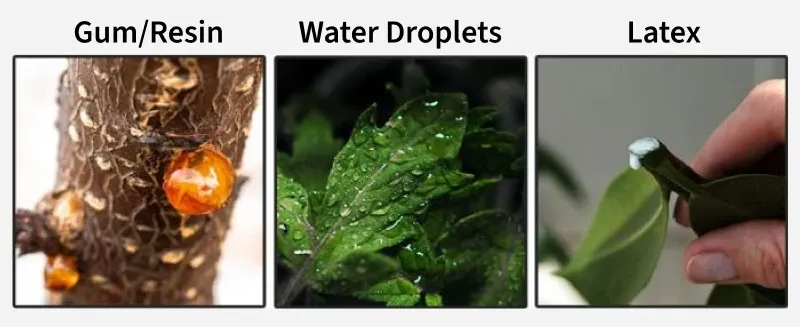
Some key characteristics of plant excretory products are:
- Plants excrete waste products through various mechanisms, including the release of gases, such as oxygen and carbon dioxide, through the stomata on their leaves, and the secretion of substances into their external environment, such as resins and gums.
- Plants have no specific organs for removing waste. The course of discharge in plants takes place through plant parts like leaves, roots, stems, maturing tissues, barks, etc. Plants generate waste material during photosynthesis.
During these processes:
- Oxygen (O₂) is produced as a waste product of photosynthesis.
- Carbon dioxide (CO₂) is produced during respiration.
- Nitrogenous wastes are formed during protein metabolism.
- Excess water is produced and eliminated through transpiration.
Both oxygen and carbon dioxide are removed through the stomata. Some plants also carry out photorespiration, where they take in oxygen and release carbon dioxide.
Transpiration
The excess water is lost via the process known as transpiration.It is the loss of water in the form of water vapour from the aerial parts of the plant, mainly through the leaves. This loss of water creates a transpiration pull, which helps in the upward movement of water through the xylem. The following are the different types of transpiration:
- **Stomatal Transpiration: The deficiency of water from leaves through stomata.
- **Cuticular Transpiration: Loss of water through the waxy cuticle of leaves.
- **Lenticular Transpiration: The deficiency of water from lenticels minute openings on the stem.
**Guttation
The deficiency of water as water beads from the hydathodes of plants is called guttation****.** There are some characteristics of guttation are given below:
- In a few herbaceous plants, water beads overflow through their leaf edges.
- At the point when the root pressure is high and transpiration is low, water oozes out through extraordinary peripheral designs called Hydathodes or Stomata.
- These drops are plentiful in mineral salts, natural acids, carbohydrates, and nitrogenous mixtures.
- Guttation should be visible in garden nasturtium, grasses, tomatoes, potatoes, and Colocasia.
Useful Excretory Products
The following are the excretory products of plants useful for humans:
- **Oxygen: During Photosynthesis, oxygen is excreted from plants, which is respired by humans and other animals.
- **Tannins: Tannins are down in the bark and leaves. The presence of tannin in tea leaves makes tea taste bitter in the event that the tea leaves are boiled for a more extended period.
- **Gums and Resins: Resins and gums are the side effects that are delivered by plants that are fundamentally stored in maturing or old xylem. Pitches present in the stem of the pine tree make the pinewood solid and strong. Saps are additionally utilised for planning stains.
- **Discharge of Minerals: Plants dispense with the abundance of minerals and salt as gems, for example, calcium carbonate, sodium oxalate, precious stones, and so on. The plant tissue xylem is responsible for moving minerals and water from the soil to the upper tissues of the plant. The leaves use the required amount of minerals, while the rest are stored or removed when plant parts fall off.
How Plants Reuse the Waste Products of Respiration
- As an origin of energy for metabolic cycles.
- As an origin of nitrogen for the union of nitrogenous mixtures.
- As a reactant in photosynthesis.
- As a protective gas for direct temperature.