Cognitive Distortions: 15 Examples & Worksheets (PDF) (original) (raw)
Key Insights
- Cognitive distortions fuel mental health issues like depression.
- Beck and Burns pioneered CBT to tackle distorted thinking.
- With effort and practice, thoughts can be reframed and patterns changed.
 As humans, we are hardwired to see what is wrong in the world around us, rather than what is right.
Evolutionarily speaking, thinking this way kept us safe and alive for thousands of years as we had to fight and forage for food and avoid predators in the wild.
But now that the human race has evolved, this predisposition to assume danger creates a negative bias, irrational thoughts, and polarized thinking (Sapmaz, 2023).
Our brains make connections between thoughts, ideas, actions, and consequences that may or may not be true. These connections and the predisposition to negative thinking also lead to negative moods and emotions, interfere with relationships, and can decrease motivation and productivity (Sapmaz, 2023).
Most of these faulty and negative thinking patterns can be classified into what we now call cognitive distortions. Let’s examine these in more detail.
Before you continue, we thought you might like to download our five positive psychology tools for free. These science-based exercises will explore fundamental aspects of positive psychology including strengths, values, and self-compassion, and will give you the tools to enhance the wellbeing of your clients, students, or employees.
This Article Contains
- What Are Cognitive Distortions? A Definition
- Why Do We Experience Distorted Thinking?
- How Do Thinking Errors Affect Mental Health?
- Cognitive Distortions List, Types & Examples
- Benefits of Reducing Thought Distortions
- 5 Strategies to Conquer Cognitive Distortions
- 5 Cognitive Distortion Worksheets (PDF)
- Helpful Resources From PositivePsychology.com
- A Take-Home Message
- Frequently Asked Questions
- References
What Are Cognitive Distortions? A Definition
Cognitive distortions are faulty beliefs and perspectives we have about ourselves and/or the world around us (Beck, 1976). They are irrational thoughts that can be subconsciously reinforced over time.
Understanding cognitive distortions and how to change them is a foundational element of cognitive behavioral therapy (CBT; Beck, 1976). These patterns and systems of thought are difficult to recognize and can be damaging to our day-to-day lives.
Cognitive distortions come in many forms, but they have some things in common.
All cognitive distortions (Beck, 1976):
- Are tendencies or patterns of thinking or believing
- Are false or inaccurate
- Have the potential to cause psychological damage
It is helpful to understand where cognitive distortions come from and why we experience them. Let’s look into that next.
Why Do We Experience Distorted Thinking?
 There are many potential reasons we experience cognitive distortions. These include evolutionary reasons, cognitive biases, mental health conditions/chemical imbalances, past experiences, and external influences (Hofmann et al, 2013).
The reasons we experience cognitive distortions have a direct impact on our emotional and mental health.
Survival
Human brains have a survival mechanism that depends on negative thoughts such as fear and worry, which allowed our ancestors to be alert for potential dangers.
The amygdala is the portion of the brain responsible for emotional processing and often overreacts to negative stimuli (Hofmann et al., 2013).
While this reaction was helpful for survival as humans evolved, our world has changed, and the need to be constantly alert to danger is now unnecessary. In this instance, cognitive distortion happens when your amygdala overreacts to a nonthreatening situation.
Negativity
Individuals pay more attention to bad things than good things, leading to a “negativity bias” (Hofmann et al., 2013). While it is the brain’s way of protecting us from potential harm, it affects how we see the world.
A negativity bias creates worry about the future, elevates levels of stress, and causes us to remember bad things more readily.
Mental health conditions and trauma
Mental health conditions, often caused by chemical imbalances, can lead to cognitive distortions. Chemical receptors in the brain can over or underproduce neurotransmitters like dopamine and serotonin, causing thoughts to spiral (Seo et al., 2008).
Additionally, traumatic events from the past can create strong memories. The brain remembers things when strong emotions are associated with them, and present events can trigger distressful memories, leading to faulty thinking patterns (Seo et al., 2008).
External factors
External influences such as social media and the news tend to project more negative events than positive. Individuals are shown sad, scary, worrisome images and dire warnings about the future. This distorts perspective and perpetuates a negativity bias.
How Do Thinking Errors Affect Mental Health?
Cognitive distortions negatively impact emotional health (Durand, 2015).
Cognitive distortions exacerbate conditions such as depression and anxiety by creating a feedback loop of negative thoughts (Hofmann et al., 2013). Distorted thoughts lead directly to negative emotions, which reinforce the distorted thinking patterns.
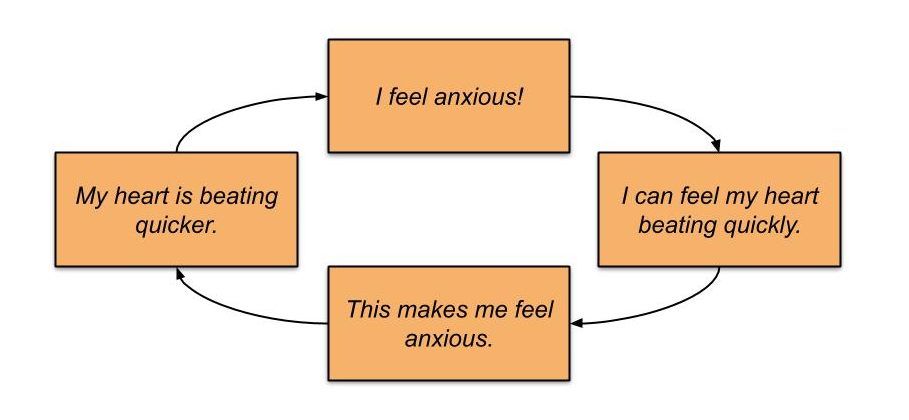
Cognitive distortions further create tension in relationships and feelings of isolation and increase workplace difficulties (Hofman et al., 2013).
Understanding the various types of cognitive distortions is the first step to changing them and improving mental health, relationships, and emotional wellbeing.
Cognitive Distortions List, Types & Examples
 There are numerous ways to categorize cognitive distortions, and it can help individuals improve self-awareness to identify and understand them.
Four categories of cognitive distortions include self-centered, blaming others, minimizing and mislabeling, and assuming the worst (Barriga et al., 2001).
1. Self-centered
Self-centered cognitive distortions involve thinking in extremes.
All-or-nothing thinking
Also known as “black and white thinking,” it is the inability to see shades of gray. Everything is viewed in terms of extremes (Hofmann et al., 2013).
For example, something is either awful or fantastic. You believe you are either a total failure or completely perfect. “I cheated on my diet, so I might as well eat whatever I want the rest of the week.”
Mind reading
Mind reading or “jumping to conclusions” happens when people assume they know what someone else is thinking. For example, someone might see a stranger’s unpleasant expression and automatically assume they are thinking something negative about them (Hofmann et al., 2013).
Should statements
Should statements are ones that we make to ourselves about what we “should,” “ought,” or “must” do. These thoughts set up unrealistic expectations that will most likely not be met.
“Should” statements can lead to guilt, shame, and resentment. We get disappointed when others don’t meet our expectations and beat ourselves up when we don’t follow through with what we “ought” to do (Beck & Beck, 2011).
For example, “I should always be nice regardless of how I feel.” Or, “I shouldn’t have made so many mistakes.”
2. Blaming others
Blaming others is the opposite of self-centered thinking. When things go wrong, it is always someone else’s fault.
Control fallacies
Control fallacies manifest as one of two beliefs. One is that we have no control over our lives and are helpless victims. The second is that we are in complete control of ourselves and surroundings and take full responsibility for the feelings of those around us (Beck & Beck, 2011).
For example, “Relationship conflict is always due to the other person.” Or, “It is my fault my parents divorced.”
3. Minimization and mislabeling
These distortions involve giving less weight to positive things and more weight to negative things.
Magnification and minimization
This distortion is also known as the “binocular trick” because it skews perspective through either exaggerating or minimizing meaning, importance, or likelihood (Beck & Beck, 2011).
An athlete who is generally a good player but makes a mistake may magnify the impact and start to believe they are a terrible player. Another athlete who wins an important award may minimize the importance of their contribution and continue believing they are only a mediocre player.
For example, “I failed the test so I will fail school and never get a job.”
Labeling and mislabeling
Labeling and mislabeling are extreme forms of overgeneralization where judgments of value are assigned to ourselves or others based on only one example or experience (Beck & Beck, 2011).
A student may label themselves as “an idiot” for failing one assignment. A waiter may label a customer as “a stingy old miser” if they leave a bad tip. Mislabeling refers to the application of highly emotional, loaded, and inaccurate language when making statements.
For example, if someone gets in one car accident, they label themselves as a terrible driver.
4. Assuming the worst
Assuming the worst can lead to depression and includes the following five distortions (Barriga et al., 2001):
Overgeneralization
When broad conclusions are made from a single event, this is considered an overgeneralization. Overgeneralization can lead to chronic pessimism and negativity about oneself and the environment based on a single experience (Beck & Beck, 2011).
For example, somebody gets a flat tire and says, “This always happens to me. I have terrible luck.”
Emotional reasoning
Emotional reasoning occurs when we accept our emotions as fact. It is often described as “I feel it; therefore, it must be true.” This is a common distortion because emotions are powerful, but they are not necessarily the truth (Hofmann et al., 2013).
For example, “I feel lucky tonight. I’ll bet my paycheck on that horse race.”
Mental filtering
When individuals focus only on negative aspects and ignore the positive in situations, events, or other people it is a form of mental filtering. This leads to an altered perception of reality that magnifies the negative (Beck & Beck, 2011).
For example, focusing only on negative feedback from a performance or presentation and ignoring any positive feedback.
Disqualifying the positive
Similar to mental filtering, disqualifying the positive occurs when positive experiences are rejected. When individuals do this about their own accomplishments, it can erode self-esteem and confidence (Beck & Beck, 2011).
For example, “I only won because there was no competition.”
Personalization
As the title implies, this distortion involves taking everything personally or assigning blame to oneself (Beck & Beck, 2011).
This cognitive distortion covers a wide range of situations from assuming you are the reason a friend did not enjoy a night out to believing that you are the cause for every instance of irritation in those around you.
For example, “It’s my fault that the party failed.”


Benefits of Reducing Thought Distortions
Reducing distorted thinking patterns can help improve relationships, productivity at work, and general levels of motivation and resilience (Durand, 2015). Decreasing the number and intensity of cognitive distortions has been related to happiness and psychological resilience (Fava, 2016).
It is possible to change the way we think. Identifying cognitive distortions and working to replace faulty thoughts can improve nearly every area of life.
Cognitive distortions: Cognitive behavioral therapy techniques
5 Strategies to Conquer Cognitive Distortions
Strategies for overcoming cognitive distortions can be implemented to help clients change the way they perceive themselves and the world around them.
Cognitive distortion activity & exercises
A variety of activities and exercises can be used in session and given as homework to help clients identify and then reframe cognitive distortions.
Strategies to identify distortions
Cognitive distortions are often subconscious, and the first step in overcoming these faulty biases is identifying them. The following exercises can help with this:
- Journaling
Writing about thoughts and feelings sheds light on negative self-talk. Thoughts can be labeled and categorized into the types of distortions listed previously in this article. - Feedback
We often don’t realize how negative our personal dialogue is or that there might be more ways of viewing a situation. Talking with close friends can reveal biased patterns of thought. - Mindfulness
Engaging in mindfulness may increase self-awareness and helps clients recognize thoughts as they arise.
Reframing cognitive distortions
- Positive spin activity
Find a story in the local news and have the client read/discuss the storyline. Then have the client describe the story using only positive terms, assuming positive intentions and outcomes. What good thing came out of this story or could possibly come from it? - Questioning assumptions activity
Many cognitive distortions are simply untrue beliefs. Have clients write out an assumption or belief and then actively seek evidence for and against this belief.
Challenge “should” statements
“Should” statements imply guilt. For example if someone says, “I should go to the gym,” there is guilt if they don’t go to the gym. “Should” also leads to feelings of obligation and duty rather than feelings of desire, pleasure, and excitement. A replacement statement could be to say, “I want to go to the gym.”
Question the validity of “should” statements. Who set the standard? Where did this inner rule come from? Is this flexible? Is the “should” helping you?
Reframe the “should.” The word “should” can be replaced with things like, “I want to” or “I get to,” or can be eliminated completely.
Conceptual frameworks
A conceptual framework of cognitive distortions invites the client to classify distortions and create new ones.
Moreno et al. ( 2001) proposed a conceptual framework for distortions based on three things:
- the environment or situation (stimulus for the thoughts)
- how this is seen in dualities (positive/negative)
- classifying or labeling the distortion
Clients can use real-life experiences or examples with these three points to create a conceptual framework and practice identifying triggers, thinking patterns, and labeling the thoughts.
Cognitive restructuring
Cognitive restructuring is a central part of CBT (Curtiss et al., 2021). Once some form of self-monitoring is accomplished (the client is aware of negative biases and cognitive distortions), they can gather evidence (is this fact or fiction?), question assumptions and validity, and begin generating alternatives.
5 Cognitive Distortion Worksheets (PDF)
The following CBT worksheets provide more specific guidelines for identifying and reframing cognitive distortions.
Thinking errors
Our distorted thoughts or errors in thinking are usually so subconscious they can be considered automatic. Identifying the cognitive distortions listed above and other “automatic thoughts” is the first step to becoming aware and changing these thoughts.
This worksheet helps clients identify automatic negative thoughts and provides guidance on reframing them.
Thought replacement
Once automatic biases and negative thoughts can be specifically identified, clients can learn practical ways to replace them.
Making a habit of seeing the positive in ourselves, other people, and situations is a skill that takes practice. This activity provides an exercise that can start to build the muscle of positive thinking.
Case formulation
This extended case formulation is rooted in CBT principles. Examining predisposing, precipitating, perpetuating, and protective factors, clients can examine specific areas of their past or future to identify automatic negative thoughts and triggers and find more helpful ways of viewing and responding to situations and events.
Restructuring thoughts and emotions
Socratic questioning is another effective way to restructure faulty thinking patterns and shift emotions. This CBT technique essentially puts thoughts on trial by examining facts that support or dispute the thought. Clients can use this to find more rational, logical, and positive ways of thinking.
Decatastrophizing
Catastrophic thinking usually begins with “what if” statements. “What if I fail this test? _What if I flunk out of school? What if I don’t get a job? And then I am homeless?_” By examining the likelihood of “what if” statements and examining the worst possible scenario, clients can explore alternate outcomes and healthier ways of projecting into the future.
Automatic Thought Record
This worksheet is an excellent tool for identifying and understanding your cognitive distortions. Our automatic, negative thoughts are often related to a distortion that we may or may not realize we have. Completing this exercise can help you to figure out where you are making inaccurate assumptions or jumping to false conclusions.
The worksheet is split into six columns:
- Date/Time
- Situation
- Automatic Thoughts (ATs)
- Emotion/s
- Your Response
- A More Adaptive Response
First, you note the date and time of the thought.
In the second column, you will write down the situation. Ask yourself:
- What led to this event?
- What caused the unpleasant feelings I am experiencing?
The third component of the worksheet directs you to write down the negative automatic thought, including any images or feelings that accompanied the thought. You will consider the thoughts and images that went through your mind, write them down, and determine how much you believed these thoughts.
After you have identified the thought, the worksheet instructs you to note the emotions that ran through your mind along with the thoughts and images identified. Ask yourself what emotions you felt at the time and how intense the emotions were on a scale from 1 (barely felt it) to 10 (completely overwhelming).
Next, you have an opportunity to come up with an adaptive response to those thoughts. This is where the real work happens, where you identify the distortions that are cropping up and challenge them.
Ask yourself these questions:
- Which cognitive distortions were you employing?
- What is the evidence that the automatic thought(s) is true, and what evidence is there that it is not true?
- You’ve thought about the worst that can happen, but what’s the best that could happen? What’s the most realistic scenario?
- How likely are the best-case and most realistic scenarios?
Finally, you will consider the outcome of this event. Think about how much you believe the automatic thought now that you’ve come up with an adaptive response, and rate your belief. Determine what emotion(s) you are feeling now and at what intensity you are experiencing them.
You can access the Automatic Thought Record Worksheet here.
Helpful Resources From PositivePsychology.com
In addition to the worksheets above, PositivePsychology.com has a multitude of resources and helpful tools to learn about CBT, identify and conquer cognitive distortions, and improve emotional wellbeing.
Many cognitive distortions begin with a set of unspoken and often unconscious inner rules we have for ourselves. This inner rule identification worksheet helps clients identify what rules they have for themselves and their environment. Simply identifying these subtle internal thoughts can help shift perspective and lead to more flexible ways of thinking.
Helping children identify cognitive distortions at a young age can set them up for healthier thinking patterns later in life. This article on CBT for children provides examples, information, and worksheets to aid younger clients.
This article provides an extensive list of books on CBT, information on distorted thinking, and ideas to help clinicians and clients practice techniques for identification and reframing.
If you’re looking for more science-based ways to help others enhance their wellbeing, this signature collection contains 17 validated positive psychology tools for practitioners. Use them to help others flourish and thrive.
A Take-Home Message
Our thoughts impact how we feel, behave, and interact with the world. While negative thinking patterns are ingrained into human DNA to keep us safe, alert, and on guard, they can cause conflict in relationships and the workplace, decrease self-confidence, and lead to mental health issues.
Using the techniques, activities, and exercises outlined in this article, clients can become aware of these cognitive distortions and biased thinking patterns. With effort and practice, thoughts can be reframed, and patterns can be changed.
Transforming thoughts will lead to healthier choices, a brighter future, and more positive experiences in life.
We hope you enjoyed reading this article. Don’t forget to download our five positive psychology tools for free.
ED: Updated Feb 2025
Frequently Asked Questions
Cognitive distortions are replaced by rational and balanced thinking through cognitive restructuring. This involves identifying distorted thoughts, challenging their validity, and replacing them with more realistic and constructive thoughts.
Yes, overthinking can be related to several cognitive distortions, such as catastrophizing, mental filtering, and jumping to conclusions. It involves excessive rumination on problems and scenarios, often leading to heightened anxiety and distorted perceptions of reality.
To get out of cognitive distortion, practice the following steps; identify the distorted thought, challenge the thought, reframe with balanced thinking, and practice mindfulness.
- Barriga, A., Morrison, E., Albert, K. & Gibbs, J. (2001). Moral cognition: Explaining the gender difference in antisocial behavior. Merrill-Palmer Quarterly, 47(4), 532–562. https://doi.org/10.1353/mpq.2001.0020
- Beck, A. T. (1976). Cognitive therapies and emotional disorders. New American Library.
- Beck, J. S. & Beck, A. T. (2011). Cognitive therapy: Basics and beyond. Guilford Press.
- Curtiss, J., Levine, D., Ander, I. & Baker, A. (2021). Cognitive behavioral treatments for anxiety and stress related disorders. American Psychiatric Publication, 19(2), 184–189. https://doi.org/10.1176/appi.focus.20200045
- Durand, M. (2015). The OECD better life initiative: How’s life? And the measurement of well-being. Journal of Happiness & WellBeing, 3(1), 93–102.
- Fava, G. A. (2016). Well-being therapy: Current indications and emerging perspectives. Psychotherapy and Psychosomatics, 85(3), 136–145. https://doi.org/10.1159/000444114
- Hofmann, S., Asmundson, G. & Beck, A. (2013). The science of cognitive therapy. Behavioral Therapy, 44(2), 199–212. https://doi.org/10.1016/j.beth.2009.01.007
- Moreno, P., Francisco, M. & Sanchez, J. (2001). Effectiveness of cognitive behavioral treatment in social phobia: A meta-analytic review. Psychology in Spain, 5, 17–25.
- Sapmaz, F. (2023). Relationships between cognitive distortions and adolescent well-being: The mediating role of psychological resilience and moderating role of gender. International Journal of Psychology and Educational Studies, 10(1), 83–97. https://doi.org/10.52380/ijpes.2023.10.1.866
- Seo, D., Patrick, C. & Kennealy, P. (2008). Role of serotonin and dopamine system interactions in the neurobiology of impulsive aggression and its comorbidity with other clinical disorders. Aggression and Violent Behavior, 13(5), 383–395. https://doi.org/10.1016/j.avb.2008.06.003
Dr. Melissa Madeson, Ph.D., believes in a holistic approach to mental health and wellness and uses a person-centered approach when working with clients. Currently in full-time private practice, she uses her experience with performance psychology, teaching, and designing collegiate wellness courses and yoga therapy to address a range of specific client needs.

Read other articles by their category
- Body & Brain (69)
- Boundaries (14)
- Coaching & Application (42)
- Compassion (26)
- Counseling (41)
- Emotional Intelligence (22)
- Gratitude (18)
- Grief & Bereavement (18)
- Happiness & SWB (40)
- Meaning & Values (27)
- Meditation (16)
- Mindfulness (47)
- Motivation & Goals (41)
- Optimism & Mindset (36)
- Positive CBT (28)
- Positive Communication (29)
- Positive Education (39)
- Positive Emotions (34)
- Positive Leadership (17)
- Positive Parenting (18)
- Positive Psychology (27)
- Positive Workplace (41)
- Productivity (17)
- Relationships (56)
- Resilience & Coping (45)
- Self Awareness (25)
- Self Esteem (38)
- Strengths & Virtues (34)
- Stress & Burnout Prevention (39)
- Theory & Books (44)
- Therapy Exercises (43)
- Types of Therapy (64)