What Is Evidence-Based Therapy? 16 EBP Therapy Interventions (original) (raw)
Key Insights
- Evidence-based therapy relies on scientifically validated methods to ensure effective treatment & client care.
- Practitioners use research-backed approaches like Cognitive Behavioral Therapy (CBT) to address diverse mental health issues.
- Staying informed about evidence-based practices enhances therapeutic outcomes & supports professional development.
 As with all forms of counseling, evidence-based therapy (EBT) seeks to ensure clients receive the best possible psychological treatment.
EBT therapists rely on peer-reviewed scientific research combined with client preferences to support treatment selection (Evidence-based practice, 2020).
While maintaining awareness of the latest research and applying it appropriately are challenging, evidence-based psychotherapy has been “shown to be efficacious and cost-effective for a wide range of psychiatric conditions” (Cook et al., 2017, p. 537).
This article explains and explores the incredible value of evidence-based therapy and shares helpful examples of interventions, approaches, and treatment plans.
Before you continue, we thought you might like to download our five positive psychology tools for free. These science-based exercises will provide you with detailed insight into positive Cognitive-Behavioral Therapy (CBT) and give you tools to apply it in your therapy or coaching.
This Article Contains
- What Is Evidence-Based Therapy? A Definition
- The Goals and Benefits of Evidence-Based Therapy
- Examples of Interventions Used in Evidence-Based Therapy
- Evidence-Based Therapy for Depression and Anxiety
- 7 Templates for Treatment Plans in EBT
- 5 Best Books on Evidence-Based Treatment
- A Take-Home Message
- Frequently Asked Questions
- References
What Is Evidence-Based Therapy? A Definition
“Evidence-based practice (EBP) aims to maximize the effectiveness of psychological interventions through adherence to principles informed by empirical findings, clinical expertise, and client characteristics” (Evidence-based practice, 2020, para. 1).
For psychotherapists, it encourages using the best research-led evidence to make informed decisions about the care of clients in treatment. More recently, the approach has been expanded to include the patient’s preferences, actions, and environment (Cook et al., 2017).
The American Psychological Association (2021, para. 2) defines evidence-based practice in psychotherapy as “the integration of the best available research with clinical expertise in the context of patient characteristics, culture, and preferences.”
The clinical implications of using EBP in psychotherapy include (American Psychological Association, 2021):
- Relying on collaborative decision-making with the patient based on the best clinically relevant evidence
- Considering probable costs, benefits, and available resources
- Using the treating therapist’s professional judgment
- Actively encouraging informed patient participation
- Individualizing treatment beyond existing research
- Ongoingly monitoring patient progress and readjusting treatment as needed
Subsequent research has shown evidence-based psychotherapy to be a practical and financially viable approach for treating various psychiatric conditions (Cook et al., 2017).
The challenges of evidence-based therapy
While EBT has many advantages, it has been challenged regarding its (Cook et al., 2017):
- Generalizability of research data and study findings
- Focus on making issues and problems less harmful rather than increasing meaning in clients’ lives
- Reliance on (sometimes) insufficient data to make an evidence-based decision in specific circumstances
- Ignorance of other clinical tools
And finally, it may be difficult and time consuming for professionals to maintain up-to-date knowledge to ensure clients receive the most appropriate psychotherapy (Cook et al., 2017).
Because of these challenges, many clinicians adopt an integrative therapy approach, which combines techniques from multiple evidence-based modalities to tailor treatment to the individual. This flexible approach recognizes that clients rarely fit neatly into one theoretical framework and may benefit from a blend of empirically supported methods.
The Goals and Benefits of Evidence-Based Therapy
 “Ultimately, the goal of EBP is the promotion and implementation of psychotherapies that are safe, consistent, and cost-effective” (Cook et al., 2017, p. 539).
This can be accomplished through a focus on
- Improved care quality for clients
- Increased accountability of the health care professional
- Enhancement of the health and wellbeing of the public
The approach encourages professionals to keep up to date with the latest research findings and discourages a diminishing quality of care.
There are many advantages and benefits for patients, therapists, and clinical teams, including (Cook et al., 2017):
- Therapists’ decisions are research led rather than solely relying on personal opinion, thereby reducing bias.
- EBP complements rather than replaces clinical expertise when making judgments.
- Reliance on research data promotes the creation of appropriate policies, databases, and clinical tools to make informed decisions.
- EBT combines scientific data and patient factors, such as situational information, cost, and time.
- The approach ensures that the best evidence becomes the starting point for complex treatment plans.
- EBT enhances the professional therapists’ skills, knowledge, and attitudes.
Examples of Interventions Used in Evidence-Based Therapy
According to EBT, therapists should use the best available evidence to provide appropriate treatment, maximizing the likelihood of a positive treatment outcome (Canadian Psychological Association, 2012).
They should also monitor clients’ reactions to treatment, tailoring the therapy interventions accordingly and “adjusting the content, sequencing, timing, or pacing of treatment elements” as appropriate (Canadian Psychological Association, 2012, p. 10).
The following examples of therapeutic interventions are evidence led, research driven, and consider the client’s needs and situation.
Cognitive Therapy
Cognitive Therapy (or cognitive restructuring) focuses on identifying and changing unhealthy and distorted patterns of thinking that contribute to negative emotions and behaviors. Combined with Behavior Therapy, it forms the foundation of Cognitive-Behavioral Therapy (Beck, 2011; Stallard, 2022).
Cognitive Therapy-based interventions for children, adolescents, and adults as individuals and families have been well validated, including in the following areas (Stallard, 2022; Koster et al., 2017).
- Psychoeducation
Explaining the goals and processes behind Cognitive Therapy can help clients examine their responses to triggers that produce negative thinking. With psychoeducation, clients are encouraged to self-monitor their thoughts and feelings and identify short and long-term goals (Canadian Psychological Association, 2012). - Cognitive control training
Improving cognitive control processes can enhance cognitive flexibility and emotional and attentional control, and reduce maladaptive patterns of thinking and behavior associated with mental health problems (Koster et al., 2017).
The Stroop task is an example of cognitive control training. It involves saying the color of words while ignoring what the words actually say, which can be challenging because of the interference between automatic reading and controlled processing.
- Cognitive restructuring interventions
Cognitive restructuring and cognitive change interventions (challenging and modifying negative or distorted thoughts) have been shown to improve mental health conditions, including depression (Lorenzo-Luaces et al., 2015).
Behavior Therapy
Behavior Therapy eliminates and changes “ineffective or maladaptive patterns of behavior” (American Psychological Association, n.d., para. 1).
There is limited recent research into Behavior Therapy as it now, in combination with cognitive therapy, forms the foundation of CBT, which receives considerable attention.
- Behavioral activation
Behavioral activation is a powerful approach for overcoming depression.
When a person is depressed, they often experience decreased motivation and withdraw from activities they once enjoyed (Lorenzo-Luaces et al., 2015).
Behavioral activation involves the client monitoring daily activities, noting their enjoyment, and then scheduling activities that align with their values and interests (Lorenzo-Luaces et al., 2015).
- Token economy
This has been proven successful at reducing unwelcome classroom behavior.
It involves using tokens or points as rewards that can be exchanged for items or privileges to reinforce desired behavior (Reitman et al., 2004).
Family therapy
Family therapy helps family members improve communication, support one another, and resolve conflicts (Carr, 2014).
Family therapy interventions are effective at addressing “relationship distress, psychosexual problems, intimate partner violence, anxiety disorders, mood
disorders, alcohol problems, schizophrenia, and adjustment to chronic physical illness” (Carr, 2014, p. 158).
Sample family therapy interventions include:
- The miracle question
The miracle question involves asking family members to imagine a possible world where problems have gone away or have been solved. This prompting has proven to be an effective intervention for contrasting successful therapeutic outcomes and encouraging the clients to work toward shared goals (Yu, 2019). - Genograms
Mapping the relationships between family members has proven helpful in identifying behavioral patterns within the past and present and encouraging the resolution of emotional issues (Goldenberg, 2017).
Evidence-Based Therapy for Depression and Anxiety
Evidence-based therapy has been shown to have a positive effect on treating clients with depression and anxiety and can have multiple forms.
Cognitive-Behavioral Therapy
CBT is like Cognitive Therapy (CT) and shares the same core theory. However, they are not identical. CBT encompasses CT but focuses on achieving behavioral change through changing incorrect and unhelpful thinking using the relationship between thinking and behavior (Beck, 2019; Beck & Fleming, 2021).
“Cognitive–Behavioral Therapy (CBT) is a practical, goal-focused approach that helps children understand the relationship between their thoughts, feelings and behaviors” (Stallard, 2022, p. 109).
Anxiety and depression are linked to unhelpful cognitive patterns and can benefit from challenging such biased and distorted thinking with interventions such as the following (Stallard, 2022; Canadian Psychological Association, 2012; Beck, 2011).
- Thought and feeling diaries can identify dominant thinking traps, such as “mind reading” (the tendency to make assumptions or believe we know what others are thinking) and “all-or-nothing” thinking (perceiving events and situations in extremely polarized terms). Identifying such cognitive distortions can help manage and avoid them in the future.
- Setting small targets and goals can be helpful when experiencing social anxiety. Therapists and clients work together to set small targets, such as reengaging with friends and attending small social gatherings. Over time, the small steps build into more significant behavioral changes that can help overcome anxiety.
While there is considerable evidence for the effectiveness of face-to-face CBT interventions in treating anxiety and depression, increasing research proves its value when delivered digitally (Stallard, 2022).
Mindfulness-Based Cognitive Therapy
Mindfulness-Based Cognitive Therapy (MBCT) is a branch of Cognitive Therapy that has successfully treated depression and anxiety and received clinical and research-based support (Canadian Psychological Association, 2012).
MBCT “was developed as a targeted approach for people who have a history of depression and are therefore vulnerable to future episodes” (Crane, 2009, p. 3). Practicing mindfulness helps clients bring body sensations, emotions, and thoughts to their attention and respond better to early indicators of a relapse (Crane, 2009; Canadian Psychological Association, 2012).
Further research confirms that “emotional management skills such as relaxation training, mindfulness, positive imagery or activity rescheduling may be developed to reduce the intensity or frequency of these unpleasant emotions” (Stallard, 2022, p. 109).
Dunning et al. (2019, p. 248) found that “participants receiving an MBI [mindfulness-based intervention] improved significantly more than those receiving the control conditions.”
Evidence-led MBCT practices include interventions such as the following (Crane, 2009; Stallard, 2022; Dunning et al., 2019):
- Body scan practice
Clients are guided to attend to all regions of the body, starting with the toes and then moving up to the head. The individual is encouraged to connect with the direct experience of physical sensations of the body and breathing.
“The body scan helps us learn to aim and sustain the attention where we want it, and to deliberately engage and disengage as we move attention through the body” (Crane, 2009, p. 112).
- Sitting meditation
Once seated and comfortable, clients are encouraged to remain relaxed yet alert while “developing the ability to be with experience within the body” (Crane, 2009, p. 121).
The therapist brings their attention to different aspects of the experience, including the movement of breath, body sensations, and emotions, and bringing to mind an existing difficulty.
- Mindful movement
Mindfulness doesn’t always mean remaining static. In mindful movement, the client is prompted to become more present with bodily experience in motion.
The participant is guided to move and stretch, choosing when to hold or move more deeply.
Research continues to find favorable evidence for the beneficial effects of mindfulness interventions for managing depression, anxiety, and stress (Dunning et al., 2019).
Psychotherapy
Psychotherapy, such as Interpersonal Therapy and Brief Psychodynamic Therapy, effectively treats depression and anxiety (Canadian Psychological Association, 2012).
“A sizeable body of evidence drawn from a variety of research designs and methodologies attests to the effectiveness of psychological practices” (American Psychological Association, 2021, para. 2).
For psychotherapy to be evidence-based and ethical, interventions must be grounded in the data rather than the personal opinion of the therapist while considering and maximizing client choice (Cook et al. 2017).
A small sample of evidence-based therapies for treating anxiety and depression (excluding those already mentioned under CBT and MBCT) include what are sometimes referred to as third-wave CBT, such as the following:
- Acceptance and Commitment Therapy (ACT)
ACT has been shown to reduce anxiety and depression while increasing quality of life (Forsyth & Eifert, 2016).
Rather than directly addressing negative emotions and thought patterns, it focuses on learning skills that cultivate a kinder, gentler relationship with clients’ anxious bodies and minds (Forsyth & Eifert, 2016).
Typical evidence-based interventions include the following (Forsyth & Eifert, 2016):
- Finding values – Identifying what matters to the client and what they want their life to be about can positively impact wellbeing and help manage anxiety and depression.
- Mindful acceptance – Accepting negative emotions can help clients regain control of their lives. Mindfulness practices do not attempt to manage, avoid, or change negative feelings, but recognize and accept them.
- Schema Therapy
Schema Therapy aims to create high-quality lives through healing maladaptive schemas formed in early life. By helping clients develop psychological awareness and gain more control over their thinking and behavior, they can change their perceptions and psychological experiences (Young et al., 2007).
Interventions include the following:
- Guided imagery can access past, current, or future (expected) experiences to rescript and reimagine trauma or replace negative emotions with positive ones.
- Chair dialogues are sometimes used with clients to express their sadness and negative emotions. Each chair represents a different schema mode (such as a punishing parent) and can be used to engage the client’s anger and upset.
7 Templates for Treatment Plans in EBT
While EBT encourages additional care when selecting treatments for clients, taking into account the quality and availability of related research and data, plans are similar to those for other psychotherapies (Canadian Psychological Association, 2012; Cook et al., 2017).
- In Mental Health Treatment Plan Template, Goals & Objectives, we define treatment plans; share many of their benefits; explain their uses, goals, and how to create them; and offer a sample mental health treatment plan.
- How To Plan Your (First) Counseling Session: 6 Examples offers further guidance on organizing your counseling session, plus six additional templates that support treatment planning.
5 Best Books on Evidence-Based Treatment
The following books help teach EBT theory and the practical steps involved.
1. Evidence-Based Practice of Cognitive-Behavioral Therapy – Deborah Dobson and Keith S. Dobson
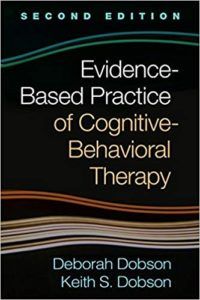
This is a comprehensive guide by renowned experts in the field, researchers and clinicians Deborah Dobson and Keith Dobson, that unlocks the power of evidence-based therapy.
The book explores the evidence base for CBT, practical clinical guidelines, and ways to enhance readers’ understanding of core techniques, real-world application, and effective management of treatment challenges.
Find the book on Amazon.
2. Mindfulness: Advances in Psychotherapy – Katie Witkiewitz, Corey R. Roos, Dana Dharmakaya Colgan, and Sarah Bowen

This insightful book delves into the theory and evidence for applying mindfulness-based interventions in psychotherapy and clinical practice.
The authors examine the roots of mindfulness, its integration into evidence-based psychotherapy, and how we can use it in diverse conditions and across various populations.
Find the book on Amazon.
3. Autism Spectrum Disorders: Advances in Psychotherapy – Lisa Joseph, Laatha Soorya, and Audrey Thurm
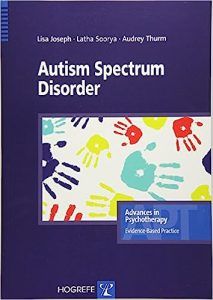
In this practical and authoritative guide, experts Lisa Joseph, Laatha Soorya, and Audrey Thurm provide comprehensive insights into the diagnosis and evidence-based treatments for autism spectrum disorder.
The reader is introduced to diagnostic criteria, current theories, and prevalence rates and receives clear guidance on evaluating and applying various interventions supported by clinical vignettes and the latest scientific research.
Find the book on Amazon.
4. Treatment Plans and Interventions for Depression and Anxiety Disorders – Robert L. Leahy, Stephen J. F. Holland, and Lata K. McGinn
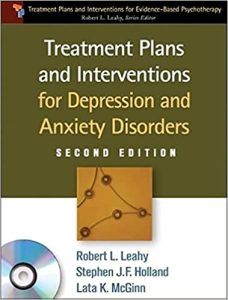
This is a treatment-focused text to enhance your outpatient mental health practice and is supported by practical tools for treating common clinical problems.
Therapists receive evidence-based assessments, interventions, treatment plans, step-by-step instructions, case examples, and client handouts.
Find the book on Amazon.
5. CBT Treatment Plans and Interventions for Depression and Anxiety Disorders in Youth – Brian C. Chu and Sandra S. Pimentel
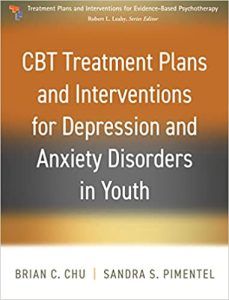
In this comprehensive 2023 handbook, the therapist is offered the latest evidence-based CBT treatment plans and interventions.
Packed with case examples, practical tools, and downloadable resources, therapists can tailor interventions to meet the unique needs of children and adolescents while collaborating effectively with parents and other professionals.
Find the book on Amazon.
A Take-Home Message
EBP treatment stems from research combined with clinical expertise, patient characteristics, culture, and client preferences. It suggests therapists should rely on the best evidence and study findings and seek a consensus among experts where little data is available (Canadian Psychological Association, 2012).
In turn, EBP strives for safe, consistent, and cost-effective treatment, improving client care, enhancing the health and wellbeing of the public, and increasing health care professionals’ accountability.
However, while it has many advantages, it also has challenges — research data is not always generalizable. It can be complex to monitor patient progress continually, and therapists may ignore other possibly helpful clinical tools.
Evidence-based interventions are available across many therapeutic fields, such as cognitive therapy, behavior therapy, and family therapy. Therapists use the latest research studies to tailor interventions and meet clients’ individual and specific needs while collaborating with other professionals as needed.
And it works. Research into EBP suggests evidence-based psychotherapy is cost effective for treating various psychiatric conditions.
For new and existing therapists, the message from EBP is straightforward. Where possible, they should rely on research data while maximizing client choice to increase the likelihood of a successful treatment outcome.
We hope you enjoyed reading this article. For more information, don’t forget to download our five positive psychology tools for free.
Ed: Updated June 2023
Frequently Asked Questions
Common evidence-based therapies include Cognitive Behavioral Therapy (CBT), Dialectical Behavior Therapy (DBT), Acceptance and Commitment Therapy (ACT), and Eye Movement Desensitization and Reprocessing (EMDR).
CBT helps individuals identify and challenge negative thought patterns and behaviors, promoting healthier thinking and coping strategies.
DBT combines cognitive-behavioral techniques with mindfulness practices to help individuals manage intense emotions and improve interpersonal relationships.
- American Psychological Association. (n.d.). Behavior therapy. In APA dictionary of psychology. Retrieved June 15, 2023, from https://dictionary.apa.org/behavior-therapy
- American Psychological Association. (2021). Policy statement on evidence-based practice in psychology. Retrieved June 15, 2023, from https://www.apa.org/practice/guidelines/evidence-based-statement
- Beck, J. S. (2011). Cognitive behavior therapy: Basics and beyond. Guilford Press.
- Beck, A. T. (2019). A 60-year evolution of cognitive theory and therapy. Perspectives on Psychological Science, 14(1), 16–20. https://doi.org/10.1177/1745691618804187
- Beck, J. S., & Fleming, S. (2021). A brief history of Aaron T. Beck, MD, and cognitive behavior therapy. Clinical Psychology in Europe, 3(2), 1–7. https://doi.org/10.32872%2Fcpe.6701
- Canadian Psychological Association. (2012). Evidence-based practice of psychological treatments: A Canadian perspective. Retrieved from https://cpa.ca/docs/File/Practice/Report_of_the_EBP_Task_Force_FINAL_Board_Approved_2012.pdf
- Carr, A. (2014). The evidence base for couple therapy, family therapy and systemic interventions for adult‐focused problems. Journal of Family Therapy, 36_(2)_, 158–194. https://doi.org/10.1111/1467-6427.12033
- Cook, S. C., Schwartz, A. C., & Kaslow, N. J. (2017). Evidence-based psychotherapy: Advantages and challenges. Neurotherapeutics, 14(3), 537–545. https://doi.org/10.1007/s13311-017-0549-4
- Crane, R. (2009). Mindfulness-based cognitive therapy. Routledge.
- Dunning, D., Griffiths, K., Kuyken, W., Crane, C., Foulkes, L., Parker, J., & Dalgleish, T. (2019). Research review: The effects of mindfulness‐based interventions on cognition and mental health in children and adolescents: A meta‐analysis of randomized controlled trials. Journal of Child Psychology and Psychiatry, 60(3), 244–258. https://doi.org/10.1111/jcpp.12980
- Evidence-based practice. (2020, September 29). McGill University. Retrieved June 15, 2023, from https://www.mcgill.ca/psy/evidence-based-practice
- Forsyth, J. P., & Eifert, G. H. (2016). The mindfulness & acceptance workbook for anxiety: A guide to breaking free from anxiety, phobias & worry using acceptance & commitment therapy. New Harbinger.
- Koster, E. H. W., Hoorelbeke, K., Onraedt, T., Owens, M., & Derakshan, N. (2017). Cognitive control interventions for depression: A systematic review of findings from training studies. Clinical Psychology Review, 53, 79–92. https://doi.org/10.1016/j.cpr.2017.02.002
- Goldenberg, I. (2017). Family therapy: An overview. Cengage learning.
- Lorenzo-Luaces, L. German, R. E., & DeRubeis, R. J. (2015). It’s complicated: The relation between cognitive change procedures, cognitive change, and symptom change in cognitive therapy for depression. Clinical Psychology Review, 41, 3–15. https://doi.org/10.1016/j.cpr.2014.12.003
- Raffagnino, R. (2019). Gestalt therapy effectiveness: A systematic review of empirical evidence. Open Journal of Social Sciences, 7(6). https://doi.org/10.4236/jss.2019.76005
- Reitman, D., Murphy, M. A., Hupp, S. D., & O’Callaghan, P. M. (2004). Behavior change and perceptions of change: Evaluating the effectiveness of a token economy. Child & Family Behavior Therapy, 26(2), 17–36. https://doi.org/10.1300/J019v26n02_02
- Stallard, P. (2022). Evidence-based practice in cognitive-behavioural therapy. Archives of Disease in Childhood, 107(2), 109–113. https://doi.org/10.1136/archdischild-2020-321249
- Young, J. E., Klosko, J. S., & Weishaar, M. E. (2007). Schema therapy: A practitioner’s guide. Guilford Press.
- Yu, F. (2019). Miracle question in couple and family therapy. In J. L. Lebow, A. L. Chambers, & D. C. Breunlin (Eds.), Encyclopedia of couple and family therapy (pp. 1930–1932). Springer. https://doi.org/10.1007/978-3-319-49425-8_1072
Jeremy Sutton, Ph.D., is an experienced psychologist, coach, consultant, and psychology lecturer. He works with individuals and groups to promote resilience, mental toughness, strength-based coaching, emotional intelligence, wellbeing, and flourishing. Alongside teaching psychology at the University of Liverpool, he is an amateur endurance athlete who has completed numerous ultra-marathons and is an Ironman.

Read other articles by their category
- Body & Brain (70)
- Boundaries (14)
- Coaching & Application (42)
- Compassion (26)
- Counseling (41)
- Emotional Intelligence (22)
- Gratitude (18)
- Grief & Bereavement (18)
- Happiness & SWB (40)
- Meaning & Values (27)
- Meditation (16)
- Mindfulness (47)
- Motivation & Goals (41)
- Optimism & Mindset (36)
- Positive CBT (28)
- Positive Communication (29)
- Positive Education (39)
- Positive Emotions (34)
- Positive Leadership (17)
- Positive Parenting (18)
- Positive Psychology (27)
- Positive Workplace (41)
- Productivity (17)
- Relationships (56)
- Resilience & Coping (45)
- Self Awareness (25)
- Self Esteem (38)
- Strengths & Virtues (34)
- Stress & Burnout Prevention (39)
- Theory & Books (44)
- Therapy Exercises (43)
- Types of Therapy (64)