How to Be Mentally Strong & Build Mental Toughness (original) (raw)
Key Insights
- Mental strength combines resilience, emotional control, and adaptability to thrive under challenges.
- It fosters a growth mindset, confidence, and effective stress management.
- Key skills include self-awareness, positive thinking, and goal setting for success.
 As a vital element of my doctorate research into human performance, I spoke to many mentally strong endurance athletes.
What set them apart was their ability to embrace challenges and maintain emotional balance. Crucially, they were open to and accepting of mentally and physically challenging times (Sutton, 2019).
Mental strength comes in many forms and across various life domains beyond sports: the civil rights campaigner fighting for a fairer world, the parent ensuring the best treatment for an unwell child, or the employee facing up to layoffs (Clough et al., 2021).
This article explores what it means to be mentally strong and how to build mental toughness.
Before you continue, we thought you might like to download our five positive psychology tools for free. These engaging, science-based exercises will help you effectively deal with difficult circumstances and give you the tools to improve the resilience of your clients, students, or employees.
This Article Contains
- Defining the Nuances of Being “Mentally Strong”
- The Benefits of Mental Fortitude
- 10 Traits of Mentally Strong People
- How to Become Mentally & Emotionally Strong
- 8 Mental Toughness & Endurance Exercises
- 10 Tips for Raising Mentally Strong Kids
- 3 Books on Mental Strength
- Helpful Resources From PositivePsychology.com
- A Take-Home Message
- Frequently Asked Questions
- References
Defining the Nuances of Being “Mentally Strong”
While there is no single and precise definition of mental strength or what it means to be mentally strong in the psychological literature, we can consider it as closely connected with the idea of mental toughness and an extension of resilience.
As such, mental strength encompasses cognitive, emotional, and behavioral skills that enable individuals, couples, and groups to endure adversity while adapting, growing, and maintaining wellbeing (Clough et al., 2021; Sheard, 2013).
Being mentally strong is a mindset associated with action. “When we resolve to be more resilient and mentally strong, we often adopt a robust grit and determination approach” (Whitehead & Peckham, 2022, p. 220).
Mental strength is closely associated with mental toughness. Psychologists describe it as a multidimensional psychological construct that enables individuals to cope better with life’s demands. While it embodies resilience and our ability to recover from challenges, it also creates opportunities for growth and goal-directed behavior (Sutton, 2019).
It is helpful to consider the following related concepts:
Mentally strong vs. strong-minded
A strong-minded individual can be unyielding or fixed in their outlook. On the other hand, when someone is mentally strong and adopts a strong mindset, they are confident in who they are and their abilities, adopting a growth mindset that supports moving forward rather than fixating on obstacles in their way (Dweck, 2017).
David Goggins: How to build immense inner strength
In this video, Andrew Huberman interviews retired Navy Seal David Goggins to understand how he built such phenomenal levels of mental discipline and mental strength.
Mental health vs. mental strength
Wellbeing and good mental health support our surviving and thriving in a changing world.
Being mentally strong or tough does not mean that we will not experience stress, anxiety, or other mental and physical health issues. Instead, good mental health and mental strength work together to support each other and allow us to move forward in a value-led and goal-directed way (Clough et al., 2021).
David Goggins - How to build extreme mental strength
Goggins continues his journey and explores his cognitive strategies in “How to Build Extreme Mental Strength.”
Mental toughness vs. mental fortitude
We can think of mental fortitude as similar to mental toughness. Fortitude involves having a strong mind or being a strong person when confronted by challenges such as adversity or illness, yet having the inner strength to persevere (Clough et al., 2021; Sheard, 2013).
Fearlessness & emotional strength
Few, if any, of us can claim to be fearless. Instead, emotionally strong individuals are more likely to be sufficiently self-aware to recognize and understand their emotions.
They acknowledge the fear they face rather than attempt to ignore or suppress it and avoid being overwhelmed or controlled by negative states of mind.
Emotional strength takes mental stamina and the ability to respond to such feelings constructively (Goleman, 2006).
Strong person vs. resilient person
A resilient person can adapt well to adversity, trauma, and stress (Southwick & Charney, 2018).
On the other hand, an individual of strong character and a strong mind might be thought of as steadfast and unbending.
Research suggests that those who are most resilient and mentally tough adapt and reshape their lives following significant events to avoid or become more ready for the challenges ahead (Southwick & Charney, 2018).
The following image highlights several key components and characteristics that combine to form resilience.

In Resilience in Positive Psychology: How to Bounce Back, we explore how to develop a mindset for success, with tools and strategies to identify and leverage individual strengths.
In this fascinating and insightful TEDx Talk, Penny Mallory explores how to build mental toughness and why it is vital.
Mental toughness: The one thing that will change everything
The Benefits of Mental Fortitude
Recent and ongoing research into mental toughness in sports, work, education, and beyond highlights the benefits of mental fortitude. While many are seen in the goal-directed behavior of individuals displaying perseverance, others are less obvious yet equally vital.
The benefits of mental fortitude and associated psychological concepts include (Ruparel & Topa, 2020; Shaw et al., 2022; Clough et al., 2021):
- Enhanced performance
Performing better under pressure and displaying a more consistent focus, confidence, and level of control - Increased resilience
Being more able to cope with demands in sports, work, education, and beyond - Positive attitude
Experiencing a more positive attitude more of the time, including emotions such as joy, energy, excitement, etc. - Reduced stress
Limiting the impact of stressful events, enabling us to cope better with job demands and better manage sporting pressure - Higher productivity
Showing higher levels of efficiency, increased output, and greater productivity - Better coping mechanisms
Displaying a greater ability to handle adversity while maintaining higher levels of functioning - Improved wellbeing
Reporting better mental and physical health, including lower levels of depression and anxiety and improved sleep - Heightened creativity
Possibly due to the improved capacity to handle stress, showing greater creativity - Better leadership
Managing and leading teams more effectively
10 Traits of Mentally Strong People
Studies suggest that mentally strong people have a range of psychological attributes that support them in difficult times, allowing them to flourish in multiple life domains (Sutton, 2019; Crust, 2008; Jones et al., 2007):
- Perseverance
They persist in the face of adversity and challenges. - Confidence
They show strong self-belief in their abilities, even under pressure. - Focus
They can maintain concentration in higher-pressure situations despite distractions. - Resilience
They can bounce back from significant obstacles and events. - Emotional control
They are aware of their emotions and can remain calm and composed. - Commitment
They are dedicated to achieving their goals despite obstacles. - Adaptability
They can adjust to changing circumstances while remaining effective. - Positive attitude
They maintain a positive outlook and recognize challenges as opportunities. - Self-motivation
They remain motivated throughout each task and are driven by internal goals rather than external rewards. - Handling stress
They use stress to their advantage.
How to Become Mentally & Emotionally Strong
 As coaches and therapists, we can support the development of mental and emotional strength in our clients by focusing on the four C’s of mental toughness: control, commitment, challenge, and confidence (Clough et al., 2021).
While each of the four C’s is an independent component of mental strength or toughness, they are connected. So, working on one will likely positively influence the others.
Develop awareness
Our clients will benefit from becoming more aware of the four factors that contribute to being mentally strong.
- Control
We should think of control as having two components: life control and emotional control.
Life control suggests, “I truly believe I can do something,” while emotional control is linked to believing “I can keep my emotions in check while I perform.”
Clients can ask themselves:
How much control do I feel I have over my emotions and in my life?
- Commitment
Commitment involves setting goals and making promises to do something, along with the degree of conscientiousness required to follow through and perform optimally.
Clients can ask themselves:
Have I set goals, and do I give up too easily?
- Challenge
Challenge requires the drive to stretch ourselves, potentially risking failure, and our ability to cope, whether we are successful or not.
Clients can ask themselves:
How do I typically respond to challenges?
- Confidence
When setting out to achieve a goal and maintaining our ground in difficult conversations, confidence is crucial.
Clients can ask themselves:
How confident am I in my ability to succeed?
Practice positive thinking
We can learn to think more positively by practicing positive affirmations, such as:
I can achieve what I set my mind to do.
I cope well in pressure situations.
I enjoy new challenges.
Equally, reframing negatives as positives is a powerful tool.
First, recognize situations that cause negative thinking.
Then ask, “How could I identify positives in these situations?”
Learn visualization
Like positive thinking, visualization is a powerful tool for harnessing the power of our imagination.
You can work with clients to help them picture a challenge they are facing. Ask them to make it as real as possible in their mind, including the sights, sounds, and sensations they are likely to experience.
Then, ask them to imagine how it would feel if everything went well. What emotions would they experience? What would others see?
They should work the scenario through several times in as much detail as possible to create a sense of what success looks like.
Set and work toward goals
Setting and working toward desired outcomes is valuable for building mental strength.
Ask your clients to identify and write down an important goal that aligns with their values.
Next, break it down into manageable chunks, assigning dates, what needs to be completed for each one, and any support required.
Work through each task and record what was achieved and any issues along the way. Adjust the remaining steps as required.
The article 10+ Goal-Setting Worksheets & Templates to Achieve Goals offers detailed guidance on using goal setting to boost engagement and achieve success.
8 Mental Toughness & Endurance Exercises
We have many exercises and tools that support the development of mental toughness and endurance in children and adults, including:
- It Could Be Worse – Learn how to practice gratitude in the most challenging situations to build a compassionate yet strong mindset.
- What Is Hope? – Positive emotions such as hope can help build a mentally tough outlook.
- Visualize Success – Picturing successful outcomes can help us become more resilient to change and criticism.
- Uncover Your Purpose – Knowing our purpose can support building a strong character and foster mental stamina for the challenges ahead.
- Coping Styles Formulation – Understanding how we cope with adversity can help us develop adaptive coping mechanisms and build mental power.
- Reverse the Rabbit Hole Worksheet – Anxiety can be crippling. Learn how to ask, “What if something positive happened instead?”
- Growing Stronger From Trauma – We can learn to find positives even in the most traumatic events.
- Fighting Irrational Thoughts With Logic – It is crucial to challenge irrational thinking with rational thought.
10 Tips for Raising Mentally Strong Kids
We all want to raise mentally strong kids who embrace challenges and can manage stressful situations. The following 10 tips are for guidance only, and consideration should always be given to the specific needs of the child (Morin, 2024):
- Encourage positive self-talk
Teach children about negative thoughts and how to replace them with positive affirmations. - Promote emotional awareness
Help kids become more aware of their emotions and use mindfulness and grounding techniques to regulate these emotions better. - Model resilience
Children learn from those around them. Let them see others overcoming challenges and displaying resilience and mental strength. - Foster independence
While letting go can be tough, give children space to make decisions and solve problems. - Teach coping strategies and skills
Show children how to break big problems and tasks into smaller, more manageable ones and show that support is available when needed. - Encourage a growth mindset
Children can learn that while we often don’t have all the knowledge and skills needed to perform a task, we can learn from and build upon what we have. - Set realistic and achievable goals
Encourage children to set challenging yet realistic goals and accept that failure can be a path to success. - Reward effort, not outcomes
Praise children for the effort they have put in rather than the outcomes. - Limit screen time
Encourage children to limit their screen time and engage in social and creative activities. - Encourage facing fears
Children can learn to face their fears gradually to build up a tolerance to discomfort.
The secret of becoming mentally strong - Amy Morin
In “The Secret of Becoming Mentally Strong,” Amy Morin explores how to build mental strength and offers exercises to help us regulate our thoughts and manage our emotions.
3 Books on Mental Strength
The following three books on mental strength have all received top reviews, offering research-based and practical insights to support the reader and those they work with.
1. 13 Things Mentally Strong People Don’t Do – Amy Morin

Amy Morin, writer, educator, and psychotherapist, provides tips, practical exercises, and advice for becoming mentally strong.
In doing so, she digs into her own and others’ experiences to create a guidebook based around what mentally strong people don’t do.
Find the book on Amazon.
2. Raising Mentally Strong Kids – Daniel Amen and Charles Fay

Neuropsychiatrists and best-selling authors Daniel Amen and Charles Fay offer an evidence-based set of practical tools to help children reach their full potential.
This powerful book is aimed at parents, carers, and teachers to develop more confident, resilient, and mentally strong children who are better prepared to make good decisions.
Find the book on Amazon.
3. The Whole-Brain Child: 12 Revolutionary Strategies to Nurture Your Child’s Developing Mind – Daniel Siegel and Tina Payne Bryson
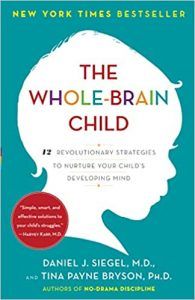
Author and neuroscientist Daniel Siegel and parenting expert Tina Payne Bryson provide 12 strategies for fostering healthy brain development in children and guidance on how to teach them to manage day-to-day struggles.
This compassionate and thoughtful text helps parents understand their children better and supports them to create rich and meaningful lives.
Find the book on Amazon.
Check out our article 8+ Best Resilience Books on Mental Toughness for other resources to help you become mentally strong.
Helpful Resources From PositivePsychology.com
We have many resources available for coaches, educators, and therapists to help individuals and groups build mental toughness and become mentally strong.
Our free resources include:
- Creating Realistic Optimism for Resilience
We can build mentally strong minds by increasing our focus on positive emotions such as joy, gratitude, and hope. - Exploring Past Resilience
Revisiting past challenges can help us develop a more mentally tough mindset and be able to face future challenges.
More extensive versions of the following tools are available with a subscription to the Positive Psychology Toolkit©, but they are described briefly below:
- The Antifragile Mind
We can become mentally stronger by recognizing the opportunities presented by adverse events. Try out the following four steps:- Step one –Think of the last time you experienced adversity.
- Step two – List the mistakes you made that may have contributed to this event.
- Step three – What lessons do you think you can take from what happened?
- Step four – How can you learn from your mistakes and grow stronger?
- When Hot Buttons Are Pushed
Learning to control our emotions supports mental strength. Use the following four steps to manage impulsive behavior better:- Step one – List what makes you angry or leaves you feeling offended.
- Step two – What happens in your body? What emotions show up?
- Step three – Create a list of possible coping strategies.
- Step four – Consider the likely effectiveness of each strategy and how you could use the preferred ones going forward.
Our article What Is Resilience, and Why Is It Important to Bounce Back? offers additional skills and resources to build resilience.
How to Use The Coping Wheel (+ 5 More Coping Strategies) is one of our articles providing effective coping strategies.
If you’re looking for more science-based ways to help others overcome adversity, this collection contains 17 validated resilience and coping exercises. Use them to help others recover from personal challenges and turn setbacks into opportunities for growth.
A Take-Home Message
The mentally strong build mental toughness. They are resilient, able to find a new path forward when encountering life’s obstacles, and capable of focusing and directing their energies toward meaningful goals.
Mental strength involves building the cognitive, emotional, and behavioral skills required to persist in the face of adversity and grow while prioritizing and maintaining physical and psychological wellbeing.
Throughout our lives, we all encounter a range of stresses. Some of these stressors are minor irritations that we often overlook, while others have a significant impact on our identity and the opportunities we encounter.
As mental health professionals, we can develop our own and our clients’ mental strength and mental health toolkits to create robust mindsets for coping compassionately without sacrificing personal needs.
In doing so, we can enhance performances, boost productivity, create better leaders, and support good health.
Why not try some of the thought-reframing exercises, positive thinking tasks, and goal-setting worksheets to help your clients become mentally strong?
We hope you enjoyed reading this article. Don’t forget to download our five positive psychology tools for free.
ED: Rewrite Dec 2024
Frequently Asked Questions
A person who is mentally strong has the cognitive, emotional, and behavioral resources to cope with tough times, adapt, and grow while maintaining their wellbeing (Clough et al., 2021; Sheard, 2013).
You can begin by practicing positive thinking, learning to visualize successful outcomes, and setting and working toward value-driven goals (Clough et al., 2021).
Mentally strong people typically show higher levels of perseverance, confidence, focus, resilience, emotional control, commitment, adaptability, a positive attitude, self-motivation, and the ability to handle stress (Sutton, 2019; Crust, 2008; Jones et al., 2007).
- Clough, P., Strycharczyk, D., & Perry, J. L. (2021). Developing mental toughness: Strategies to improve performance, resilience and wellbeing in individuals and organizations. Kogan Page.
- Crust, L. (2008). A review and conceptual re-examination of mental toughness: Implications for future researchers. Personality and Individual Differences, 45(7), 576–583. https://doi.org/10.1016/j.paid.2008.07.005
- Dweck, C. S. (2017). Mindset. Robinson.
- Goleman, D. (2006). Emotional intelligence. Bantam Books.
- Jones, G., Hanton, S., & Connaughton, D. (2007). A framework of mental toughness in the world’s best performers. The Sports Psychologist, 21, 243–264
- Morin, A. (2024). How to raise mentally strong kids. Parents. Retrieved November 13, 2024 from https://www.parents.com/how-to-teach-kids-to-be-mentally-strong-8647311
- Ruparel, N., & Topa, G. (2020). Mental toughness: Promising new paradigms for the workplace. Cogent Psychology, 7(1). https://doi.org/10.1080/23311908.2020.1722354
- Shaw, L., Hansen, H., & St Clair-Thompson, H. (2022). Mental toughness is a mediator of the relationship between positive childhood experiences and wellbeing. European Journal of Developmental Psychology, 20(1), 130–146. https://doi.org/10.1080/17405629.2022.2058485
- Sheard, M. (2013). Mental toughness: The mindset behind sporting achievement. Routledge.
- Southwick, S. M., & Charney, D. S. (2018). Resilience: The science of mastering life’s greatest challenges. Cambridge University Press.
- Sutton, J. (2019). Psychological and physiological factors that affect success in ultra-marathoners (Doctoral thesis, Ulster University). Retrieved November 12, 2024, from https://pure.ulster.ac.uk/en/studentTheses/psychological-and-physiological-factors-that-affect-success-in-ul
- Whitehead, J., & Peckham, M. (2022). Resilience. In Network Leadership (1st ed., pp. 219–222). Routledge. https://doi.org/10.4324/9781003092582-32
Jeremy Sutton, Ph.D., is an experienced psychologist, coach, consultant, and psychology lecturer. He works with individuals and groups to promote resilience, mental toughness, strength-based coaching, emotional intelligence, wellbeing, and flourishing. Alongside teaching psychology at the University of Liverpool, he is an amateur endurance athlete who has completed numerous ultra-marathons and is an Ironman.

Read other articles by their category
- Body & Brain (69)
- Boundaries (14)
- Coaching & Application (42)
- Compassion (26)
- Counseling (41)
- Emotional Intelligence (22)
- Gratitude (18)
- Grief & Bereavement (18)
- Happiness & SWB (40)
- Meaning & Values (27)
- Meditation (16)
- Mindfulness (47)
- Motivation & Goals (41)
- Optimism & Mindset (36)
- Positive CBT (28)
- Positive Communication (29)
- Positive Education (39)
- Positive Emotions (34)
- Positive Leadership (17)
- Positive Parenting (18)
- Positive Psychology (27)
- Positive Workplace (41)
- Productivity (17)
- Relationships (56)
- Resilience & Coping (45)
- Self Awareness (25)
- Self Esteem (38)
- Strengths & Virtues (34)
- Stress & Burnout Prevention (39)
- Theory & Books (44)
- Therapy Exercises (43)
- Types of Therapy (64)