What Is Post-Traumatic Growth? (+ PTG Inventory & Scale) (original) (raw)
Key Insights
- Post-traumatic growth is the positive psychological change that occurs as a result of struggling with highly challenging life circumstances.
- This growth can lead to improved relationships, a greater appreciation for life & a deeper sense of personal strength.
- Strategies like fostering resilience, finding meaning & seeking supportive relationships can facilitate post-traumatic growth.
 Experiencing trauma is an almost inevitable part of life and, typically, outside of our control.
Ultimately, even the harshest, most traumatic events can lead to growth and a reevaluation of what is vital and meaningful (Schubert et al., 2015).
Post-traumatic growth (PTG) is the process of change involved in developing beyond previous levels of functioning, and it can help us make sense of our world and our lives.
PTG aligns closely with positive psychology’s approach that the interplay of positive and negative life experiences helps us flourish (Joseph, 2013).
This article explores post-traumatic growth, the phases involved in understanding and treating it, and how it can be measured.
Before you continue reading, we thought you might like to download our five positive psychology tools for free. These science-based tools will help you move yourself or others through grief in a compassionate way.
This Article Contains
- What Is Post-Traumatic Growth? A Definition
- 6 Phases of Post-Traumatic Growth
- Looking at Post-Traumatic Growth vs. Resilience
- What Is the Post-Traumatic Growth Inventory?
- PTSD Scales & The Davidson Trauma Scale
- Common Criticisms of PTG
- 3 Books on the Topic
- A Take-Home Message
- Frequently Asked Questions
- References
What Is Post-Traumatic Growth? A Definition
Positive psychology recognizes trauma as a crucial aspect of human flourishing. “It is naïve to seek a life in which there is no sadness and no misfortune,” and so we must learn to “live with, and learn from, adversity” (Joseph, 2013, p. 15).
Having experienced and survived trauma, it is possible for individuals to overcome severe stress. Post-traumatic growth is defined as the tendency for people to “change after the experience of stressful or even traumatic events in that they develop beyond their previous level of psychological functioning” (Schubert et al., 2015, p. 469).
According to Professor Stephen Joseph’s (2013, p. 122) book, What Doesn’t Kill Us Make Us Stronger, we should think of post-traumatic growth as a “process of change – not only as an outcome of change.”
Closely tied in with Ryan and Deci’s (2018) self-determination theory of motivation, Joseph (2013) suggests we seek to make sense of the world and ultimately increase our fitness for survival.
Put simply, PTG includes “experiences of positive change that may occur as the result of the struggle with traumatic events and major life crises” (Munroe & Ferrari, 2022, p. 12).
When it happens, it typically (Munroe & Ferrari, 2022):
- Occurs during conditions of severe, rather than low-level, stress
- Is accompanied by transformative life changes
- Is experienced as a process and an outcome
- Requires challenging and reconstructing basic assumptions about the individual’s life – beyond that of previously held views on flourishing
In the psychology literature, post-traumatic stress disorder (PTSD) is defined as both a stressor-related disorder that focuses specifically on the experience of a problem event and an anxiety disorder, a more generalized feeling of unease (Kiyimba et al., 2022).
PTSD is a complex reaction to trauma with multiple factors involved that can lead to difficulty coping and individuals struggling to rebuild their lives (Joseph, 2013).
Fortunately, even with PTSD, post-traumatic growth is possible.
6 Phases of Post-Traumatic Growth
 There are several different approaches and phased models for understanding PTG and treating PTSD.
Below we outline two: Hudgins’s (2019) three-stage therapeutic spiral model and Herman’s (1992) three-phased tripartite model.
Therapeutic spiral model
The therapeutic spiral model is a three-stage process using experiential trauma therapy to treat trauma by stabilizing the self, working through the past, and integrating post-traumatic growth (Hudgins, 2019).
Stage 1: Prescriptive roles
Stage one focuses on identifying the roles that will be needed to “face the impact of trauma with spontaneity, creativity, and a fully activated autonomous healing center” (Hudgins & Durost, 2022, p. 45).
The roles include self-observation and strengths. Stage one then involves learning to use these strengths, foster engagement, and also to use the “psychological functions of observation, containment, and restoration to promote healthy self-organization” (Hudgins & Durost, 2022, p. 45).
Stage 2: The trauma triangle
Stage two involves demonstrating and working through “the dissociated feelings, survival defenses, and repetitive memories until it is safe for feelings to be consciously expressed in the present” (Hudgins & Durost, 2022, p. 45).
The focus of this stage is to work through the aftereffects of past trauma and their impact.
Stage 3: The role of transformation
This is where transformation “conveys the concept of the autonomous healing center igniting the body for self-healing when the conditions are right” (Hudgins & Durost, 2022, p. 65).
Stage three engages with the client’s moments of insight and how to use them in the future, ultimately realizing potential.
The final phase is where most of the growth happens.
“The entire self-organization is changed when new experiences cause positive changes in body, mind, heart, spirit, and relationships with self, others, and the world” (Hudgins & Durost, 2022, p. 34).
Tripartite model of trauma
The tripartite model was proposed by Judith Herman (1992) as a safe, effective, and phased approach for therapists working with clients to revisit traumatic memories (Kiyimba et al., 2022).
1. Safety and stabilization
Safety and stabilization involve a period of symptom management, including communicating to clients how trauma affects the brain and body and teaching them strategies for regulating their emotional reactions.
Ultimately, the aim is to normalize clients’ symptoms, help them manage their day-to-day lives, and lessen the risk of re-traumatization.
2. Remembering and mourning
Remembering and mourning require “engaging with the trauma memory or narrative so that it can be safely processed” (Kiyimba et al., 2022, p. 91).
The client is supported as they gain increased awareness and mastery over their traumatic recollections and boost their sense of control over distress. Such upsetting feelings are gradually moved toward being thought of and referred to in the past tense.
3. Reconnection
Reconnection includes supporting the client in regaining their connections with social networks and finding their way back to reintegrating with society and experiencing fewer symptoms.
The individual integrates their newfound knowledge, skills, and awareness to enhance their personal and relational wellbeing.
The phased approach to understanding and promoting post-traumatic growth can be particularly helpful when individuals have been exposed to prolonged or repeated trauma and may need to acquire psychologically stabilizing resources to draw on before moving forward (Kiyimba et al., 2022).
Looking at Post-Traumatic Growth vs. Resilience
Post-traumatic growth is not the same as emotional resilience or resilience more broadly, and yet their use frequently overlaps when we discuss experiencing and recovering from trauma (Collier, 2016).
The term resilience is often used to describe our ability to bounce back, returning to a previous norm seemingly without significant interruption to our lives. For most of us, returning to normal after events is not an effortless recovery and may involve a period of (possibly prolonged) struggle and suffering (Neenan, 2018).
PTG “refers to what can happen when someone who has difficulty bouncing back experiences a traumatic event that challenges his or her core beliefs, endures psychological struggle […] and then ultimately finds a sense of personal growth,” says Kanako Taku, associate professor of psychology at Oakland University (as cited in Collier, 2016, para 10).
Individuals who are more resilient, possibly because of previous experiences of trauma, may be less likely to experience PTG because their lives are less easily shaken to the core. Their heightened ability to cope protects them, reducing the likelihood of needing and searching for a new life path to recover.
On the other hand, _less-_resilient people, even when experiencing the same or similar events, must pass through a period of distress and confusion that requires a new or updated belief system as they attempt to make sense of what has happened (Collier, 2016).
What Is the Post-Traumatic Growth Inventory?
 Importantly for academics and researchers, PTG is measurable.
The Post-Traumatic Growth Inventory (PTGI), developed by psychologists Richard Tedeschi and Lawrence Calhoun (1996) scores positive responses in each of the following five areas:
- Appreciation of life
- Relationships with others
- New possibilities in life
- Personal strength
- Spiritual change
Where to download the PTGI scale
The PTGI is widely available online and is considered a reliable resource for scoring personal growth following traumatic events (Joseph, 2013).
Scoring and interpretation
The PTGI is a 21-item scale scored using six-point responses.
Participants indicate the degree to which they have or have not experienced a particular change using a scale ranging from zero (“I did not experience this change as a result of my crisis”) to five (“I experienced this change to a very great degree as a result of my crisis”; Tedeschi & Calhoun, 1996, p. 459).
A higher score indicates a higher level of post-traumatic growth.
Examples of statements scored include:
- Appreciation of life
My priorities about what is important in life
An appreciation for the value of my own life - Relating to others
Knowing that I can count on people in times of trouble
I accept needing others - New possibilities
I developed new interests
I’m able to do better things with my life - Personal strength
A feeling of self-reliance
Knowing I can handle difficulties - Spiritual change
A better understanding of spiritual matters
I have a stronger religious faith
Studies by Tedeschi and Calhoun (1996, p. 469) suggest PTGI’s validity and its usefulness in furthering our “understanding of the natural processes people use as they struggle with the aftermath of trauma to derive meaning, feel wiser, and face uncertain futures with more confidence.”
PTSD Scales & The Davidson Trauma Scale
There are various scales available for scoring trauma. The American Psychological Association lists several on its website corresponding to the Diagnostic and Statistical Manual of Mental Disorders used for diagnosing mental disorders.
The following is a sample:
Clinician-Administered PTSD Scale
This 30-item structured interview can diagnose PTSD in the past month and over a lifetime and assess symptoms over the last seven days.
The scale can typically be administered in less than one hour and is available for download upon request (Weathers et al., 2017).
PTSD Symptom Scale Interview
This scale involves a 17-item semi-structured interview for assessing and diagnosing PTSD.
The interview takes approximately 20 minutes to perform and assesses the presence and severity of symptoms over the past month and their impact on daily life.
The PTSD Symptom Scale Interview is available upon request from its author.
PTSD Symptom Scale self-report version
Based on the above scale, this is a 17-item self-report version for diagnosing PTSD and assessing symptoms.
Scoring describes the symptoms in terms of frequency and severity, and the results indicate the likelihood of PTSD.
Available with appropriate access.
Treatment-Outcome PTSD Scale
This eight-item assessment of PTSD treatment outcomes takes approximately 10 minutes to complete (Davidson & Colket, 1997).
The scale uses an interview-based assessment based on three symptom clusters: re-experiencing, avoidance and numbing, and hyperarousal.
The scale is available upon request.
Davidson Trauma Scale
This 17-item self-report questionnaire assesses the symptoms of PTSD (Davidson et al. 1997).
Each item is answered using a score for frequency and severity to determine if the symptoms meet the Diagnostic and Statistical Manual of Mental Disorders criteria for PTSD.
Available for purchase.
Common Criticisms of PTG
 While PTG is widely used, there have been criticisms of and concerns regarding the term, many of which refer to its definition and measurement.
They include (Christiansen et al., 2015):
- Neither trauma nor growth is adequately defined. How much stress is required for personal growth? And will too much prevent it from happening?
- PTG might be better referred to as stress-related growth. Multiple minor stressors (as opposed to one big one) may also lead to growth and yet are not always recognized as trauma.
- The PTGI may not be generalizable. The PTGI was developed and validated on limited populations, primarily female college students. It could be that the inventory is not generalizable to other populations.
- The dimensionality of the PTG. Questions have been raised regarding whether PTG is a multi- or one-dimensional phenomenon. More research is required to understand the number of factors involved in this psychological construct.
- Is the growth from the reported trauma? It can be unclear whether the client-reported growth is directly related to the trauma identified, other traumas, or whether, as individuals, they are better at reporting growth.
- PTG measures are not measuring growth. We cannot be confident that only PTG is being measured. It could be that the scales are capturing other forms of growth.
While it’s clear that some individuals cope better with trauma than others, it is less obvious how that happens and the exact reasons behind why they report growth. While PTG clearly exists, there is a lack of clarity over its definition and measures (Christiansen et al., 2015).
3 Books on the Topic
There are some incredibly insightful books about trauma and post-traumatic growth. We have included several of our favorites below.
1. What Doesn’t Kill Us: A Guide to Overcoming Adversity and Moving Forward – Stephen Joseph
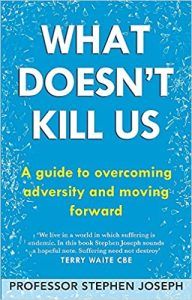
Stephen Joseph has worked with many trauma survivors and has had a long career studying post-traumatic growth.
In this highly engaging book, he shares many of their stories and the psychological theories and practices involved in exploring what growth can mean and how we can navigate adversity to create new meaning and purpose in our lives.
Find the book on Amazon.
2. Comprehensive Guide to Post-Traumatic Stress Disorders – Colin R. Martin, Victor R. Preedy, and Vinood B. Patel
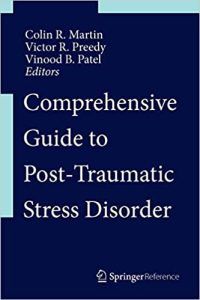
This text is a comprehensive and exhaustive guide to contemporary issues in the field of PTSD.
The editors have collected 125 chapters, organized into 12 major sections, to explore trauma’s social, behavioral, psychological, biochemical, and genetic aspects and how we recover from them.
Find the book on Amazon.
3. Post-Traumatic Growth to Psychological Well-Being: Coping Wisely With Adversity – Melanie Munroe and Michel Ferrari
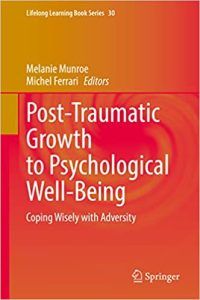
This fascinating book explores why some people experience growth in response to trauma and others do not.
The editors have put together a work that suggests that individuals who actively reflect on their experiences develop a higher degree of self-transcendent wisdom.
The final chapter wraps up all the ideas into a new conceptual framework to help survivors better respond to what has happened in their lives.
Find the book on Amazon.
A Take-Home Message
While trauma is commonplace, it doesn’t have to limit or prevent future flourishing.
For many, psychological growth and new meaning is the ultimate outcome of the toughest events in their lives.
In line with positive psychology, it is widely recognized that difficult times are unavoidable and ultimately crucial to future wellness.
Post-traumatic growth refers to the ability of some individuals to develop beyond their level of functioning prior to the traumatic event, meeting their — possibly revised — psychological needs and creating new belief systems.
PTG requires a significant but not excessive degree of stress. It is also a process rather than an outcome that results in the individual passing through several stages before achieving potential positive changes to mind, body, and spirit.
Crucially, it is possible to measure the degree of trauma experienced and the success with which an individual is coping and potentially achieving growth.
While there are challenges to PTG’s measures and definition, the research-led theories and associated learnings provide valuable insights into how, as therapists, we can help clients recover from traumatic events and use their newfound wisdom to create more fulfilling lives after challenging circumstances.
We hope you benefited from reading this article. Don’t forget to download our five positive psychology tools for free.
Ed: Updated May 2023
Frequently Asked Questions
While resilience involves bouncing back to a previous state after adversity, PTG signifies a transformation that leads to a higher level of functioning and personal development beyond the prior norm.
PTG encompasses five main domains: appreciation of life, relationships with others, new possibilities in life, personal strength, and spiritual change.
Engaging in self-care, seeking meaning in the traumatic experience, and building supportive relationships can facilitate PTG.
- Christiansen, D. M., Iversen, T. N., Ambrosi, S. L., & Elklit, A. (2015). Posttraumatic growth: A critical review of problems with the current measurement of the term. In C. Martin, V. Preedy, & V. Patel (Eds.), Comprehensive guide to post-traumatic stress disorder. Springer.
- Collier, L. (2016, November). Growth after trauma. Monitor on Psychology, 47(10), 48. https://www.apa.org/monitor/2016/11/growth-trauma
- Davidson, J. R. T., & Colket, J. T. (1997). The eight-item treatment-outcome post-traumatic stress disorder scale: A brief measure to assess treatment outcome in post-traumatic stress disorder. International Clinical Psychopharmacology, 12, 41–45. https://doi.org/10.1097/00004850-199701000-00006
- Davidson, J. R. T., Book, S. W., Colket, J. T., Tupler, L. A., Roth, S., David, D., Hertzberg, M., Mellman, T., Beckham, J. C., Smith, R. D., Davison, R. M., Katz, R., & Feldman, M. E. (1997). Assessment of a new self-rating scale for post-traumatic stress disorder. Psychological Medicine, 27(1), 153–160. https://doi.org/10.1017/S0033291796004229
- Herman, J. L. (1992). Trauma and recovery: The aftermath of violence–from domestic abuse to political terror. HarperCollins.
- Hudgins, K. (2019). Psychodrama revisited: Through the lens of the internal role map of the therapeutic spiral model to promote post-traumatic growth. Zeitschrift für Psychodrama und Soziometrie, 18(1), 59–74. https://doi.org/10.1007/s11620-019-00483-7
- Hudgins, K., & Durost, S. W. (2022). Experiential therapy from trauma to posttraumatic growth: Therapeutic spiral model psychodrama. Springer.
- Joseph, S. (2013). What doesn’t kill us: A guide to overcoming adversity and moving forward. Piatkus.
- Kiyimba, N., Buxton, C., Shuttleworth, J., & Pathe, E. (2022). Discourses of psychological trauma. Springer.
- Munroe, M., & Ferrari, M. (Eds.). (2022). Posttraumatic growth to psychological well-being : Coping wisely with adversity. Springer.
- Neenan, M. (2018). Developing resilience: A cognitive-behavioural approach. Routledge.
- Ryan, R. M., & Deci, E. L. (2018). Self-determination theory: Basic psychological needs in motivation, development, and wellness. Guilford Press.
- Schubert, C. F., Schmidt, U., & Rosner, R. (2015). Posttraumatic growth in populations with posttraumatic stress disorder: A systematic review on growth-related psychological constructs and biological variables. Clinical Psychology & Psychotherapy, 23(6), 469–486. https://doi.org/10.1002/cpp.1985
- Tedeschi, R. G., & Calhoun, L. G. (1996). The Posttraumatic Growth Inventory: Measuring the positive legacy of trauma. Journal of Traumatic Stress, 9(3), 455–471. https://doi.org/10.1007/BF02103658
- Weathers, F. W., Bovin, M. J., Lee, D. J., Sloan, D. M., Schnurr, P. P., Kaloupek, D. G., Keane, T. M., & Marx, B. P. (2017). The Clinician-Administered PTSD Scale for DSM-5 (CAPS-5): Development and initial evaluation in military veterans. Psychological Assessment, 30(3), 383–395. https://doi.org/10.1037/pas0000486
Jeremy Sutton, Ph.D., is an experienced psychologist, coach, consultant, and psychology lecturer. He works with individuals and groups to promote resilience, mental toughness, strength-based coaching, emotional intelligence, wellbeing, and flourishing. Alongside teaching psychology at the University of Liverpool, he is an amateur endurance athlete who has completed numerous ultra-marathons and is an Ironman.

Read other articles by their category
- Body & Brain (69)
- Boundaries (14)
- Coaching & Application (42)
- Compassion (26)
- Counseling (41)
- Emotional Intelligence (22)
- Gratitude (18)
- Grief & Bereavement (18)
- Happiness & SWB (40)
- Meaning & Values (27)
- Meditation (16)
- Mindfulness (47)
- Motivation & Goals (41)
- Optimism & Mindset (36)
- Positive CBT (28)
- Positive Communication (29)
- Positive Education (39)
- Positive Emotions (34)
- Positive Leadership (17)
- Positive Parenting (18)
- Positive Psychology (27)
- Positive Workplace (41)
- Productivity (17)
- Relationships (56)
- Resilience & Coping (45)
- Self Awareness (25)
- Self Esteem (38)
- Strengths & Virtues (34)
- Stress & Burnout Prevention (39)
- Theory & Books (44)
- Therapy Exercises (43)
- Types of Therapy (64)