Readiness for Change: How to Assess & Improve It (original) (raw)
Key Insights
- Readiness for change involves recognizing the need for transformation & being prepared to take action.
- The Stages of Change model outlines steps from pre-contemplation to action, aiding personal development & behavior change.
- Tailored strategies, like motivational interviewing, support individuals in progressing through these stages effectively.
 Clients seeking professional help from a counselor or therapist are often aware they need to change yet may not be ready to begin their journey.
Professional consultation aims to understand the challenges and concerns of the client while recognizing that they already have much of what’s needed within them (Miller & Rollnick, 2013).
For change to happen, an alliance must be created with the client that focuses on their strengths while evoking their readiness for change.
This article explores how to create that readiness to support the client throughout their journey.
Before you continue, we thought you might like to download our five positive psychology tools for free. These detailed, science-based exercises will help you or your clients create actionable goals and master techniques to create lasting behavior change.
This Article Contains
- What Is Readiness for Change?
- 4 Fascinating Theories & Models
- How to Create Readiness for Change
- 8 Worksheets to Support Your Clients
- Assessment Tools: 4 Questionnaires & Scales
- Using Software to Improve Readiness for Change
- Tools From PositivePsychology.com
- A Take-Home Message
- Frequently Asked Questions
- References
What Is Readiness for Change?
Change can be initiated or experienced at an individual, societal, or organizational level. Understanding readiness for change can make the journey easier for those involved.
Readiness for change at the individual level
Coaching, counseling, and therapy typically involve change. The issues, problems, and needs that clients bring to each session often involve a “focus on altering how people feel, think and act so that they can live their lives more effectively” (Hagger et al., 2020; Nelson-Jones, 2014, p. 10).
The following are key questions that can support the client through change (modified from Michie et al., 2014):
- Understanding the behavior
What problem are we trying to solve?
What behaviors need to change, and in what way?
What will it take for the desired change to happen? - Identifying intervention options
What interventions are likely to bring about the necessary change? - Identifying implementation options
What should the specific content of the intervention be?
How should it be implemented?
Underlying each of these points is another one: What is the client’s readiness for change? Unless they are prepared and willing for change to happen, the process will either not begin or fall at the first obstacle.
“People don’t change until they are ready to” (Arloski, 2014, p. 267). Even when the client and the mental health professional see the need for change, it may not happen. Rushing in front of the client, saying, “So, what are we going to do about this?” may damage the chance of treatment success (Arloski, 2014).
It is vital to consider change as a journey for the individual, with several stages of change through which they must pass for a successful outcome (Hagger et al., 2020).
Employee & organizational readiness for change
Change (anticipated or unexpected) within any organization can unsettle employees and should be planned and handled with care. While it is not always possible to predict what is ahead, it is vital to be ready for different possible futures. “The time to prepare for change is not when it hits. It’s before it hits” (Rinne, 2021, para. 4).
Ensuring the organization and its staff are ready for change is also about removing or, more importantly, avoiding impediments that will halt or block change, including (modified from Rinne, 2021):
- An anxious or burned-out team
- Limited or insufficient trust
- A “just do it” culture
- Lack of measurements of progress/success
Performing a change audit can help an organization assess its staff’s readiness, motivation, and willingness for change and challenges (Rinne, 2021; Harvard Business Review, 2019).
4 Fascinating Theories & Models
 There are many models and theories for understanding, predicting, and promoting readiness for change.
The following approaches provide a helpful insight into the variety of techniques available.
1. GROW model
The GROW model remains a popular technique for approaching change, despite having been around since the late 1980s (Whitmore, 2017). Like other approaches, it uses a series of questions to raise awareness, ownership, and, ultimately, readiness in the individual for change.
John Whitmore (2017), the creator of this powerful coaching model, suggests the acronym GROW as a framework that follows four distinct stages:
- Goal – What do you want to do?
Set short-term (session) goals and longer term life goals. - Reality – Where are you now?
Perform a review of the current situation and environment. - Options – What could you do?
Understand the strategies and course of action available. - Will – What will you do?
Identify “when, by whom, and the will to do it” (Whitmore, 2017, p. 96).
It is important to note that goals are set before assessing the reality. While counterintuitive, this promotes readiness and avoids (or at least reduces) the individual being limited by past performances (Whitmore, 2017).
2. Transtheoretical model
The transtheoretical model (TTM) emerged from a complex and confusing array of psychotherapy approaches that attempted to predict and explain “what people need to do to make change happen” (Hagger et al., 2020, p. 137).
The five-stage model captures the journey an individual makes to achieve lasting change:
- Precontemplation
- Contemplation
- Preparation
- Action
- Maintenance
Clients “can be at a different stage of readiness in each specific behavior we look at” (Arloski, 2014, p. 167). For example, a client may be ready to exercise but not stop smoking. Readiness for change is therefore not all or nothing, but uneven. The client may cycle and recycle through the stages, sometimes slipping back, other times moving forward.
3. Self-determination theory
The self-determination theory proposes that humans have three fundamental needs that, if met, lead to intrinsic motivation, optimal functioning, wellness, and a desire for growth (Ryan & Deci, 2018):
- Relatedness – the need for connectedness with and support from others
- Autonomy – the need to feel we are in control, or the origin, of our actions
- Competence – the need to feel mastery over what we do
“When needs are thwarted or frustrated, individuals experience ill-being, dissatisfaction, and negative affect, among other signs of non-optimal function” (Hagger et al., 2020, p. 109).
Satisfying each of the needs can lead to positive change. Individuals experiencing their actions as autonomous are likely to initiate and persist in their behavior. Interventions that support feelings of relatedness, autonomy, and competence highlight to the individual that their actions are freely chosen and personal (Hagger et al., 2020).
4. Motivational interviewing
Motivational interviewing (MI) has been widely used and highly effective in challenging clients’ unhealthy behavior, such as smoking, poor diet, and drug use. MI is particularly helpful in overcoming ambivalence or unwillingness to change (Miller & Rollnick, 2013).
MI uses preparatory talk during sessions, encouraging open yet directed questioning to evoke conversation about change. In essence, the client talks themselves into being ready by uncovering their desire, ability, reasons, and need for change (Miller & Rollnick, 2013).
Several MI-influenced worksheets are included below.
How to Create Readiness for Change
Ensuring readiness for change is particularly important for clients engaged in coaching for health and wellness (Rogers & Maini, 2016; Arloski, 2014). Knowing that you need to exercise more, drink less alcohol, or change your diet does not mean you are ready to begin.
“Contrary to some people’s approach, giving your client a shove in the back is probably not a good idea. That first step has to come from within” (Arloski, 2014, p. 172).
Readiness for change may begin with working on a client’s self-worth and self-esteem. A low feeling of self-worth may become an obstacle to change. However, it is also possible to start the change journey by helping the client act as if they are already ready (Arloski, 2014).
It is also crucial that the person is aware of the benefits of the behavior, learning why change matters. The first three stages in the TTM above are therefore vital in creating that readiness for change in the client (modified from Hagger et al., 2020).
To move out of stage one, precontemplation:
| Client’s tasks | Counselor or coach’s tasks |
|---|---|
| Become more aware, concerned, hopeful, and confident about change. | Build a rapport with the client and increase their awareness of their existing risks and problematic behavior. |
To move out of stage two, contemplation:
| Client’s tasks | Counselor or coach’s tasks |
|---|---|
| Understand the risk of not doing something versus the benefits of doing it.Solidify the decision to change. | Normalize the client’s ambivalence.Explore and evoke the reasons for change and tip the client’s decisional balance. |
To move out of stage three, preparation:
| Client’s tasks | Counselor or coach’s tasks |
|---|---|
| Commit to change and agree to a change plan. | Work with the client to make a plan that considers the barriers they may experience. |
Having created this readiness for change, the client can continue their journey through the subsequent TTM stages: action, maintenance, and, where necessary, revisit plans if they relapse (Hagger et al., 2020).
Getting the readiness balance right to progress to the next stage is not easy. “When you are being an effective coach, you walk a very delicate and thin line between facilitating change and growth, and convincing someone of the benefits of growth” (Arloski, 2014, p. 174).
8 Worksheets to Support Your Clients
 As we have already seen, MI is an effective and widely used approach for helping clients talk themselves into positive change (Miller & Rollnick, 2013).
The following worksheets are powerful tools to promote that change conversation and are available for download.
Use the acronym DARN as a helpful reminder of the types of change talk available to prepare the client.
- Desire questions – What do you want? What would you like? What do you wish for?
- Ability questions – How confident are you that you could do X?
- Reasons questions – What are the advantages of doing X?
- Need questions – What needs to happen?
Other MI approaches include:
- Querying extremes – What concerns you most about your current behavior? If you make the change, what’s the best that could happen?
- Looking back – What were things like before the difficulty started? What has changed? How has it stopped you from moving forward?
- Looking forward – If you make the change, how do you think your future would be different from your past?
The Readiness for Change Ruler
A diagram can help the client visualize their degree of readiness for change.
Ask the client to complete the Readiness for Change Ruler worksheet to assess their preparedness for change.
This ruler can be revisited over several sessions to assess how the client’s readiness has changed.
Knowing an individual’s or organization’s readiness for change can help prepare them for unforeseen events or planned changes that may be beneficial but have not yet been adopted.
Assessing readiness for organizational change
Rinne (2021) suggests performing a change audit to assess an organization’s readiness for change.
Consider the following:
Where is change currently hitting the organization hardest?
Which departments or teams are more ready or more consistently cope with change?
Over the last 6, 12, and 18 months, what areas have excelled? Why?
What sorts of changes are most challenging?
The answers identify areas that need support and apply lessons learned in areas that are coping well to those handling change poorly.
Assessing readiness for clients
Assessment can range from (possibly lengthy) formal interviews to a few standard questions in a consultation or a handwritten or online form (Miller & Rollnick, 2013).
Interestingly, the counselor typically already knows all the answers by the time in-session assessments are complete (Miller & Rollnick, 2013).
However, formal motivation assessments can still provide a great deal of insight and continue to be helpful in understanding client readiness, especially regarding changes in health behavior.
The following questionnaires and scales are worth considering:
- URICA
URICA is the “most widely studied measure of readiness for change designed for an adult target population” (Ceccarini et al., 2014, p. 3). This 32-item self-report scale measures the TTM stages of precontemplation, contemplation, action, and maintenance. - Readiness to Change Questionnaire
This 20-item self-report measure evaluates the client’s view of the pros and cons of reducing alcohol consumption. - The General Self-Efficacy Scale
These 10 statements rated between 1 (not at all true) and 4 (exactly true) identify the client’s degree of self-belief. - S-Weight and P-Weight
Two self-report questionnaires focus on an individual’s readiness to engage in healthy eating and physical activity. Both scales can assess the relationship between the stages and processes of change according to the TTM (Ceccarini et al., 2014).
Using Software to Improve Readiness for Change
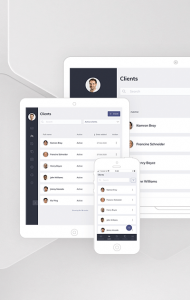 Modern counseling, coaching, and therapy regularly make use of technology to help clients through the process of change (Ribbers & Waringa, 2015).
An online approach is particularly suited to a world where so many are flexible in their work location.
Online tools and communication can reach and support people when and where they need it most and are helpful when motivating a client’s readiness and willingness to change (Kanatouri, 2020).
9 Benefits of Quenza software
Quenza is a powerful, user-friendly application for crafting client care that increases engagement between sessions and reduces administrative work, freeing practitioners to spend more time with their clients.
Quenza is especially helpful for increasing readiness for change and supporting the client throughout their treatment journey. Benefits of the tool include:
- Customized homework exercises and interventions that are available when the client needs them most.
- The ability to send clients psychoeducation and micro-teachings to build thinking, self-confidence, and awareness regarding change.
- Assessments can be tailored and sent out individually or at regular intervals.
- Onboarding forms can be completed digitally to capture the needs, wishes, and concerns of the client.
- Evaluation forms provide ongoing feedback on how the clients feel about their progress.
- Inspirational quotes and videos can be sent directly to the client’s mobile device without getting lost in a cluttered and busy inbox.
- Visualization tools help the client picture what they would like to achieve and how they are progressing along their journey.
- Pathways can be tailored, scheduled, and sent to clients.
- Each stage of the journey can be monitored and progressed.
The founders of PositivePsychology.com realized there is a need for an engaging healthcare platform and, with the collaboration of the positive psychology community, established Quenza. It is the ideal platform for practitioners, teachers, coaches, and therapists, and you can try it out for $1 for a month’s trial.
We have many resources available for supporting clients along the change journey, including:
- Abstraction Worksheet
Use this worksheet to identify and define the behavior to be changed and establish the goals and steps required to accomplish it. - WDEP Questions Worksheet
These lists of questions reflect on what a person wants, what they are doing, whether or not it is working, and planning to change things for the better.
More extensive versions of the following tools are available with a subscription to the Positive Psychology Toolkit©, but they are described briefly below:
- Self-Contract
Behavioral contracting can help people commit to making a desired change.
Ask the client to state and sign on to their intention (e.g., “I will do X by [date].”).
- What Does Not Need to Change?
This exercise helps clients notice the positive things in everyday life and become more aware of aspects of their lives they do not want to change.- Step one – Identify what does not need to change.
- Step two – Think about why these daily experiences should continue.
- Step three – Identify how to have more of these experiences
17 Motivation & Goal Achievement Exercises
If you’re looking for more science-based ways to help others reach their goals, check out this collection of 17 validated motivation & goal achievement tools for practitioners. Use them to help others turn their dreams into reality by applying the latest science-based behavioral change techniques.
A Take-Home Message
Ambivalence and resistance are normal steps on the change path and should be recognized and normalized with the client (Miller & Rollnick, 2013).
Forming a positive alliance and increasing client awareness and confidence in their ability to change can foster feelings of readiness to move forward. Doing so makes it possible to help them think, feel, and behave in line with their values and goals (Hagger et al., 2020).
It is vital to understand what problem the client hopes to solve and what is standing in their way. Then, rather than instructing them in the changes to make, it is possible to evoke readiness through dialogue.
Motivational interviewing and the transtheoretical model are notably helpful in evoking change talk and recognizing that there are several stages to pass through to achieve their goal. By doing so, the client increases self-compassion and self-confidence and identifies the control and strengths they bring to each session and their lives as a whole.
Why not review the models and theories included in this article and consider which approaches and interventions would be most helpful to increase client readiness for change?
We hope you enjoyed reading this article. Don’t forget to download our five positive psychology tools for free.
Frequently Asked Questions
You can assess your readiness by reflecting on your motivation, confidence, and the perceived benefits and challenges of the change.
The stages of change include precontemplation, contemplation, preparation, action, maintenance, and termination, each representing a phase in the journey toward behavior change.
Improving readiness involves setting clear goals, building self-efficacy, and developing a detailed plan to guide the change process.
- Arloski, M. (2014). Wellness coaching for lasting lifestyle change. Whole Person Associates.
- Ceccarini, M., Borrello, M., Pietrabissa, G., Manzoni, G. M., & Castelnuovo, G. (2015). Assessing motivation and readiness to change for weight management and control: An in-depth evaluation of three sets of instruments. Frontiers in Psychology, 6, 511. https://doi.org/10.3389/fpsyg.2015.00511
- Hagger, M. S., Cameron, L. D., Hamilton, K., Hankonen, N., & Lintunen, T. (2020). The handbook of behavior change. Cambridge University Press.
- Harvard Business Review. (2019). HBR guide to motivating people. Author.
- Kanatouri, S. (2020). The digital coach. Routledge.
- Michie, S., Atkins, L., & West, R. (2014). The behaviour change wheel: A guide to designing interventions. Silverback.
- Miller, W. R., & Rollnick, S. (2013). Motivational interviewing: Helping people change. Guilford Press.
- Nelson-Jones, R. (2014). Practical counselling and helping skills. Sage.
- Ribbers, A., & Waringa, A. (2015). E-coaching: Theory and practice for a new online approach to coaching. Routledge.
- Rinne, A. (2021, September 22). A futurist’s guide to preparing your company for constant change. Harvard Business Review. Retrieved March 7, 2022, from https://hbr.org/2021/09/a-futurists-guide-to-preparing-your-company-for-constant-change
- Rogers, J., & Maini, A. (2016). Coaching for health: Why it works and how to do it. Open University Press.
- Ryan, R. M., & Deci, E. L. (2018). Self-determination theory: Basic psychological needs in motivation, development, and wellness. Guilford Press.
- Whitmore, J. (2017). Coaching for performance: The principles and practice of coaching and leadership. Nicholas Brealey.
Jeremy Sutton, Ph.D., is an experienced psychologist, coach, consultant, and psychology lecturer. He works with individuals and groups to promote resilience, mental toughness, strength-based coaching, emotional intelligence, wellbeing, and flourishing. Alongside teaching psychology at the University of Liverpool, he is an amateur endurance athlete who has completed numerous ultra-marathons and is an Ironman.

Read other articles by their category
- Body & Brain (69)
- Boundaries (14)
- Coaching & Application (42)
- Compassion (26)
- Counseling (41)
- Emotional Intelligence (22)
- Gratitude (18)
- Grief & Bereavement (18)
- Happiness & SWB (40)
- Meaning & Values (27)
- Meditation (16)
- Mindfulness (47)
- Motivation & Goals (41)
- Optimism & Mindset (36)
- Positive CBT (28)
- Positive Communication (29)
- Positive Education (39)
- Positive Emotions (34)
- Positive Leadership (17)
- Positive Parenting (18)
- Positive Psychology (27)
- Positive Workplace (41)
- Productivity (17)
- Relationships (56)
- Resilience & Coping (45)
- Self Awareness (25)
- Self Esteem (38)
- Strengths & Virtues (34)
- Stress & Burnout Prevention (39)
- Theory & Books (44)
- Therapy Exercises (43)
- Types of Therapy (64)