Vernalization (original) (raw)
Last Updated : 11 Jun, 2026
Vernalisation is the process by which certain plants require exposure to low temperatures in order to initiate or promote flowering. It is an important adaptation that ensures flowering occurs during favourable environmental conditions, usually after the winter season. This process helps plants avoid damage from extreme cold and increases the chances of successful reproduction and seed formation. Vernalisation is commonly observed in temperate plants and plays a significant role in synchronising plant growth with seasonal changes.
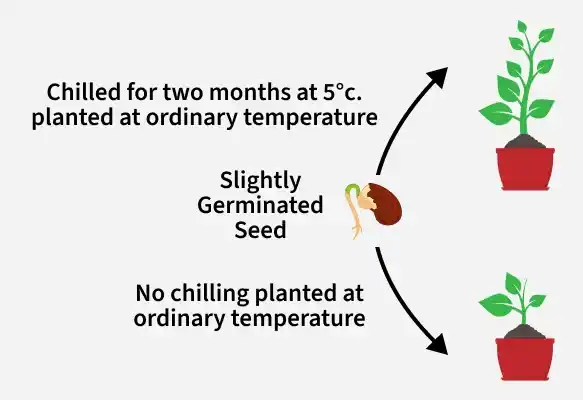
Mechanism of Vernalisation
The process of vernalisation mainly occurs in germinating seeds, young seedlings, or actively growing shoot apices. During exposure to low temperatures, physiological and biochemical changes occur within the plant tissues that prepare the plant for flowering. The important features of the mechanism of vernalisation are as follows:

**1. Requirement of Low Temperature
Plants requiring vernalisation are exposed to low temperatures generally ranging between 0°C and 4°C for several weeks. The duration of cold exposure varies depending on the plant species. This cold treatment initiates physiological changes necessary for flowering.
**2. Occurs in Young Tissues
Vernalisation usually occurs in germinating seeds, embryos, young seedlings, or apical meristems. These actively dividing tissues are highly responsive to cold treatment.
**3. Formation of Vernalin
Scientists proposed the existence of a hypothetical flowering hormone called vernalin, which is believed to be produced during cold treatment. Vernalin is thought to stimulate flowering once the plant is exposed to suitable environmental conditions.
**4. Induction of Flowering
After completion of cold treatment, plants become capable of flowering when favourable conditions such as proper temperature, light, and nutrition are available. Thus, vernalisation converts the vegetative plant into a flowering plant.
Types of Plants Requiring Vernalisation
Plants requiring vernalisation are generally divided into two categories:
**1. Winter Annuals: Winter annuals germinate in autumn or winter and require cold treatment before flowering in spring or summer.
**Examples: wheat, barley, and rye.
**2. Biennials: Biennial plants require two years to complete their life cycle and depend on cold exposure for flowering during the second year.
**Examples: cabbage, carrot, beetroot, and onion.
Factors Affecting Vernalisation
- **Temperature: Low temperature is the most important factor. Generally, temperatures between 0°C and 4°C are most effective for vernalisation.
- **Duration of Cold Treatment: The duration of exposure to low temperature varies among plant species. Some plants require a few weeks, while others may need several months.
- **Oxygen and Water Supply: Proper oxygen and moisture conditions are necessary for metabolic activities during vernalisation.
- **Age of Plant Tissue: Young and actively growing tissues respond more effectively to cold treatment.
Applications of Vernalisation in Agriculture
- Cold treatment helps accelerate flowering and reduces the time required for crop maturity.
- Vernalisation can improve agricultural productivity by ensuring timely flowering and seed production.
- Plants requiring cold treatment can be cultivated successfully in regions with varying climatic conditions through artificial vernalisation techniques.
- Seeds of winter varieties can be artificially vernalised and grown as spring crops, increasing agricultural flexibility.
Importance of Vernalisation
Vernalisation is highly important for plant survival, reproduction, and agriculture. It ensures that flowering occurs during the most suitable season and protects reproductive organs from harsh winter conditions.
- Vernalisation ensures that plants flower only after winter, when environmental conditions become favourable for pollination and seed development.
- Without vernalisation, plants might flower during winter when low temperatures could damage flowers and reduce reproductive success.
- Cold treatment of seeds and young plants can accelerate flowering and crop production, helping farmers obtain better yields.
- Vernalisation allows plants to adapt to seasonal climatic changes, especially in temperate regions with cold winters.