Push and Pull Force (original) (raw)
Last Updated : 23 Jul, 2025
A push force or pull force is a force upon an object arising from the object's or body’s interaction with another object. A push or pull only exists as a result of an interaction, like when a body, an object or a material is either pushed or pulled, which is termed as a **force. A force due to action generates motion in an object.
A push or a pull force also has direction, which means that it is a _vector _quantity; if the magnitude or direction changes, it directly affects either type of force. If the direction of the force and the moving object are opposite, then it decreases the force. If an object is in motion, then an external push or pull may change the state or the direction of motion of that object. The change in the state of motion in an object or body is usually explained by its speed and direction of motion.

Push and pull on a box.
- Now, it can be seen in the image shown above that the box tends to move due to two forces: _Push force that is applied from the left side of the box whereas the _pull force which is acting in the same direction but applied on the right side of the box.
- Both the forces move the box on the right side even after they are different in nature. In Push force object moves away from the source of the force, but scenarios are different in pull force. In pull force object moves toward the source of the force.
What is Push?
Push can be defined as the force that is responsible for an object to move from the state of rest. In Push force, object moves away from the source of the force.
- In simple words, it can be said that the object is moved away from the surface of applied force.
- The time taken to move the object depends on the reaction force exerted by the object or the body.
- The push is applied not only by us but many machines use the push forces to mend the shape of materials to their desired shapes.

Push force on the box.
**Examples of Push
- Pushing the trolley when we go to shopping malls or markets.
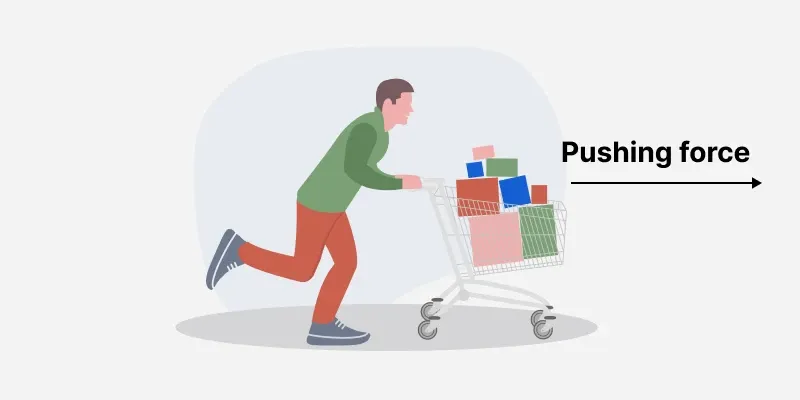
Pushing the trolley by the person
- Pushing of the cart to move it from one place to another one.
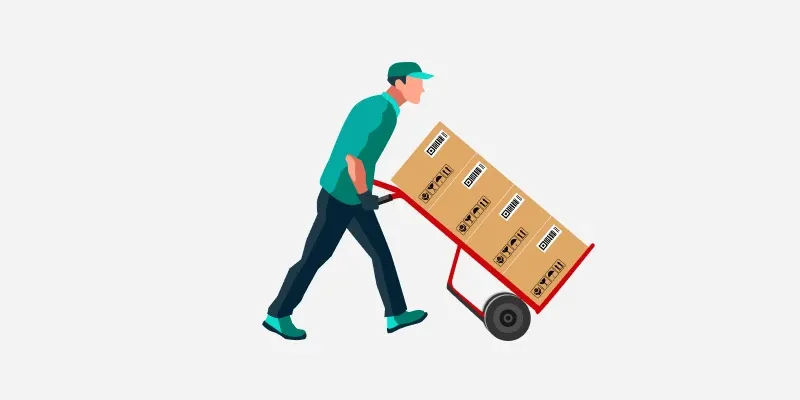
Pushing the cart by the person
- Pushing the Bed from one place to another in a room
- Pushing the door to open it.
- Pushing the switch to make it on.
- Pushing the dough to make small rolls for making tortillas.
What is Pull?
The pull can be described or represented as the force that is responsible for an object to move from the state of rest but in the opposite direction when compared to the push. In pull force object moves toward the source of the force.
- In simple words, it can be said that the object is moved away from the surface of applied force. The time taken to move the object depends on the reaction force exerted by the object or the body.

Pull force on the box
**Examples of Pull
- Pulling the curtains to let us open the window panes.
- Dragging the box to our desired position.
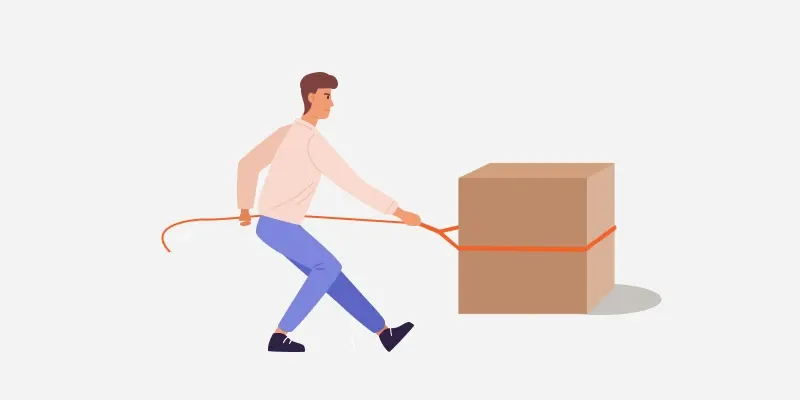
Dragging the box
- Opening of the door to get in.
- Pulling the kite yarn to make it fly higher.
- Pulling a string to make it elongated.
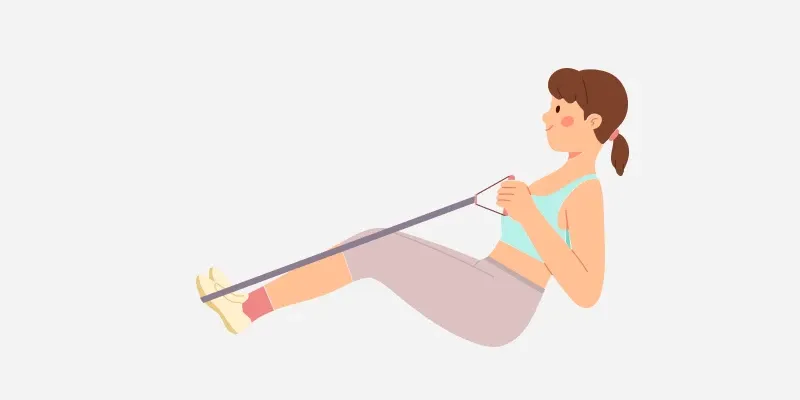
Pulling a string by the girl
- A spring balance measures the weight of an object by judging the pulling force by it.
- The game of tug war has two teams that apply pulling forces on each other. Either team which will exert a greater pull force to the rope with a greater force wins.

Force
Force can be defined as a push or pull on an object or body. For any force applied there is a change in motion of the body, state of it, its shape, of its size, etc. of an object. The force has both magnitude and a direction, as it is a vector quantity that has both. It can be measured very easily by using a spring balance by placing the object or material at the hook end.
**The state of “stationary position” or “rest” of an object is considered to be the zero speed, as:
- An object or a stationary body cannot move by itself.
- An object or a stationary block cannot change its speed by itself.
- An object or a stationary body cannot change its direction by itself.
- An object or a body at rest cannot change by itself.
**Therefore, it can be interpreted that a push or pull force can do the following actions itself:
- A push or pull force may make an object move from rest.
- A push or pull force may change the speed of a moving object.
- A push or pull force may change the direction of a moving object.
- A push or pull force on an object or body may change the shape of an object.
**Basically, forces are of two types:
- Contact Forces
- Non-contact Forces
1. Contact Forces
A contact force is any force that requires contact with the surface. Contact forces are ubiquitous and are responsible for almost every visible interaction between macroscopic matters. Some everyday examples where contact forces are at work are pushing a car up a hill or kicking a ball across a room.
The contact force is generally subdivided into two: Frictional force and Muscular force:
**Frictional Force
It is an opposing or backward pulling force that opposes the motion of one body over the surface of another body. It is very necessary for the motion of any object over another object or body. Friction is a force between two surfaces that are sliding over each other, in contact or very much trying to slide, across each other. Friction always slows a moving object down.

Frictional Force
**e.g:
- Walking, we are able to walk because there is friction, and we are walking at a certain low speed because of the opposing force provided by friction.
- When we move a heavy almirah from one room to another it is very difficult to move it because of the opposing frictional force that gets generated during motion.
- When we rub our hands we can feel the heat due to friction between the rough surfaces.
Muscular Force
The force which muscles of our body exert is called _Muscular force. All our daily body activities like lifting things, walking on the surface, running on the ground, bending to take things, etc. are because of muscular force. It is mentioned as a contact force because muscular force can only be or exerted on physical contact like walking, running, jumping, and so on.
**e.g:
- Strolling something from one place to another.
- Lifting anything up or keeping it down.
- Getting up from a seat or a chair
- Crossing a leg, moving from one position to another, etc.
2. Non-Contact Forces
A non-contact force is described as a type of force that acts on an object or body without coming physically in contact with it. The most familiar non-contact force that we observe is gravity, which confers weight. Forces that arise or generate without the contact of two or more objects are termed _non-contact forces.
There are mainly three types of non-contact forces, that are: magnetic forces, electrostatic force, and gravitational force:
Magnetic Force
Magnetic force describes the attraction force or the repulsion forces that generate or arises between the electrically charged particles because of their motion. It tells us about the force responsible for the action of electric motors and the attraction of magnets for iron pieces. In very simple words, two objects or materials having charge with the same direction of motion have a magnetic attraction force between them while there exists some kind of opposite charges then they repel each other.

Magnetic Force
**e.g:
- The attraction between the magnetic pieces when brought near each other.
- The electromagnets used in machines.
- Working magnets in some machines operate only based upon magnetic forces by a single switch.
**Electrostatic Force
The electrostatic force refers to attractive forces or repulsive forces between two charged tiny particles. It exists in the particles that are at rest or stationary charged particles. It is often referred to as Coulomb’s force. In simple words, it is the force that exists between electrically charged particles or objects at rest.

Electrostatic Force
**e.g:
- Balloons get attracted to each other, whenever one of them is rubbed through our hairs.
- When we run a small or tiny piece of paper with the oil in our head with the help of a comb produces electrostatic force.
- When you do ironing on your silk-made cloth or cotton made cloth and keep it right in front of you, they just cling to your body.
- Lightning phenomenon is also a common example of electrostatic force.
Gravitational Force
All bodies have some weight or in other words a downward force of gravity which is proportional to their mass which arises due to the mass of Earth. Gravity is the acceleration of the Earth on the free-falling object. It is exerted in every falling object, small or big, thick or thin, whatever it is. This universal force acts on every single thing on Earth.

Gravitational Force:
**e.g:
- Whenever we throw a rubber ball up, it falls to the ground due to gravitational force.
- Water from the tap always flows in a downward direction due to this force.
- When we throw a shuttlecock it comes down due to gravity.
Sample Problems
**Problem 1: What are pull and push forces out of the following actions:
**Moving a book far from you, opening a door toward yourself, drawing a bucket of water from a well, a football player taking a penalty kick, a cricket ball hit by a batsman, Opening a drawer.
**Pulling forces are:
- Opening a door toward yourself,
- Opening a drawer
- Drawing a bucket of water from a well
**Pushing forces are:
- Moving a book far from you
- A football player taking a penalty kick
- A cricket ball hit by a batsman
**Problem 2: How magnetic force is a non-contact force?
Force caused due to magnets are called the magnetic or non-contact magnetic force. This force applies even when magnets and metals are not in contact, so it can be stated as a non-contact force.
**Problem 3: Why our shoes get wear and tear after some time?
Our shoes when we walk face frictional force which is a backward pulling force that leads to the wear and tear of our shoes.
**Problem 4: Two girls try to push a block that is kept near them. The block when the first girl applies push force doesn’t move, but it was displaced from its position when the other girl applied push force. Why was it so that the similar push forces applied to tend to move the object or block in the first case but not in the second?
The movement of a body at rest depends upon the extent of external force applied. If it overcomes the reaction force exerted by the block or object they tend to move it. The push force applied by the girl in the first case cannot overcome the reaction force exerted by the block and so the block doesn’t move whereas in the second case the push force applied by the second girl would have overcome the reaction forces by the block and so it moved.
**Problem 5: A boy in a shopping mall is very confused about whether he should pull the cart or push it to move to the cash counter. Suggest the boy which force should he use for his work?
As since it found easier to pull a cart than pushing. So he must pull the cart to the cash counter. The reason behind this is the pulling forces can overcome the reaction force exerted by the cart somewhat easily than push force.
Conclusion
A force that makes something move towards you is called a pull, while a force that makes it move away is a push. In simple terms, force is just a push or a pull that happens when one object interacts with another.
**Related Reads: