MasterSlave Architecture (original) (raw)
Master-Slave Architecture
Last Updated : 27 May, 2026
Master-Slave Architecture is a distributed system design where one central node called the master controls and manages multiple slave nodes. The master assigns tasks to slave nodes, and the slave nodes execute the tasks and send the results back to the master.
This architecture is commonly used in distributed systems to manage resources efficiently and streamline data processing.
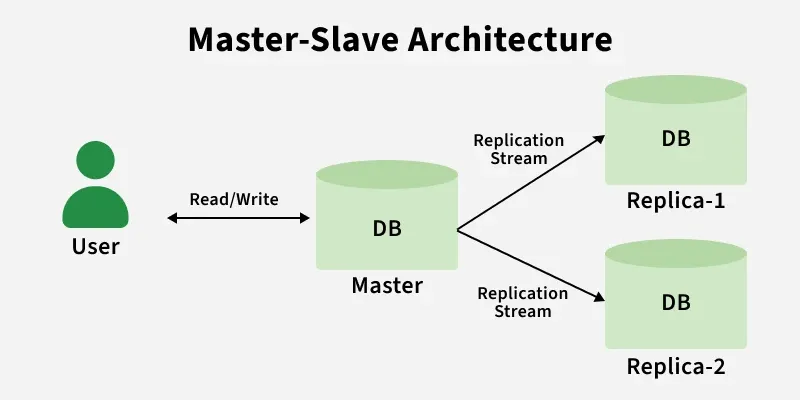
- Communication between the master and slave nodes is generally uni-directional, with the master issuing commands and the slaves executing them.
- This architecture enables parallel processing and load balancing, as tasks can be distributed across multiple slave nodes, thereby improving system performance and scalability.
Components
In Master-Slave Architecture, the primary components are:
- **Master Node: Master node is the central unit in the architecture responsible for coordinating and managing the overall operation of the system. It receives requests, delegates tasks to slave nodes, and collects results.
- **Slave Node(s): Slave nodes are the subordinate units that execute tasks assigned by the master node. They perform computations, process data, or handle specific functions as instructed.
- **Communication Protocol: It is a collection of guidelines and customs that control how information is shared between slave and master nodes. It guarantees dependable and effective communication, facilitating smooth architecture-wide collaboration.
- **Task Distribution Mechanism: By making it easier to assign tasks from the master to the slave nodes, this method guarantees efficient utilization of resources.
- **Feedback Mechanism: It enables slave nodes to report task execution status and results back to the master, ensuring synchronization and error handling.
Working
In a Master-Slave Architecture, the master node controls and coordinates multiple slave nodes. The master receives requests, assigns tasks to slave nodes, and collects the results after execution.
Working Process
- Client sends a request to the master node
- Master analyzes the request and selects a slave node
- The selected slave node performs the task or processes data
- Slave sends the result back to the master
- Master returns the final response to the client
**Example: In MySQL replication, the master database handles write operations such as INSERT or UPDATE queries. The slave databases copy the updated data from the master and mainly handle read requests to improve performance and scalability.
Real-World Examples
Real-World Examples of Master-Slave Architecture demonstrate its versatility and applicability across various industries and domains.
- **Database Management: Systems like MySQL employ master-slave replication for data redundancy and scalability.
- **Content Delivery Networks (CDNs): CDNs utilize master-slave setups to efficiently distribute content across geographically dispersed servers.
- **Parallel Processing: High-performance computing clusters use master-slave architecture to divide computational tasks among multiple nodes.
- **Network Infrastructure: Networking devices like routers and switches implement master-slave configurations for efficient traffic routing and management.
- **Distributed Computing: Platforms such as Apache Hadoop leverage master-slave architecture for processing vast amounts of data across multiple nodes.
Data Flow and Communication
Data Flow and Communication in Master-Slave Architecture facilitate the exchange of information between the master and slave nodes. This communication is crucial for task delegation, result collection, and system coordination.
- **Task Delegation: The master node assigns tasks to slave nodes, specifying the nature of the task and any relevant data.
- **Data Transmission: Data relevant to the assigned tasks are transmitted from the master node to the respective slave nodes.
- **Task Execution: Slave nodes process the received data and perform the assigned tasks independently.
- **Result Collection: Upon task completion, slave nodes transmit the results back to the master node.
- **Feedback Loop: The master node receives the results, analyzes them, and may initiate further actions or tasks based on the outcomes.
Load Distribution and Balancing
Load Distribution and Balancing in Master-Slave Architecture ensure tasks are evenly distributed among slave nodes, optimizing system performance.
- **Even Distribution: Tasks are assigned to slave nodes in a balanced manner to prevent overloading any single node.
- **Dynamic Allocation: Load balancing algorithms dynamically adjust task assignments based on node capacities and current workloads.
- **Efficient Resource Utilization: By distributing tasks evenly, the architecture maximizes resource utilization across all nodes.
- **Scalability: Load balancing enables the system to scale efficiently by adding or removing slave nodes as needed.
- **Fault Tolerance: Load distribution enhances fault tolerance by redistributing tasks in case of node failures.
Use Cases and Applications
Some of the use cases and applications of of Master-Slave Architecture are:
- **Distributed Databases: In distributed database systems, the Master-Slave Architecture makes it easier to store and retrieve data across several nodes.
- **Content Delivery Networks (CDNs): CDNs use this architecture to replicate and distribute content closer to end-users, reducing latency.
- **Parallel Processing: Parallel processing with this architecture helps with high-performance computing jobs like data analytics and scientific simulations.
- **Network Infrastructure: This design is used in network devices like switches and routers for load balancing and traffic control.
- **Real-time Systems: Master-Slave Architecture is used for rapid reaction times in applications that need to handle data in real-time, such as online gaming and financial trading platforms.
Data copying strategies
In a Master-Slave architecture, data copying strategies are essential to ensure that the slave servers are up-to-date with the master server. Here are some common approaches in simple terms:
1. Synchronous Replication
Synchronous replication ensures that data changes on the master are immediately reflected on all slave nodes.
- Provides strong consistency as master and slaves stay in sync.
- Can reduce performance since updates wait for slave confirmations.
2. Asynchronous Replication
Asynchronous replication updates the master first and propagates changes to slaves after a delay.
- Improves system performance and response time.
- May cause temporary data lag on slave nodes.
3. Periodic (Batch) Replication
Periodic replication transfers accumulated data changes from the master to slaves at fixed intervals.
- Reduces system load by batching updates.
- Slaves reflect data only up to the last synchronization.
Each strategy balances consistency, performance, and freshness of data differently depending on system requirements.
Best Practices of Master-Slave Architecture
Best Practices in Master-Slave Architecture are essential for ensuring robust and efficient system operation. Following these guidelines can help optimize performance and maintain reliability.
- **Scalability: Design the architecture with scalability in mind to accommodate growth and changing workloads.
- **Fault Tolerance: Implement redundancy and failover mechanisms to minimize the impact of node failures.
- **Communication Efficiency: Optimize communication protocols and minimize network latency for fast and reliable data exchange.
- **Load Balancing: Use dynamic load balancing algorithms to evenly distribute tasks and prevent node overloads.
- **Monitoring and Management: Implement robust monitoring tools to track system health and performance metrics.
- **Security Measures: Implement security measures such as encryption and access controls to protect data and prevent unauthorized access.
Challenges
Challenges in Master-Slave Architecture present obstacles that need to be addressed for optimal functioning.
- **Synchronization: Ensuring consistency across distributed nodes can be challenging due to communication delays.
- **Single Point of Failure: Dependency on the master node can lead to system failure if it malfunctions.
- **Scalability Limits: Adding more nodes may not always linearly improve performance due to communication overhead.
- **Complexity: Managing a network of interconnected nodes requires robust coordination mechanisms.
- **Data Integrity: Ensuring data consistency and integrity across distributed nodes is critical for reliable operation.