Energy Flow of Ecosystem (original) (raw)
Last Updated : 17 Mar, 2026
Energy flow in an ecosystem is the movement or transfer of energy from one trophic level to another. The energy is passed in the form of chemical energy through food. It is one of the most important processes in an ecosystem, and the Sun is the primary source of energy for almost all ecosystems. The flow of energy is unidirectional, meaning it moves in one direction from one trophic level to another. It occurs through food chains and food webs, where energy is transferred from producers to consumers.
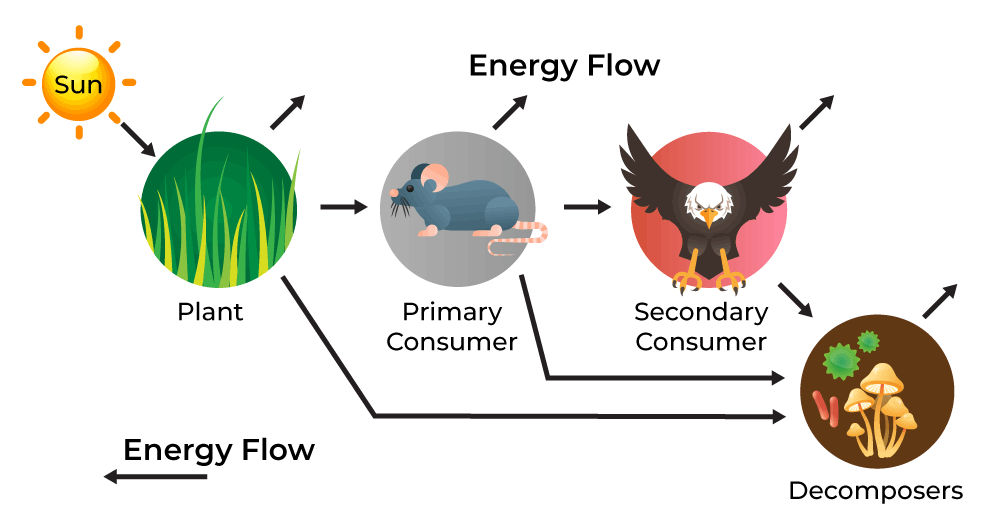
Energy flow is the phenomenon that is responsible for sustaining life on this planet. All the biotic components of an ecosystem need energy for their survival. If the energy flow in an ecosystem is disturbed, then it leads to an ecological imbalance. Energy flow is unidirectional, while nutrients move cyclically through biogeochemical cycle.
Mechanism of Energy Flow in Ecosystem
Animals get energy in two forms: radiant energy and fixed energy. Radiant energy comes from electromagnetic waves, like light. Fixed energy is stored in objects and substances as chemical energy.
- Organisms that convert radiant energy to fixed energy are called autotrophs. Heterotrophs get their energy from autotrophs. The sun is the main source of energy in our ecosystem. But less than half of the sun's energy is used by plants for photosynthesis, i.e. About 50% of sunlight is PAR, but only a small fraction (~1%) is used in photosynthesis.
- Plants convert radiant energy to fixed energy and pass it on to other organisms. When the sun shines on plants, they use it along with carbon dioxide and water to make glucose and oxygen.
- The oxygen goes into the atmosphere, and the glucose stays in the plant. When herbivores eat plants, they get energy from the plant. Some of this energy is lost as heat.
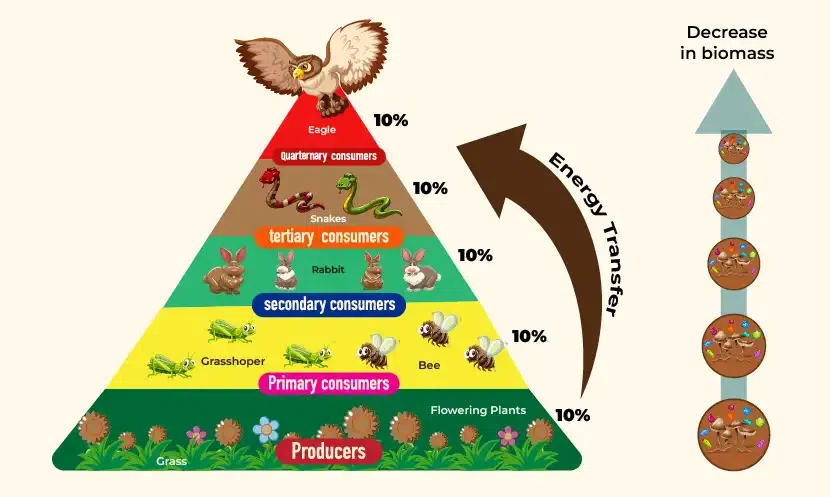
- When carnivores eat herbivores, there is again a loss of some energy. We call this the 10% law because only 10% of the energy available at one level is transferred to the next level.
- The flow of energy in an ecosystem is unidirectional, meaning it only goes in one direction. We can't transfer energy to a previous level.
Trophic Levels
An ecosystem is divided into various levels called trophic levels. Various trophic levels are as follows:
- **First trophic level: This level is occupied by the producers,which include the plants.
- **Second trophic level: It is occupied by the primary consumers that consume plants. For example, herbivores such as cows, goats, etc.
- **Third Trophic Level: This level is occupied by the primary carnivores or secondary consumers such as snakes, frogs, birds, etc.
- **Fourth trophic level: Large carnivores that are also called tertiary consumers make up this level. Example: Lion, Tiger, Cheetah, etc.
Ecological Pyramid
The ecological pyramid, which is formed by determining the flow of energy from one trophic level to another, is known as the pyramid of energy. The producers situated at the base of the pyramid of energy have the highest amount of energy, and the topmost consumer at the top has the least amount of energy. The pyramid of energy is always uprigh**t.
Direction of Energy Flow in an Ecosystem
The direction of the energy flow in an ecosystem is unidirectional. It flows from the primary source of energy, i.e. the sun's light energy, to producers or autotrophs, which then transferred to the consumers. The producer uses solar energy to produce organic food, which flows through a series of trophic levels. Each trophic level captures a portion of this energy for its metabolic needs, while the rest is passed to the next level. The flow of energy follows the following pathway.
Solar Energy --> Producer (autotrophs) --> Consumer (herbivores) --> Consumer (carnivores) --> Consumer (higher levels of carnivores)
10 Per cent Energy Rule
Producers can utilise only **1% of the sunlight through photosynthesis to prepare their food. The energy is lost in the form of heat to the environment and in metabolism when plants are eaten by the next trophic level. This rule highlights the efficiency of energy transfer and the challenges of supporting higher trophic levels in ecosystems.
The 10 per cent energy rule states that of the energy available at one trophic level, only about 10 per cent of the energy is transferred to the next trophic level. Because of this 10% energy rule, the food chain can be sustained only up to 4-5 trophic levels.
Significance of Energy Flow in Ecosystem
- It is vital for all living thing sin ecosystem to survive and function properly.
- It helps us to understand who eats whom in nature.
- The more diverse the organisms more stable the ecosystem is.
- It shows how all creatures in an ecosystem depend on each other and how changes can affect each other.
- It helps us to see how human actions are affecting the ecosystem.
- Understanding the flow of energy in an ecosystem helps us to devise proper conservation techniques to save the ecosystem.